Opinion
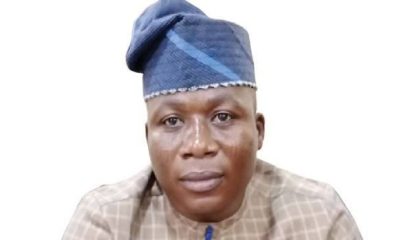
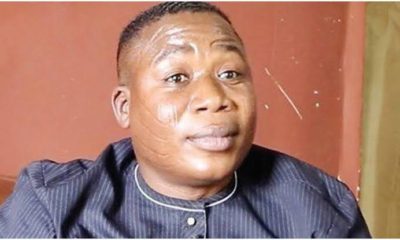
OPINION : The Trial Of ‘Brother Sunday Igboho’
Published
5 years agoon
A stand-up comedian mounting the stage for the first time will never know the reception of his audience. It could end up being a hit or a miss. Only established or popular comedians can mount any stage and expect fits of laughter. For instance, if Dave Chappelle walks on stage alone without uttering a word yet, the audience laughs. Trevor Noah guarantees that too.
The turf of activism is a very treacherous one. While the spirit of aluta may thrive without any preparation or training, it must not be knee-jerk. It must be measured. You must know where to begin, when to pause and when to end your agitations. Agitation is not all about blowing hot. You blow cold too. Explore confrontation and diplomacy in appropriate measures. Like a stand-up comedian telling his best joke on the first try, once the audience is evidently amused or exhilarated, leave the stage immediately and continue another day. Good jokes that come afterwards may not fly.
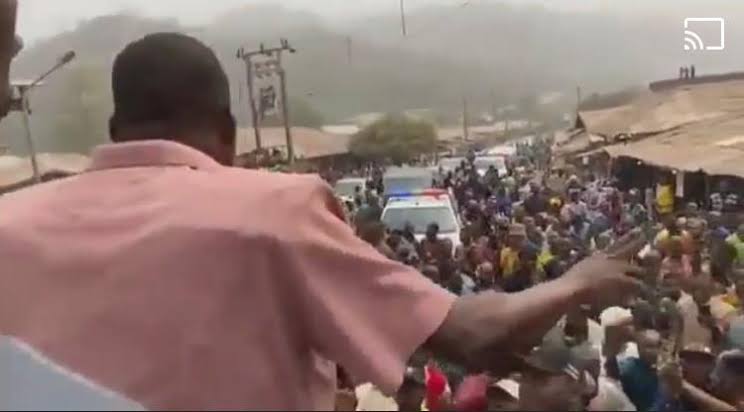
No person of Yoruba extraction should mock Chief Sunday Adeyemo alias “Sunday Igboho”. He fought a genuine fight on the Igangan issue. He took the matter by the scruff of the neck while government at the federal and state level were taciturn and clueless. The matter angered all Yorubas. We all felt enough was enough but we had no one leading from the front except the not so sterling Igboho Oosa. The reception in Igangan was rousing.
There was hope of a genuine resistance. Government got the deserved bashing and they were quick to wake up from their slumber. The matter, by sheer resistance of a Yoruba “one-man Mopol”, was on the front burner for many days.
After the initial gra-gra, there ought to be a pause. Igboho is a non-state actor. He is an “ordinary” citizen bereft of the mighty legally-backed force, clout and influence of the state (“state” here means government from the top down). He lacks the education, experience, circumspection, introspection, influence, protection, powers, immunity and sovereignty of the state. The state, no matter the system of government in place (of which democracy is actually the most liberal), is all-conquering. Ijoba amunimoogun.
Igboho, basking on the euphoria of the Igangan reprieve that he ensured, went to town in a manner suggesting dissidence, uprising and incitement. He picked on notable Yoruba leaders, including Governor Makinde, Asiwaju Tinubu and even the Ooni of Ife. He granted too many boastful and insulting interviews. The art of saying hurtful or scathing words beautifully is not his specialty or forte.
His speeches bordered on crudeness and tactlessness. My admiration for him faded. I was initially so proud of him that I hinted at our facial resemblance. I knew he was teetering on the slopes of doom. I knew the DSS was already all over him compiling dossiers and executing stake-outs of his movements. He simply should have piped down and live to fight another day.
Make no mistake, every Yoruba person should buy into agitations for restructuring. We are not on the same footing or status with the Fulanis. Oppressions are rife and the Fulanis rub it in our faces.
Keeping politics, religion and ethnicity in abeyance, the truth of the matter is that Fulanis enjoy special privileges. Controvert that fact all you like, Miyetti Allah is the socio-political and socio-cultural group that has the greatest influence in Nigeria. It’s the preeminent group of Fulani cattle owners but it’s status as a socio-political juggernaut is unquestionable. Every top Fulani politician is a patron and none dares criticize the group. Even one of the liberal among them, Shehu Sani, told us bare-faced that Miyetti Allah should be respected.
The clout of Miyetti Allah is well-known to every Fulani cattle owner or herder across Nigeria. It intoxicates them into believing they can get away with anything concerning open grazing and malicious destruction of farm crops. Whether it’s in Benue or Oyo and everywhere in between, the mentality is the same.
Our people in Igangan came under the cosh of the intimidation, oppression and high crimes including killings, rapes and kidnappings. Government created vacuums of no communication, no intervention and no abatement. Sunday Igboho stepped in. Would we rather have no one doing the talking and acting to stop the carnage? That is why I would always consider his trip to Igangan, regardless of the methods, very NOBLE.
Sunday Igboho’s lack of education exposed his mediocre sides. It’s why I always tell anyone who cares to listen to at least be formally educated. Unfortunately I don’t think he is surrounded by anyone who understands the concept of consequences. People fight government all the time with the power of pen, organized protests, opinion mounding and resistance. The last is the one no government will tolerate, not even in America. Has America taken kindly to violently storming the Congress during the process of a democratic exercise?
Igboho’s crimes include overdoing his talking in the form of abuse and ridicule of revered personalities (notably the Ooni and Pastor Adeboye); inciting hatred and violence; daring security forces with threats of annihilation, and reportedly resisting arrest when security forces stormed his house.
It is arguable that he is not even close to being among non-state actors who are thorns in the flesh of the government. His activism has not even lasted six months. He was not seen openly carrying firearms. He did not have a militia planning any attack against anyone. It is a moot question whether or not firearms were actually recovered in his house during the DSS-led raid. He is less a threat than the bigger fishes in the ocean of national insurgency.
His message or agitation is targeted at the double standards of the authorities when it comes to the Fulani question. That’s a valid position that should concern all Yorubas regardless of political or religious affiliation. The Fulanis obliterated the powers of the greatest Kingdom in Yorubaland. The expansionist agenda is alive and kicking yet you have Yorubas siding a system that will further relegate us in the comity of socio-cultural groups in Nigeria. This should be a collective struggle.
There’s no reason to think politics on the matter. Fulanis are in both the APC and the PDP. Whether it is Buhari or Atiku at the helms, the story will be the same. The way out is a collective position to point out the oppression and engender dialogue or resistance to attain equity and justice. It goes beyond Igboho who has given a crude try and has failed.
I just pray Yorubas will not regret the preponderance of indifference over genuine reasons to speak out against injustice. It’s our call.
Sunday Igboho has been arrested and he will face the law. History will never forget him regardless of the consequences he may suffer. He is not a coward, not even for escaping DSS arrest and attempting to flee through Cotonou. He is sadly a victim of his own excesses. I pray he gets a reprieve.
Muideen Olagunju, a Lawyer and Politician; writes from Ibadan
Opinion
Re: Adekambi vs Alli: Dr. Olanrewaju’s Descent To Soliloquizing | Sola Abegunde
Published
2 days agoon
October 1, 2026By
Mega Icon
I have read Dr. Sulaimon Olanrewaju’s piece titled ” Adekambi vs Alli: Between Substance And Sensationalism” and it offers me a lot of entertainment.
Dr. Sulaimon Olanrewaju is a seasoned Journalist no doubt. Very brilliant mind, but, he needs a lecture on politics and governance.
No matter how educated or professional you could be, if you lack basic knowledge about raw politics and governance at different tiers of Government, you are bound to struggle like a fish out of the water each time you attempt to defend certain positions.
Very obviously, Dr. Olanrewaju doesn’t know how a Local Government should operate on a normal situation, even, before the Judgment of the Supreme Court obtained by president Bola Ahmed Tinubu.
I will refer Dr. Olanrewaju to a document titled ” Financial Memorandum for Local Governments”.
That document speaks to how funds belonging to the Local Governments could be legally spent.
It will also provide accurate information about the roles and powers of the Local Government Chairmen, Head of Local Government Administration, the Finance and General Purposes Committee, F&GPC, how approvals for funds, projects and how contracts are signed at the Local Government level.
Had it been that Dr. Olanrewaju had proper information, I am sure that he wouldn’t have advertised his ignorance the way he did, in the argument about Financial autonomy for Local Governments which Senator Sarafadeen Abiodun Alli is promising.
He would also have known that his Principal, Governor Seyi Makinde had been engaged in criminal activities in the manner he had been withdrawing and spending resources belonging to the 33 Local Governments illegally since 2019.
Perhaps I need to repeat this for emphasis sake. There is no Law that empowers a state Governor to withdraw money belonging to the Local Governments for the execution of projects on behalf of the Local Governments.
The fact that the monthly allocations for the 33 Local Governments would have to drop on a joint account does not confer any authority on a state Governor to illegally withdraw and spend same.
It is the responsibility of the F&GPC for each of the Local Governments to identify projects it wants to execute, approve funds for same and if the funds are beyond the approving limits of the F&GPC, it will seek approval from the Governor through the office of the Commissioner for Local Governments.
If the project would be executed as a contract, it is the sole responsibility of the HLGA to sign the contract agreement.
That is what Senator Sarafadeen Abiodun Alli is saying. That he would not make illegal withdrawals from the Local Governments funds. That he will allow the F&GPC for the 33 Local Governments to function without hinderance. That he will allow the Career officers to do their duties assigned to them by Law.
If Governor Seyi Makinde doesn’t believe in the existence of the Local Governments and he is not hiding this fact and Sarafa Alli is saying, I believe in a functional and free Local Government, where is the sensationalism in that?
Truth hurts. Dr. Olanrewaju can not, through his essay, which I consider an afterthought, rewrite the fact that, his Principal publicly declared that he doesn’t believe in the existence of the Local Governments, not to talk of allowing them to function freely.
I am surprised that Dr. Olanrewaju is of the opinion that Senator Sarafadeen Abiodun Alli is not saying what he would do differently.
I know that the Special Adviser on Media to Governor Seyi Makinde is not deaf. Neither is he blind or dumb. He is only being hypocritical.
How else does the Allied People’s Movement, APM and its Gubernatorial candidate want the All Progressives Congress, APC Gubernatorial candidate to say what he is going to do differently?
On this issue of Financial autonomy for Local Governments, Sarafadeen Alli is saying, contrary to the illegalities of the past seven years plus, he will not concern himself with the responsibilities that are ordinarily that of the Local Governments.
On Education, he has declared that he will ensure that we go back to the 30 Pupils per classroom policy of the former Governor, Senator Rasidi Adewolu Ladoja, now, H. I . M, Oba Senator Rasidi Adewolu Ladoja.
He said he will revive the Broadcasting Corporations of Oyo state, BCOS which is gasping for breath under Governor Seyi Makinde.
He was emphatic about the fact that he would set up a Committee to review the crisis created at the Circular Road by Governor Seyi Makinde within 72 hours when he is elected as the Governor of Oyo state.
He said he would review the sales and handing over of our Farm Settlements to Estate Developers amongst other promises.
On these issues, what are the clear positions taken by Adekambi?
If Dr. Olanrewaju wants us to believe his cock and bull stories about the performance of the 33 Local Governments under Seyi Makinde, I challenge him to ask his Principal to publish the statement of income and expenditures for the 33 Local Governments in the past seven years plus.
He should give us a breakdown of the total figure of the monthly allocations received on behalf of the 33 Local Governments, the breakdown of salaries and allowances paid, the number of projects executed, identities of the contractors who handled projects, the contract agreements, total figure of the Internally Generated Revenues, IGR received by the Local Governments and the VAT.
In the absence of these vital information, which I am certain they will never dare to make public, I want to humbly suggest that Dr. Olanrewaju should go and update his knowledge about how certain things are done.
Opinion
Ladoja @82: When the ladder becomes too tall and Makinde’s sin of ingratitude | By Ayinla Joseph
Published
6 days agoon
September 28, 2026The Yoruba say, when a man forgets the ladder that took him to the top of the iroko tree, the fall that awaits him will be narrated as a proverb.
On Thursday, Ibadan stood still for its king. Oba Rashidi Adewolu Ladoja clocked 82. Not 82 years of mere age, but 82 years of bruises, battles, betrayals and benediction. A former Senator. A former Governor. An elder statesman who, like Oduduwa, returned as king. The following day, Friday, Oba Ladoja also clocked one year on the throne of his forefathers.
Ibadan celebrated him. Nigeria celebrated him. The Presidency sent greetings. Former governors knelt. Serving governors bowed. The Alaafin of Oyo paid tribute. The Soun of Ogbomoso poured libation of words. Even the Aseyin, far in Iseyin, bought a full page in a national daily to say: our father lives.
But in Agodi Government House, there was silence. Cold, deliberate, imperial silence.
Governor Seyi Makinde did not felicitate his king. No advert. No statement. No courtesy of any sort extended. Nothing. His protégé, Bimbo Adekanmbi, toed the same line of contempt. For 48 hours, Ibadan people waited for a word that never came, until shame forced a whisper.
We must ask: what manner of politics is this?
In 2019, it was this same Ladoja who held Makinde’s hand when Makinde had no hand to hold. It was Ladoja who coordinated the coalition, who gathered the angry, the broken and the hopeful, and stitched them into a garment called victory for a man who had never won anything before. Without Ladoja, there would have been no Omituntun in 2019. And the man knows it.
Philosophers call it the Paradox of Power. Machiavelli warned about it in “The Prince”: that power acquired through the mercy of others must be sustained by gratitude, otherwise it consumes itself. Plato called such rulers philosopher-kings who failed philosophy. Men who know how to win power but not how to carry it.
History is littered with them.
Emperor Nero of Rome who burnt the city that made him emperor. King Rehoboam in the Bible who told the elders who made him king: “My little finger shall be thicker than my father’s waist.” Emperor Commodus who thought Rome was his father’s farm and turned the palace into a circus until the circus swallowed him.
Seyi Makinde governs like them — as an emperor, not as an Omoluabi. A man who believes loyalty must flow upwards to him, but must never flow downwards from him. He rides on the shoulders of giants and then complains that the giants are too tall.
Today it is Ladoja he snubs. Yesterday it was the Alaafin. The day before, the Soun. Tomorrow, which Oba will taste his disdain? He has transferred his personal hatred for the Olubadan stool into a war against all royal stools in Oyo State. That is not politics. That is poison.
And what shall we say of Bimbo Adekanmbi, his political son, who has learnt this ignoble art of ingratitude so perfectly? The Yoruba say, “the child who says his mother will not sleep, he too will not sleep.” To watch a man seeking to be governor practise contempt for the throne he seeks to govern is a disaster foretold.
Oyo people know Omituntun 2.0 for what it is — a poisonous pill coated with sweet advertisement. If 2.0 can openly humiliate an 82-year-old first-class monarch who made him, what will Omituntun 3.0, headed by his anointed, do? It will be the unkindest cut of all. It will be the complete desecration of the Omoluabi ethos that Ibadan and Oyo hold sacred.
Seyi Makinde will be remembered. Not for the roads that crack before commissioning. Not for the parks that lead to nowhere. He will be remembered as the governor who rode on the backs of eminent men and made every one of them regret that they ever lent him their shoulders.
Ladoja at 82 needs no advert from Agodi to be great. The king’s greatness is not conferred by the governor. But the governor’s smallness is exposed by how he treats his king.
Oyo people, shine your eyes. This affliction must not rise a second time.
Opinion
Makinde Deserves No Sympathy: He Brought His Present Predicament Upon Himself
Published
1 week agoon
September 23, 2026In response to my brother, Shuaib Idris, who wrote the piece titled “Seyi Makinde Deserves Our Sympathy,” I submit that Seyi Makinde does not deserve our sympathy. How do you sympathise with somebody who brought political calamity upon himself?
There is a point in every political journey when a leader must pause, look around and ask himself a difficult question: How did I get here? For Governor Seyi Makinde, that moment has long arrived.
Much has been written and said about the governor’s increasingly combative public interventions, his exchanges with political opponents and his determination to market the candidacy of his preferred successor. Some have interpreted these developments as signs of pressure surrounding him. But sympathy, in this circumstance, may be misplaced.
If Governor Makinde is under pressure today, much of that pressure is self-inflicted. If his administration is now being subjected to increasingly intense scrutiny, he cannot reasonably blame those asking the questions. And if political opponents have become emboldened enough to challenge his record openly, he should perhaps examine the decisions and conduct that have created the circumstances in which those challenges are now flourishing.
The governor’s recent political conduct provides ample illustration.
At the 70th birthday celebration of Bishop Francis Wale Oke, the governor reportedly used his appearance to introduce Bimbo Adekanmbi, the APM governorship candidate whom he supports. Adekanmbi’s emergence as the APM candidate is not in dispute; the party adopted him as its consensus candidate in May.
Two things continue to haunt him: his subpar performance in office and what critics describe as his imposition of Adekanmbi and Open Salawu, new entrants into his team, on his “first eleven.”
The question, therefore, is not whether Governor Makinde has the right to support a candidate. He does. The question is why a governor who repeatedly speaks of his administration’s achievements appears increasingly eager to make the 2027 succession contest a personal project.
A governor nearing the end of his tenure should ordinarily be concerned about preserving the dignity of the office, defending his record with facts and allowing his preferred candidate to present his own credentials. Indeed, Adekanmbi himself has publicly said he would not be a political stooge and that he would take responsibility for his own decisions if elected. That is political rhetoric. However, everything about Adekanmbi, according to his critics, points to the possibility of his being a stooge waiting to be planted to do Makinde’s bidding after the latter leaves office in 2027.
Yet Governor Makinde has increasingly inserted himself into the political conversation surrounding his successor. That creates an unavoidable question: if Adekanmbi is sufficiently qualified and politically prepared to succeed him, why does the governor so frequently feel compelled to fight the successor’s battles himself?
This is where the argument about pressure becomes particularly relevant. Political pressure does not simply descend from heaven. It can be generated by the choices of the politician himself.
Consider the recent exchange with Senator Sharafadeen Alli over the legal profession. Governor Makinde reportedly questioned Alli’s experience as a lawyer, arguing that he had never entered a courtroom. Alli’s campaign organisation subsequently responded by detailing his legal background and professional experience.
There is nothing wrong with political candidates examining one another’s records. That is part of democratic competition. But reducing a lawyer’s professional identity to courtroom appearances is a curious line of attack, particularly when the political argument ought ultimately to be about competence, experience, policy and public record.
A lawyer can practise in several areas of the profession without making litigation the centre of his career. Administrative work, corporate practice, legal consultancy, governance and institutional management are among the possible avenues available to members of the profession.
The larger point, however, is this: when an incumbent administration turns the professional credentials of an opponent into a central campaign issue, it invites its own record to be placed under the microscope. So, why does he need to be sympathised with over what he brought upon himself?
The response from Alli’s camp has shifted attention towards questions about Makinde’s own record as an engineer and governor, particularly the controversy surrounding diesel-powered streetlights and the renovation of the Lekan Salami Stadium. Those are now matters of public political debate, with competing claims about expenditure and performance. How do you sympathise with someone who threw a stone and received a Scud missile?
This is the unavoidable consequence of political combat: once you open the door to scrutiny of another man’s credentials, you should expect yours to be examined with equal intensity. Governor Makinde cannot reasonably demand immunity from the same standard he applies to others.
The same principle applies to his much-advertised “first eleven.” If the governor describes his administration as being driven by a carefully assembled team of exceptional people, the public is entitled to ask what became of that team when the question of succession arose. Why was the search for a successor extended beyond this celebrated first eleven?
A football coach who constantly boasts about his first eleven naturally invites the question of who among that eleven can step forward when the captain leaves the field. If none is selected, his team’s fans will ask why. That is not persecution. It is accountability.
There is another issue the governor should confront: political loyalty. Governor Makinde did not arrive at the Government House in 2019 in isolation. His political journey involved alliances with people and groups who contributed to the coalition that eventually produced his victory. The political history of that period is well known and should not be rewritten simply because former allies and associates are now on different sides of the political divide.
The problem with “use and discard” politics is that yesterday’s ally eventually becomes tomorrow’s witness. People who helped build a political structure do not disappear simply because their usefulness has expired. And when they begin speaking, the politician who once relied on them may find himself answering questions he never anticipated.
That appears to be part of the political atmosphere surrounding Governor Makinde today. His confrontation with traditional institutions is another matter that requires careful reflection. Whatever one’s political affiliation, Yoruba traditional institutions occupy a distinctive place in the cultural architecture of Oyo State. Political disagreement with individual traditional rulers is legitimate; treating the institution itself with disdain is entirely wrong, and it raises questions about Makinde’s Omoluabi values.
A governor may disagree with a monarch’s political preference. He may even believe traditional rulers should remain politically neutral. But the language employed in expressing that disagreement matters.
The office of governor carries enormous constitutional authority, but it also carries a moral obligation to exercise restraint. A governor should not need to be reminded that words spoken from Government House do not remain personal words. They acquire the weight of the office. That is why some of Governor Makinde’s recent public exchanges have generated such controversy.
The irony is that political power is temporary, while institutions and relationships often outlive individual office holders. The governor should know this better than most.
He is approaching the end of his constitutionally permitted tenure in Oyo State. The political question before him is therefore not how to remain governor indefinitely, but what legacy he will leave behind. Will he be remembered primarily for the projects executed under his administration? For the policies introduced? For the institutions strengthened? Or increasingly for the political battles fought during the final phase of his tenure? The last question is what will occupy people’s minds most after Makinde has left office.
The most consequential political mistake an incumbent can make is to interpret every criticism as persecution and every opponent as an enemy. Criticism is not necessarily hatred. Opposition is not necessarily sabotage. Questions about public expenditure are not necessarily attacks on a person. And scrutiny of an administration is not evidence of an organised conspiracy.
A mature government answers questions. A confident administration publishes records. A secure political movement allows its candidate to speak. And a governor who believes his record speaks for itself should have little reason to spend every available political moment speaking for his preferred successor.
That is why sympathy for Governor Makinde is evidently misplaced. The political pressure surrounding him today is not simply something that happened to him. It is also the product of political decisions, alliances, rhetoric and strategies that he and his political associates have consciously pursued.
He chose his successor. He chose his political platform. He chose to engage his opponents. He chose to make their records a subject of public debate. He chose to defend his administration through increasingly political exchanges. Those choices have consequences.
The electorate is now watching. And when the people begin to ask questions, the appropriate response from a governor is not to complain about pressure. It is to provide answers. Oyo people do not owe any politician sympathy for the consequences of his political choices. They owe themselves something far more important: a careful examination of every candidate, every record, every promise and every claim before making their decision in 2027.
MEGAICON TV
Ido Communities Rally Oseni, Lawmaker Assures Fresh Development Interventions
Gunmen abduct 20 NYSC members in Imo
Independence: Alli celebrates Nigeria at 66, seeks support for Tinubu, APC candidates
Trending
-
Politics1 week agoAPM Rally: APC Tackles Makinde Over Use of ‘CAF-Rejected’ ₦5.5bn Stadium
-
Politics4 weeks agoOyo won’t become real estate company, says Alli
-
News3 weeks agoOyo South: Oseni Approves N100m for Ibadan Community Road Rehabilitation
-
Politics3 weeks agoOyo 2027: Alli appoints Oladele, Olaosebikan, Tunji media directors