Opinion
Kano’s midnight kingdom | By Lasisi Olagunju
Published
2 years agoon
Today, those whose ancestors snatched Kano are fighting each other over the city and their spoils. The Yoruba would look at their drama and sing for them the song of Ambrose Campbell/ Ebenezer Obey: Eni rí nkan he tó fé kú torí è/ Owó eni tó ti so nù nko? I won’t translate this!
Their victims are taking sides. I shake my head for them. May I never be found on either side of siblings feuding over whose turn it is to loot me.
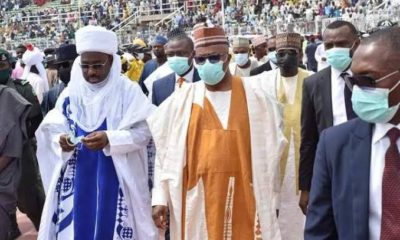
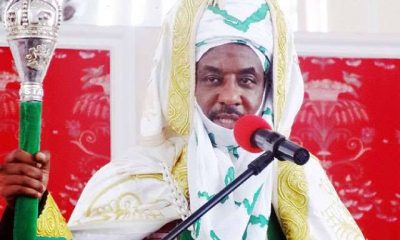
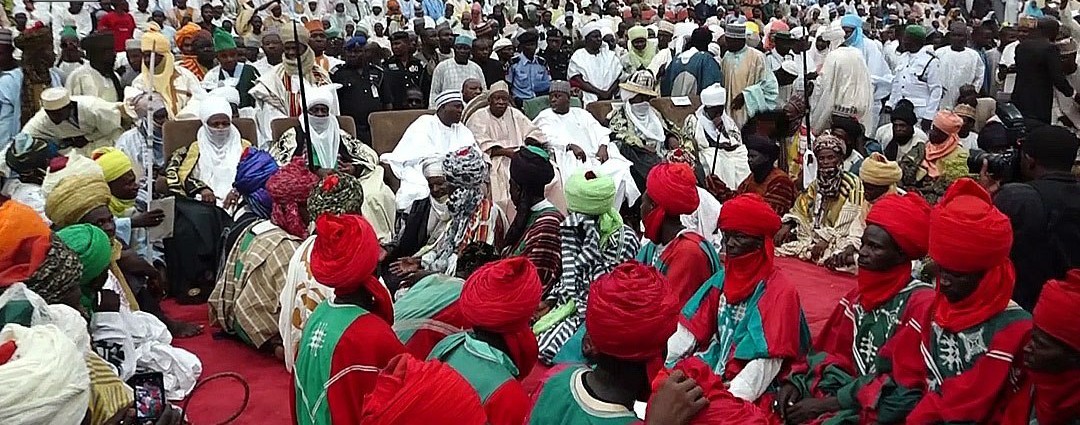
“Emir Sanusi II should be referred to as the 59th Emir of Kano (and) not the 16th – unless the history of Kano started after Dan Fodio’s Jihad and imposition of Emir Sulaimanu in 1807.” With these words, Journalist Jafaar Jafaar on Friday started an online war which is still raging as I write this. So, two wars are being fought simultaneously on and over Kano. The first is the game of thrones between brother and brother over the city’s kingship and its pricey palace. The second war is on social media being fiercely fought between a conquered people and their conquerors over when the history of the city started.
Jafaar, a Hausa, maintained that “from King Bagauda in the 10th century to Muhammadu Alwali in 1805, there were at least 42 Habe/Hausa rulers documented by history that ruled Kano.” He went on to claim that most of the symbols of authority of today’s Emir of Kano predated the Jihad and the ascendancy of Fulani rulership of the city. The charge and the pushback have been enormous online. Whatever is the fate of the Hausa of Kano today was foretold and it is recorded in their history.
Kano’s monarchy has a very well documented history. The best known by historians is ‘The Kano Chronicle’ – a list of rulers of Kano since the establishment of the Bagauda Dynasty in 998 AD. Long before Bagauda and his tribe of adventurers entered Kano, history says the founding ‘chief’ was a man called Barbushe. He was credited with enormous strength and spirituality – a man who could look very far and see tomorrow. The Kano Chronicle describes this strange man’s own ancestor, Dalla, as “a black man of great stature and might; a hunter who slew elephants with his stick and carried them on his head about nine miles…”
One day, spirit-possessed Barbushe told his people that in the coming years they would lose everything they had to a stranger.
“A man shall come to this land with an army and will gain mastery over us,” he told the people of Kano.
If it was today, those people would snap their fingers over their heads and reject the prophecy. Barbushe’s people did not snap any finger, but they voiced their rejection in their own way. They told him: “Why do you say this? It is an evil saying.”
The seer kept his peace; he ignored them. Then continued. He told the people that if their conqueror “comes not in your time, assuredly, he will come in the time of your children, and will conquer all in this country, and forget you and yours and exalt himself and his people for years to come.”
The Kano Chronicle said the people were exceedingly downcast because they knew their leader told the truth of a future of slavery awaiting them. They believed him and asked: “What can we do to avert this great calamity?”
He replied them: “There is no cure but resignation.” Then “they resigned themselves” and have remained in that state of resignation till today.
It is a long story. My source is H.R. Palmer’s ‘The Kano Chronicle’ published in 1908. The prophecy is on page 64. You may read that portion and others and match that history with whatever is happening to these people today.
I remembered Barbushe’s prophecy when I saw the Hausa journalist and his online army asking questions and referring to their own ancestors as the ‘Habe’ rulers of Kano. The 19th century Fulani (and their successors) called any people they conquered ‘Habe’.
The Hausa think the altered, contemporary king list of Kano city is rigged against their ancestors. They think it robs them of their royal and cultural essence. The people who enslaved them reset the calendar and the clock of their history. Their existence started with their defeat. Their fate is classic in how not to surrender to fate. Could the 1804 Jihad of Dan Fodio and its spread to Kano be the fulfillment of that promise of eternal subjugation; a rulership which history predicted would misgovern them “till they become of no account”? The prediction, and everything around it, even its myth and legend, appear to have come with a fatal ring of prescient finality wound around these people. Their resignation is proof that there is no medicine against destiny and no armour against fate.
Students of Kano history would have no problem identifying successive emirs of the city as snacks of power. In some cases, governors munch, chew, and swallow them. Some other times, they try and fail. On January 1, 1954, Premier Ahmadu Bello installed his “close personal friend”, Muhammad Sanusi, as emir of Kano. The man succeeded his father, Abdullahi Bayero. But in August 1963, the friendship was over. Sanusi was dethroned even despite opposition from the federal. On June 8, 2014, Sanusi’s grandson, Lamido, became emir despite opposition from Abuja and its forces. He was there for six years and was dethroned by a governor who was deputy governor when he was enthroned. Last week, Lamido’s destiny brought him back to the throne even in the face of a blitzkrieg from federal forces.
Emirs are riverside reeds, precarious at all times. In 1982, Governor Abubakar Rimi had a big issue with the Emir of Kano and, in an interview, he described the emir as “nothing, nothing, nothing but a public person.” He said the emir was “holding a public office” and was “being paid from public funds” and his “appointment is at the pleasure of the governor of the state.” He said the emir “can be dismissed, removed, interdicted, suspended if he commits an offence.” Rimi said there was “nothing unique about Ado Bayero, the Emir of Kano… believe me, if he commits any offence which will make it necessary for us to remove him, we will remove him and we will sleep soundly.” His listeners shivered. The PRP governor proceeded from there to plot the sack of the emir “for failing to fulfill government orders or to show due respect to the State Governor.” There was opposition from the streets with thousands shouting: “we don’t want the governor; we want the emir.” Ado Bayero survived that coup and soon ate the exit cake of Governor Rimi. The opposite appears to be the case now with Bayero’s son, Aminu.
Perhaps, more importantly, the Kano case has just confirmed to us that the country now has judges without borders; they sit anywhere -in the air and at sea, in their wives’ beds and on their concubines’ laps. They work 24 hours; they operate with the speed of light such that cases can be filed at 11pm and judgment delivered at 12 midnight while the other party is sleeping. Whatever they do is valid. It stands. There is no control again; the steering wheel is rusted and stiff. The state backs its carefully selected judges with everything it has –guns, threats, excuses, lightning and thunder.
The case should strengthen us to double down on our insistence that Nigeria is a federation and must be so governed. A Nigerian Federal High Court sat in the United States of America and plunged a knife into the tendons of Kano chieftaincy. And we are excusing the perfidy with lexis and structure of e-judiciary. You would think under our laws, chieftaincy matters are state and local government matters. That is what our law says but the offshore judge did not think it was necessary to respect that law. Popular comedian, Mr Macaroni, would ask: “Are you normal?” We are not.
Section 251 of our constitution clearly states what areas the Federal High Court has jurisdiction over. The section has three subsections. Subsection 1 gives that court jurisdiction on matters relating to the revenue of the government of the federation and allied matters. It lists those matters. Subsection 2 gives it “jurisdiction and powers in respect of treason, treasonable felony and allied offences.” Subsection 3 gives the court powers to hear cases “in respect of criminal causes and matters in respect of which jurisdiction is conferred by subsection (1) of this section.” Nowhere in that section or anywhere in the constitution is the Federal High Court empowered to sit over chieftaincy matters. Yet, a judge who was not even in the country, assumed jurisdiction under the cover of midnight darkness in the Kano emirship tussle and, aided by candies of impunity, signed an injunction. That judge is, very soon, going to the Court of Appeal on promotion. One day, he will become the Chief Justice of Nigeria.
Power and its allure rob society of order. In William Golding’s ‘Lord of the Flies’, we see how man with power enjoys the anonymity conferred on him by darkness. We see how control is lost and he strays calmly from goodness to savagery. America’s second president, John Adams, in March 1801, stayed up till midnight of the eve of his last night in office creating courts and signing appointment memos of his friends and supporters as judges to fill his freshly minted courts. US history remembers those judges harshly as “midnight judges.” The court ruling at the centre of Kano’s emirship logjam walked in from the United States at midnight on Thursday. The reinstated emir, Muhammadu Sanusi II, jogged into the palace midnight on Friday. The deposed emir, Aminu Ado Bayero, sneaked into the city under the canopy of darkness before dawn on Saturday. The security forces of the federal government soon filed out and took embarrassing positions. The hinge of their involvement was the tokunbo court order from a midnight judge who sat across the seas. Our courts no longer dread darkness and its forbidden fruits; they have become like hired killers, their fingers stained with the blood of justice.
Yet, the judiciary had seen better days – even in the so-called dark days before the white man came with his civilisation. There was a time in Kano when what distinguished judges were learning and piety. Sulyman, emir of Kano from 1807 to 1819, had a very tough mother and an upright alkali (judge). The emir’s mother was found on a particular day ill-treating a private citizen. She was charged for it at the court of Alkali Yusuf al-Hausi. The court found the queen mother guilty and pronounced corporal punishment. Emir Sulyman could neither shield nor save his mother – she served her sentence. Thirty-six years later, Emir ‘Abd Allah Maje Karofi took over the throne of Kano and was there till 1882. At a point during his reign, the emir bought a horse from a Tuareg and refused to pay despite repeated demands. The Tuareg took his case to court and Alkali Ahmad Rufa’i found the king guilty. The king’s punishment was an order that the emir’s confidant named Kasheka, who represented him in court, be seized and sold into slavery to settle the debt. A shaken Emir Karofi quickly arranged for the money and paid his creditor, the Tuareg. My source for these stories is Professor Tijjani Naniya’s ‘The Dilemma of the Ulama in a Colonial Society’ published in the Journal of Islamic Studies in 1993.
The period of those judgments was a time when kings feared and respected the law. It was an era when judges knew the law and applied it as they should, entertaining neither fear nor favour. Today’s judge would jail the creditor and shout rankadede to the debtor-king. The jungle of our judiciary has matured and the beasts grown in all departments.
In my moments of devotion and meditation, I watch wild animals on TV channels. Right before me is a vulture, hyena and lion sizing one another up over a banquet of skunked meat. What we witnessed between Thursday and Saturday night in Kano was exactly that. Beastly fights over meals are a natural feature of life in the jungle. Bayero was dethroned and Sanusi enthroned. Enthronement and dethronement are not strange with monarchies. It didn’t start today in Kano and elsewhere; it won’t end with this Kano matter. How did Sanusi become emir in June 2014? Was he the favourite of the kingmakers? Aminu Ado Bayero, the dethroned emir, how did he get the throne four years ago? General Ibrahim Babangida once said that the moment you get into power through a coup, you should expect that a coup would be staged against you one day. It is delusional not to accept this. It is like Napoleon thinking his revolution would be the last. Russian writer, Yevgeny Zamyatin, says exactly this in his novel ‘We’ – described by a reviewer as “a prediction of the natural conclusions of totalitarianism.” It was from ‘We’ that George Orwell pinched the whole idea of his monumental ‘1984’. In “We” is the warning to all who stand but who think their stability is forever: “How can there be a final revolution? There is no final one. The number of revolutions is infinite.” One era will be succeeded by another era just as one preceded it. There is no goodnight in power politics. Sanusi is back; Bayero is out, but may yet come back. There is no end to snatching and running away with power.
Related
You may like
Growing support has continued to trail a youthful politician and technology advocate, Hon. Khalil Mustapha Adegboyega, popularly known as Repete, as many youths in Ibadan North Federal Constituency expressed confidence in his leadership style and vision for development.
Across several communities within the constituency, residents, particularly students, artisans and young professionals, described Repete as one of the emerging political figures with strong grassroots appeal and a passion for youth empowerment.
Supporters said his growing popularity stems from his consistent advocacy for innovation, entrepreneurship and skills development aimed at addressing unemployment and creating opportunities for young people.
As an engineer and technology enthusiast, Repete is also said to possess a deep understanding of the evolving digital economy and the need to position youths for global competitiveness.
Many of his supporters noted that his approach to leadership focuses on practical solutions, mentorship and capacity-building initiatives capable of helping young people become self-reliant and economically productive.
Some community stakeholders who spoke on his rising profile said his humility, accessibility and relationship with the grassroots have continued to endear him to many residents within the constituency.
They added that Repete’s engagement with youths and community groups reflects his commitment to inclusive governance and people-oriented representation.
Observers within the constituency also maintained that the increasing support for the politician reflects a growing desire among residents for a new generation of leaders driven by innovation, competence and accountability.
According to them, many young people see Repete as a symbol of hope and progressive leadership capable of contributing meaningfully to the development of Ibadan North Federal Constituency.
Related
The All Progressives Congress (APC) in Oyo State stands on the edge of a consequential decision—one that may define not only its fortunes in Ibadan North Federal Constituency but also its broader political relevance in the state.
As the countdown to the party primaries intensifies, the question before APC leaders is no longer routine. It is strategic. It is urgent. And it is decisive: will the party align with the clear preference of the people or risk repeating costly political miscalculations?
At the centre of this debate is Hon. Khalil Mustapha Adegboyega, widely known as Repete—a name that has, over time, evolved from a political identity into a grassroots phenomenon.
A Candidate Rooted in the People
In contemporary Nigerian politics, where voter awareness is rising and expectations are shifting, candidates are increasingly judged not by promises but by presence. On this scale, Adegboyega stands tall.
His political journey is marked by consistent engagement with constituents—far beyond the optics of election seasons. From youth empowerment initiatives that provide practical skills and startup support, to sustained interventions in healthcare access for the elderly and indigent, his footprint across Ibadan North reflects a model of leadership anchored on service.
Unlike the transactional approach that often defines political relationships, Adegboyega’s connection with the people appears organic—built on trust, accessibility, and continuity. These are not mere campaign attributes; they are political assets.
The Danger of Political Disconnect
History offers the APC a clear lesson: parties that ignore grassroots sentiment often pay a heavy electoral price. The imposition of candidates perceived as distant or untested has, in several instances, resulted in voter apathy, internal dissent, and eventual defeat at the polls.
Ibadan North presents no exception.
With opposition parties closely monitoring the APC’s internal dynamics, any misstep in candidate selection could provide a ready opening. A divided house, coupled with a candidate lacking widespread acceptance, is a formula the opposition is well-positioned to exploit.
The implication is straightforward: this is not merely about party loyalty; it is about electoral viability.
Echoes from the Grassroots
Across the length and breadth of Ibadan North—markets, motor parks, religious centres, and community gatherings—a consistent pattern emerges in political conversations. The name “Repete” resonates with familiarity and acceptance.
Such organic support is not easily manufactured. It is cultivated over time through visible impact and sustained presence. For a party seeking electoral certainty in a competitive environment, this level of grassroots validation is not just desirable—it is critical.
A Test of Leadership and Judgment
For the APC leadership in Oyo State, the moment calls for clarity of purpose. Decisions driven by narrow interests, personal alignments, or short-term calculations may carry long-term consequences.
The task, therefore, is to balance internal considerations with external realities. Elections are ultimately decided by voters, not by party caucuses. A candidate who commands public confidence offers the strongest pathway to victory.
The Stakes Are Clear
Ibadan North is too strategic a constituency for experimentation. The cost of error is not limited to a single seat; it extends to party cohesion, credibility, and future positioning within the state’s political landscape.
In this context, the argument for Adegboyega is less about sentiment and more about strategy. His visibility, acceptability, and record of engagement place him in a strong position to consolidate support and mobilise voters effectively.
Conclusion: A Choice with Consequences
As the APC moves closer to its primaries, the decision before it is both simple and significant: align with a candidate who reflects the mood of the electorate or risk conceding advantage to a watchful opposition.
In politics, moments such as this often separate foresight from hindsight.
For APC in Ibadan North, this may well be one of those defining moments.
Aderibigbe Akanbi, a political analyst, writes from Ibadan.
Related
Opinion
Ibarapa East: Yusuf Ramon’s Quest for Responsive Representation
Published
3 months agoon
February 14, 2026As the road to 2027 gradually unfolds across Oyo State, political conversations are shifting from routine permutations to deeper questions about competence, generational leadership, and measurable impact. In Ibarapa East, that conversation has found a new voice in Yusuf Abiodun Ramon — a Lanlate-born technocrat whose entry into the race for the State House of Assembly is redefining what representation could mean for the constituency.
In a political environment often dominated by familiar faces and conventional calculations, Ramon presents a profile shaped by technical discipline, structured thinking, and solution-driven engagement. His professional background, anchored in analytical precision and systems management, forms the foundation of his public service aspiration.
For him, representation must move beyond ceremonial presence to practical responsiveness — laws that reflect local realities, oversight that protects public resources, and advocacy that translates into visible development.
Ramon argues that the future of Ibarapa East lies in leadership that listens deliberately, plans strategically, and delivers measurably. He speaks of strengthening rural infrastructure, expanding youth-driven economic opportunities, and institutionalising transparency as core pillars of his agenda. In his view, governance must not merely be symbolic; it must be structured, accountable, and people-centred.
Rooted in Ile Odede, Isale Alubata Compound, Ward Seven of Ibarapa East Local Government, and maternally linked to Ile Sobaloju, Isale Ajidun Compound, Eruwa, Ramon’s story is not one of distant ambition but of lived experience. He is, in every sense, a son of the soil — shaped by the same roads, schools, and economic realities that define daily life in Ibarapa East.
“I was born here. I grew up here. I understand our struggles, our strengths, and our untapped potential,” he says. “Representation must go beyond occupying a seat; it must translate into preparation, competence, and genuine commitment to development.”
His academic journey mirrors that philosophy of steady growth. He began at Islamic Primary School, Lanlate (1995–2001), proceeded to Baptist Grammar School, Orita Eruwa (2001–2007), and later earned a National Diploma in Mechanical Engineering Technology from Federal Polytechnic, Ilaro, between 2009 and 2011. Refusing to plateau, he advanced his intellectual horizon and is now completing a Bachelor of Science in Business Administration at the University of Lagos. “Education,” he reflects, “is continuous capacity building. Leadership today requires both technical knowledge and administrative insight.”
That blend of engineering precision and managerial training has defined a professional career spanning more than a decade. Shortly after his diploma, Yusuf joined Mikano International Limited as a generator installer, gaining hands-on experience in industrial power systems — a sector central to Nigeria’s infrastructural backbone. He later transitioned into telecommunications at Safari Telecoms Nigeria Limited, where he received specialized training in Industrial, Scientific, and Medical radio bands, strengthening his expertise in network operations.
In 2013, he became a Field Support Engineer at Netrux Global Concepts Ltd., then a leading ISM service provider in Nigeria. Over four formative years, he immersed himself in telecom infrastructure deployment and maintenance, mastering field coordination, logistics management, and real-time technical problem-solving.
Since July 2017, he has served as a Field Support Engineer with Specific Tools and Techniques Ltd., a power solutions firm providing services to major operators including MTN Nigeria and Airtel Nigeria. In that capacity, he operates at the frontline of ensuring energy reliability and network uptime — responsibilities that demand discipline, accountability, and systems thinking.
For political observers in Ibarapa East, this trajectory matters. It reflects more than résumé credentials; it speaks to a mindset anchored in efficiency, coordination, and measurable outcomes — qualities increasingly demanded in legislative representation.
Beyond the private sector, Ramon’s political exposure is neither sudden nor superficial. A loyal member of the progressive political family in Lagos, he once served as a personal assistant to a former lawmaker, gaining practical insight into legislative procedure and constituency engagement. Within his community, he has quietly extended financial support to small-scale entrepreneurs and students — modest but consistent interventions rooted in personal responsibility.
“My interest is my people,” he states firmly. “Ibarapa East deserves strategic, responsive, and capable leadership at the State Assembly. We must move from rhetoric to results.”
Across the constituency — from Lanlate to Eruwa — development priorities remain clear: youth employment, vocational empowerment, rural road rehabilitation, stable power supply, agricultural value-chain expansion, improved educational standards, and stronger lawmaking that directly reflects community needs.
Political analysts argue that Ramon’s technocratic background positions him uniquely at the intersection of policy formulation and practical implementation. At a time when national discourse increasingly favours competence over grandstanding, his profile resonates with a broader generational shift toward performance-driven governance. His engineering discipline reinforces problem-solving; his business training strengthens administrative understanding; his grassroots roots anchor his empathy.
For Ibarapa East, the 2027 election cycle may represent more than a routine democratic exercise. It may mark a recalibration of expectations — a demand for representation that understands both the soil beneath its feet and the systems that drive modern development. As political alignments gradually crystallize in Oyo State, Yusuf Abiodun Ramon’s declaration signals the arrival of a candidate seeking to translate private-sector structure into public-sector impact.
One thing is clear: the conversation about the future of Ibarapa East has begun — and it is now framed around competence, credibility, and capacity.
Oluwasegun Idowu sent in this piece from Eruwa, Ibarapa East LG, Oyo State
Related
Advertisement
Entertainment
Adekunle Gold, Simi welcome twins
Ayefele drops new album, Reflections
Reggae Legend, Jimmy Cliff, Dies At 81
Photos: Davido blows $3.7m on lavish Miami white wedding for Chioma
FAAN probes K1 for spilling alcohol on airport officer during boarding
Odunlade Adekola loses father
MegaIcon Magazine Facebook Page
MEGAICON TV
Advertisement
Trending
-
Politics1 day ago2027: APC Perfects Consensus Strategy for Oyo
-
Politics2 days ago2027: Oyo APC Set for Credible Direct Primaries, Says Alake Adeyemo
-
News1 week agoTCN plans power outage in Ibadan over substation maintenance
-
Crime & Court11 hours agoEx-Power Minister Mamman Jailed 75 Years Over ₦33.8bn Fraud