Connect with us

Health

COVID-19 response in southern Nigeria boosts surveillance of other diseases

Published

on

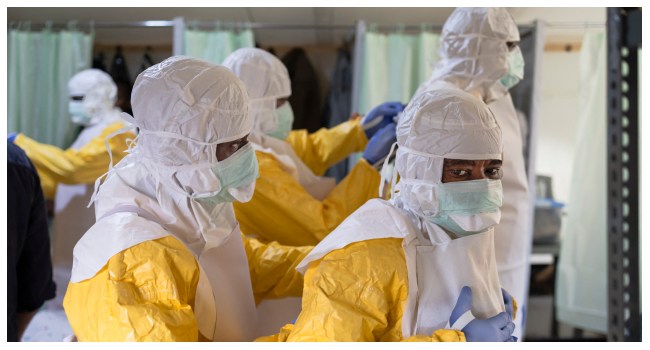
In many countries, tackling the COVID-19 pandemic has taken cues from other disease approaches, such as lessons from protecting communities against Ebola. But in Nigeria’s Niger Delta, health workers have found inspiration from guarding against the coronavirus.

They have exploited the rigorous surveillance standard set by the COVID-19 response to keep from losing sight of other priority diseases. Mostly what they have learned is how not to divide their attention.

The unifying surveillance strategy they have enveloped is quickly producing significant and – possibly oddly – uplifting results.

“I recorded my first acute flaccid paralysis case since last year while I was following up on the contact of a confirmed case of COVID-19,” says Sarah Oladimeji, a Diseases and Surveillance Notification Officer in charge of finding cases of preventable and infectious diseases in Oredo Local Government Area of Nigeria’s Edo State.

When COVID-19 crept into the southern Delta region in April, health workers had to learn to overcome their worries and hunkered down to the needed work. The odds seemed stacked against the six states that make up the South-South zone: Akwa Ibom, Bayelsa, Cross River, Delta, Edo and Rivers. COVID-19 cases increased daily while community attitudes towards the virus grew lax. Health workers scrambled to manage the time and resources available to respond to both COVID-19 and other endemic-prone diseases.

One solution government teams and health workers hit upon: bring the aggressive COVID-19 surveillance into the systems used to monitor priority diseases.

Across the Niger Delta, the World Health Organization (WHO) and its partners retrained 3874 surveillance officers who had been mobilized to detect COVID-19 cases in hospitals and communities to also look for acute flaccid paralysis (AFP), polio, meningitis, cholera, neonatal tetanus, yellow fever, measles and more.

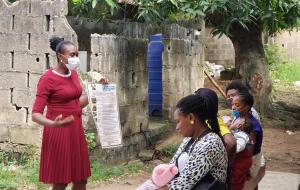
After the Government decentralized the COVID-19 response in April, some states began also training religious and community leaders – who are often important decision-makers, influencers and informants – to help find and report suspected COVID-19 and other priority diseases in their communities.

Now, four months into the region’s COVID-19 outbreak, health workers are seeing spectacular efficiency. Detected cases of AFP, for example, increased substantially (doubling and even tripling in one state) between the end of March and end of July as the harmonized surveillance ramped up.

Protecting immunization gains

Keeping eyes on both COVID-19 and other diseases, most of which are vaccine-preventable, is an important but challenging task in the Niger Delta where immunization coverage had been low for years. Located along the Niger River and the Gulf of Guinea, the Niger Delta, or South-South zone, comprises a system of coastal communities that rely on farming and fishing. Waterway systems here are often inadequate and moving around is difficult. In the past, residents in the deepest riverine communities, far from a mainland, had little luck accessing a health centre. Many were discouraged by the distance from taking their children for vaccinations, which led the region to its poor immunization coverage and thus heightened risk of disease outbreaks.

Since 2016, community engagement, better access to health care and increased surveillance have led to rising numbers of vaccinated children. Health workers now attend patients in on-sea treatment centres or travel into the deep-river communities by canoe to provide services.

Navigating the creek communities may be hard but health workers accept that medical care has no boundaries, says Dr Edmund Ogbe, WHO Coordinator for Bayelsa State. Public health commitment and resourcefulness seem to be ingrained characteristics of this region.

Increased detection of measles and yellow fever

To protect their gains in immunization coverage and keep from neglecting other worrisome diseases in these times of COVID-19, the integrated surveillance is making a difference. In March, Bayelsa State recorded nine cases of AFP. But 16 new cases were investigated over the next four months – a 180% increase.

With COVID-19 case findings now meshed with the systems used to detect and report priority diseases, more cases of measles and yellow fever are emerging, too. The reported numbers of both diseases increased considerably between the end of March and the end of July. In a couple states, case detection nearly doubled.

The next step will be to accelerate case search throughout the region. State governments in the South-South zone, supported by WHO, continue to train more surveillance officers and community informants on combining COVID-19 and preventable-disease surveillance. Involving communities by educating them and appointing them as public health informants will help ensure that the combined surveillance continues to be a success, says Dr Olubowale Ekundare Famiyesin, WHO Zonal Coordinator of the Niger Delta.

Early detection of any disease is the goal for health workers in the Delta. “All resources for surveillance at our disposal will be deployed to improve early infectious disease detection and reporting, including COVID-19,” Dr Famiyesin promises.

Comments

Health

Oyo confirms Lassa fever death in Ibadan, activates emergency response, traces contacts

Published

on

The Oyo State Government has confirmed a Lassa fever case at the University College Hospital, Ibadan, where a 44-year-old woman died, prompting the activation of emergency response measures and immediate contact tracing to contain the disease.

The state Commissioner for Health, Oluwaserimi Ajetunmobi, disclosed this in a statement on Wednesday, saying, “The patient died on April 11, 2026, while receiving treatment, while laboratory confirmation of Lassa fever was received on April 13.”

She added that the Ministry of Health had swiftly activated its emergency response system, including the establishment of an Incident Management System to coordinate response activities across the state.

According to her, “All identified contacts of the deceased are being closely monitored, while necessary measures have been taken to ensure a safe and dignified burial in line with public health protocols.”

Ajetunmobi urged residents to seek immediate medical attention if they experience symptoms such as persistent fever, weakness, sore throat, vomiting, diarrhoea, unexplained bleeding, chest pain or difficulty breathing.

She stressed, “Early presentation at health facilities significantly improves the chances of survival.”

The commissioner explained that Lassa fever is a viral haemorrhagic disease transmitted primarily through contact with food or household items contaminated by urine or faeces of infected rodents.

“It can also spread from person to person through contact with bodily fluids, especially in healthcare settings where infection prevention measures are not strictly observed,” she said.

She advised residents to maintain strict environmental hygiene, including proper waste disposal, safe storage of food in rodent-proof containers and avoiding drying food items on bare ground or roadsides.

Ajetunmobi also urged households to seal holes and entry points to prevent rodent access, while emphasising regular handwashing and good personal hygiene.

Residents, she said, should report suspected cases through designated emergency lines, while health workers must strictly adhere to infection prevention and control protocols.

Reaffirming the government’s commitment, the commissioner said surveillance had been intensified across the state, with all health facilities placed on alert.

“There is no cause for panic. The situation is under control, and Lassa fever is both preventable and treatable when detected early,” she assured.

Continue Reading

Health

Rep Oseni Backs Ajimobi Widow’s Cancer Fight, Vows More Health Projects

Published

on

The lawmaker representing Ibarapa East/Ido Federal Constituency in the House of Representatives, Aderemi Oseni, has pledged to support the breast cancer awareness programme of the ABC Foundation founded by former Oyo First Lady, Dr. Florence Ajimobi.

Oseni, who is Chairman of the House Committee on Federal Roads Maintenance Agency (FERMA), made the commitment on Thursday in Ibadan at the flag-off of Pink Month 2025, an initiative of the foundation.

Contained in a statement by his media aide, Idowu Ayodele, the lawmaker described the campaign as a “lifesaving mission” given the rising burden of breast cancer in Nigeria, with over 28,000 new cases and thousands of deaths reported annually.

The APC chieftain said the free screening of 1,000 women planned by the foundation was timely, stressing that early detection remained the strongest weapon in the fight against cancer.

Hon. Aderemi Oseni exchanging pleasantries with former Oyo State First Lady, Dr. (Mrs.) Florence Ajimobi, at the event.

“Health is life. Only this June, I moved a motion at the National Assembly which led to the Federal Government subsidising dialysis treatment nationwide. Today, dialysis is either free or heavily discounted in federal health facilities,” Oseni said.

He listed his personal interventions to include funding hospital bills of indigent patients, construction of hospitals in Ido and Ibarapa East, establishment of primary health centres, and organisation of medical outreaches. He also disclosed plans to deploy mobile clinics to rural areas.

Commending Mrs. Ajimobi for sustaining her late husband’s legacy through humanitarian service, Oseni assured of partnership with the foundation, saying women’s wellbeing and empowerment remained central to his vision for Oyo State.

In her remarks, Mrs. Ajimobi said the foundation had offered medical care to over 85,000 patients and conducted more than 100,000 investigations since its inception. She added that the campaign was not just corporate social responsibility but “a moral duty and sacred trust.”

The former first lady, who lost her daughter Abisola to breast cancer earlier this year, said the experience had strengthened her resolve to save other families from such tragedy. She appealed to women to take advantage of the free screening and called on partners and development agencies to support the fight.

Continue Reading

Health

Ayebae, Afolabi to headline D’Bio Wellness Summit

Published

on


Chairman of Fidson Healthcare Plc, Dr. Fidelis Akhagboso Ayebae, and Chief Executive Officer of Hazon Holdings, Dr. Victor ’Gbenga Afolabi, are set to lead discussions at the second edition of the D’Bio Wellness & Selfcare Summit.

The event is scheduled to hold on September 24 and 25 at the Lagos Chamber of Commerce and Industry (LCCI) Conference and Exhibition Centre, Alausa, Ikeja.

This year’s summit has the theme: “Self-Care as a Driver of Optimal Health and Wellness.”

Ayebae will serve as chairman of the event, while Afolabi, who is also the co-founder of Wellness HMO, will deliver the keynote address.

Ayebae, founder of Fidson Healthcare, is regarded as one of Nigeria’s leading pharmaceutical entrepreneurs. He is a fellow of the Institute of Directors Nigeria and the Institute of Corporate Affairs Management, and has held significant roles in the Manufacturers Association of Nigeria.

Afolabi has more than 20 years’ experience spanning healthcare, finance, technology and marketing. He is also the founder of the Eko Innovation Centre, a Lagos-based technology hub that supports start-ups and young entrepreneurs.

Convener of the summit, Dr. Monica Hemben Eimunjeze, said the event would focus on practical steps to improve health outcomes through self-care.

She said, “We are excited to welcome Dr. Ayebae and Dr. Afolabi as pivotal figures in our quest to enhance health literacy and empower individuals to prioritise self-care. This summit is not just about discussions; it is about actionable insights that can inspire and transform lives.”

The organisers said the two-day summit is open to the public and will feature panel sessions with health and wellness experts, attracting healthcare professionals, advocates and business leaders.

Continue Reading

Advertisement

Entertainment

Advertisement

MegaIcon Magazine Facebook Page

Advertisement

MEGAICON TV

Advertisement

Trending