Connect with us

Opinion

An Open Letter to Northern Leaders: Arewa Is Bleeding. Who Will Answer the Call? 

Published

on

I write this letter with a heavy heart to the sons and daughters of Arewa, particularly those entrusted with leadership and influence, concerning the painful reality confronting our region today. Once united in purpose and driven by a shared vision, Arewa now appears to be living in the shadow of its glorious past.

Our forefathers built this great region with one voice, setting aside differences of ethnicity and religion. They understood that unity was our greatest strength and that our diversity was not a weakness but a blessing. Their legacy was one of peace, mutual respect, visionary leadership, and collective progress.

Today, it is heartbreaking to witness how far we have drifted from those ideals. This letter is a sincere call for reflection, reconciliation, and a renewed commitment to rebuilding the unity, security, and prosperity that once defined our beloved Arewa.

Arewa Under Siege

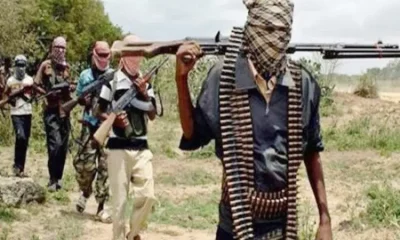
Northern Nigeria has become widely known as a hotspot for multiple forms of insecurity. From the Boko Haram insurgency to widespread kidnapping, armed banditry, and violent attacks, fear has become part of everyday life. People no longer feel safe in their homes, workplaces, on their farms, or while travelling on the highways. Every journey is undertaken with uncertainty, with no guarantee of arriving safely.
Even more troubling is the perception that these security challenges have become normalised. Reports of abductions, killings, and attacks have become so frequent that they often receive far less attention than they deserve. This perceived indifference from those in positions of authority has contributed to a growing public belief that criminal groups now operate with confidence and relative impunity.

Consequently, many residents feel abandoned, while public trust in the government’s ability to protect lives and property continues to erode.

Addressing this crisis requires a coordinated and sustained response through stronger security operations, improved intelligence gathering, greater support for affected communities, and genuine accountability. Without decisive action, the cycle of violence and fear will continue to undermine the region’s stability, economic development, and the well-being of its people.

Beyond Insecurity: A Crisis of Leadership

The North’s challenges are not accidental. Poverty, insecurity, and underdevelopment are the cumulative consequences of long-standing structural failures, weak governance, and policy choices that have compounded over decades.

Responsibility is shared across different segments of society—including the political elite, the educated class, and the business community—many of whom have possessed both the influence and the opportunity to intervene more decisively than they have.

Rather than being the result of a single coordinated agenda, what is evident is a persistent pattern of neglect, weak accountability, and recurring governance failures that have allowed social and economic conditions to deteriorate. These failures have contributed to rising unemployment, declining educational outcomes, inadequate healthcare, and the expansion of insecurity across much of the region.

Breaking this cycle requires more than assigning blame. It demands institutional reform, accountable leadership, strategic investment in human capital, and a renewed sense of public responsibility.

Where Are the Northern Elite?

This brings us to the most difficult question: Where are the Northern elite? Where are the governors, ministers, lawmakers, business leaders, scholars, and other influential voices? Many command enormous influence, considerable private wealth, and extensive international networks, yet too often appear unable—or unwilling—to meaningfully confront the conditions that continue to leave large parts of the region insecure, impoverished, and politically weakened.

Why does this gap persist?

Part of the answer lies in proximity to power. In political environments shaped by patronage, speaking boldly may threaten access, while silence preserves influence. Over time, self-preservation begins to resemble strategy.

Unfortunately, the cost is borne not by those in positions of privilege but by ordinary communities far removed from the rooms where decisions are made.

Reviving the North’s Industrial Legacy
Northern Nigeria was once the industrial powerhouse of the country. Cities such as Kano and Kaduna were thriving centres of manufacturing, commerce, and employment. Today, much of that industrial strength has faded.

This is, therefore, a respectful appeal to two of Nigeria’s most accomplished industrialists—Aliko Dangote and Abdul Samad Rabiu. Many people continue to ask why there is limited visible large-scale industrial reinvestment in Kano, your home state, and across Northern Nigeria.

As a Kano indigene, and to the best of my knowledge, neither Aliko Dangote nor Abdul Samad Rabiu currently operates major manufacturing facilities actively producing in Kano. Several facilities associated with their businesses are widely reported to have become inactive or to function primarily as warehouses rather than active industrial plants. For example, along Tafawa Balewa Road, two BUA facilities that previously operated flour and vegetable oil mills are reported to have ceased production. Likewise, several Dangote industrial sites stretching from Mai Malari Road to the Sharada Industrial Area are also widely reported to be inactive or operating far below capacity.

Kano and Kaduna, once renowned for their vibrant manufacturing sectors, have experienced decades of industrial decline, resulting in widespread unemployment and underutilised infrastructure. At the same time, a significant share of new private-sector industrial investment appears to have been concentrated in other parts of the country, particularly the South-West. This naturally raises important questions about balanced national development.
Philanthropy remains valuable and deeply appreciated. Scholarships, donations, and humanitarian support undoubtedly improve lives. However, charity cannot replace sustainable industrial development.

What the North urgently needs is long-term investment that revives manufacturing, creates employment, strengthens local supply chains, develops skills, and rebuilds industrial ecosystems across Kano, Kaduna, and neighbouring states. Strong factories build strong communities, while sustainable industries create lasting prosperity. The expectation, therefore, is not charity but a renewed commitment to the economic transformation of the region where many of Nigeria’s greatest industrial success stories first began.

The Responsibility of Business Leaders

The Northern business elite have watched insecurity, poverty, and displacement deepen while economic activity has increasingly concentrated elsewhere.

Insurgency, banditry, and weakened rural governance have disrupted agriculture, trade routes, and local markets. Investment naturally gravitates towards safer and more predictable environments. Yet public advocacy from many influential business leaders has often remained muted, constrained by commercial interests, political relationships, and regulatory considerations.

The region risks becoming divided into two realities: one integrated into national wealth and opportunity, and the other left to bear the consequences of persistent insecurity, economic stagnation, and neglect.

Business leadership extends beyond generating profits. It also entails helping to create an environment where enterprise can flourish, jobs can be created, and communities can prosper. Sustainable economic growth depends not only on private investment but also on the willingness of influential stakeholders to advocate policies and initiatives that promote stability, security, and inclusive development.

The North’s business community has historically played a significant role in shaping the region’s economic fortunes. That tradition of leadership remains essential today. While governments bear primary responsibility for governance and security, the private sector also possesses the capacity to influence development through strategic investments, partnerships, innovation, and constructive engagement with public institutions.

Rebuilding confidence in Northern Nigeria requires collaboration among government, businesses, civil society, and local communities. A more secure and prosperous region ultimately benefits everyone, creating new opportunities for investment, employment, and long-term economic growth.

A Message to Political Leaders

To the political leadership of Northern Nigeria: the contradiction has become increasingly difficult to ignore. The region remains one of the country’s most significant in terms of population and political influence, yet it continues to lag behind on key development indicators such as education, healthcare, infrastructure, employment, and security.

When communities are attacked, farmers are displaced, and schools are forced to close, silence from those entrusted with leadership is seldom interpreted as restraint. More often, it is perceived as detachment. Leadership is measured not only by electoral success or political influence but also by the willingness to confront difficult realities with courage, empathy, and decisive action.

The expectations of citizens go beyond promises. They seek visible commitment, practical solutions, and sustained engagement with the challenges affecting their daily lives. Rebuilding public confidence requires leadership that is accountable, responsive, and focused on the long-term development of the region.

A Message to the Educated and Professional Class

To our academics, professionals, and intellectuals: the evidence is neither hidden nor difficult to find. Reports, research, and lived experiences consistently reveal widening gaps in human development, education, healthcare, and security.

Yet, too often, expertise remains confined within institutions and professional circles that discourage open engagement with entrenched power. Knowledge should not merely describe problems; it should help solve them. Research should inform policy, enrich public debate, and contribute meaningfully to sustainable solutions.

Every society depends on courageous thinkers who are willing to engage constructively, challenge complacency, and place the public interest above personal convenience. The North possesses no shortage of intellectual talent. What is needed is a stronger connection between knowledge and action.

A Message to Cultural Influencers

To our musicians, artists, writers, actors, and other public figures: throughout history, art has served as a powerful instrument of truth, reflection, and social transformation. Cultural voices have inspired movements, preserved history, and given hope to communities during difficult times.

Yet, when economic survival becomes closely tied to political or commercial interests, critical voices often become subdued. Society benefits when its cultural figures speak with honesty, empathy, and a sense of responsibility. Their influence extends beyond entertainment; it helps shape public values, inspire civic engagement, and amplify the concerns of ordinary people.

A Shared Responsibility

Ultimately, this is not solely a Northern Nigerian problem. It reflects a broader question confronting societies everywhere: what happens when elite interests become disconnected from the well-being of ordinary people?

When access becomes more valuable than accountability, and proximity to power outweighs responsibility to the public, silence is rarely accidental—it becomes institutionalised.

The result is a widening emotional and political distance between leadership and the people. Unless that distance is narrowed through meaningful investment, principled advocacy, and courageous leadership, the same questions will continue to resonate:

Who speaks? Who benefits? Who bears the cost?

History will judge every generation by how it responds to the challenges of its time. Northern Nigeria possesses enormous human potential, entrepreneurial talent, agricultural resources, and a rich cultural heritage.

What it requires now is leadership marked by vision, courage, integrity, and an unwavering commitment to the common good.

This letter is not intended to condemn but to encourage honest reflection and meaningful action. The future of Arewa depends not only on government but also on every leader, businessperson, scholar, professional, artist, and citizen willing to place the region’s long-term prosperity above personal or political interests.

May we find the wisdom to rebuild what has been weakened, the courage to confront uncomfortable truths, and the determination to restore Northern Nigeria to its rightful place as a region of peace, opportunity, and shared prosperity.


Abba Dukawa writes from Kano and can be reached at abbahydukawa@gmail.com.

Comments

Opinion

2027: Why Oyo APC Should Close Ranks Behind Sarafadeen Alli | By Adeniyi Olowofela

Published

on

Since the emergence of Senator Sarafadeen Alli as the governorship candidate of the All Progressives Congress (APC) for the 2027 election in Oyo State, I have listened to and read numerous reactions from party members and stakeholders. While some of his co-contestants have expressed disappointment, such feelings are understandable in every keenly contested democratic process.

Interestingly, many people have attempted to draw Senator Teslim Folarin into the controversy surrounding the party’s choice. However, he has remained silent. In my view, that silence is deliberate. I believe Senator Folarin understands the direction taken by the party’s national leadership regarding the choice of candidate.

Anyone who believes Senator Folarin was unaware of Senator Sarafadeen Alli’s governorship ambition does not fully appreciate his political experience. Senator Folarin is a strategic politician. In the 2023 governorship election, he pursued victory with determination and commitment. Personally, I had hoped he would emerge victorious, and I remain convinced that he gave his all in that contest.

Former Minister of Power, Chief Bayo Adelabu, also contested the 2023 governorship election on the platform of the Accord Party. Although I disagreed with that political decision, democracy guarantees every citizen the freedom of association and political choice.

Following the election, he was appointed into the Federal Executive Council, a development many interpreted differently based on their political perspectives.

Today, Chief Adelabu commands a substantial political following built over several election cycles. His support base remains significant, and if APC is to present a formidable front in 2027, Senator Sarafadeen Alli will undoubtedly benefit from the goodwill and backing of Adelabu and his loyalists.

Similarly, former Minister of Communications, Barrister Adebayo Shittu, has consistently demonstrated interest in Oyo State’s governorship over the years, even though he did not purchase the APC nomination form this time. His political experience and network remain valuable assets that should not be ignored.

My sympathy also goes to those aspirants who invested as much as ₦50 million each to purchase the APC governorship nomination form. That is no small sacrifice. Nonetheless, politics demands sacrifice in the collective interest. The pendulum could easily have swung in favour of any of them. Had that happened, the rest of us would equally have appealed to others to rally behind the eventual flag bearer.

I recall an incident during the 2022/2023 party activities when an official from Abuja, sent to supervise APC affairs in Oyo State, passionately appealed to stakeholders to embrace consensus. His message remains instructive. He warned that continued division within the party would only prolong its stay outside power and ultimately hurt everyone.

That warning remains relevant today.
For seven years, the APC has remained outside government in Oyo State. Can the party afford another four years in opposition? I do not think so.

This is why the task before us goes beyond the personal ambition of Senator Sarafadeen Alli. It is a collective struggle for every APC member, especially the foot soldiers who have remained loyal through difficult times. The Federal Government alone cannot provide opportunities for everyone. Regaining power in Oyo State is essential if the party hopes to broaden opportunities for its members at both the state and federal levels.

The challenge before us, therefore, is to build a larger political platform that accommodates everyone.
Senator Sarafadeen Alli is no political novice. Over the years, he has built relationships across virtually every ward in Oyo State. His political structure and grassroots appeal are undeniable. If party members unite behind him, APC stands a strong chance of returning to Government House.

Realistically, the 2027 governorship contest in Oyo State is shaping up to feature three major political forces. First is Senator Sarafadeen Alli of the APC, representing arguably the state’s most established political platform. Second is Hon. Bimbo Adekanbi, who many believe enjoys the backing of Governor Seyi Makinde and is expected to fly the flag of the APM. Third is Alhaji Hazmat Oriyomi of the Accord Party, whose growing popularity among many grassroots supporters cannot be dismissed.

The eventual winner is likely to emerge from one of these three political blocs. That reality alone should remind APC members that victory is far from guaranteed.

The surest path to success is unity.

This election should not be seen as Senator Sarafadeen Alli’s personal battle. It is the collective responsibility of every APC member who desires the party’s return to power in Oyo State.

The time has come to bury personal grievances, close ranks and work together. Only through unity can APC reclaim Oyo State in 2027.


Prof. Adeniyi Olowofela, former Chairman of the defunct Alliance for Democracy (AD) in Oyo State, former Chairman of Ido Local Government, former Commissioner for Education, Science and Technology in Oyo State, and former Federal Commissioner representing Oyo State at the Federal Character Commission (FCC), writes from Abuja.

Continue Reading

Opinion

The Silent Thief in Nigeria’s Petrol Stations | By Solomon Oroge

Published

on

File photo of Dr. Solomon Oroge

• How systemic fraud is draining billions, weakening businesses and threatening the future of the downstream petroleum sector

The Nigerian petroleum retail industry remains one of the most important drivers of economic activity in the country. Every day, millions of litres of petrol, diesel and other petroleum products are sold through thousands of filling stations spread across cities, towns and rural communities.

To many Nigerians, a filling station is simply a place where vehicles are refuelled. To investors and operators, however, it is a complex business environment involving inventory management, transportation logistics, cash handling, procurement processes, technology systems and human resources. When properly managed, petrol retailing can be highly profitable. When poorly controlled, it can become a breeding ground for one of the most dangerous threats to business sustainability – systemic fraud.

Unlike isolated incidents of theft or misconduct, systemic fraud is far more sophisticated and destructive. It is not the work of a single dishonest employee acting alone. Rather, it is a pattern of fraudulent activities that gradually becomes embedded within an organisation’s operational processes and culture. Over time, such practices become normalised, tolerated and, in some cases, deliberately protected by those who benefit from them.

This is what makes systemic fraud particularly dangerous. It often operates quietly beneath the surface while management remains focused on sales growth, market expansion and operational targets. By the time the full extent of the problem becomes apparent, substantial damage may already have been done.

Across Nigeria’s downstream petroleum sector, systemic fraud continues to drain significant resources from businesses every year. Revenue leakages occur through fuel diversion, stock manipulation, sales suppression, procurement abuses, payroll fraud, inventory theft and cash skimming. In many organisations, these activities take place daily, gradually eroding profitability and shareholder value.

One of the most common schemes is fuel diversion during transportation. Products that leave depots in approved quantities may arrive at their destinations with unexplained shortages. Sometimes these losses are disguised as operational variances or transportation-related discrepancies. In reality, they may be the result of organised siphoning carried out during transit.

Another common practice involves pump calibration manipulation. In such situations, customers unknowingly receive less fuel than the quantity displayed on the dispensing pump. While the discrepancy may appear insignificant on a single transaction, the cumulative financial impact can be enormous when repeated hundreds of times daily across multiple stations.

Tank dip manipulation represents another major challenge. Deliberate alteration of stock measurements allows losses to be concealed, making it difficult for management to accurately determine actual inventory positions. Similarly, sales suppression occurs when transactions are intentionally omitted from official records, creating opportunities for revenue diversion and cash theft.

Procurement fraud, inflated maintenance costs, ghost workers on payrolls, fictitious vendors and collusion between employees and suppliers have also become recurring concerns within many petroleum retail operations.
The unfortunate reality is that systemic fraud thrives where governance is weak, accountability is limited and internal controls are either poorly designed or inadequately enforced. High daily cash transactions, large fuel inventories, multiple operating locations and limited real-time supervision further increase exposure to fraud risks.

The warning signs are often visible long before losses become catastrophic.

Persistent cash shortages, unexplained stock variances, delayed banking, repeated customer complaints, inflated procurement costs and declining profitability despite rising sales should immediately attract management attention. Likewise, employees who resist transfers, refuse annual leave, display unusual secrecy or maintain lifestyles far above their legitimate income levels may warrant closer scrutiny.

Many organisations make the mistake of assessing fraud only from the perspective of direct financial losses.

However, the true cost extends much further.

Systemic fraud distorts management information and weakens decision-making. It undermines operational efficiency, damages corporate reputation, attracts regulatory sanctions and erodes customer confidence. Investors become wary, employees lose morale and businesses struggle to achieve sustainable growth.

Perhaps most damaging is the fact that fraud weakens trust—the single most important asset any organisation possesses. Once trust is compromised, rebuilding it becomes both difficult and expensive.

Addressing this challenge requires a shift from fraud detection to fraud prevention.

The most successful organisations understand that preventing fraud is significantly less costly than investigating fraud after it has occurred. Prevention begins with strong corporate governance, ethical leadership and a clear commitment to accountability at every level of the organisation.

Technology has also become an indispensable ally in the fight against fraud.

Automated tank monitoring systems, CCTV surveillance, GPS tanker tracking, integrated enterprise resource planning systems and data analytics tools provide organisations with greater visibility over operational activities and help identify unusual patterns before they escalate into major losses.

Yet technology alone cannot solve the problem.

Organisations must also invest in people, processes and culture. Employees should receive regular ethics training.

Whistleblower mechanisms must be strengthened and protected.

Responsibilities should be properly segregated and surprise verification exercises should become part of routine operational oversight.

In this regard, Internal Audit has a strategic role to play.

Modern Internal Audit functions must evolve beyond traditional compliance checks and become proactive partners in fraud risk management. Through fraud risk assessments, data analytics, control testing, fraud mapping and unannounced verification exercises, Internal Audit can provide independent assurance that critical controls are operating effectively and that emerging fraud risks are identified before they become crises.

To strengthen organisational resilience against systemic fraud, the Sedabuk Fraud Risk Management Model (SFRMM) was developed as a practical framework for fraud prevention, detection, investigation and sustainable risk management within petroleum retail operations.

The model is built around seven strategic pillars: Surveillance, Fraud Risk Assessment, Robust Internal Controls, Monitoring and Data Analytics, Management Accountability, Detection and Investigation, and Ethical Culture and Employee Engagement. Together, these pillars create a continuous cycle of identifying risks, implementing controls, monitoring activities, detecting anomalies, conducting investigations and driving continuous improvement.

The message for operators in Nigeria’s downstream petroleum sector is simple but urgent: the greatest threat to profitability may not be competition, inflation or market volatility. It may well be the silent leakage of resources occurring within their own operations.

As the industry continues to evolve under ongoing reforms and changing regulatory expectations, organisations must recognise that sustainable profitability is achieved not merely by increasing sales but by protecting every litre of fuel, every naira of revenue, every operational process and every stakeholder’s trust.

Companies that embrace ethical leadership, strong governance, proactive Internal Audit, technology-enabled monitoring and a zero-tolerance culture towards fraud will not only reduce losses but also strengthen stakeholder confidence, improve operational efficiency and position themselves for long-term success.


Dr. Solomon Oroge, PhD, is an accomplished professional in Internal Audit, Risk Management, Corporate Governance, Compliance and Fraud Risk Management with extensive experience in Nigeria’s downstream petroleum industry.

He is the developer of the Sedabuk Fraud Risk Management Model (SFRMM), a proprietary framework designed to help petroleum retail organisations proactively identify, prevent, detect and manage systemic fraud risks.

Oroge can be reached via the following contact details: saoprofessional@gmail.com or +234 806 512 6192.

Continue Reading

Opinion

State Police, Local Government Autonomy: Answers to Nigeria’s Lingering Questions | By Titilope Gbadamosi

Published

on

File photo of Dr. Titilope Gbadamosi, the Special Assistant on Youth Initiatives (Monitoring and Delivery) to President Bola Ahmed Tinubu.

Almost every democratically elected administration in Nigeria has had to grapple with pockets of insecurity in one form or another. Nigerians have watched uprisings metamorphose into banditry and terrorism, as though every administration had its own uniquely tailored brand of insecurity, defined by the modus operandi of these vicious elements.

The faces change, the methods change, but the burden on whoever occupies the highest office in the land has remained heavy and constant.

Just two administrations ago, during President Goodluck Jonathan’s tenure, we witnessed the horror of the abduction of the Chibok girls and explosives going off in public spaces in Abuja, the nation’s capital. Every well meaning Nigerian was worried, and nowhere felt truly safe. The President’s seat was not the most desirable at the time, and it was clearly a difficult job.

President Muhammadu Buhari’s administration had its own share, mostly in the form of clashes between farmers and herders, driven by grazing routes lost to farming, droughts pushing herders toward greener pastures, and old accommodations between communities slowly breaking down.

I recall quite vividly, while serving as Special Assistant to the former Governor of Oyo State, the late Senator Abiola Ajimobi, joining the head of our team in several peace talks with farmers, traditional rulers, and the Hausa and Fulani community in the state. One lesson from those rooms has stayed with me ever since. The people who understood the grievances, the terrain, and the actors were all local, yet the command of security sat far away in Abuja. That gap is the question every administration has struggled to answer.

Today, President Bola Ahmed Tinubu is in charge, and Nigerians who are students of history watched to see what shape insecurity would take and, more importantly, what this President would do differently. In recent development, the country received an answer that previous decades only debated.

On June 11, following the President’s formal request to the National Assembly to restructure our security architecture, the House of Representatives passed the constitutional amendment to establish state police, with 289 members voting in support and barely a voice against, while the Senate works to complete passage before year end. Today June 12th,2026, in his Democracy Day address, the President spoke plainly: the insecurity we face is partly the product of collapsed grassroots governance, and his administration remains committed to financial autonomy for our 774 local government councils. There it is, a two pronged solution: state police and true local government autonomy.

The first prong closes the gap I saw in those Oyo State peace talks. The amendment to Section 214 of the Constitution creates a dual policing structure under which each state may establish its own force. Security decisions will now be taken by those who know the terrain, the actors, and the grievances at first hand.

To his credit, the President did not merely champion the idea; he asked the National Assembly to institute controls to prevent abuses, the mark of a leader interested in a reform that endures rather than one that backfires. All of this rides on the largest security investment in our history, a 5.41 trillion naira commitment in the 2026 budget and over 50,000 new police officers approved for recruitment.

The second prong puts resources where the new responsibility will live. Since the Supreme Court ruled in July 2024 that federation allocations belonging to local governments must reach them directly, monthly allocations to the 774 councils have grown from roughly 387 billion naira in March 2025 to nearly 530 billion naira by September 2025. The money has never been the problem; control of it was. By pressing autonomy to its conclusion, this administration is returning both funds and accountability to the communities where insecurity actually begins, so that the grassroots governance whose collapse the President identified can finally be rebuilt.

So who wins in all of these? Nigerians win, because security decisions and development funds will finally live where the people live. Governors win the powers they have long demanded, and with them the responsibility they can no longer pass to Abuja. And the country wins a President willing to attempt what others only discussed. The President reminded us on Democracy Day that Nigerians bend and bleed but do not break. With these two reforms, we may finally stop having to prove it so often.


Dr. Titilope Gbadamosi  is the Special Assistant on Youth Initiatives (Monitoring and Delivery) to President Bola Ahmed Tinubu.

Continue Reading

Advertisement

Entertainment

Advertisement

MegaIcon Magazine Facebook Page

Advertisement

MEGAICON TV

Advertisement

Trending