News
Real reason why SERAP sued Code of Conduct Bureau
Published
7 years agoon
By
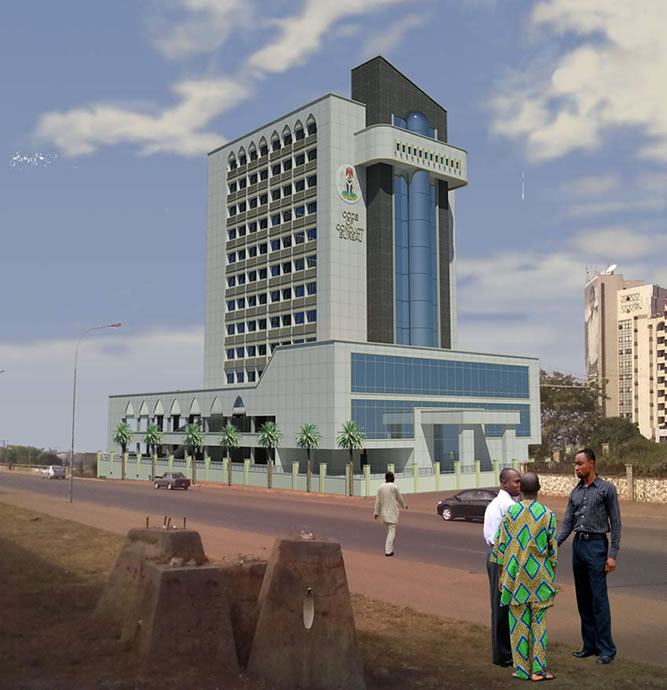
adminThe Socio-Economic Rights and Accountability Project (SERAP) has filed a lawsuit in the Federal High Court, Lagos against the Code of Conduct Bureau (CCB).
In a statement issued on Sunday, SERAP said it was suing the CCB over its claim that it could not disclose details of asset declarations submitted to it by successive presidents and state governors since 1999 because doing so “would offend the right to privacy of presidents and state governors.”
The human rights group, in the statement indicated that the CCB had last week refused a Freedom of Information request by SERAP, stating that: “Asset declaration form is private information.”
However, in the suit number FHC/L/CS/1019/2019 filed last Friday, SERAP argued: “Asset declarations of presidents and state governors submitted to the CCB are public documents. Public interest in disclosure of the details of asset declarations sought by SERAP clearly outweighs any claim of protection of the privacy of presidents and state governors, as they are public officers entrusted with the duty to manage public funds, among other public functions.”
According to the group, “A necessary implication of the rule of law is that a public institution like the CCB can only act in accordance with the law, as to do otherwise may enthrone arbitrariness. The CCB does not have reasonable grounds on which to deny SERAP’s FOI request, as it is in the interest of justice, the Nigerian public, transparency and accountability to publish details of asset declarations by presidents and state governors since the return of democracy in 1999.”
SERAP also argued that: “Disclosing details of asset declarations of public officers such as presidents and state governors would improve public trust in the ability of the CCB to effectively discharge its mandate. This would, in turn, put pressure on public officers like presidents and state governors to make voluntary public declaration of their assets.”
The suit filed by SERAP’s counsel, Adelanke Aremo, read in part: “The right to receive information without any interference or distortion should be based on the principle of maximum disclosure, and a presumption that all information is accessible subject only to a narrow system of exceptions. It is a settled principle of law that details such as asset declarations of presidents and governors should be disclosed if there is an overriding public interest in having access to such information, which is clearly so in this matter.
“Democracy cannot flourish if governments operate in secrecy, no matter how much open discussion and debate is allowed. The very nature and quality of public discussion would be significantly impoverished without the nourishment of information from public authorities such as the CCB, and to guarantee freedom of expression without including the right to know would be a formal exercise.”
SERAP is, therefore, seeking the following reliefs:
An order granting leave to the Applicant to apply for judicial review and to seek an order of mandamus directing and compelling the Respondent to compile and make available to the Applicant information on specific details of asset declarations submitted to the Code of Conduct Bureau by successive Presidents, Vice Presidents, Senate Presidents, Speakers of House of Representatives, State Governors and Deputy Governors from 1999 to 2019 and to publish widely including on a dedicated website, any such information.
An Order granting leave to the Applicant to apply for judicial review and to seek an order of mandamus directing and compelling the Respondent to compile and make available to the Applicant information on the number of asset declarations so far verified by the Code of Conduct Bureau and the number of those declarations found to be false and deemed to be in breach of the Code of Conduct for Public Officers by the Bureau and to publish widely including on a dedicated website, any such information.
An order granting leave to the Applicant to apply for Judicial Review and to seek an order of mandamus directing and compelling the Respondent to immediately take cases of false asset declarations to the Code of Conduct Tribunal for effective prosecution of suspects, and include banning the politicians involved from holding public offices for at least a period of 10 years and seeking refund of stolen public funds as part of the reliefs to be sought before the Tribunal and for further order or orders as this Court may deem fit to make in the circumstances.
No date has been fixed for the hearing of the suit.
Source: Channels TV
Related
News
Don petitions GTBank over alleged ₦9.98m unauthorised transfers
Published
2 days agoon
March 9, 2026By
adminA university lecturer in Oyo State has petitioned Guaranty Trust Bank (GTBank) over the alleged unauthorised withdrawal of ₦9.98 million from his account, demanding the immediate reversal of the funds.
The professor, through his solicitors, submitted a petition to the branch manager of the bank in Oyo, alleging that the transactions were carried out without his knowledge or approval.
According to the petition dated February 21, 2026, two separate transfers were made from the lecturer’s account within minutes, resulting in the withdrawal of a total sum of ₦9,980,000.
Details of the transactions showed that the first transfer of ₦4,990,000 was carried out at 10:19 a.m. to an account belonging to Isah Ahmed Ahmed on the Paga financial platform.
Another transfer of ₦4,990,000 was allegedly made at 10:21 a.m. to Nasir Nasir Sanusi, also linked to an account on the same platform.
The lecturer, however, denied authorising the transactions, insisting that he neither initiated the transfers nor disclosed his banking security credentials to any individual.
His solicitors maintained that at no time did their client compromise his Personal Identification Number, token, or other security information associated with the account.
They argued that the bank owed their client a duty of care to safeguard his funds and ensure that unauthorised access to his account was prevented.
In the petition addressed to the bank’s management and copied to its legal department, the professor demanded the immediate reversal of the ₦9.98 million allegedly withdrawn from his account.
The legal representatives warned that failure by the bank to refund the money within seven days of receiving the letter would compel their client to institute legal proceedings against the financial institution.
“Our client categorically denies authorising the transactions and holds the bank responsible for the unauthorised debits which occurred within its banking infrastructure and security framework,” the petition stated.
They urged the bank to treat the matter with urgency and ensure the swift restoration of the funds to the lecturer’s account.
Related
News
Kano Assembly Moves to Impeach Deputy Governor Gwarzo Over ₦1.6bn Alleged Fraud
Published
6 days agoon
March 5, 2026By
adminThe Kano State House of Assembly has initiated impeachment proceedings against Deputy Governor Aminu Abdussalam Gwarzo over allegations of gross misconduct, abuse of office, and breach of public trust.
The notice was presented yesterday during plenary by the Majority Leader, Lawan Hussaini Dala, who said the action follows Section 188 of the 1999 Constitution of the Federal Republic of Nigeria.
Dala said the allegations stem from Abdussalam’s tenure as Commissioner for Local Government (2023–2024) and his current role as deputy governor. He accused the deputy governor of diverting funds meant for the 44 local government councils.
According to the majority leader, Abdussalam allegedly received N1.5 million monthly from each council between June 2023 and January 2024, totaling N462 million. Between February and July 2024, he allegedly collected N3.255 million monthly from each council under the guise of special assignments, amounting to N726 million.
Dala also accused the deputy governor of abuse of office, claiming he facilitated payments of N10 million from each council to NovoMed Pharmaceuticals Limited, totaling N440 million, in violation of state procurement laws.
“The misuse of official capacity to confer undue advantage constitutes abuse of power and undermines public trust,” Dala told lawmakers, adding that the allegations amount to gross misconduct under the Constitution.
The impeachment notice was reportedly endorsed by 38 lawmakers, meeting the constitutional threshold to proceed. The Speaker has acknowledged receipt, and the House is expected to serve the allegations on the deputy governor.
If approved, a panel may be constituted by the state Chief Judge to investigate the claims.
As of filing, Abdussalam had yet to respond publicly to the allegations.
Related
News
IGP Inaugurates State Police Committee, Gives Four-Week Deadline
Published
7 days agoon
March 4, 2026By
adminThe Inspector-General of Police, Tunji Disu, on Wednesday inaugurated a seven-member committee on the establishment of state police, giving it four weeks to submit its report.
The inauguration was held during his maiden conference with senior police officers at the Peacekeeping Conference Centre, Force Headquarters, Abuja.
Charging members of the panel to discharge their duties with professionalism and objectivity, Disu described the assignment as “both significant and timely,” noting that it would shape the framework through which state policing may operate in Nigeria.
“In carrying out this assignment, your deliberations must be guided by professionalism, objectivity, and a clear appreciation of the unique complexities of policing a diverse nation such as our own,” the IGP said.
He stated that if properly designed and effectively implemented, state policing holds significant potential benefits for the country.
“By bringing law enforcement closer to communities, state police institutions can deepen local knowledge of security dynamics and enable quicker and more targeted responses to emerging threats,” he added.
The committee is expected to review existing policing models within and outside Nigeria, assess community security needs and emerging risks, and propose an operational framework for the establishment and coordination of state police structures.
It will also address issues relating to recruitment, training, standards and resource allocation, as well as develop accountability and oversight mechanisms to ensure professionalism and public trust.
The panel is chaired by Olu Ogunsakin, with Bode Ojajuni as secretary. Other members are Emmanuel Ojukwu, Okebechi Agora, Suleyman Gulma, Ikechukwu Okafor and Tolulope Ipinmisho.
Disu said the committee had about four weeks to conclude its assignment and submit a comprehensive report.
The move marks one of the first major steps taken by the new police chief since his appointment and confirmation a few days ago.
The development comes amid rising security concerns across the country, with several stakeholders advocating state policing as part of measures to tackle insecurity.
President Bola Tinubu had earlier asked the National Assembly to commence the process of amending relevant laws to pave the way for the creation of state police.
Related
Advertisement
Entertainment
Adekunle Gold, Simi welcome twins
Ayefele drops new album, Reflections
Reggae Legend, Jimmy Cliff, Dies At 81
Photos: Davido blows $3.7m on lavish Miami white wedding for Chioma
FAAN probes K1 for spilling alcohol on airport officer during boarding
Odunlade Adekola loses father
MegaIcon Magazine Facebook Page
MEGAICON TV
Advertisement
Trending
-
Politics1 week agoIbarapa East Assembly Hopeful, Ramon Congratulates Ajiboye, Says Emergence Good for Oyo APC
-
Politics2 days agoAppeal Court upholds judgement stopping INEC from recognising PDP Ibadan convention
-
Politics3 days agoAPC accuses Makinde, PDP of fueling fresh political violence in Oyo
-
Politics1 week ago2027: Former Oyo Deputy Governor Adeyemo Emerges APC Chairman (See Full List)