I write this letter with a heavy heart to the sons and daughters of Arewa, particularly those entrusted with leadership and influence, concerning the painful reality confronting our region today. Once united in purpose and driven by a shared vision, Arewa now appears to be living in the shadow of its glorious past.
Our forefathers built this great region with one voice, setting aside differences of ethnicity and religion. They understood that unity was our greatest strength and that our diversity was not a weakness but a blessing. Their legacy was one of peace, mutual respect, visionary leadership, and collective progress.
Today, it is heartbreaking to witness how far we have drifted from those ideals. This letter is a sincere call for reflection, reconciliation, and a renewed commitment to rebuilding the unity, security, and prosperity that once defined our beloved Arewa.
Arewa Under Siege
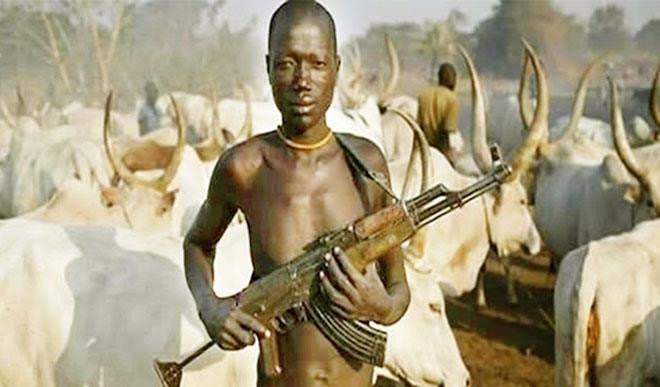
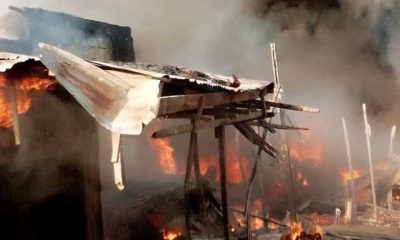
Northern Nigeria has become widely known as a hotspot for multiple forms of insecurity. From the Boko Haram insurgency to widespread kidnapping, armed banditry, and violent attacks, fear has become part of everyday life. People no longer feel safe in their homes, workplaces, on their farms, or while travelling on the highways. Every journey is undertaken with uncertainty, with no guarantee of arriving safely.
Even more troubling is the perception that these security challenges have become normalised. Reports of abductions, killings, and attacks have become so frequent that they often receive far less attention than they deserve. This perceived indifference from those in positions of authority has contributed to a growing public belief that criminal groups now operate with confidence and relative impunity.
Consequently, many residents feel abandoned, while public trust in the government’s ability to protect lives and property continues to erode.
Addressing this crisis requires a coordinated and sustained response through stronger security operations, improved intelligence gathering, greater support for affected communities, and genuine accountability. Without decisive action, the cycle of violence and fear will continue to undermine the region’s stability, economic development, and the well-being of its people.
Beyond Insecurity: A Crisis of Leadership
The North’s challenges are not accidental. Poverty, insecurity, and underdevelopment are the cumulative consequences of long-standing structural failures, weak governance, and policy choices that have compounded over decades.
Responsibility is shared across different segments of society—including the political elite, the educated class, and the business community—many of whom have possessed both the influence and the opportunity to intervene more decisively than they have.
Rather than being the result of a single coordinated agenda, what is evident is a persistent pattern of neglect, weak accountability, and recurring governance failures that have allowed social and economic conditions to deteriorate. These failures have contributed to rising unemployment, declining educational outcomes, inadequate healthcare, and the expansion of insecurity across much of the region.
Breaking this cycle requires more than assigning blame. It demands institutional reform, accountable leadership, strategic investment in human capital, and a renewed sense of public responsibility.
Where Are the Northern Elite?
This brings us to the most difficult question: Where are the Northern elite? Where are the governors, ministers, lawmakers, business leaders, scholars, and other influential voices? Many command enormous influence, considerable private wealth, and extensive international networks, yet too often appear unable—or unwilling—to meaningfully confront the conditions that continue to leave large parts of the region insecure, impoverished, and politically weakened.
Why does this gap persist?
Part of the answer lies in proximity to power. In political environments shaped by patronage, speaking boldly may threaten access, while silence preserves influence. Over time, self-preservation begins to resemble strategy.
Unfortunately, the cost is borne not by those in positions of privilege but by ordinary communities far removed from the rooms where decisions are made.
Reviving the North’s Industrial Legacy
Northern Nigeria was once the industrial powerhouse of the country. Cities such as Kano and Kaduna were thriving centres of manufacturing, commerce, and employment. Today, much of that industrial strength has faded.
This is, therefore, a respectful appeal to two of Nigeria’s most accomplished industrialists—Aliko Dangote and Abdul Samad Rabiu. Many people continue to ask why there is limited visible large-scale industrial reinvestment in Kano, your home state, and across Northern Nigeria.
As a Kano indigene, and to the best of my knowledge, neither Aliko Dangote nor Abdul Samad Rabiu currently operates major manufacturing facilities actively producing in Kano. Several facilities associated with their businesses are widely reported to have become inactive or to function primarily as warehouses rather than active industrial plants. For example, along Tafawa Balewa Road, two BUA facilities that previously operated flour and vegetable oil mills are reported to have ceased production. Likewise, several Dangote industrial sites stretching from Mai Malari Road to the Sharada Industrial Area are also widely reported to be inactive or operating far below capacity.
Kano and Kaduna, once renowned for their vibrant manufacturing sectors, have experienced decades of industrial decline, resulting in widespread unemployment and underutilised infrastructure. At the same time, a significant share of new private-sector industrial investment appears to have been concentrated in other parts of the country, particularly the South-West. This naturally raises important questions about balanced national development.
Philanthropy remains valuable and deeply appreciated. Scholarships, donations, and humanitarian support undoubtedly improve lives. However, charity cannot replace sustainable industrial development.
What the North urgently needs is long-term investment that revives manufacturing, creates employment, strengthens local supply chains, develops skills, and rebuilds industrial ecosystems across Kano, Kaduna, and neighbouring states. Strong factories build strong communities, while sustainable industries create lasting prosperity. The expectation, therefore, is not charity but a renewed commitment to the economic transformation of the region where many of Nigeria’s greatest industrial success stories first began.
The Responsibility of Business Leaders
The Northern business elite have watched insecurity, poverty, and displacement deepen while economic activity has increasingly concentrated elsewhere.
Insurgency, banditry, and weakened rural governance have disrupted agriculture, trade routes, and local markets. Investment naturally gravitates towards safer and more predictable environments. Yet public advocacy from many influential business leaders has often remained muted, constrained by commercial interests, political relationships, and regulatory considerations.
The region risks becoming divided into two realities: one integrated into national wealth and opportunity, and the other left to bear the consequences of persistent insecurity, economic stagnation, and neglect.
Business leadership extends beyond generating profits. It also entails helping to create an environment where enterprise can flourish, jobs can be created, and communities can prosper. Sustainable economic growth depends not only on private investment but also on the willingness of influential stakeholders to advocate policies and initiatives that promote stability, security, and inclusive development.
The North’s business community has historically played a significant role in shaping the region’s economic fortunes. That tradition of leadership remains essential today. While governments bear primary responsibility for governance and security, the private sector also possesses the capacity to influence development through strategic investments, partnerships, innovation, and constructive engagement with public institutions.
Rebuilding confidence in Northern Nigeria requires collaboration among government, businesses, civil society, and local communities. A more secure and prosperous region ultimately benefits everyone, creating new opportunities for investment, employment, and long-term economic growth.
A Message to Political Leaders
To the political leadership of Northern Nigeria: the contradiction has become increasingly difficult to ignore. The region remains one of the country’s most significant in terms of population and political influence, yet it continues to lag behind on key development indicators such as education, healthcare, infrastructure, employment, and security.
When communities are attacked, farmers are displaced, and schools are forced to close, silence from those entrusted with leadership is seldom interpreted as restraint. More often, it is perceived as detachment. Leadership is measured not only by electoral success or political influence but also by the willingness to confront difficult realities with courage, empathy, and decisive action.
The expectations of citizens go beyond promises. They seek visible commitment, practical solutions, and sustained engagement with the challenges affecting their daily lives. Rebuilding public confidence requires leadership that is accountable, responsive, and focused on the long-term development of the region.
A Message to the Educated and Professional Class
To our academics, professionals, and intellectuals: the evidence is neither hidden nor difficult to find. Reports, research, and lived experiences consistently reveal widening gaps in human development, education, healthcare, and security.
Yet, too often, expertise remains confined within institutions and professional circles that discourage open engagement with entrenched power. Knowledge should not merely describe problems; it should help solve them. Research should inform policy, enrich public debate, and contribute meaningfully to sustainable solutions.
Every society depends on courageous thinkers who are willing to engage constructively, challenge complacency, and place the public interest above personal convenience. The North possesses no shortage of intellectual talent. What is needed is a stronger connection between knowledge and action.
A Message to Cultural Influencers
To our musicians, artists, writers, actors, and other public figures: throughout history, art has served as a powerful instrument of truth, reflection, and social transformation. Cultural voices have inspired movements, preserved history, and given hope to communities during difficult times.
Yet, when economic survival becomes closely tied to political or commercial interests, critical voices often become subdued. Society benefits when its cultural figures speak with honesty, empathy, and a sense of responsibility. Their influence extends beyond entertainment; it helps shape public values, inspire civic engagement, and amplify the concerns of ordinary people.
A Shared Responsibility
Ultimately, this is not solely a Northern Nigerian problem. It reflects a broader question confronting societies everywhere: what happens when elite interests become disconnected from the well-being of ordinary people?
When access becomes more valuable than accountability, and proximity to power outweighs responsibility to the public, silence is rarely accidental—it becomes institutionalised.
The result is a widening emotional and political distance between leadership and the people. Unless that distance is narrowed through meaningful investment, principled advocacy, and courageous leadership, the same questions will continue to resonate:
Who speaks? Who benefits? Who bears the cost?
History will judge every generation by how it responds to the challenges of its time. Northern Nigeria possesses enormous human potential, entrepreneurial talent, agricultural resources, and a rich cultural heritage.
What it requires now is leadership marked by vision, courage, integrity, and an unwavering commitment to the common good.
This letter is not intended to condemn but to encourage honest reflection and meaningful action. The future of Arewa depends not only on government but also on every leader, businessperson, scholar, professional, artist, and citizen willing to place the region’s long-term prosperity above personal or political interests.
May we find the wisdom to rebuild what has been weakened, the courage to confront uncomfortable truths, and the determination to restore Northern Nigeria to its rightful place as a region of peace, opportunity, and shared prosperity.
Abba Dukawa writes from Kano and can be reached at abbahydukawa@gmail.com.