Connect with us

Top Stories

FG speaks on ‘death’ of Leah Sharibu, attacks PDP

Published

on

The Nigerian government has reacted to report making the rounds on social media that Leah Sharibu, one of the abducted Dapchi school girls was dead.

Minister of Information and Culture, Alhaji Lai Mohammed, at a press conference on Sunday in Ilorin, Kwara State, described the report as ‘absolute fake news’

He blamed the news as a ploy by the opposition party to dent the image of APC just few days to presidential election.

He said: “It’s absolutely fake news. There is nothing like that

“The rumour of Miss Sharibu’s death, which surfaced just a few days to the presidential election, is another ploy by the political opposition to tarnish the image of the administration and exploit primordial sentiments ahead of the polls.

“I think it’s part of the opposition’s strategies to throw everything at the administration and at the President. I think everyday they are realising the hopelessness of their position.

“Everyday, they are amazed by the support Mr. President is receiving from every part of the country and they have decided that they are going to spread falsehood, inflame passion and make this election a Muslim-Christian affair or North-South affair, but people are not listening to them.”

Comments

Politics

Oyo APC rejects Makinde’s planned December LG poll, vows boycott

Published

on

The opposition All Progressives Congress (APC) in Oyo State has rejected plans by the administration of Governor Seyi Makinde to conduct another local government election on December 26, 2026, describing the proposed exercise as illegal, premature and a calculated move to retain political influence at the grassroots beyond the governor’s tenure.

The party declared that it would neither participate in the election nor remain silent over what it termed an attempt to squander public resources on a process allegedly designed to install loyalists in the 33 local government councils and 351 wards across the state.

The controversy followed the decision of the Oyo State Independent Electoral Commission (OYSIEC) to shift the date earlier fixed for January 2027 to December 26, 2026, after the Independent National Electoral Commission (INEC) released the timetable for the 2027 general elections.

The move has continued to generate debate among political observers, many of whom have questioned the urgency of conducting another council poll barely six months before the expiration of the tenure of the incumbent chairmen and councillors elected in the 2024 local government elections.

In a statement issued on Thursday in Ibadan by its Publicity Secretary, Olawale Sadare, the APC said it would not stop at boycotting the election but would also collaborate with “patriots and rational minds” to resist what it called an unnecessary expenditure of taxpayers’ money.

The party accused Governor Makinde of lacking commitment to local government autonomy, alleging that the administration had exercised undue control over council resources for more than seven years.

“The whole world knows that Governor Makinde does not believe in local government autonomy and, when it comes to democracy at the grassroots, he cannot be trusted for anything,” the statement said.

The APC alleged that the proposed poll was aimed at positioning individuals loyal to the governor in local councils before his exit from office on May 29, 2027, arguing that such a move would enable him to sustain political influence after leaving the Agodi Government House.

According to the opposition party, expectations among many residents are centred on ongoing efforts by the administration of President Bola Ahmed Tinubu to strengthen local government autonomy and ensure that councils enjoy direct access to their statutory allocations without interference from state governments.

The APC also linked what it described as poor development outcomes in some rural communities to the operation of the state-local government joint account system. It cited communities such as Ahoro Esiele and Yawota in Oriire Local Government Area, which have reportedly faced security challenges, as examples of areas where local government resources should have translated into visible improvements.

“It is sad that Governor Makinde appears determined to sustain a system that has left many rural communities vulnerable despite huge allocations accruing to local governments monthly,” the party said.

The opposition further dismissed the local government elections conducted in 2020 and 2024 as lacking credibility, alleging that winners emerged through predetermined outcomes rather than a transparent electoral process.

“The fraud called local government polls in 2020 and 2024 should be the last the people of Oyo State would witness. Governor Makinde and his supporters should bury any thought of staging another charade in which results are announced without genuine voting and public offices become tools for the diversion of public funds,” the statement added.

The APC consequently urged officials of OYSIEC to halt preparations for the proposed December election, warning against actions capable of undermining democratic values and public confidence in the electoral process.

As of the time of filing this report, neither the Oyo State Government nor OYSIEC had issued an official response to the allegations raised by the opposition party.

Continue Reading

Opinion

The Silent Thief in Nigeria’s Petrol Stations | By Solomon Oroge

Published

on

File photo of Dr. Solomon Oroge

• How systemic fraud is draining billions, weakening businesses and threatening the future of the downstream petroleum sector

The Nigerian petroleum retail industry remains one of the most important drivers of economic activity in the country. Every day, millions of litres of petrol, diesel and other petroleum products are sold through thousands of filling stations spread across cities, towns and rural communities.

To many Nigerians, a filling station is simply a place where vehicles are refuelled. To investors and operators, however, it is a complex business environment involving inventory management, transportation logistics, cash handling, procurement processes, technology systems and human resources. When properly managed, petrol retailing can be highly profitable. When poorly controlled, it can become a breeding ground for one of the most dangerous threats to business sustainability – systemic fraud.

Unlike isolated incidents of theft or misconduct, systemic fraud is far more sophisticated and destructive. It is not the work of a single dishonest employee acting alone. Rather, it is a pattern of fraudulent activities that gradually becomes embedded within an organisation’s operational processes and culture. Over time, such practices become normalised, tolerated and, in some cases, deliberately protected by those who benefit from them.

This is what makes systemic fraud particularly dangerous. It often operates quietly beneath the surface while management remains focused on sales growth, market expansion and operational targets. By the time the full extent of the problem becomes apparent, substantial damage may already have been done.

Across Nigeria’s downstream petroleum sector, systemic fraud continues to drain significant resources from businesses every year. Revenue leakages occur through fuel diversion, stock manipulation, sales suppression, procurement abuses, payroll fraud, inventory theft and cash skimming. In many organisations, these activities take place daily, gradually eroding profitability and shareholder value.

One of the most common schemes is fuel diversion during transportation. Products that leave depots in approved quantities may arrive at their destinations with unexplained shortages. Sometimes these losses are disguised as operational variances or transportation-related discrepancies. In reality, they may be the result of organised siphoning carried out during transit.

Another common practice involves pump calibration manipulation. In such situations, customers unknowingly receive less fuel than the quantity displayed on the dispensing pump. While the discrepancy may appear insignificant on a single transaction, the cumulative financial impact can be enormous when repeated hundreds of times daily across multiple stations.

Tank dip manipulation represents another major challenge. Deliberate alteration of stock measurements allows losses to be concealed, making it difficult for management to accurately determine actual inventory positions. Similarly, sales suppression occurs when transactions are intentionally omitted from official records, creating opportunities for revenue diversion and cash theft.

Procurement fraud, inflated maintenance costs, ghost workers on payrolls, fictitious vendors and collusion between employees and suppliers have also become recurring concerns within many petroleum retail operations.
The unfortunate reality is that systemic fraud thrives where governance is weak, accountability is limited and internal controls are either poorly designed or inadequately enforced. High daily cash transactions, large fuel inventories, multiple operating locations and limited real-time supervision further increase exposure to fraud risks.

The warning signs are often visible long before losses become catastrophic.

Persistent cash shortages, unexplained stock variances, delayed banking, repeated customer complaints, inflated procurement costs and declining profitability despite rising sales should immediately attract management attention. Likewise, employees who resist transfers, refuse annual leave, display unusual secrecy or maintain lifestyles far above their legitimate income levels may warrant closer scrutiny.

Many organisations make the mistake of assessing fraud only from the perspective of direct financial losses.

However, the true cost extends much further.

Systemic fraud distorts management information and weakens decision-making. It undermines operational efficiency, damages corporate reputation, attracts regulatory sanctions and erodes customer confidence. Investors become wary, employees lose morale and businesses struggle to achieve sustainable growth.

Perhaps most damaging is the fact that fraud weakens trust—the single most important asset any organisation possesses. Once trust is compromised, rebuilding it becomes both difficult and expensive.

Addressing this challenge requires a shift from fraud detection to fraud prevention.

The most successful organisations understand that preventing fraud is significantly less costly than investigating fraud after it has occurred. Prevention begins with strong corporate governance, ethical leadership and a clear commitment to accountability at every level of the organisation.

Technology has also become an indispensable ally in the fight against fraud.

Automated tank monitoring systems, CCTV surveillance, GPS tanker tracking, integrated enterprise resource planning systems and data analytics tools provide organisations with greater visibility over operational activities and help identify unusual patterns before they escalate into major losses.

Yet technology alone cannot solve the problem.

Organisations must also invest in people, processes and culture. Employees should receive regular ethics training.

Whistleblower mechanisms must be strengthened and protected.

Responsibilities should be properly segregated and surprise verification exercises should become part of routine operational oversight.

In this regard, Internal Audit has a strategic role to play.

Modern Internal Audit functions must evolve beyond traditional compliance checks and become proactive partners in fraud risk management. Through fraud risk assessments, data analytics, control testing, fraud mapping and unannounced verification exercises, Internal Audit can provide independent assurance that critical controls are operating effectively and that emerging fraud risks are identified before they become crises.

To strengthen organisational resilience against systemic fraud, the Sedabuk Fraud Risk Management Model (SFRMM) was developed as a practical framework for fraud prevention, detection, investigation and sustainable risk management within petroleum retail operations.

The model is built around seven strategic pillars: Surveillance, Fraud Risk Assessment, Robust Internal Controls, Monitoring and Data Analytics, Management Accountability, Detection and Investigation, and Ethical Culture and Employee Engagement. Together, these pillars create a continuous cycle of identifying risks, implementing controls, monitoring activities, detecting anomalies, conducting investigations and driving continuous improvement.

The message for operators in Nigeria’s downstream petroleum sector is simple but urgent: the greatest threat to profitability may not be competition, inflation or market volatility. It may well be the silent leakage of resources occurring within their own operations.

As the industry continues to evolve under ongoing reforms and changing regulatory expectations, organisations must recognise that sustainable profitability is achieved not merely by increasing sales but by protecting every litre of fuel, every naira of revenue, every operational process and every stakeholder’s trust.

Companies that embrace ethical leadership, strong governance, proactive Internal Audit, technology-enabled monitoring and a zero-tolerance culture towards fraud will not only reduce losses but also strengthen stakeholder confidence, improve operational efficiency and position themselves for long-term success.


Dr. Solomon Oroge, PhD, is an accomplished professional in Internal Audit, Risk Management, Corporate Governance, Compliance and Fraud Risk Management with extensive experience in Nigeria’s downstream petroleum industry.

He is the developer of the Sedabuk Fraud Risk Management Model (SFRMM), a proprietary framework designed to help petroleum retail organisations proactively identify, prevent, detect and manage systemic fraud risks.

Oroge can be reached via the following contact details: saoprofessional@gmail.com or +234 806 512 6192.

Continue Reading

Politics

2027: Oseni Mobilises Oyo Artisans, Traders, Targets One Million Votes for Tinubu

Published

on

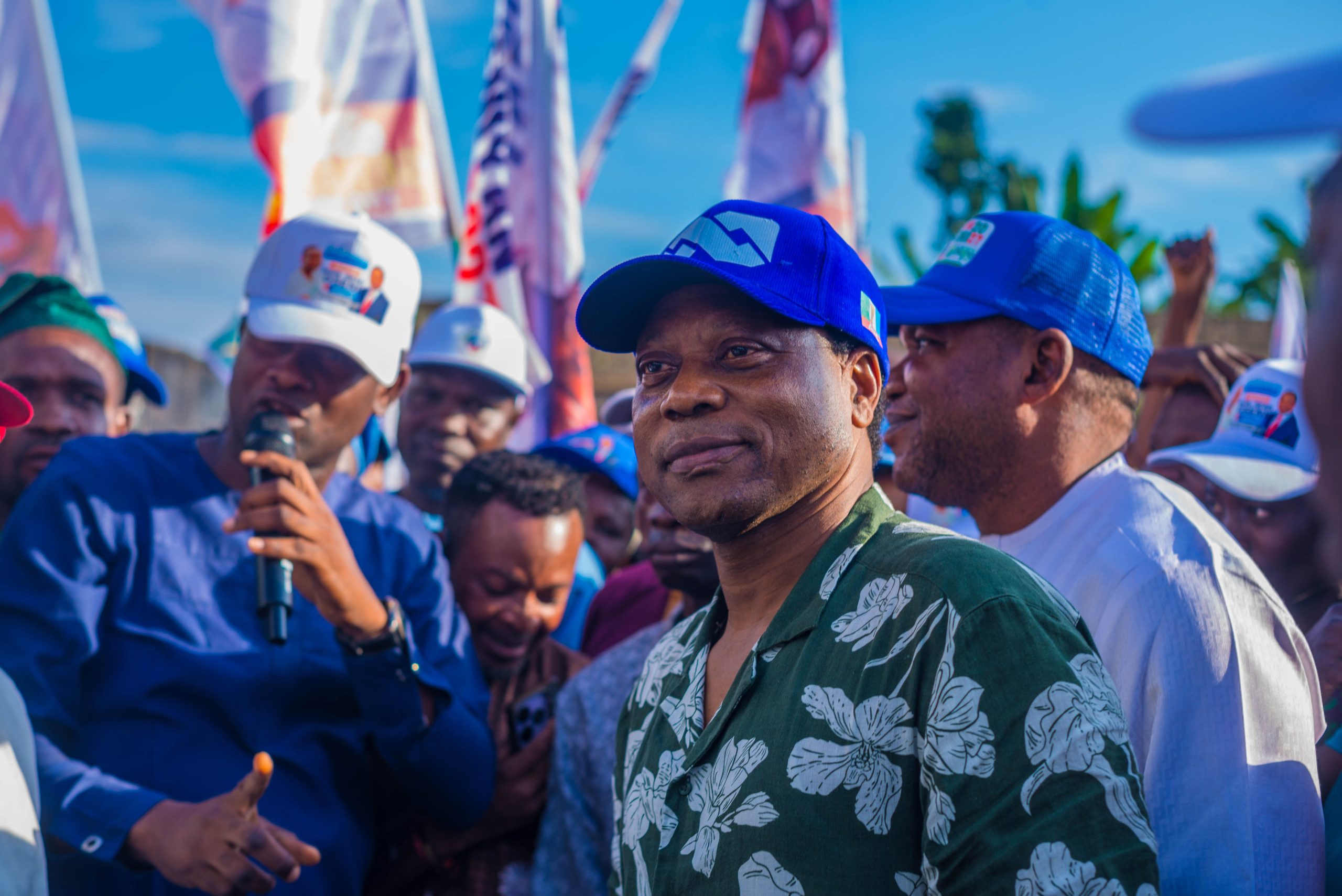
The lawmaker representing Ibarapa East/Ido Federal Constituency in the House of Representatives, Aderemi Oseni, on Saturday mobilised thousands of artisans and traders across Oyo State in support of President Bola Tinubu’s re-election bid in 2027.

‎Oseni said the support base of the Remi Oseni Committee of Friends (ROCOF), in collaboration with other stakeholders, was intensifying efforts to deliver one million votes for the President in the state.

‎Oseni, Chairman of the House Committee on Federal Road Maintenance Agency (FERMA), said artisans and traders must see themselves as critical stakeholders in President Tinubu’s Renewed Hope Agenda, stressing that the success of the administration depends largely on grassroots participation.

‎The federal lawmaker spoke in Ibadan, the Oyo State capital, during a stakeholders’ engagement with members of the ROCOF Progressive Workers and Traders’ Associations.

‎In a symbolic show of political readiness, scores of traders and artisans displayed their Permanent Voter Cards (PVCs), while Oseni urged eligible Nigerians yet to register to obtain their voter cards ahead of the next general election.

‎He cautioned against vote-buying and vote-selling, warning that such practices threaten the future of democracy and mortgage the destiny of younger generations.

‎The meeting, according to Oseni, was also convened to deepen economic support for members through empowerment programmes targeted at strengthening businesses and improving livelihoods.

‎He announced that requests for a N250 million interest-free loan scheme for artisans and traders, construction of an artisans’ village with stable electricity supply, and health insurance support had received approval.

‎According to him, the loan facility will be administered through a microfinance bank under the Remi Oseni Foundation to ensure transparency, accessibility and sustainability.

‎He added that road and infrastructure projects across communities would remain a major priority.

‎Oseni, who is seeking to represent Oyo South Senatorial District  in the next election cycle, also used the meeting to explain his decision to pursue a Senate seat instead of his earlier governorship ambition.

‎He said the move followed consultations with party leaders and supporters.

‎According to him, supporters deserved clarity on the political direction of the movement.

‎He said: “We convened this stakeholders’ meeting to review our present position. Before now, our focus was on leading Oyo State through the governorship. That was our clear objective as a movement, but today, it has become evident that God is directing us towards the Senate.

‎“Our people needed to understand the reasons for this decision, the position of the party and what we have accepted in the overall interest of our political future. It is not enough for leaders to take decisions. We owe our supporters explanations and must carry them along.

‎“We have encouraged them to embrace this opportunity in good faith and believe that greater opportunities still lie ahead.

‎“Many of them felt our governorship ambition would have delivered greater benefits, but we have reassured them that the government remains supportive and the future is bright.

‎“We have equally assured the President that our decision to pursue the Oyo South Senate seat will not affect the one million votes earlier promised him, because ROCOF structures across the 33 local government areas are fully mobilised and committed to his re-election.”

‎On the crisis within the All Progressives Congress (APC), Oseni said efforts were ongoing to reconcile aggrieved members, expressing confidence that outstanding differences would soon be resolved.

‎He described competing interests within the party as a reflection of the APC’s growing strength and political attractiveness.

‎Earlier, the Oyo State Coordinator of ROCOF Progressive Workers and Traders’ Associations, Alhaji Munirudeen Adegoke, described Oseni’s empowerment drive as a strategic investment capable of reducing unemployment, youth restiveness and poverty.

‎Adegoke said meaningful empowerment for artisans and traders must go beyond temporary palliatives.

‎According to him, sustainable support requires deliberate policies that guarantee access to capital, improved infrastructure and social protection.

Continue Reading

Advertisement

Entertainment

Advertisement

MegaIcon Magazine Facebook Page

Advertisement

MEGAICON TV

Advertisement

Trending