Connect with us

Top Stories

100 Days of Nigeria COVID-19 Response

Published

on

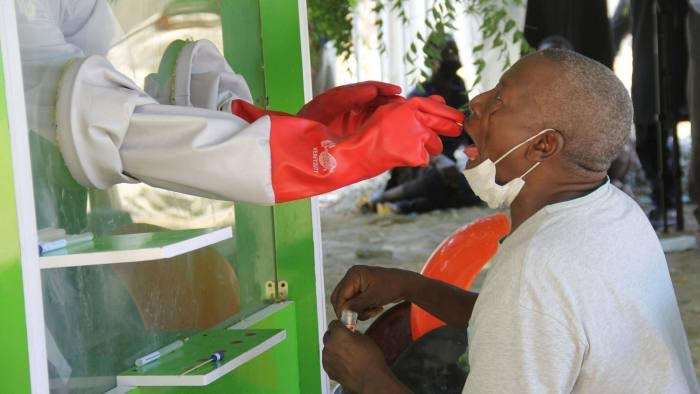
On the 27th of February 2020, Nigeria confirmed its first case of coronavirus disease (COVID-19). One hundred days after, the Nigeria Centre for Disease Control (NCDC) has reported 11,844 confirmed cases and 333 deaths.


Additionally, 3,696 people have been treated and discharged successfully. The COVID-19 pandemic has affected over 100 countries across the world. Over 6 million people have been affected, and the number of deaths has exceeded 300,000 as at the 6th of June 2020.

As Nigeria’s Public Health Institute, NCDC continues to work alongside other agencies under the supervision of the Federal Ministry of Health, in leading the public health response to the outbreak. In addition, the agency has played a key role in the multi-sectoral response, within the Presidential Task Force on COVID-19 (PTF-COVID-19), established by President Muhammadu Buhari.

One hundred days after the first case, we remember all Nigerians who have passed away from the disease. We commiserate with their families and friends who have had to deal with the difficulty of losing loved ones at this time.

To ensure a well-coordinated emergency response, NCDC activated a Level 3 Emergency Operations Centre (EOC) on the 27th of February 2020. Prior to this, the National EOC was in alert mode; monitoring the spread in other countries, carrying out risk assessments and strengthening Nigeria’s preparedness. During this time, NCDC developed technical guidelines, response plans and trained health workers across the country. The National EOC includes representatives from the Federal Ministry of Health, other sister agencies and partners.

Prior to the confirmation of the first case, NCDC supported four laboratories within its molecular laboratory network to activate testing for COVID-19. Since then, the number of laboratories has increased to 30, with a combined minimum capacity of 10,000 tests daily. The goal is to expand to at least 10 more laboratories by the end of June, leveraging on Gene-Xpert capacity for Tuberculosis diagnosis.

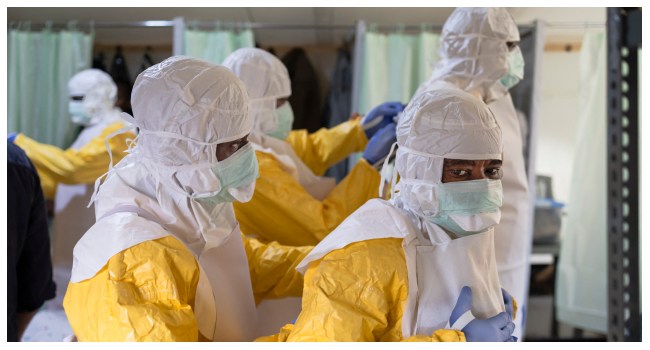
The safety of health workers has been at the forefront of Nigeria’s response strategy to COVID-19. Since the first case was confirmed, NCDC has supported the training of 13,000 health workers in infection prevention and control (IPC) as well as case management. In collaboration with the Departments of Hospital Services and Food and Drugs of the Federal Ministry of Health, NCDC has also ensured that health workers are provided with the required personal protective equipment (PPE) to reduce the risk of health workers’ infection.

As part of its mandate, NCDC has provided support to all states in Nigeria. Over the last three years, in preparedness for major outbreaks, the agency supported the establishment of State Public Health Emergency Operations Centres in 23 of the 30 states in Nigeria, without polio or public health EOCs. These EOCs have served as the coordination hub at state level since the first case was confirmed in Nigeria. The NCDC has deployed its highest number of rapid response teams – with 37 teams across 34 states and the FCT. The extent of this response has been supported by the deployment of additional surge teams from the Nigeria Field Epidemiology and Laboratory Training Programme (NFELTP), the World Health Organization (WHO) and Africa Centres for Disease Control (Africa CDC). NCDC continues to support every State with medical supplies, transportation of samples, training of health workers, risk communications and other response activities.

The NCDC launched the #TakeResponsibility campaign which has formed the cornerstone of public health messaging. This is done by leveraging on social media, mainstream media and other avenues to encourage Nigerians to take responsibility for protecting themselves and loved ones and preventing the spread of COVID-19. Over 150 jingles currently air on radio and television, reaching communities across the country. With the support of Nigeria’s telecommunication companies, over 100 million text messages have been sent out since February 2020 reminding Nigerians about measures that can be taken to protect themselves from COVID-19. The NCDC continues to work closely with the Federal Ministry of Information and Culture, as well as the National Orientation Agency to educate Nigerians on how to protect themselves.

A key strength of Nigeria’s response has been the strong collaboration among Federal Government Ministries, Departments and Agencies, as well as with partners. As part of the global and regional response, NCDC has received guidance and support from WHO, Africa Centres for Disease Control and the West African Health Organisation.

The response to the pandemic has not been without challenges – global competition for access to reagents and medical supplies limited the initial testing capacity of the molecular laboratories. Today, the Presidential Task Force paid a visit to the National Reference Laboratory in Gaduwa, Abuja, in recognition of the role the apex laboratory is playing in response to the pandemic. Strengthening laboratory capacity nationwide and increasing access to testing is a major priority for Nigeria’s response, in the coming months. The NCDC continues to work with the Nigerian Institute of Medical Research, Medical Laboratory and Science Council of Nigeria and other partners to carry out laboratory related research and validation, as Nigeria scales up its testing capacity.

Since the first confirmed case was reported one hundred days ago, several health workers have been at the forefront. We remain grateful to State Task Forces, Emergency Operations Centres, Rapid Response Teams, laboratory scientists and all health workers who continue to work very hard for national health security.

The NCDC remains committed to working under the supervision of our parent Ministry, the Federal Ministry of Health, and in collaboration with other Ministries, Departments and Agencies through the PTF, to scale up Nigeria’s response. Our strategy is to ensure more people are tested, contacts are traced early to prevent further spread and confirmed cases are treated.

In the absence of a vaccine, Nigeria and the rest of the world must depend on public health, social measures and supportive management of confirmed cases. We urge all Nigerians to take individual and collective responsibility by adhering to public health advice such as;

• Frequent hand hygiene through hand washing or use of alcohol-based sanitiser.

• Use of face mask in public places

• Observing physical distancing of at least two metres

Comments

Politics

2027: APC Perfects Consensus Strategy for Oyo

Published

on


Ahead of the 2027 general elections, the national leadership of the All Progressives Congress (APC) on Tuesday held a high-level strategic meeting with the Oyo State chapter of the party as part of efforts to reposition the APC for victory and prevent internal crisis ahead of the polls.

The development was first scooped by OYOINSIGHT.COM which quoted multiple party sources familiar with the closed-door deliberations.

Sources disclosed that the meeting, held in Abuja, focused largely on a consensus arrangement being considered by stakeholders of the party in Oyo State, in line with political templates reportedly being adopted in Lagos and Ogun states ahead of the next electoral cycle.

Party insiders said the move was aimed at strengthening unity within the fold of the opposition party in the state, minimising rancour during the primaries and presenting a formidable front against rival parties in 2027.

It was further gathered that some members of the state executive committee may have been subtly informed about preferred consensus candidates being considered for elective positions across the state.

Though details of the deliberations were still sketchy as of press time, sources hinted that the national leadership stressed the need for cohesion, discipline and strategic alignment among stakeholders to improve the party’s electoral fortunes in Oyo.

Those at the meeting included the Oyo APC Chairman, Moses Alake Adeyemo; the state secretary, Fatai Adesina Adeniyi; the Publicity Secretary, Olawale Sadare; the Organising Secretary, Aderemi Adepoju; and the Legal Adviser, Sunday Aborisade.

Others were the Women Leader, Adekemi Opatunde; the Youth Leader, Olalekan Oladejo; Joshua Oyebamiji; Tunde Oloyede; Sunday Babalola; Joseph Omoniyi; and Mojeed Adebayo.

As of the time of filing this report, the party had yet to issue an official statement on the outcome of the meeting.

Continue Reading

Politics

2027: Oyo APC Set for Credible Direct Primaries, Says Alake Adeyemo

Published

on

The Chairman of the All Progressives Congress (APC) in Oyo State, Chief Moses Alake Adeyemo, on Monday assured aspirants and party members that the party would conduct transparent, peaceful and credible direct primaries ahead of the 2027 general elections.

Adeyemo declared that no aspirant would be victimised or denied a level playing field, stressing that the party leadership remained committed to internal democracy and progressive ideals.

The former deputy governor spoke while receiving members of the APC Screening and Appeal Committees deployed from the party’s National Secretariat in Abuja at the APC Secretariat in Oke-Ado, Ibadan.

He disclosed that although the party initially explored consensus arrangements across elective positions, prevailing realities indicated that direct primaries would be conducted in some areas, including the governorship contest.

Adeyemo said the party had already put necessary structures in place to ensure a hitch-free exercise capable of strengthening unity within the APC.

He said: “We set machineries in motion for us to achieve the aim of consensus across board but reports available to me indicate that we would have to go by the second option which is direct primary in certain cases including the governorship ticket.

“To this end, we shall work towards organising free, fair and credible exercise in all the affected areas even as we cannot rule out the possibility of some aspirants having a rethink and supporting the consensus arrangement as necessary.

“Where we have more than an aspirant, Abuja would send people to conduct primaries and we at the state level would provide the required support to make everything work out in the interest of our great party.”

The APC chairman explained that all registered party members would participate fully in the exercise at their respective wards on dates to be announced by the National Secretariat.

According to him, affirmation would be adopted in areas where consensus candidates emerge, while voting would be conducted wherever direct primaries become necessary.

“For consensus, members will lend their voices for affirmation while voting will be done in the cases of direct primary,” he added.

Speaking earlier, Chairman of the Screening Committee and former Speaker of the Ondo State House of Assembly, Rt. Hon. Taofiq AbdusSalam, assured party faithful that the committee would carry out a thorough, transparent and unbiased screening process.

He said only eligible aspirants would be cleared to participate in the primaries and eventually fly the APC flag in the forthcoming elections.

Other members of the Screening Committee are Kamal Sanusi (Secretary), Smart Oluwole, Tunde Kolade and Olabamiji Agunloye.

Members of the Screening Appeal Committee are Jibola Oduwole (Chairman), Abimbola Jack (Secretary) and Jelil Jimoh.

Continue Reading

Politics

NDC zones 2027 presidency to South, reserves 2031 for North

Published

on

The Nigeria Democratic Congress on Saturday zoned its 2027 presidential ticket to Southern Nigeria, declaring that the party’s candidate would serve a single four-year term if elected.

The decision was reached during the party’s national convention held in Abuja amid growing momentum within the opposition platform following a wave of high-profile defections from other political parties.

Announcing the development on its official social media handle, the party stated, “NDC presidential ticket is zoned to the South!!”

The party also resolved that its 2031 presidential ticket would be ceded to Northern Nigeria as part of efforts to maintain regional balance and internal equity.

The convention comes as key opposition figures, including former Labour Party presidential candidate, Peter Obi, and former New Nigeria People’s Party presidential candidate, Rabiu Kwankwaso, joined party leaders and delegates at the Abuja gathering.

Saturday’s convention is expected to ratify several recent decisions taken by the party’s National Executive Committee, including zoning arrangements, amendments to the party constitution, and the election of new national executives.

According to the convention agenda obtained by journalists, discussions centred on zoning, ratification of the amended constitution, and leadership restructuring ahead of the 2027 general elections.

The NDC has in recent weeks witnessed a surge in defections from rival opposition parties, particularly the African Democratic Congress and the Peoples Democratic Party.

On Tuesday, no fewer than 17 members of the House of Representatives defected from the ADC to the NDC.

Their defections were formally announced during plenary at the House of Representatives.

The lawmakers include Yusuf Datti, Uchenna Okonkwo, Adamu Wakili, Thaddeus Attah, George Ozodinobi, Lilian Orogbu, Oluwaseyi Sowunmi, Peter Aniekwe, Mukhtar Zakari, George Oluwande and Munachim Umezuruike.
Others are Emeka Idu, Jesse Onuakalusi, Ifeanyi Uzokwe, Afam Ogene, Murphy Omoruyi and Abdulhakeem Ado.
The defections came barely two days after Obi and Kwankwaso formally joined the NDC from the ADC.

The duo were presented with the party’s membership cards last Sunday shortly after a closed-door meeting with party leaders.

A former Governor of Bayelsa State and NDC national leader, Seriake Dickson, officially welcomed the opposition figures into the party.

Obi had attributed his exit from the ADC to worsening internal crises, external interference and what he described as increasing hostility within party structures.

The former Anambra State governor said Nigeria’s political environment had become increasingly toxic, marked by intimidation, insecurity and sustained scrutiny of opposition figures.

He also lamented that institutions meant to protect citizens were now often deployed against them, while individuals committed to genuine public service faced mounting pressure both publicly and privately.

Continue Reading

Advertisement

Entertainment

Advertisement

MegaIcon Magazine Facebook Page

Advertisement

MEGAICON TV

Advertisement

Trending