Connect with us

Education

Why we attach importance to skill acquisition for our students – Pioneer Rector, Federal Poly, Ayede

Published

on

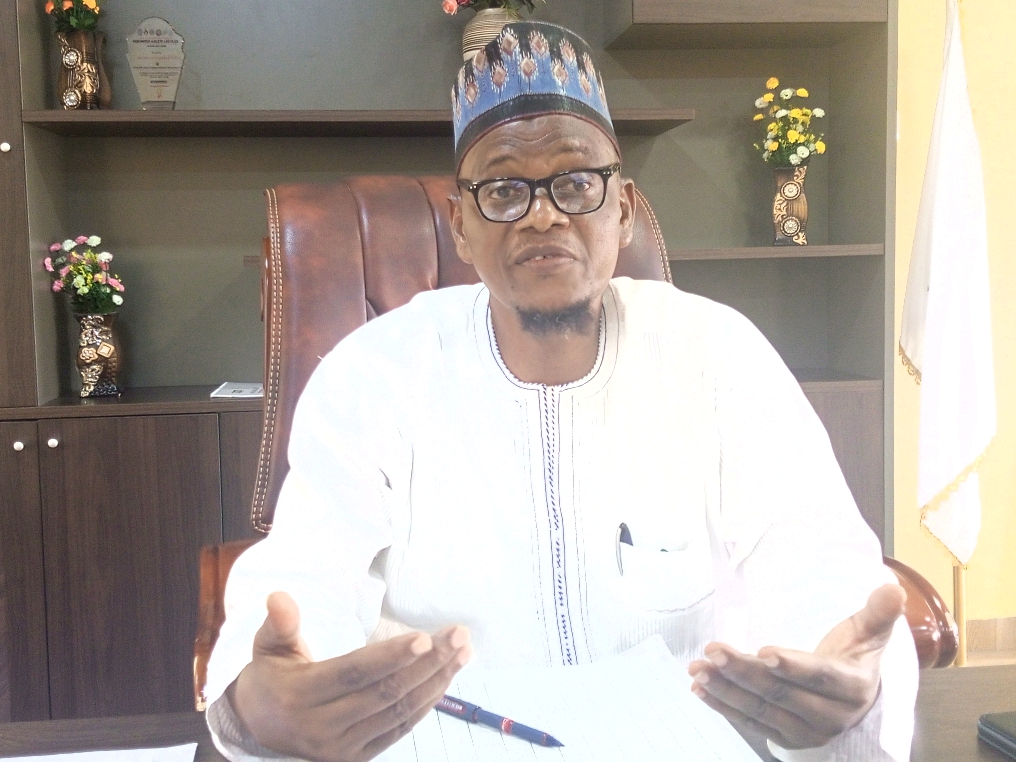
Pioneer Rector of the Federal Polytechnic, Ayede, Oyo State, Dr. Taofeek Adekunle Abdul-Hameed in this interview with Mega Icon Magazine, shares his experience on the journey so far in the past two years as well as his vision for the fastest growing polytechnic, among its peers established in 2021, by former President Muhammadu Buhari.

The University of Ilorin trained Electrical Engineer maintained that the institution would thrive on innovation, skills, functional education, and international partnerships.

Excerpts :


As the Rector of the Federal Polytechnic, Ayede, how would you describe the journey so far in the past two years?

First and foremost, we give thanks to God almighty. There have been so many challenges, really. We just have to thank God because most of the challenges have been surmounted one by one and gradually. We also know that Rome was not built in a day. Pioneering a new institution is like being thrown into a bush without a path or compass. You have to be the one to find your way, create your path, design your compass, and find your bearings. It was actually like that, but all the same, we thank God for where we are.

The stage so far might seem not significant to some, but if you compare us with other Polytechnics established at the same time, we can say we are faring very well in terms of manpower, infrastructural development, and in terms of student admission.

To a large extent, we are far better than many of our contemporaries. The summary is that the journey has been so challenging. Like they say, when the going gets tough, the tough get going. We are trying our best, and we hope in the upcoming years, the result will be more manifested than what we have currently.

Very recently, you said the polytechnic is determined on producing functional and active employers of labour after graduation. Can you share your vision for the institution with us?

The vision is still intact. You see there is this saying, being propagated by the Executive Secretary of the National Board for Technical Education (NBTE) Prof. Bugaje, “Skills not degrees”. Looking at what is trending in the advanced world, the emphasis is on skills, digital skills, and other soft skills even more than degrees. Until we can focus on skill acquisition, sincerely yours, Nigeria might not get out of the teething unemployment challenges.

Recently, NBTE and TETFUND organised a seminar for Rectors and Directors of Entrepreneurship Development in various Federal Polytechnics in Nigeria. It gladdens my heart to inform you that a sum of one hundred and thirty million Naira (N130M) has been approved for each of the Federal Polytechnic, specifically to strengthen skills acquisition initiatives.

What are the strategies you intend to deploy to achieve the set of skills development at the Federal Polytechnic, Ayede?

When you talk about skill acquisition, it is not theoretical stuff but built around vocation. It is not the volume of grammar spoken or the quantum of equations one can solve. It is about what you can do with your hands, and this is what matters now.

Sir, you invited the National Board for Technical Education (NBTE) for the accreditation process with the presentation of thirteen courses, but only four were successfully accredited. Are there plans for other courses to be accredited any time soon?

Thank you! You need to understand that he who does not dare will never conquer. That was the story of the accreditation programme. We aimed very high, presenting thirteen courses. The presentation afforded us the opportunity of knowing what constitutes our strengths and weaknesses for the other eight not accredited courses. The report afforded us that auspicious opportunity, and we have left where they met us then. We believed by the time they come back again they will meet us readily improved.

How would you appraise the presence of the institution in this community and Ogbomoso in general?

Of course, when there is an institution in any community, it will bring about development. Despite the presence of this Polytechnic at the temporary campus, in Iresa-Pupa, the community is already benefiting in terms of patronage, economic boost, and exposure. The students and staff are already renting accommodation, as community members are also bearing witness to this development.

Even at the permanent sites, development is already springing up. Very recently, the then Council Chairman, Professor Dakas C. J. Dakas (SAN) led us to the permanent site. We have not less than eight structures already at various levels of completion. Certainly, after the completion, the community will experience development and economic boom.

Assuming it’s matriculation, what will be your message to the matriculants?

The motto of the school is Learning Dexterity and Moral. Learning is a continuous process and each student must devote themselves to learning to be useful. Dexterity is about skill acquisition that must be developed and improved upon steadily, while morality must be guided to be useful to society. A morally bankrupt person, whatever the volume of the knowledge, cannot be a useful member of any society.

That is why our focus is on learning blended with useful skills guarded by morality. My belief is, by God’s grace, before any student graduates from this Polytechnic, he or she must have developed and perfected at least two major skills.

Sir, looking into the crystal ball, in the next 5 years where would you place the Federal Polytechnic, Ayede?

By God’s grace, Federal Polytechnic, Ayede will stand unique among its peers and even, among older ones. Except for trying to be modest, our achievements, for instance, accessing TETFund interventions are outstanding compared to even older institutions. The polytechnic will thrive on innovation, skills, functional education, and international partnerships. Hopefully, in the next five years, this Polytechnic will be a positive point of reference.


(c) Mega Icon Magazine 

Comments

Education

Ayede Poly trains staff on FG skills scheme, targets employable graduates

Published

on

The Federal Polytechnic, Ayede, Oyo State, has intensified efforts to align with the Federal Government’s skills-based education policy by training its academic and non-academic staff on the implementation of the National Skills Qualification (NSQ), Nigerian Skills Qualifications Framework (NSQF) and Mandatory Skills Qualification (MSQ).

‎The capacity-building workshop, organised in collaboration with the National Board for Technical Education (NBTE) and JACL Consulting, was held at the institution’s Centre for Vocational, Skills Acquisition and Entrepreneurship Development, NDE Model Skills Centre, Onipaanu, Ogbomoso.

‎The training is part of the Polytechnic’s broader strategy to deepen competency-based education and ensure that its graduates leave school with practical and industry-relevant skills capable of improving their employability and entrepreneurial prospects.

The institution had earlier organised a similar exercise for students, a move that reinforces its commitment to preparing both staff and learners for the seamless implementation of the Federal Government’s national skills certification policy.

‎Declaring the workshop open, the Acting Rector, Dr. Morufat Adepoju, described the National Skills Qualifications Framework as a game-changing initiative that would bridge the long-standing gap between classroom learning and industry expectations.

‎According to her, the framework will produce graduates equipped with practical competencies required to meet the demands of a fast-changing economy while strengthening Nigeria’s technical and vocational education system.

‎Adepoju expressed appreciation to President Bola Ahmed Tinubu, the Chairman of the Governing Council, Hon. Yakubu Dati, and the Federal Government for their continued support for the institution. She also commended the Executive Secretary of the NBTE, Prof. Idris Bugaje, for driving reforms aimed at repositioning technical education in the country.

‎She equally acknowledged the contributions of the pioneer Rector,  Dr. Taofeek Abdul-Hameed, and other pioneer principal officers, noting that the institution was building on the solid foundation they laid.

‎Explaining the significance of the initiative, the Don  said the National Skills Qualifications Framework provides a nationally recognised system for assessing and certifying occupational knowledge, technical competence and practical skills across various sectors of the economy.

‎She added that the framework would not only improve the quality of technical education but also reduce unemployment by equipping graduates with hands-on skills capable of stimulating entrepreneurship, wealth creation and national development.

‎”The NSQ provides the compass we desperately need as a nation seeking to equip its workforce with relevant competencies for national growth and global competitiveness,” Adepoju said.

‎Earlier, in his welcome address, the Acting Director of the Centre for Vocational, Skills Acquisition and Entrepreneurship Development, Mr. Oluwaseun Owojori, said the workshop was organised to prepare members of staff for the effective implementation of the NSQ, NSQF and MSQ in line with NBTE guidelines.

‎He stressed that the success of the Federal Government’s skills development agenda would depend largely on the preparedness of institutions and their personnel to deliver quality competency-based education. Owojori thanked the Acting Rector, management, principal officers and participants for their support, while appreciating the resource persons for facilitating the training.

‎One of the facilitators, the Acting Director, South-West Zone of the NBTE, Dr. John Onyebuchi, urged participants to embrace skills acquisition, describing practical competence as a vital asset in today’s economy. “I encourage everyone to acquire a skill because skills are the driving force in today’s economy, not money,” he said.

‎Also speaking, Dr. Julius Ayodele of JACL Consulting encouraged both academic and non-academic staff to participate actively in entrepreneurship and vocational development programmes.

He said continuous skills acquisition would improve professional competence, enhance productivity and open up wider career opportunities, expressing optimism that the workshop would promote innovation and practical learning across the Polytechnic.

The workshop attracted principal officers of the institution, including the Registrar, Mr. Akinlolu Akinpade, represented by the Director of SERVICOM and Deputy Registrar (Council Affairs and Establishment), Mr. Kolapo Olatinwo; the Bursar, Mr. Mufutau Alao, represented by Deputy Bursar, Mr. Lukman Buhari; and the Acting Polytechnic Librarian, Mr. Dare Samuel Adeleke, represented by Dr.  Halimat Amuda, Coordinator of Women in Technical Education and Development.

Continue Reading

Education

Ogun govt.  moves to fortify schools, unveils multi-sector security steering committee

Published

on

The Ogun State Government has inaugurated a multi-sectoral Safe Schools Steering Committee as part of renewed efforts to strengthen security architecture across schools in the state amid rising concerns over the safety of pupils, students, and teachers.

The committee is expected to drive the formulation and implementation of policies, strategies, and intervention programmes aimed at preventing security breaches, enhancing emergency preparedness, and ensuring that schools remain safe, stable, and conducive for learning.

Inaugurating the committee in Abeokuta, the state capital, the Commissioner for Education, Science and Technology, Prof. Abayomi Arigbabu, described the initiative as a deliberate and strategic response to emerging security challenges in the education sector.

He said the composition of the committee reflected a careful selection of professionals drawn from relevant sectors, based on competence, experience, and institutional responsibility.

According to him, the government recognises that schools can no longer be treated as isolated institutions, but must be protected through coordinated action involving government agencies, security operatives, communities, and development partners.

“The inauguration of the Ogun State Safe Schools Steering Committee is a strategic response aimed at strengthening collaboration among government agencies, security services, communities, development partners and all stakeholders in the education sector,” Arigbabu said.

He stressed that the task before the committee was urgent and non-negotiable, warning that the future of children in the state depended on the quality and timeliness of their decisions.

“As members of this committee, your selection was based on expertise, experience, and institutional responsibilities. This task is both important and urgent. The future of our children depends on the effectiveness of the decisions and actions we take today,” he said.

Arigbabu urged members to discharge their duties with “dedication, professionalism, integrity and a strong sense of purpose,” adding that every school in Ogun State must remain a place of safety, hope, and opportunity rather than fear.

“I therefore charge you to approach this assignment with dedication, professionalism, integrity, and a strong sense of purpose. Let us work together to ensure that every school in Ogun State remains a place of safety, learning, hope, and opportunity,” he added.

Other stakeholders at the inauguration reinforced the need for collective responsibility, stressing that school safety cannot rest on government alone but requires sustained collaboration from all segments of society.

They noted that communities, parents, security agencies, and development partners must work in synergy to safeguard learning environments and protect the future of children.

“As we inaugurate this committee today, let us recognise that school safety is not the responsibility of government alone. It is a shared responsibility requiring partnership, vigilance, innovation, and collective action,” one of the stakeholders said.

“The decisions we take and the commitment we make here today will contribute significantly to shaping the future of thousands of learners across our state,” the stakeholder added.

Continue Reading

Education

Oyo teachers begin indefinite strike over abducted colleagues, pupils

Published

on

The Nigeria Union of Teachers (NUT), Oyo State Wing, has directed all public primary and secondary school teachers in the state to embark on an indefinite strike over the continued abduction of teachers and pupils.

The strike, which takes effect from Monday, June 1, 2026, is expected to ground academic activities across public schools in the state.

The union said the action became imperative following what it described as growing insecurity in schools and the prolonged captivity of abducted teachers and pupils whose whereabouts remain unknown.

In a statement jointly signed by the Chairman of the Oyo State Wing of the NUT, Hassan Fatai, and the Secretary, Salami Olukayode, the union expressed concerns over the psychological impact of the incidents on teachers, learners and parents.

According to the union, the lingering abduction cases have created fear and anxiety among teachers, weakened confidence in the safety of schools and discouraged many parents from sending their children to school.

The statement read in part, “The Nigeria Union of Teachers, Oyo State Wing, hereby directs all public primary and secondary school teachers across the state to commence an indefinite strike action effective from Monday, June 1, 2026, pending urgent and decisive action by relevant authorities on the abduction of teachers and pupils.”

The union explained that the industrial action was aimed at compelling the government and security agencies to intensify efforts toward the immediate and unconditional release of the victims.

It urged teachers across the state to comply fully with the directive, remain peaceful and law-abiding, and prioritise their safety while staying away from classrooms during the strike.

The NUT also expressed solidarity with the abducted victims and their families, assuring that it would continue to engage relevant authorities until the victims were safely rescued.

The union reaffirmed its commitment to the welfare, safety and security of teachers and pupils, stressing that the protection of school communities remained non-negotiable.

Continue Reading

Advertisement

Entertainment

Advertisement

MegaIcon Magazine Facebook Page

Advertisement

MEGAICON TV

Advertisement

Trending