Connect with us

Opinion

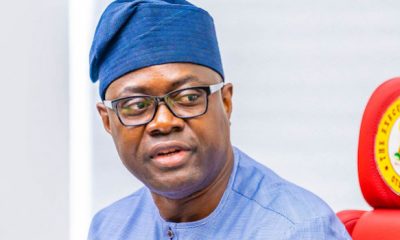
Why Ajimobi Towers Above Others In Oyo South Senatorial Race || By Akin Oyedele

Published

on

BY this time exactly a year ago, political pundits within and outside Oyo State had begun to pile pressure on the Governor of Oyo State, Senator Abiola Ajimobi, to mull over having another shot at the Senate. This is against the backdrop of his public pronouncements that he was calling time on active politics, climaxed by his jinx-breaking election as governor for two uninterrupted tenures.

He had vowed not to mount the soap box again, except to canvas for votes on behalf of his protégés. In the governor’s reckoning, 2019 is the destination point for his illustrious political career, having also served Oyo South Senatorial District in the Senate between 2003 and 2007 under the defunct Alliance for Democracy (AD).

In the February 19, 2018 edition of the Punch Newspaper, a respected Senior Advocate of Nigeria, Chief Adeniyi Akintola, said, “Ido Local Government is launching the campaign to endorse him (Ajimobi) to go to the Senate and by the grace of God, he shall make it. Of course, this isn’t his first time; he wasn’t a bench warmer there as he gave quality representation. In the Senate, he will be a pride to Oyo State and the South West.”

And since this move by the patriotic Ido elders and leaders, many other groups and individuals have asked the governor to take another shot at the Senate in the best interest of the state and the region. Having surrendered to the superior argument of his supporters, the governor participated in the October 2, 2018 National Assembly primaries of the All Progressives Congress. To underscore the beauty of democracy, his main challenger, Dr Fola Akinosun, refused all entreaties by party stalwarts to step down for the governor in deference to the political tradition that respects position and experience in such circumstance. But Akinosun eventually lost by 168 votes to Ajimobi’s 2659 as announced by the Chief Ademola Seriki-led electoral panel. Thus began another journey to the hallowed Red Chamber for the governor to represent Oyo South Senatorial District.

In a short acceptance speech after the primaries, Ajimobi had said, “I look forward to going back to the Red Chamber to contribute my quota to the national debate and the progress of the nation. I wish to bring to fore my parliamentary experience to grow a Nigeria that the next generation will be proud of.”

Many reasons had been adduced by the proponents of Ajimobi should go to the senate, ranging from his enviable corporate and political experience, integrity, record of achievements, clout, robust political capital, inexhaustible physical agility, intelligence, gift of the gab and most importantly because of his mettlesome disposition. Although, the uninitiated have derisively dubbed the Senate as the retirement home for two-term governors, but in advanced climes the Senate is populated by senior citizens who are regarded as the bulwark of democracy. Advanced age is seen in western democracy as an asset rather than liability.

For instance, since 1981, the average age of representatives and senators in the US Congress has jumped from 49 and 53, respectively, to 57 and 61, according to Quorum. In the today’s 116th Congress of the US, Dianne Feinstein of California is the oldest sitting member of the Senate at 84 years old. She is known for being a liberal, left-leaning politician who has dedicated her life to serving the people of California.

Another asset that Ajimobi possesses is his impeccable educational attainment, having bagged a BSc in Business Administration and Finance from The State University of New York, Buffalo. He also obtained an MBA in Operations Research and Marketing, with a concentration in Finance, from the Governor’s State University, Park Forest, Illinois.

In 1979, Ajimobi became the youngest Manager at the National Oil and Chemical Marketing Company in Nigeria, and rose to the position of the Managing Director/Chief Executive Officer of the National Oil and Chemical Marketing Company. As Managing Director he substantially improved the profitability of the company and the shareholders’ fortunes. In 2003, he voluntarily retired after 26 years of meritorious service in the Oil and Gas industry.

Whether at the regional, national or international platforms, Ajimobi is consistently acknowledged as one of Nigeria’s most gifted and effective leaders with the ennobling characteristics of great and noble statesmen.

During his first spell at the Senate in 2003, the governor and his AD colleagues, who were just six in number (with three others from Lagos State and one each from Ondo and Ekiti States), were hampered by their numerical disadvantage. In a sharp contrast, the Peoples Democratic Party (PDP) had an overwhelming majority of 78 members, while the All Nigeria Peoples Party had 25 members.

To underscore the respect his colleagues had for him, he was appointed the Deputy Minority Leader of the 5th Senate.

In addition to his ably-discharged primary responsibility as a Senator, Governor Ajimobi deployed his personal resources and goodwill to carry out several grassroots projects in Oyo State, including the establishment of the first and the largest free vocational training center. The centre offers training in computer engineering, computer operations, telephone engineering, fashion designing, hair dressing, tie and dye etc. So far, the centre has turned out over 20,000 students. It has also been recognized and certified as a partner and training centre by the Industrial Training Fund (ITF) of the Federal Government.

Between 2003 and 2007 Senator Ajimobi also identified communities that lacked potable water, where he sunk boreholes. He also carried out many empowerment and grassroots programmes for his Senatorial District.

During the infamous ‘third term agenda’ of the third republic it was alleged that some political jobbers, including National Assembly members, fell for the filthy lucre transported in the wee hours of the night in hefty Ghana Must Go bags by agents of the evil plot. It is on record that Ajimobi was among the very few that resisted the allure of the mint N50m doled to each pliant lawmaker to oil the botched civilian coup. Ajimobi was and is never afraid to speak truth to power no matter whose ox may be gored. When you talk about a contended man of integrity and patriotic zeal, Ajimobi stands tall. In the Senate, his views will be respected and he will not be in the league of absentee lawmakers or those who will only be heard during voice votes.

Apart from his unprecedented achievements in the past eight years, Ajimobi has also amassed enormous goodwill and respect within the top hierarchy of the APC. Today, he is a leading light of the party at the national, regional and state levels judging by the several assignments he had been saddled with in the recent past. These include his appointment as chairman of the APC national convention committee and chairman of the party’s 2018 well-organised presidential primaries national convention. The governor is highly connected to the centre, having been rubbing shoulders with the topmost echelon of the APC and the leadership of the country in the last eight years.

It was not merely fortuitous that Ajimobi broke the second term jinx in Oyo State, having been the first governor to be re-elected by the good people of Oyo State and for two successive tenures. The governor had unwittingly wormed himself into the hearts of the people when on assumption of office in 2011he decided to challenge the status quo of mediocre leadership. He braved the odds to tame the roughnecks disturbing the peace of the land, while he embarked on infrastructural revolution that changed the entire landscape of Ibadan, the state capital. He did not stop there; the governor took the road revolution agenda to the six zones of the state, where dual carriage roads were constructed for the first time in their histories.

That the respected Vanguard Newspaper named Ajimobi as the Governor of the year 2018 is not by happenstance, but in recognition of his hard work. According to the newspaper, he was given the award “for his outstanding unfurling of infrastructural revolution in the state and his numerous accomplishments in the education sector.”

In 2011 when Governor Abiola Ajimobi took over the reins of power, the state of affairs in the state was aptly captured in Thomas Hobbes state of nature, where there was perpetual fear and strives. Pre-2011, the rule of brawn superseded the rule of law; live was simply “solitary, poor, nasty, brutish and short.”

Brigandage and violence was the order of the day, headlined by incessant attacks and killings by rapacious drivers’ unions, as well as fatal bank robberies.

Between 2011 and 2019, Governor Ajimobi restored sanity, peace, security, law and order by establishing a well-kitted and equipped joint security outfit codenamed ‘Operation Burst.’ Not intent on resting on his laurels, the governor introduced the Safe City project, which witnessed the installation of Closed Circuit Television cameras across flash points in the state. The latest initiative is, of course, meant to nip criminality in the bud.

And to the credit of the Ajimobi-led administration, not a single incident of bank robbery has been recorded in the last five years unlike before. The establishment of a Security Trust Fund, which has donated multi-million naira worth of equipment to security outfits and refurbished many grounded patrol vans, has also boosted these efforts.

Ajimobi has also in the last eight years impacted on the environment, education, health, civil service, a feat that has earned him the appellation of the builder of modern Oyo State. Sentiments apart, it is now up to the good people of Ibarapa North, Ibarapa East, Ibarapa Central, Ido, Ibadan North, Ibadan South-East, Ibadan South-West, Ibadan North-East and Ibadan North-West to reward Ajimobi for his eight years of service to the good people of Oyo State by voting him as their next Senator. Undoubtedly, it is a person of his stature and track record that has what it takes to take Oyo State to the next level of development.


Akin Oyedele is the Senior Special Assistant on Media to Oyo State Governor

Comments

Opinion

Repete or Regret: APC’s Moment of Truth in Ibadan North

Published

on

File photo of Hon. Khalil Mustapha Adegboyega (Repete)

The All Progressives Congress (APC) in Oyo State stands on the edge of a consequential decision—one that may define not only its fortunes in Ibadan North Federal Constituency but also its broader political relevance in the state.

As the countdown to the party primaries intensifies, the question before APC leaders is no longer routine. It is strategic. It is urgent. And it is decisive: will the party align with the clear preference of the people or risk repeating costly political miscalculations?

At the centre of this debate is Hon. Khalil Mustapha Adegboyega, widely known as Repete—a name that has, over time, evolved from a political identity into a grassroots phenomenon.

A Candidate Rooted in the People

In contemporary Nigerian politics, where voter awareness is rising and expectations are shifting, candidates are increasingly judged not by promises but by presence. On this scale, Adegboyega stands tall.

His political journey is marked by consistent engagement with constituents—far beyond the optics of election seasons. From youth empowerment initiatives that provide practical skills and startup support, to sustained interventions in healthcare access for the elderly and indigent, his footprint across Ibadan North reflects a model of leadership anchored on service.

Unlike the transactional approach that often defines political relationships, Adegboyega’s connection with the people appears organic—built on trust, accessibility, and continuity. These are not mere campaign attributes; they are political assets.

The Danger of Political Disconnect

History offers the APC a clear lesson: parties that ignore grassroots sentiment often pay a heavy electoral price. The imposition of candidates perceived as distant or untested has, in several instances, resulted in voter apathy, internal dissent, and eventual defeat at the polls.

Ibadan North presents no exception.

With opposition parties closely monitoring the APC’s internal dynamics, any misstep in candidate selection could provide a ready opening. A divided house, coupled with a candidate lacking widespread acceptance, is a formula the opposition is well-positioned to exploit.
The implication is straightforward: this is not merely about party loyalty; it is about electoral viability.

Echoes from the Grassroots

Across the length and breadth of Ibadan North—markets, motor parks, religious centres, and community gatherings—a consistent pattern emerges in political conversations. The name “Repete” resonates with familiarity and acceptance.

Such organic support is not easily manufactured. It is cultivated over time through visible impact and sustained presence. For a party seeking electoral certainty in a competitive environment, this level of grassroots validation is not just desirable—it is critical.

A Test of Leadership and Judgment

For the APC leadership in Oyo State, the moment calls for clarity of purpose. Decisions driven by narrow interests, personal alignments, or short-term calculations may carry long-term consequences.

The task, therefore, is to balance internal considerations with external realities. Elections are ultimately decided by voters, not by party caucuses. A candidate who commands public confidence offers the strongest pathway to victory.

The Stakes Are Clear

Ibadan North is too strategic a constituency for experimentation. The cost of error is not limited to a single seat; it extends to party cohesion, credibility, and future positioning within the state’s political landscape.

In this context, the argument for Adegboyega is less about sentiment and more about strategy. His visibility, acceptability, and record of engagement place him in a strong position to consolidate support and mobilise voters effectively.

Conclusion: A Choice with Consequences

As the APC moves closer to its primaries, the decision before it is both simple and significant: align with a candidate who reflects the mood of the electorate or risk conceding advantage to a watchful opposition.

In politics, moments such as this often separate foresight from hindsight.
For APC in Ibadan North, this may well be one of those defining moments.


Aderibigbe Akanbi, a political analyst, writes from Ibadan.

Continue Reading

Opinion

Ibarapa East: Yusuf Ramon’s Quest for Responsive Representation

Published

on

Hon. Yusuf Abiodun Ramon

As the road to 2027 gradually unfolds across Oyo State, political conversations are shifting from routine permutations to deeper questions about competence, generational leadership, and measurable impact. In Ibarapa East, that conversation has found a new voice in Yusuf Abiodun Ramon — a Lanlate-born technocrat whose entry into the race for the State House of Assembly is redefining what representation could mean for the constituency.

In a political environment often dominated by familiar faces and conventional calculations, Ramon presents a profile shaped by technical discipline, structured thinking, and solution-driven engagement. His professional background, anchored in analytical precision and systems management, forms the foundation of his public service aspiration.

For him, representation must move beyond ceremonial presence to practical responsiveness — laws that reflect local realities, oversight that protects public resources, and advocacy that translates into visible development.

Ramon argues that the future of Ibarapa East lies in leadership that listens deliberately, plans strategically, and delivers measurably. He speaks of strengthening rural infrastructure, expanding youth-driven economic opportunities, and institutionalising transparency as core pillars of his agenda. In his view, governance must not merely be symbolic; it must be structured, accountable, and people-centred.

Rooted in Ile Odede, Isale Alubata Compound, Ward Seven of Ibarapa East Local Government, and maternally linked to Ile Sobaloju, Isale Ajidun Compound, Eruwa, Ramon’s story is not one of distant ambition but of lived experience. He is, in every sense, a son of the soil — shaped by the same roads, schools, and economic realities that define daily life in Ibarapa East.

“I was born here. I grew up here. I understand our struggles, our strengths, and our untapped potential,” he says. “Representation must go beyond occupying a seat; it must translate into preparation, competence, and genuine commitment to development.”

His academic journey mirrors that philosophy of steady growth. He began at Islamic Primary School, Lanlate (1995–2001), proceeded to Baptist Grammar School, Orita Eruwa (2001–2007), and later earned a National Diploma in Mechanical Engineering Technology from Federal Polytechnic, Ilaro, between 2009 and 2011. Refusing to plateau, he advanced his intellectual horizon and is now completing a Bachelor of Science in Business Administration at the University of Lagos. “Education,” he reflects, “is continuous capacity building. Leadership today requires both technical knowledge and administrative insight.”

That blend of engineering precision and managerial training has defined a professional career spanning more than a decade. Shortly after his diploma, Yusuf joined Mikano International Limited as a generator installer, gaining hands-on experience in industrial power systems — a sector central to Nigeria’s infrastructural backbone. He later transitioned into telecommunications at Safari Telecoms Nigeria Limited, where he received specialized training in Industrial, Scientific, and Medical radio bands, strengthening his expertise in network operations.

In 2013, he became a Field Support Engineer at Netrux Global Concepts Ltd., then a leading ISM service provider in Nigeria. Over four formative years, he immersed himself in telecom infrastructure deployment and maintenance, mastering field coordination, logistics management, and real-time technical problem-solving.

Since July 2017, he has served as a Field Support Engineer with Specific Tools and Techniques Ltd., a power solutions firm providing services to major operators including MTN Nigeria and Airtel Nigeria. In that capacity, he operates at the frontline of ensuring energy reliability and network uptime — responsibilities that demand discipline, accountability, and systems thinking.

For political observers in Ibarapa East, this trajectory matters. It reflects more than résumé credentials; it speaks to a mindset anchored in efficiency, coordination, and measurable outcomes — qualities increasingly demanded in legislative representation.

Beyond the private sector, Ramon’s political exposure is neither sudden nor superficial. A loyal member of the progressive political family in Lagos, he once served as a personal assistant to a former lawmaker, gaining practical insight into legislative procedure and constituency engagement. Within his community, he has quietly extended financial support to small-scale entrepreneurs and students — modest but consistent interventions rooted in personal responsibility.

“My interest is my people,” he states firmly. “Ibarapa East deserves strategic, responsive, and capable leadership at the State Assembly. We must move from rhetoric to results.”

Across the constituency — from Lanlate to Eruwa — development priorities remain clear: youth employment, vocational empowerment, rural road rehabilitation, stable power supply, agricultural value-chain expansion, improved educational standards, and stronger lawmaking that directly reflects community needs.

Political analysts argue that Ramon’s technocratic background positions him uniquely at the intersection of policy formulation and practical implementation. At a time when national discourse increasingly favours competence over grandstanding, his profile resonates with a broader generational shift toward performance-driven governance. His engineering discipline reinforces problem-solving; his business training strengthens administrative understanding; his grassroots roots anchor his empathy.

For Ibarapa East, the 2027 election cycle may represent more than a routine democratic exercise. It may mark a recalibration of expectations — a demand for representation that understands both the soil beneath its feet and the systems that drive modern development. As political alignments gradually crystallize in Oyo State, Yusuf Abiodun Ramon’s declaration signals the arrival of a candidate seeking to translate private-sector structure into public-sector impact.

One thing is clear: the conversation about the future of Ibarapa East has begun — and it is now framed around competence, credibility, and capacity.


Oluwasegun Idowu sent in this piece from Eruwa, Ibarapa East LG, Oyo State

Continue Reading

Opinion

Flying on Trust: How Ibom Air’s Reliability Became Its Winning Strategy

Published

on

An Ibom Air aircraft at the airport.

“In a sky where delays are normal, one airline flies with precision and trust. Ibom Air shows that reliability can be a strategy”.

In Nigeria’s skies, where flight delays and cancellations are often taken as routine, Ibom Air has quietly rewritten the rules. From the moment it launched in June 2019, the Akwa Ibom State–owned carrier has treated reliability not as a bonus, but as a core strategy—turning punctuality, discipline, and operational excellence into a competitive edge that passengers can count on.

While most airlines chase rapid expansion or flashy promotions, Ibom Air has chosen consistency. Flights depart on schedule, disruptions are minimal, and communication with passengers is clear and timely. This predictability has quickly earned the airline a loyal following among business travellers, professionals, government officials, and families for whom time is invaluable.

The airline’s approach is methodical. Every flight is treated as a commitment, and operational decisions are guided by structured planning, not improvisation. This discipline underpins everything from scheduling to fleet management, ensuring passengers experience flying without surprises.

Central to this model is Ibom Air’s modern fleet. Its Airbus A220-300 and Bombardier CRJ-900 aircraft are fuel-efficient, comfortable, and rigorously maintained to meet both manufacturers’ specifications and the regulatory standards of the Nigerian Civil Aviation Authority and international aviation bodies. Safety here is a culture, not a compliance exercise.

Cabin cleanliness and aircraft health are equally prioritized. Passengers consistently step into neat, hygienic, and professionally maintained cabins, reinforcing confidence and comfort even before take-off. In a sector where small details signal operational quality, Ibom Air’s standards speak volumes.

Technology quietly drives reliability across operations. From booking and check-in to flight coordination and customer service, modern systems enhance efficiency, reduce disruptions, and ensure smooth communication. These tools allow the airline to anticipate challenges rather than merely react.

R–L: Dr. Solomon Oroge, a consultant, and Mr. Idowu Ayodele, journalist and media practitioner, aboard an Ibom Air flight.

Service delivery follows the same disciplined pattern. Pilots, cabin crew, engineers, and ground staff operate under strict professional standards. Courtesy is paired with efficiency, and calm, structured service ensures passengers feel confident throughout their journey.

The Ibom Flyer loyalty programme reflects this structured approach, rewarding consistent passengers and fostering long-term engagement. It turns reliability into a tangible benefit for frequent flyers.

From its hub at Victor Attah International Airport, Uyo, Ibom Air serves major Nigerian cities including Lagos, Abuja, Port Harcourt, Calabar, and Enugu, while extending its reach to West Africa with flights to Accra, Ghana. Expansion is deliberate, prioritizing sustainability over rapid growth that could compromise service quality.

Measured growth allows the airline to maintain operational excellence and service consistency even as demand increases—a strategy that contrasts sharply with competitors whose rapid expansion often strains resources.

Mr. Idowu Ayodele, journalist and media practitioner, pictured inside an Ibom Air aircraft.

Beyond commercial success, Ibom Air has become a national example. It has created employment, stimulated tourism, and strengthened regional connectivity, projecting a positive image of Nigerian aviation at a time when confidence in the sector is often fragile.

The airline has also challenged assumptions about government-owned enterprises. By combining professional management with operational autonomy, it demonstrates that public investment can achieve efficiency, accountability, and competitiveness.

Reliability, in the case of Ibom Air, is than a promise—it is a deliberate business philosophy. It shapes operations, informs decisions, and builds passenger trust consistently.

Technology, discipline, and attention to detail converge to produce an airline that works. Every element, from fleet maintenance to cabin service, supports the promise that Ibom Air delivers what it advertises—without surprises.

In a market where uncertainty has been the norm, Ibom Air has shown that consistency can be a strategic advantage. Passengers no longer fly with anxiety; they fly with confidence, knowing their schedules will hold and service will meet expectations.

Ultimately, Ibom Air is not just an airline—it is a model of operational excellence in Nigerian aviation. By prioritizing reliability over spectacle, discipline over improvisation, and planning over shortcuts, it sets a benchmark for the industry and a standard for passengers: in the skies, predictability is priceless


Idowu Ayodele – Journalist, Ibadan, Oyo State
0805 889 3736 | megaiconpress@gmail.com


Continue Reading

Advertisement

Entertainment

Advertisement

MegaIcon Magazine Facebook Page

Advertisement

MEGAICON TV

Advertisement

Trending