Connect with us

National Issues

WAR ON POVERTY: A LOST BATTLE AT ALL TIMES IN NIGERIA.

Published

on

The pains of poverty does not bear analogy with a needle stinging human body and its long effects could be reflected in the philosophical approach an analyst adopted in defining that endemic term called ‘poverty’. Mostly acceptable definition of poverty could be found in the sketch of 1995 Copenhagen World Summit on Development, where absolute poverty was defined as “a condition characterized by severe deprivation of basic human needs, including food, safe drinking water, sanitation facilities, health, shelter, education and access to other services”.

Other social commentators have defined poverty in terms of relative deprivation. That is, poverty should be defined in  relation to the standards of a particular society at a particular time, thereby, extending beyond a simple lack of material resources, and in attempting to broaden debate and research on poverty, social experts also coined the term ‘social exclusion’. Whatever the dimension of definition and conceptualization adopted, it could not change the apparent fact that poverty is indisputably an undesirable state of living – an incidence that must be alleviated in every known human settings.

“She has nourished food and her children so hungry but could’nt eat, there is an ocean and her offspring so thisty but could’nt drink, blessed with bounty of clothes but sons and daughters lives bared naked, blessed with vast hectares of housing domain yet her children moved in troops to oversea in search of favourable habits, amply endowed with experts and gurus in various spheres of life but left the so much uncaring mother for favourable zones where the genius is appreciated”.

Who or what could best replicate this shameless, careless and non-challant mother? With no regret or remorse, it is no other entity other than our dear deceitful Nigeria.

The ever-increasing high death rate in our noble country Nigeria is a staggering example of betraying humanity. People die of hunger, nutritional diseases, road crash as a result of bad roads, air mishaps, ethnic clashes, Boko haram killings, all results from poverty and bad governance.

The natural endowment is so ample that other countries of the world make jest of our dear country, Nigeria. Greatest of these resources is the larger concentration  of crude oil hugely deposited in the downstream of Nigerian terrain, which was discovered in the last decade of imperial colonialism of the nation.

Poor leadership and lack of developmental initiatives has been a curse on Nigeria at least for a monumental period. That is, the concept of Nigerian factor is as old as the birth (independence) of the country herself.

Deliberately or unconsciously, our National Economy gradually becomes a mono-economy with the over-concentration on the downsream oil sector and the consequent neglect of other sectors of economy that would have supplied succour  to the  citizens of the country. Apparently, crude oil that ought to be the source of  socio-economic and political greatness to Nigeria as a nation has unfortunately become the “conveyor belt of poverty, the womb of injustice, the den of death and ultimately ,the corridor of crime”.

Poverty, a social problem and a contagious disease identified in Nigeria as far back as three decades ago, mutating in different forms, aggravating in varieties of dimension accross moving era, surviving all forms of initiatives and overriding all poverty alleviating policies designed to combat the nemesis, and as a result deepening its root, defying all solutions and gradually becoming our permanent companion in Nigeria.

Steadily, poverty is winning the war, starving Nigeria from the south, decapacitating us from  the East and disempowering our masses far from the North. Thus, Nigeria is losing the war on poverty. The corollary of all these are abound in various settlements that make up Nigeria. The masses perpetually poor despite the various poverty alleviating measures applied by successive governments in Nigeria.

The good people of Nigeria, tagged as “suffering but smiling” holding firm to the principle that, if they have devoured our future, they cannot devour our smile, are much conscious that poverty is a consequential wages of bad leadership.

By their greed, calousness and avarice, these thieving ruling elite manufactured poverty through their mindless looting of the country’s treasure, rendering the youths uneducated, and masses, homeless and pauperized. While these elected and appointed ruling cabals are busy with their Oliver Twists’ maddening acquisition, stashing of illegally-acquired wealth in foreign domiciliary accounts and sharing of peoples’ commonwealth, poverty is ravaging the home of Nigerian masses – people are hungry, thirsty, homeless, impoverished, economically degraded, dejected and devastated.

Our streets is filled with children hawking even on highways and youths who have lost hope of what future hold. People were subjected to absolute suffering and a life of misery, and yet, the nation have not been able to produce a leader who could dare exploring the audacity of progressive leadership to the benefit of Nigeria.

Various successive governments in Nigeria have made spirited attempts to reduce the incidence of poverty among the citizens.

In 1972, National Accelerated Food Production Programme and the Nigerian Agricultural and Co-operative Bank were established, in 1976, Operation Feed the Nation to teach the rural farmers how to use modern farming tools. In 1979, Green Revolution Programme to reduce food importation and increase local food production.

In 1986, Directorate of Food, Roads and Rural Infrastructure (DFRRI) and in 1993, Family Support Programme and the Family Economic Advancement Programme. In 2001, National Poverty Eradication Programme (NAPEP) to replace the previously failed Poverty Alleviation Programmes. Majority of these initiatives could be regarded as white paper or window dressing  policies which were toothless in tackling the root cause of poverty in Nigeria.

Combating poverty in this country has metamorphosed beyond a mere poverty alleviating programmes because only the politically acute people, whether they are in need or not, always be the benefactors of these projects. Such are just window-dressing and white paper policies, politically designed and implemented in the bureau of power tussle.

At present, there was a paradox at the heart of Nigeria as the economy was growing from strength to strength, mainly because of oil production – yet Nigerians were getting poorer. Despite the fact that the Nigerian economy is growing, the proportion of Nigerians living in poverty is increasing every year. According to National Bureau of Statistics, in 1980, 17.1 million Nigerian population live below 1 dollar per day, 34.7 million in 1985, 39.2million has not produced commensurate employment opportunities and reduction in poverty among its citizens.

The situation was what was often referred to by some analysts as faceless growth. Unemployment figures also indicated that the number of unemployed members of the labour force continues to grow from 12.3 per cent in 2006 to 23.9 per cent in 2011. It is even more disturbing to note that on the average, youth unemployment rate in Nigeria was 46.5 per cent in 2011.

According to NBS report, the North-West and North-East recorded the highest poverty rates in the country in 2010 with 77.7 per cent and 76.3 per cent respectively. On the other hand, the South-West geo-political zone, according to report, recorded the lowest at 59.1 per cent. Among the 36 states of the Federation, the report revealed that Sokoto State had the highest poverty rate (86.4 per cent), while Niger had the lowest at (43.6, per cent). As at 2004, Jigawa State had the highest poverty rate (95 per cent), while Anambra, with a poverty rate of 22 per cent, was the least poverty-stricken state.

A critical look at the indepth budgetary analysis over a couple of past years reveals that poverty is about to be allowed to continue playing unfettered free role among the poor masses of Nigeria, because our domestic earnings and foreign aids are not channelled towards empowering the teeming poor population. Instead governments, past and present, are blatantly committed to overloading our pool of resources while paying huge allowances to political office holders and even, their wives.

One recent debatable instance of such, peculiar to 2013 Budget is the huge amount voted for furnishing first ladies’ residence. One would wonder what benefit that exorbitant spending would render to the hapless masses.

The lack of a stringent regulatory and monitoring system also allowed these madly paid politicians to indulge in  rampant missapropriation of funds, knowing fully well that our criminal justice system that can indict them, is much at their disposal to manipulate. This has hindered past poverty alleviation efforts, and will continue to do so, since resources which could pay for public goods or directed towards investment (and so create employment and other opportunities for citizens) are being misappropriated.

At this level, it should be recognised that there is the need for integrated and comprehensive approach that included interventions at both macro and micro levels, that will include sustaining both our small and medium scale industries, as an effective means of providing qualitative jobs for Nigerians.  Government at all levels must engage in growth patterns that generate jobs on a large scale to absorb the blessings of additional labour created by the larger youth population as man power. There is also the need for a rethink and shift from jobless growth strategies toward inclusive and pro-poor growth strategies that equip youths and women with required skills for decent employment. Government must be urged working in their capacity to rescue the sinking boat of common peoples’ economy, make audacious but developmental decisions, stop your calousness, selfishness and maintain fast track developmental strategies.

It is only on this plank that we can arrest the growing rate of poverty in our dear country, Nigeria.

Comments

National Issues

Tinubu vows intelligence-led rescue of abducted Oyo pupils, teachers

Published

on

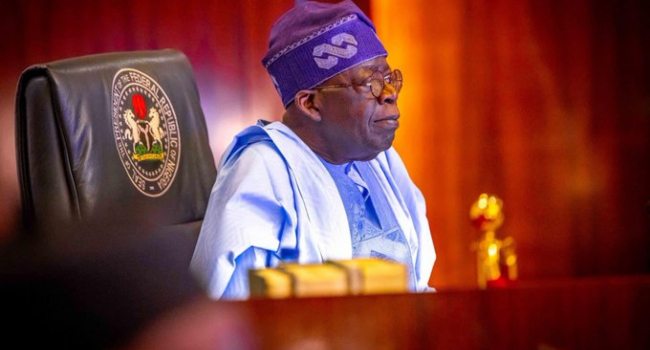
President Bola Tinubu on Monday assured residents of Oyo State that ongoing efforts to rescue abducted pupils and teachers in Oriire Local Government Area would be intelligence-driven, coordinated and sustained.

The President said the Federal Government would deploy every lawful means, including kinetic and non-kinetic measures, to ensure the safe return of the victims abducted during the May 15, 2026 attack in Esiele and Yawota communities.

“Our rescue efforts will be intelligence-led, careful, coordinated, and sustained. We will deploy every lawful tool available, both kinetic and non-kinetic, to ensure our children and teachers are safely returned home,” Tinubu stated in a statement posted on his X handle on Monday.

The President also expressed sorrow over the killing of a school teacher during the abduction and extended condolences to his wife, Mrs Mary Oyedokun, and the bereaved family.

“I also extend my deepest condolences to Mrs Mary Oyedokun, the wife of the late school teacher and her family. Their sacrifice will not be forgotten, and his family will not be abandoned,” he said.

Tinubu stressed that children should never be exposed to the trauma of abduction, noting that no parent should endure the pain associated with such incidents.

“No child should be taken from the safety of a classroom. No parent should have to endure this anguish,” the President added.

He assured affected communities that efforts to secure the release of the abducted pupils and teachers would remain sustained and intelligence-driven.

The statement comes amid growing concerns over insecurity in schools and rural communities following the abduction, which prompted the Federal Government to dispatch a high-powered delegation to the affected communities in Oriire Local Government Area.

The delegation included the Chief of Staff to the President, Femi Gbajabiamila; the National Security Adviser, Nuhu Ribadu; the Minister of Defence; and the Inspector-General of Police, Kayode Egbetokun, alongside other senior government and security officials.

Tinubu further disclosed that he had approved additional security measures, including the deployment of a specialised security unit equipped with advanced rescue capabilities to intensify efforts towards the safe return of the victims.

“I have also directed the deployment of a specialised security unit with advanced rescue capabilities to intensify efforts to secure the safe return of the abducted pupils and teachers,” he stated.

The President also revealed that the Federal Government, in collaboration with the Oyo State Government, was mobilising 1,000 forest guards to improve surveillance in forest corridors frequently exploited by criminal elements.

According to him, the initiative would be complemented by broader operational measures aimed at strengthening rescue operations and preventing future attacks.

Tinubu added that a request for the establishment of a military base in the affected area was receiving urgent consideration as part of efforts to bolster security.

Authorities have continued rescue operations amid rising concerns over the safety of schools and rural settlements, insisting that efforts remain focused on securing the release of the abducted victims and preventing a recurrence.

Continue Reading

National Issues

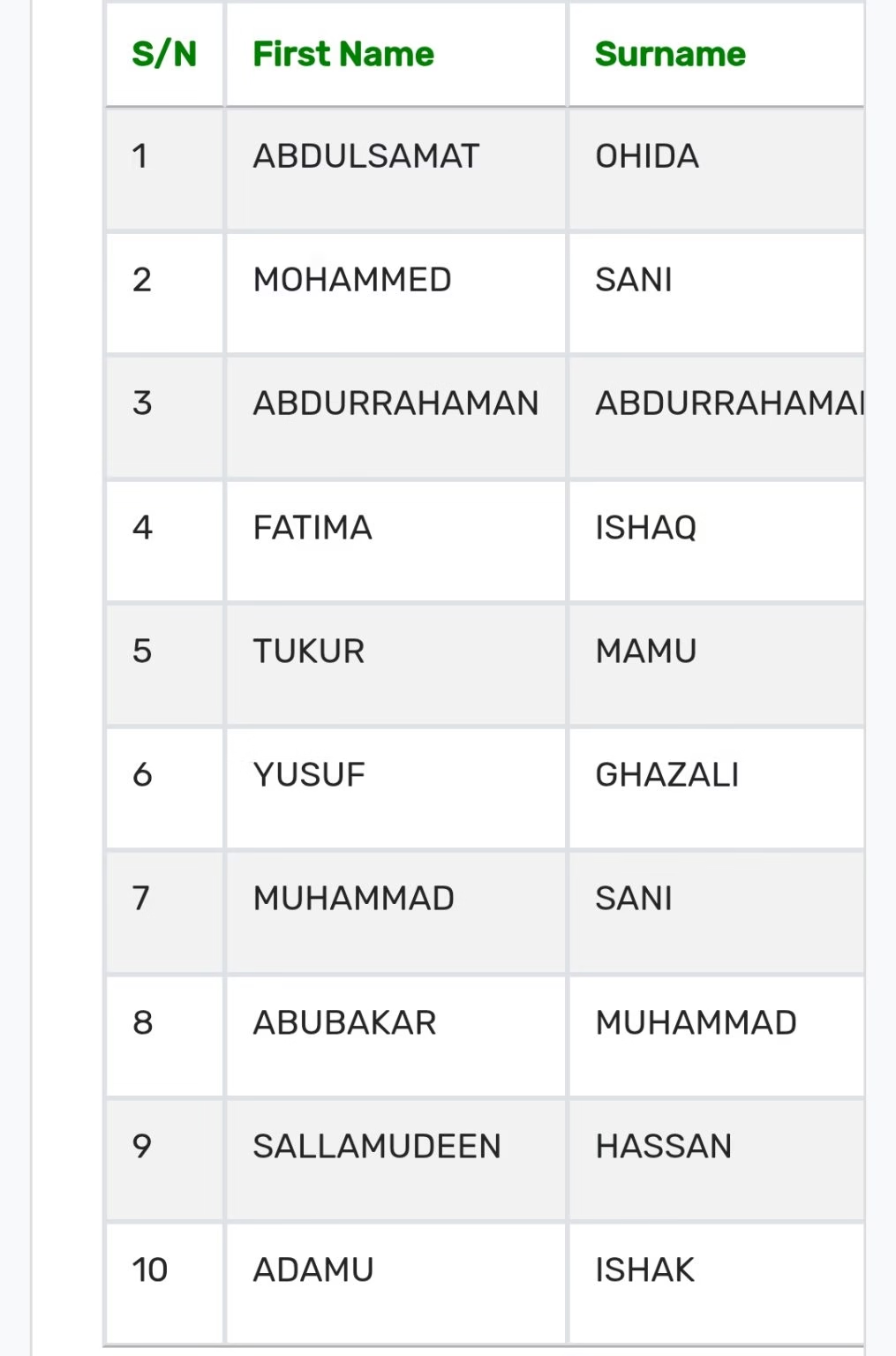
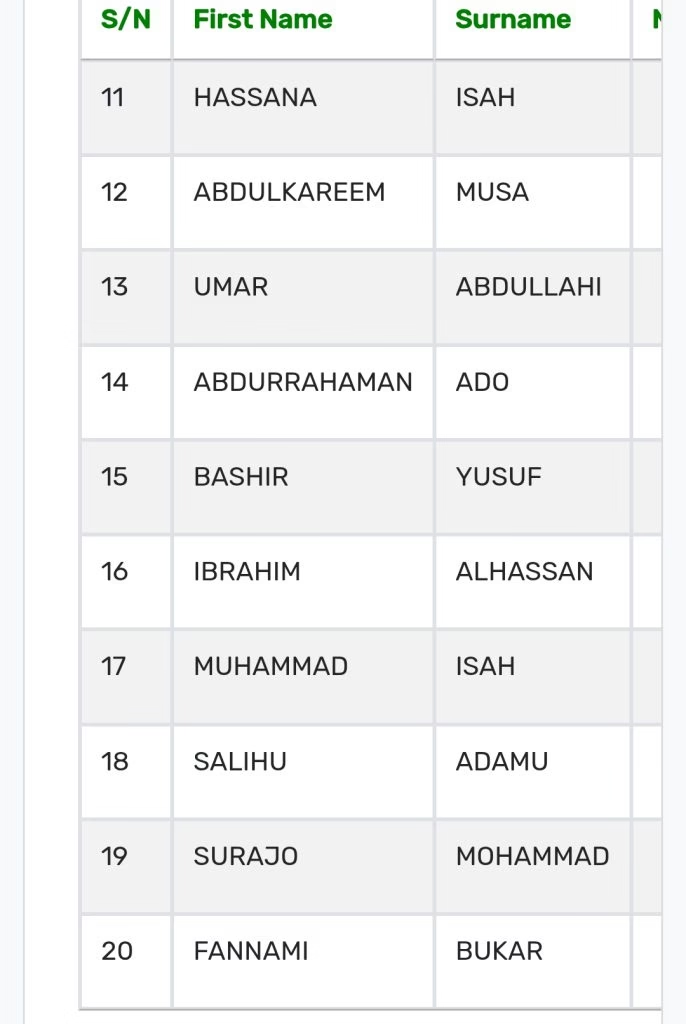
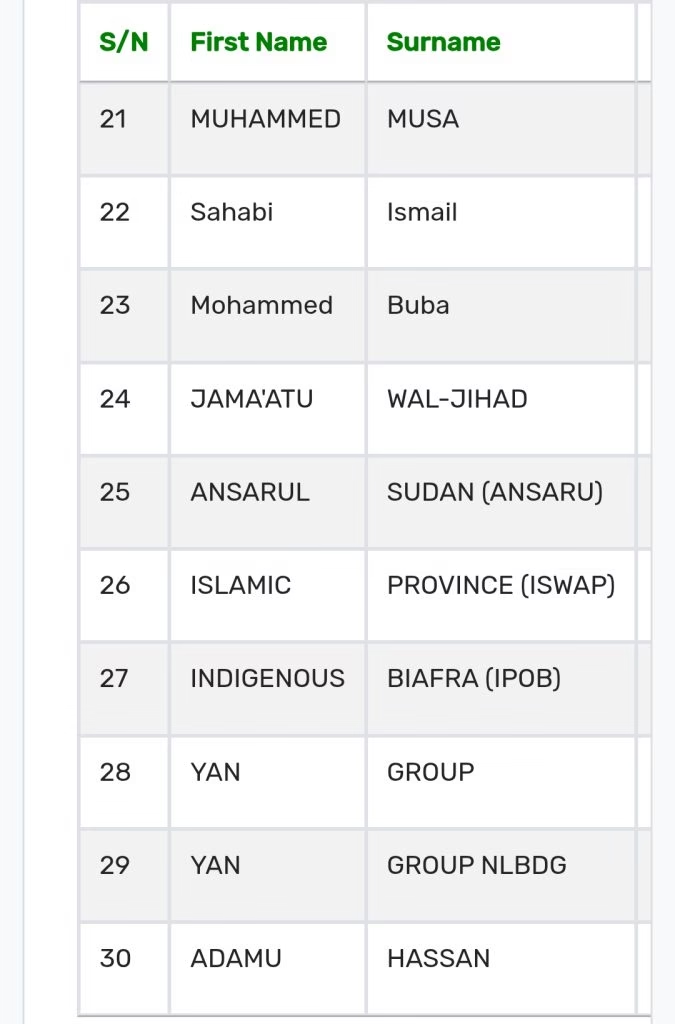
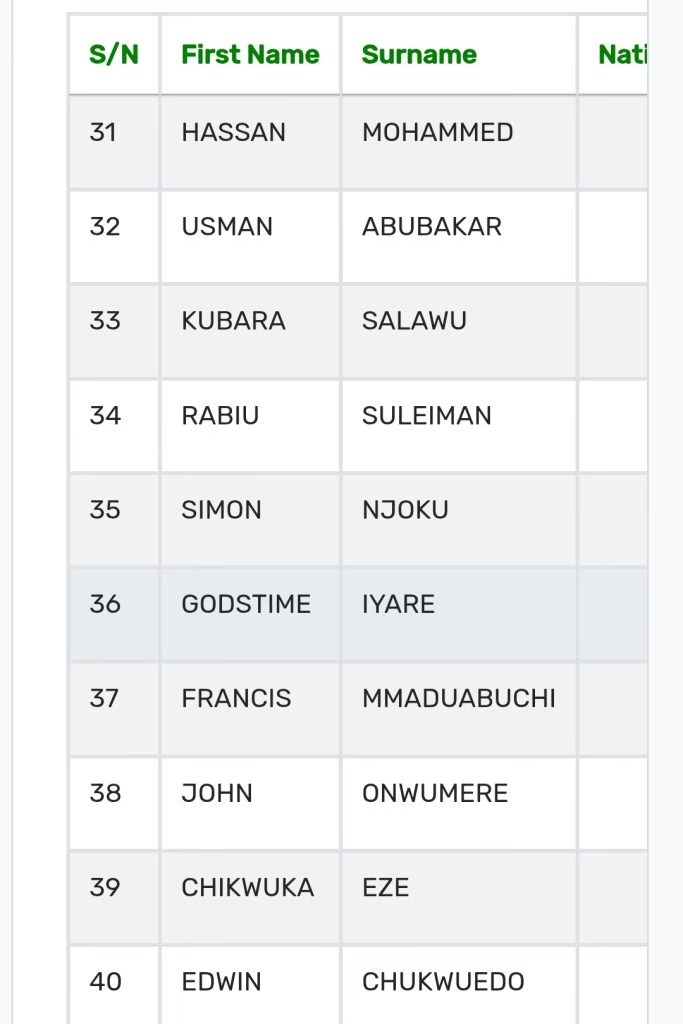
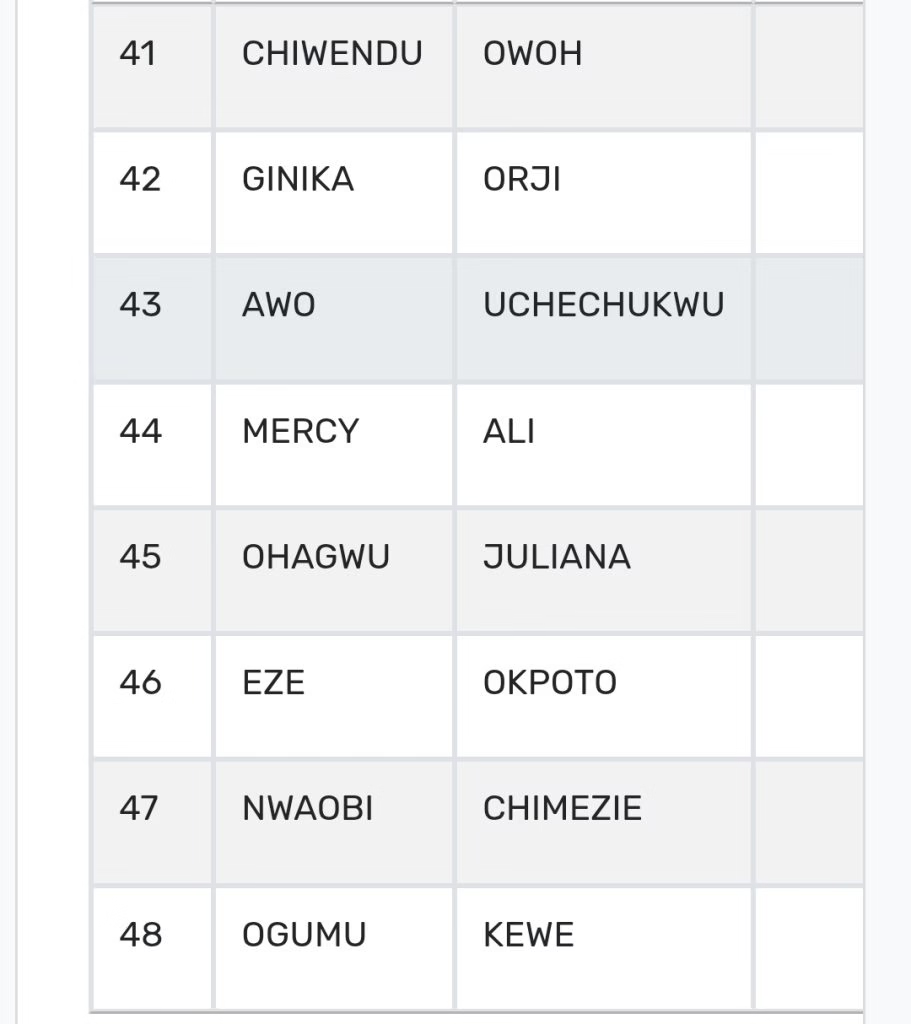
48 alleged terror financiers named by FG {SEE FULL LIST}

Published

on

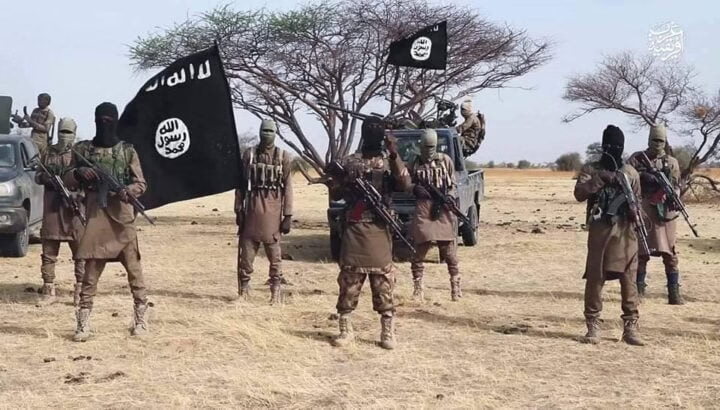
The Federal Government, on Saturday, published a list of 48 individuals and entities allegedly linked to terrorism financing in Nigeria, naming suspects with reported ties to outlawed groups including the Indigenous People of Biafra, Ansaru, and the Islamic State West Africa Province.

The list was released by the Nigeria Sanctions Committee as part of intensified efforts to disrupt financial networks sustaining terrorist activities across the country.

In a statement accompanying the publication, the committee said the designation of the individuals and organisations was in line with Nigeria’s legal and international obligations to combat terrorism financing.

“The Nigeria Sanctions Committee has approved the designation of the following individuals and entities for their alleged involvement in terrorism financing,” the statement read.

It added, “The action is pursuant to relevant laws and regulations aimed at identifying and freezing assets of persons and organisations linked to terrorist activities.”

The committee explained that the move was targeted at dismantling the financial backbone of insurgent and extremist groups operating within and beyond Nigeria’s borders.

Among those listed are individuals reportedly associated with the Indigenous People of Biafra, a proscribed separatist group; Ansaru, a faction linked to Al-Qaeda; and the Islamic State West Africa Province, one of the most active terrorist groups in the region.

Security experts have repeatedly stressed that cutting off funding sources remains a critical strategy in weakening terrorist operations.

Speaking on the development, a senior government official familiar with the process said the publication sends a strong signal about Nigeria’s resolve to confront terrorism at its roots.

“This is not just about naming names; it is about choking the financial lifelines of terror networks. Once funding is disrupted, their operational capacity is significantly weakened,” the source said.

The committee further noted that relevant authorities and financial institutions have been directed to take necessary steps in enforcing sanctions, including the identification and freezing of assets linked to the designated persons and entities.

“The public is also advised to remain vigilant and report suspicious financial activities to appropriate authorities,” the statement added.

The Federal Government reiterated its commitment to safeguarding national security, insisting that individuals or groups found culpable would face the full weight of the law.

As of the time of filing this report, detailed breakdowns of the sanctions and timelines for enforcement were yet to be made public.


Continue Reading

National Issues

Tinubu declares nationwide security emergency, orders massive recruitment

Published

on


Amid rising killings and a wave of mass abductions by gunmen and suspected terrorists across the country, President Bola Tinubu on Wednesday declared a nationwide security emergency.

The President, in a statement personally signed and released in Abuja, also ordered an immediate expansion of the manpower of the Armed Forces and the Nigeria Police Force as the Federal Government rushes to halt the worsening insecurity.

“Today, in view of the emerging security situation, I have decided to declare a nationwide security emergency and order additional recruitment into the Armed Forces,” Tinubu said.

“By this declaration, the police and the army are authorised to recruit more personnel. The police will recruit an additional 20,000 officers, bringing the total to 50,000.”

Tinubu explained that he had already approved upgrades of police training facilities nationwide and authorised the use of selected National Youth Service Corps camps as police training depots.

He added that officers withdrawn from VIP guard duties would undergo “crash training” before being redeployed to areas battling heightened insecurity.

The President also directed the Department of State Services to immediately deploy all trained forest guards to flush out terrorists and bandits hiding in forests across the country. The DSS was further authorised to recruit additional personnel.

“There will be no more hiding places for agents of evil. This is a national emergency. We are deploying more boots on the ground, especially in vulnerable communities. The times require all hands on deck. As Nigerians, we must all get involved in securing our nation,” he said.

Tinubu commended security agencies for jointly securing the release of 24 abducted schoolgirls in Kebbi State and 38 worshippers in Kwara State. He assured that efforts were ongoing to rescue students of Catholic schools in Niger State and other kidnapped Nigerians still in captivity.

“To the leadership and rank and file of our Armed Forces, I commend your courage and sacrifice. This is a challenging moment for our nation and for the military itself. I charge you to remain resolute, restore peace across all theatres of operation, and uphold the highest standards of discipline. There must be no compromise, no collusion, and no negligence,” he added.

The President announced that the Federal Government would support state governments operating community-based security outfits.

Tinubu also urged the National Assembly to begin reviewing laws that would allow states seeking to establish their own police forces to do so.

He warned states against maintaining boarding schools in remote areas without adequate security and advised churches and mosques in vulnerable areas to engage security agencies when organising large gatherings.

On the lingering farmer–herder clashes, Tinubu restated that the newly created Ministry of Livestock Development would provide long-term solutions. He appealed to herders to embrace ranching, end open grazing, and surrender illegal weapons.

“I sympathise with the families who have lost their loved ones in recent attacks on soft targets in Kebbi, Borno, Zamfara, Niger, Yobe, and Kwara states. I also pay tribute to our brave soldiers who have made the ultimate sacrifice, including Brigadier-General Musa Uba,” he said.

Warning criminal groups not to undermine the state, Tinubu emphasised that his administration possessed the resolve and capacity to secure the country.

“Fellow compatriots, I urge you not to give in to fear or despair. Stand firm to defend our freedom and values. Our administration will continue to guarantee peaceful co-existence and preserve our union.”

He called on citizens to remain vigilant, report suspicious activities, and cooperate with security agencies.

Tinubu’s declaration came amid nationwide outrage after the killing of at least five people in Kebbi and Kwara states, and the abduction of over 300 schoolchildren from Government Girls Comprehensive Secondary School, Maga, in Kebbi State, and St Mary’s Catholic School, Papiri, in Niger State.

Continue Reading

Advertisement

Entertainment

Advertisement

MegaIcon Magazine Facebook Page

Advertisement

MEGAICON TV

Advertisement

Trending