Top Stories
Stop managing COVID-19 patients in private facilities, Oyo EOC warns private healthcare providers
Published
5 years agoon
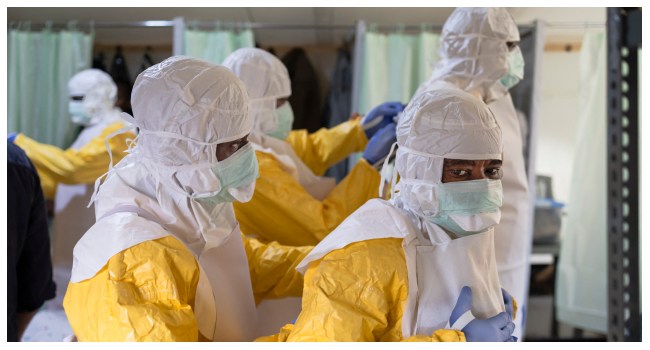
Owners of private health facilities in Oyo State have been warned against managing COVID-19 cases in their facilities, as this has been linked with the rising cases of the infection in the state.
The Emergency Operations Centre (EOC) and the state’s COVID-19 Technical Task Force, on Saturday, gave this warning, noting that there are approved 30 Testing Centres including the University College Hospital, UCH, Ibadan, for the purpose of testing samples.
It added that those suspected to have symptoms of coronavirus infection should be referred to these centres for testing and that testing for symptomatic or suspected cases is free.
A statement by Mr. Taiwo Adisa, Chief Press Secretary to Governor Seyi Makinde, indicated that the chairman of the state’s COVID-19 Technical Task Force, Professor Temitope Alonge, gave this warning in a memo addressed to Chief Executive Officers, Chief Operating Officers and Managers of private health facilities in the state.
Alonge, the statement noted, appealed to the health workers to comply strictly with the advisory, reiterating that the Oyo State Government could not afford any depletion in the healthcare workforce due to ill health arising from coronavirus infection.
The statement read in part: “The spread of the new wave of the coronavirus infection in Oyo State is increasing and the reports reaching the Emergency Operations Centre and the Technical Task Force is that some of the people infected had been managed for various ailments in some private health facilities.
“In some cases, the private health facilities fail to notify the EOC about suspected cases that would have had their samples taken by the EOC at the invitation of the private health facilities. Sampling of such cases by the EOC has been the established protocol and it is still in place.
“However, repeated breach of this protocol is worrisome and I wish to remind all health care providers that we are not immune to this infection and admitting suspected cases in private health facilities is unacceptable.
“No private health facility in Oyo State has been licensed to manage COVID-19 patients. Strict adherence to the laid down infection prevention and control measures will be enforced by the EOC at any private health facility. I wish to inform you that there are reports of an increase in the number of healthcare workers who have contracted coronavirus infection at various healthcare facilities.”
The Task Force indicated that managements of all public and private health care facilities in the state should be aware that “there are thirty (30) testing centres dotted all over Oyo State, including the UCH, Ibadan, and that patients suspected to have symptoms of coronavirus infection should be referred to these centres for testing.
“Please note that testing for symptomatic or suspected cases is free.
“There are five testing centres in Ibadan, namely; Alakia PHC (Lagelu LGA); Health is Wealth (Ibadan North LGA); General Hospital, Apata (Ibadan South West LGA); Ologuneru PHC (Ido LGA); and the University College Hospital, Ibadan.
“I wish to appeal to all for strict compliance with this advisory and to reiterate that the Oyo State Government can not afford any depletion in the healthcare workforce due to ill health arising from coronavirus infection.
“If you see something, say something, and if you know something, please speak up,” the statement concluded.
Related
You may like
Politics
2027: APC Perfects Consensus Strategy for Oyo
Published
8 hours agoon
May 12, 2026By
Mega Icon
Ahead of the 2027 general elections, the national leadership of the All Progressives Congress (APC) on Tuesday held a high-level strategic meeting with the Oyo State chapter of the party as part of efforts to reposition the APC for victory and prevent internal crisis ahead of the polls.
The development was first scooped by OYOINSIGHT.COM which quoted multiple party sources familiar with the closed-door deliberations.
Sources disclosed that the meeting, held in Abuja, focused largely on a consensus arrangement being considered by stakeholders of the party in Oyo State, in line with political templates reportedly being adopted in Lagos and Ogun states ahead of the next electoral cycle.
Party insiders said the move was aimed at strengthening unity within the fold of the opposition party in the state, minimising rancour during the primaries and presenting a formidable front against rival parties in 2027.
It was further gathered that some members of the state executive committee may have been subtly informed about preferred consensus candidates being considered for elective positions across the state.
Though details of the deliberations were still sketchy as of press time, sources hinted that the national leadership stressed the need for cohesion, discipline and strategic alignment among stakeholders to improve the party’s electoral fortunes in Oyo.
Those at the meeting included the Oyo APC Chairman, Moses Alake Adeyemo; the state secretary, Fatai Adesina Adeniyi; the Publicity Secretary, Olawale Sadare; the Organising Secretary, Aderemi Adepoju; and the Legal Adviser, Sunday Aborisade.
Others were the Women Leader, Adekemi Opatunde; the Youth Leader, Olalekan Oladejo; Joshua Oyebamiji; Tunde Oloyede; Sunday Babalola; Joseph Omoniyi; and Mojeed Adebayo.
As of the time of filing this report, the party had yet to issue an official statement on the outcome of the meeting.
Related
Politics
2027: Oyo APC Set for Credible Direct Primaries, Says Alake Adeyemo
Published
2 days agoon
May 11, 2026By
Mega IconThe Chairman of the All Progressives Congress (APC) in Oyo State, Chief Moses Alake Adeyemo, on Monday assured aspirants and party members that the party would conduct transparent, peaceful and credible direct primaries ahead of the 2027 general elections.
Adeyemo declared that no aspirant would be victimised or denied a level playing field, stressing that the party leadership remained committed to internal democracy and progressive ideals.
The former deputy governor spoke while receiving members of the APC Screening and Appeal Committees deployed from the party’s National Secretariat in Abuja at the APC Secretariat in Oke-Ado, Ibadan.
He disclosed that although the party initially explored consensus arrangements across elective positions, prevailing realities indicated that direct primaries would be conducted in some areas, including the governorship contest.
Adeyemo said the party had already put necessary structures in place to ensure a hitch-free exercise capable of strengthening unity within the APC.
He said: “We set machineries in motion for us to achieve the aim of consensus across board but reports available to me indicate that we would have to go by the second option which is direct primary in certain cases including the governorship ticket.
“To this end, we shall work towards organising free, fair and credible exercise in all the affected areas even as we cannot rule out the possibility of some aspirants having a rethink and supporting the consensus arrangement as necessary.
“Where we have more than an aspirant, Abuja would send people to conduct primaries and we at the state level would provide the required support to make everything work out in the interest of our great party.”
The APC chairman explained that all registered party members would participate fully in the exercise at their respective wards on dates to be announced by the National Secretariat.
According to him, affirmation would be adopted in areas where consensus candidates emerge, while voting would be conducted wherever direct primaries become necessary.
“For consensus, members will lend their voices for affirmation while voting will be done in the cases of direct primary,” he added.
Speaking earlier, Chairman of the Screening Committee and former Speaker of the Ondo State House of Assembly, Rt. Hon. Taofiq AbdusSalam, assured party faithful that the committee would carry out a thorough, transparent and unbiased screening process.
He said only eligible aspirants would be cleared to participate in the primaries and eventually fly the APC flag in the forthcoming elections.
Other members of the Screening Committee are Kamal Sanusi (Secretary), Smart Oluwole, Tunde Kolade and Olabamiji Agunloye.
Members of the Screening Appeal Committee are Jibola Oduwole (Chairman), Abimbola Jack (Secretary) and Jelil Jimoh.
Related
Politics
NDC zones 2027 presidency to South, reserves 2031 for North
Published
3 days agoon
May 9, 2026By
Mega IconThe Nigeria Democratic Congress on Saturday zoned its 2027 presidential ticket to Southern Nigeria, declaring that the party’s candidate would serve a single four-year term if elected.
The decision was reached during the party’s national convention held in Abuja amid growing momentum within the opposition platform following a wave of high-profile defections from other political parties.
Announcing the development on its official social media handle, the party stated, “NDC presidential ticket is zoned to the South!!”
The party also resolved that its 2031 presidential ticket would be ceded to Northern Nigeria as part of efforts to maintain regional balance and internal equity.
The convention comes as key opposition figures, including former Labour Party presidential candidate, Peter Obi, and former New Nigeria People’s Party presidential candidate, Rabiu Kwankwaso, joined party leaders and delegates at the Abuja gathering.
Saturday’s convention is expected to ratify several recent decisions taken by the party’s National Executive Committee, including zoning arrangements, amendments to the party constitution, and the election of new national executives.
According to the convention agenda obtained by journalists, discussions centred on zoning, ratification of the amended constitution, and leadership restructuring ahead of the 2027 general elections.
The NDC has in recent weeks witnessed a surge in defections from rival opposition parties, particularly the African Democratic Congress and the Peoples Democratic Party.
On Tuesday, no fewer than 17 members of the House of Representatives defected from the ADC to the NDC.
Their defections were formally announced during plenary at the House of Representatives.
The lawmakers include Yusuf Datti, Uchenna Okonkwo, Adamu Wakili, Thaddeus Attah, George Ozodinobi, Lilian Orogbu, Oluwaseyi Sowunmi, Peter Aniekwe, Mukhtar Zakari, George Oluwande and Munachim Umezuruike.
Others are Emeka Idu, Jesse Onuakalusi, Ifeanyi Uzokwe, Afam Ogene, Murphy Omoruyi and Abdulhakeem Ado.
The defections came barely two days after Obi and Kwankwaso formally joined the NDC from the ADC.
The duo were presented with the party’s membership cards last Sunday shortly after a closed-door meeting with party leaders.
A former Governor of Bayelsa State and NDC national leader, Seriake Dickson, officially welcomed the opposition figures into the party.
Obi had attributed his exit from the ADC to worsening internal crises, external interference and what he described as increasing hostility within party structures.
The former Anambra State governor said Nigeria’s political environment had become increasingly toxic, marked by intimidation, insecurity and sustained scrutiny of opposition figures.
He also lamented that institutions meant to protect citizens were now often deployed against them, while individuals committed to genuine public service faced mounting pressure both publicly and privately.
Related
Advertisement
Entertainment
Adekunle Gold, Simi welcome twins
Ayefele drops new album, Reflections
Reggae Legend, Jimmy Cliff, Dies At 81
Photos: Davido blows $3.7m on lavish Miami white wedding for Chioma
FAAN probes K1 for spilling alcohol on airport officer during boarding
Odunlade Adekola loses father
MegaIcon Magazine Facebook Page
MEGAICON TV
Advertisement
Trending
-
Politics2 days ago2027: Oyo APC Set for Credible Direct Primaries, Says Alake Adeyemo
-
Politics8 hours ago2027: APC Perfects Consensus Strategy for Oyo
-
News1 week agoTCN plans power outage in Ibadan over substation maintenance
-
News5 days agoTegbe clarifies: No 3-month promise on power grid, outlines realistic reform timeline