Connect with us

Crime & Court

SERAP reacts to $16bn power projects, backs EFCC’s decision to probe past govts’ spending

Published

on

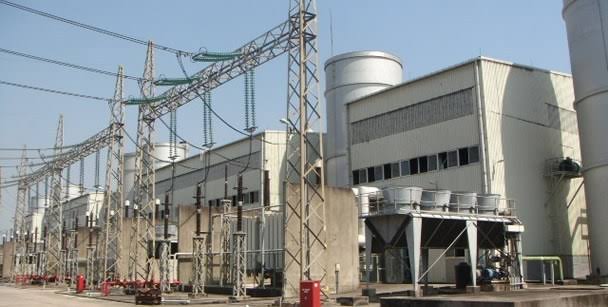
The Socio-Economic Rights and Accountability Project (SERAP) has agreed that  “the reported probe by the Economic and Financial Crimes Commission (EFCC) of the past governments, starting with the government of former president Olusegun Obasanjo’s $16 billion power project.

SERAP noted that it is an opportunity for the anti-graft agency to show that former heads of state and other high-ranking public officials are not immune from investigation and prosecution for allegations of grand corruption in Nigeria.

“This probe is something, which SERAP has consistently called for. Nigerians have for far too long been denied justice and the opportunity to get to the bottom of why they continue to pay the price for corruption in the electricity sector–staying in darkness, but still made to pay crazy electricity bills.”

According to reports, the EFCC has begun the probe of the $16 billion power project of the administration of former President Olusegun Obasanjo. While some put the exact cost of the project at $16 billion others say it is $13.8 billion. Key contractors and about 18 top public officers allegedly involved in the power project scam during the Obasanjo administration, and those of former Presidents Umaru Yar’Adua and Goodluck Jonathan, may also be arrested.

SERAP, in a statement signed on Sunday by its deputy director, Kolawole Oluwadare, said: “The probe is timely, especially coming at a time of citizens’ frustrations at persistent allegations of corruption and the impacts on their human rights. Investigating allegations of grand corruption and prosecuting former heads of state and other high-ranking officials where such allegations show relevant and sufficient admissible evidence would address the grave travesty that has for many years occurred in the power sector.”

The organization also added: “The EFCC should urgently invite anyone suspected to be involved for questioning. The agency should also expand the probe to cover the alleged squandering of a total of N11 trillion in the power sector between 1999 and 2015, and the unresolved case of the reported missing $12.4 billion oil windfall, allegedly spent between 1988 and 1993 by the government of former military dictator, General Ibrahim Babangida.”

“The EFCC has the full support of Nigerians in its efforts to hold high-ranking public officials to account for grand corruption, and if consistently, fairly and diligently pursued, this probe would contribute to ending impunity for corruption, and to mobilizing and encouraging youth civic engagement in the anti-graft fight in the country. SERAP stands ready to work with the EFCC in pursuing all allegations of grand corruption.

“SERAP notes that former presidents have routinely faced corruption charges in countries like Iceland, Kyrgyzstan, Brazil, Montenegro, South Korea, Pakistan, Zimbabwe, South Africa, Slovakia, Peru, and Mauritius, and the probe by the EFCC would mean this list would grow even further to include Nigeria.

“Impunity for grand corruption will continue as long as high-ranking public officials go largely unpunished for their alleged crimes. It is by pursuing these allegations and taking the evidence before the court that the truth will be revealed and justice best served. Addressing impunity in the power sector should be total. This would help to further public perception of fairness and thoroughness.

“Lack of regular electricity supply in the country had occasioned many other problems, including lack of access to potable water. The failure by successive governments to tell Nigerians the truth about allegations of corruption in the power sector amounts to a failure to ensure that electricity services are progressively made available, on the basis of equality and non-discrimination.

“In November 2016, SERAP petitioned the former Chief Justice of Nigeria, Walter Onnoghen, urging him to probe the alleged spending of the $16 billion. In April 2017, SERAP sent President Muhammadu Buhari an open letter, advising him to take allegations of corruption in the power sector to the international criminal courts to ensure that justice is served.

“SERAP has also called on Mr Buhari to refer the alleged $16 billion spending on electricity between 1999 and 2007 to the EFCC. Mr Buhari subsequently raised questions over the issues, saying that ‘one of the former Heads of State was bragging that he spent more than 15 billion American dollars, not naira, on power. Where is the power? Where is the power?

“In August 2017, SERAP published a report, ‘From Darkness to Darkness: How Nigerians are Paying the Price for Corruption in the Electricity Sector’, which revealed how over N11 trillion meant to provide regular electricity supply was allegedly squandered under the governments of former presidents Olusegun Obasanjo, Umaru Musa Yar’Adua and Goodluck Jonathan”, the statement concluded.

Meanwhile, the said report reads: “The Obasanjo’s administration spent $10 billion on NIPP with no results in terms of increase in power generation. $13.278,937,409.94 was expended on the power sector in eight years while unfunded commitments amounted to $12 billion.

“The Federal Government then budgeted a whopping N16 billion for the various reforms under Liyel Imoke (2003 to 2007) which went down the drains as it failed to generate the needed amount of electricity or meet the set goals. Imoke was alleged to have personally collected the sum of $7.8 million for the execution of the contract for the construction of the Jos-Yola Transmission Line, which was never executed. There were documented/reported allegations of corruption against Imoke that fizzled-out shortly thereafter.”

Comments

Crime & Court

‘I was misled,’ Villa worker tells court in alleged coup plot trial

Published

on

The fourth defendant in the alleged coup plot trial before the Federal High Court in Abuja, Zekeri Umoru, on Tuesday denied knowledge of any plan to overthrow President Bola Tinubu’s government, declaring in a recorded statement played in court that he was “misled”.

Umoru, a maintenance worker at the Presidential Villa engaged by a construction firm, made the claim in a video recording tendered by the prosecution as part of evidence against six defendants standing trial over the alleged plot.

In the footage played in open court, the defendant told investigators that he was introduced to key figures in the case by the third defendant, Inspector Ahmed Ibrahim, who is attached to the Presidential Clinic.

He said Ibrahim introduced him to one Hassan Mohammed, whom he later discovered to be Colonel Mohammed Ma’aji.

Umoru explained that he initially believed Ma’aji was a civilian businessman who intended to engage him for electrical work at a building under construction.

He, however, told investigators that he subsequently received several cash payments from Ma’aji during meetings attended by Ibrahim and another associate identified as Usman.

Recounting one of such meetings at a bar, Umoru said Ma’aji allegedly gave between N100,000 and ₦120,000 to him and others after buying drinks and asking about their professions.
He further disclosed that on September 24, 2025, Ma’aji allegedly handed him a “Ghana Must Go” bag filled with cash.

According to him, he deposited the money in a bank, where it was counted and confirmed to be N8.8m.

He added that an additional N2m was allegedly given to him the following day during another meeting involving Inspector Ibrahim.

Umoru told investigators that he became uneasy over the repeated cash payments and demanded an explanation from Ibrahim.

He claimed that Ibrahim told him Ma’aji was dissatisfied with the state of the country and intended to “sanitise the government” with the support of unnamed associates described as “boys”.

The defendant further alleged that discussions included plans to involve an ambulance driver to facilitate access into the Presidential Villa, with promises of financial rewards.

Despite the revelations, Umoru maintained that he had no knowledge of any coup plot.

“I was misled,” he said, adding that he would have distanced himself from Ma’aji had he known he was a military officer or had intentions beyond business.

Umoru also admitted escorting Usman into the Presidential Villa, noting that security personnel granted access after he identified the visitor as someone who came to see him.

He added that he later caught Usman taking photographs in his office and warned him to desist.

The defendant expressed regret during the interview, apologised to his employers, and affirmed his support for President Tinubu’s administration.

The court also viewed a separate video involving an Islamic cleric, Sheikh Imam Kassim Goni, who similarly denied involvement in the alleged plot.

Goni told investigators that funds he received from Ma’aji were meant strictly for prayers and charitable causes, including spiritual interventions linked to alleged promotion challenges.

However, investigators presented financial records indicating transfers running into millions of naira, including a ₦10m transaction in October 2024, which they said contradicted aspects of his claims.

The prosecution further argued that discussions captured in the videos—particularly references to gaining access and procuring “work tools”—raised concerns about a coordinated scheme, although both individuals denied any knowledge of a coup plot.

Following the presentation of the video evidence, counsel to the sixth defendant, Michael Numa (SAN), told the court that he had just been served with his client’s video exhibits and required time to study them.

While defence counsel sought an adjournment, the prosecution, led by the Director of Public Prosecutions, Rotimi Oyedepo (SAN), urged the court to adhere to its earlier directive for accelerated hearing of the case.

Justice Abdulmalik subsequently adjourned proceedings till May 11, 12 and 13, 2026, for continuation of trial.

Continue Reading

Crime & Court

IGP orders dismissal, prosecution of ASP over Delta suspect’s killing

Published

on

The Inspector-General of Police, Olatunji Disu, has approved the dismissal and prosecution of an Assistant Superintendent of Police, Nuhu Usman, over the killing of a suspect, Mene Ogidi, in Effurun, Delta State.

The decision followed the outcome of a review by the Force Disciplinary Committee, which examined the circumstances surrounding the incident and other related internal disciplinary procedures.

Addressing an emergency press conference in Abuja on Friday, the IGP said the officer, alongside members of his team found culpable in the matter, had been recommended for dismissal from the Nigeria Police Force.

According to him, the police panel established that the officer acted in gross violation of Force Order 237 and other extant regulations guiding the use of firearms.

He said, “The disciplinary committee recommended the immediate dismissal of ASP Usman, as well as other officers found culpable in the incident.

“Upon dismissal, all officers will be handed over to the appropriate judicial authorities to face criminal charges for unlawful homicide.”

Disu added that he had approved the recommendations and forwarded them to the Police Service Commission for ratification in line with due process.

The IGP reiterated that the Nigeria Police Force maintains zero tolerance for extrajudicial killings, abuse of power and all forms of misconduct.

He said, “No uniform confers the right to take life outside the provisions of the law. Any officer who violates this fundamental principle will face the full weight of disciplinary and legal consequences.”

Disu also extended condolences to the family of the deceased, 28-year-old Mene Ogidi, assuring them that the incident would not be treated lightly.

He said the Force remained committed to ensuring that justice was not only done but seen to be done in a manner that would reinforce public confidence and institutional accountability.

The IGP urged members of the public to remain calm and law-abiding, stressing that the police remained committed to discipline, professionalism and the protection of the rights and dignity of all citizens.

The killing of Ogidi has sparked outrage on social media. According to the police, the incident occurred on April 26, 2026, when operatives attached to Area Command Effurun acted on intelligence that the deceased had been apprehended while allegedly attempting to waybill a parcel containing a Beretta pistol loaded with four rounds of ammunition.

Continue Reading

Crime & Court

Joshua crash: Driver faces fresh charges as court adjourns trial

Published

on

File photo of Adeniyi and Anthony Joshua

The Ogun State Magistrate’s Court sitting in Sagamu has adjourned the trial of the driver involved in the road crash that affected former heavyweight boxing champion, Anthony Joshua, to June 2, 2026.

The court, presided over by Magistrate Olufunilayo Somefun, fixed the new date to allow the prosecution to file fresh charges in the case.

The defendant, Adeniyi Mobolaji, is facing a four-count charge bordering on dangerous and negligent driving resulting in death.

It was gathered that the matter had been adjourned about four times to enable the prosecuting counsel, G. O. Ogunyomi, amend the charges before the court.

Mobolaji was accused of reckless and negligent driving, contrary to Section 6(1) of the relevant law, as well as driving without due care and attention, causing bodily harm, and damage to property under Section 7(1).

He was also alleged to have driven without a valid national driver’s licence, contrary to Section 10(1) of the Federal Highway Act.

Ruling on the prosecution’s application for adjournment, the magistrate granted the request and fixed June 2 for proper hearing. The defence counsel did not oppose the application.

Speaking after the proceedings, counsel to the defendant, Abiodun Olalekan, said the adjournment was necessary to ensure justice for all parties involved.

The 46-year-old defendant was involved in the fatal crash that claimed the lives of Joshua’s personal trainer, Latif Ayodele, and strength and conditioning coach, Sina Ghami, along the Lagos-Ibadan

Expressway on December 29, 2025.
The Lexus SUV conveying the boxer collided with a stationary truck, leaving Joshua and the driver with minor injuries.

Joshua was later discharged from the hospital after being certified clinically stable.

The deaths of Ayodele and Ghami drew widespread reactions within the international boxing community, where both men were regarded as key figures in Joshua’s camp.

Their remains were subsequently repatriated to the United Kingdom, where a funeral prayer was held on January 4, 2026, at the London Central Mosque.

Continue Reading

Advertisement

Entertainment

Advertisement

MegaIcon Magazine Facebook Page

Advertisement

MEGAICON TV

Advertisement

Trending