Connect with us

News

Pilgrims throng Mount Arafat for peak of hajj

Published

on

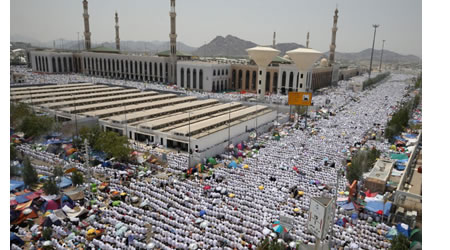
Their palms facing the sky, around two million Muslims gathered Thursday on Saudi Arabia’s Mount Arafat for the highlight of the hajj pilgrimage, one of the world’s largest annual gatherings.

Muslim worshippers, some carrying umbrellas to protect them from the scorching sun, gather for prayer at Namirah mosque near Mount Arafat, also known as Jabal al-Rahmah (Mount of Mercy), where the Prophet Mohammed is believed to have given his final sermon, on August 31, 2017, ahead of the climax of hajj.

With temperatures pushing 40 degrees Celsius (104 Fahrenheit) under the desert sun, the faithful climbed the hill east of Mecca where Muslims believe the Prophet Mohammed gave his last sermon some 14 centuries ago. The second day of the hajj — a five-day pilgrimage which all Muslims must perform at least once in their lifetime if physically and financially able — is dedicated to prayer and reflection.

“I came up here last night and prayed, took pictures and called my family and friends,” said Maolana Yahia, 32, who made the trip from Indonesia. This year’s hajj has seen the return of pilgrims from Saudi Arabia’s arch-rival Iran following a diplomatic row and a deadly stampede in 2015. But thousands who would normally make the journey from neighbouring Qatar are absent apart from a few dozen because of the diplomatic crisis shaking the Gulf.

Helicopters flew around the area as the pilgrims converged from dawn on the Mount Arafat plain and the hill known as Jabal al-Rahma, or Mount of Mercy. Forming a sea of white, the pilgrims ascended the hill and took up positions to pray on rocks already heated by the morning sun. On the concrete pathways linking the plain to the hill, hundreds of thousands of devout Muslims invoked God, as others rested in makeshift tents or on sheets along the side of the road amid empty bottles and waste. – Beating the heat – Tunisian mother-of-three Fatima Arfawi said she was moved beyond words. “This is the first time I see anything like this, ever,” she said.

“This day is dedicated to prayer for my three children and my family.” In a hospital opposite the mountain, an area was set aside for people suffering dehydration or heat exhaustion. Saudi Arabia’s Red Crescent said it had deployed 326 ambulances along the pilgrimage route to handle health emergencies.

“Some pilgrims, for example, forget to protect their heads with an umbrella when they pray,” said Bandar Al-Harthi, a nurse at a hospital facing Mount Arafat. In the evening, the pilgrims will travel to Muzdalifa where they will spend the night before taking part in a symbolic stoning of the devil. The Jamarat Bridge, where the ritual is held, was the scene of a stampede in 2015 that claimed the lives of nearly 2,300 pilgrims — the worst disaster in the history of the hajj.

Tehran reported the largest number of stampede victims, with 464 Iranians among the dead. – Politics and pilgrimage – The next year, amid heightened political tension between Saudi Arabia and Iran, Iranian pilgrims stayed away from the hajj after authorities from the two countries failed to agree on arrangements and logistics. Iranian authorities say more than 86,000 Iranian pilgrims are taking part this year, each equipped with an identity bracelet in case of any accident.

Reza, a 63-year-old former oil company official from Iran, said he was torn between the joy of taking part and lingering grief over the stampede. “They’ve taken more security measures otherwise we would not have come,” he said. Saudi Arabia says it has deployed more than 100,000 security personnel to keep pilgrims safe. At the foot of Mount Arafat, mobile barriers have been installed to control the movement of the crowds.

“They will be moved to enlarge the passages when there are more pilgrims,” said Ahmed al-Baraka of the Saudi security forces. Seated near the barriers at Mount Arafat, eight young women from Ghana who are all related took a brief respite after making their way from Mina, east of Mecca. Aged between 18 and 30, for some of them it was their first time away from home. “This is the first time I leave Ghana,” said 25-year-old Khadija. “My husband let me come alone because it is Mecca.” AFP

Comments

News

Oseni mourns ex-Oyo lawmaker Akeem ‘Able’, says Oyo APC has lost loyal progressive

Published

on

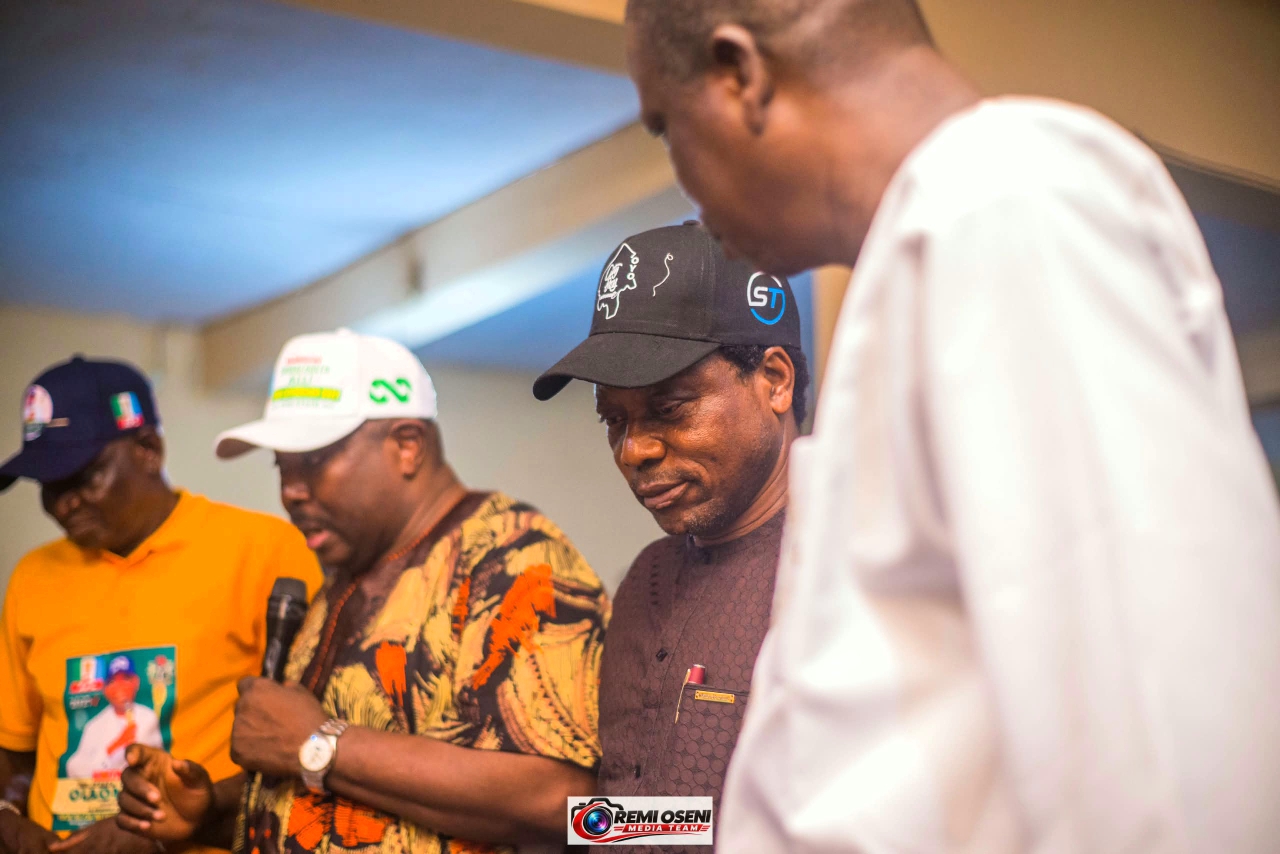
The lawmaker representing Ibarapa East/Ido Federal Constituency in the House of Representatives, Engr. Aderemi Oseni, has mourned the death of a chieftain of the All Progressives Congress (APC) in Oyo State and former member of the Oyo State House of Assembly, Hon. Akeem Abimbola Oladipupo, popularly known as Able, describing his demise as a painful loss to the progressive family.

Oladipupo, who represented Ibadan North-West Constituency in the Oyo State House of Assembly, was widely regarded as a grassroots politician and committed party loyalist until his passing.

Oseni, who is also the Chairman, House Committee on Federal Roads Maintenance Agency and the APC candidate for Oyo South Senatorial District, said the late politician’s death had created a vacuum within the party and among those who benefitted from his unwavering commitment to public service.

In a condolence statement issued on Monday by his Media Aide, Idowu Ayodele, and made available to journalists in Ibadan, the Oyo State capital, the federal lawmaker described the late Oladipupo as a dependable progressive, humble political actor and loyal party stalwart whose impact would remain indelible.

He said the deceased dedicated his life to serving humanity, strengthening the progressive movement and supporting the aspirations of many at the grassroots.

Oseni said, “The death of Hon. Akeem Abimbola Oladipupo (Able) came to me as a rude shock. Oyo State and the progressive family have indeed lost a committed, loyal and selfless leader whose passion for service, humility and dedication to the people stood him out.

“He was not just a politician but a bridge-builder, a dependable ally and a grassroots mobiliser who believed strongly in the ideals of our great party. His contributions to the growth of the APC in Oyo State and his service to humanity will remain unforgettable.”

The APC senatorial candidate noted that the late former lawmaker remained steadfast in promoting peace, unity and political development, adding that his simplicity and accessibility endeared him to many across political divides.

According to Oseni, the late politician’s legacy of service and sacrifice would continue to inspire younger politicians and party faithful.

He, however, urged members of the APC, associates and family members of the deceased to take solace in the remarkable life he lived and the positive impact he made during his lifetime.

Oseni also prayed for the repose of the deceased’s soul and for God to grant his family the fortitude to bear the painful loss.

Continue Reading

News

Governors Push N100,000 Minimum Wage to Ease Workers’ Economic Burden

Published

on

State governors have proposed a new national minimum wage of N100,000 for Nigerian workers as part of efforts to cushion them from the biting effects of inflation and the rising cost of living.

Governor AbdulRahman AbdulRazaq of Kwara State, who is also the Chairman of the Nigeria Governors’ Forum (NGF), disclosed the proposal on Saturday in a post by the state government’s official Facebook page. He said the move aims to improve workers’ welfare while ensuring that government finances remain sustainable.

“State governments recognise the urgent need to improve workers’ welfare in response to the current economic realities facing Nigerians,” AbdulRazaq said.

“We are actively engaging with the Federal Government and organised labour to arrive at a wage structure that is fair to workers and sustainable for government finances.”

The NGF chairman explained that ongoing discussions are focused on balancing the need to boost workers’ purchasing power with the capacity of governments to deliver essential public services and development projects.

“The goal is to improve the living conditions of workers while ensuring that states can continue to meet their obligations and sustain projects that directly impact citizens,” he added.

The proposed N100,000 minimum wage is expected to intensify national debates on salaries, inflation, and broader economic reforms as Nigerians continue to contend with rising food prices, transportation costs, and other living expenses.

Currently, Nigeria’s statutory minimum wage stands at N70,000 per month. Some states, including Lagos, Rivers, and Imo, are already paying above the national benchmark to support workers amid the country’s economic challenges.

Meanwhile, the Nigeria Labour Congress (NLC) has continued to call for a comprehensive review of salaries, insisting that workers deserve a living wage that reflects present-day economic realities rather than merely guaranteeing survival.

Continue Reading

News

Petrol hits N1,533/litre as cooking gas prices jump nationwide

Published

on

The average retail price paid by consumers for Premium Motor Spirit, popularly known as petrol, rose to N1,532.93 per litre in April 2026, representing a 23.69 per cent increase compared to the N1,239.33 recorded in the corresponding period of 2025, findings by the National Bureau of Statistics (NBS) have shown.

The sharp rise in petrol prices came amid mounting inflationary pressure and worsening living costs, with Nigerians grappling with soaring transportation and food expenses that have continued to shrink household purchasing power.

The NBS disclosed this in its Premium Motor Spirit (Petrol) Price Watch for April 2026, released on Friday.

The report further showed that on a month-on-month basis, petrol prices rose by 18.97 per cent from N1,288.54 recorded in March 2026, underscoring persistent volatility in the downstream petroleum market.

A breakdown of prices across states revealed that Yobe recorded the highest average retail price for petrol at N1,599.05 per litre during the review period.

Edo and Bauchi followed closely with average prices of N1,595.74 and N1,589.07, respectively.

However, Niger residents paid the least for petrol at an average of N1,403.89 per litre, while Sokoto and Katsina recorded N1,404.16 and N1,406.28 respectively.

At the zonal level, the South-South recorded the highest average retail price at N1,566.76 per litre, while the North-West posted the lowest at N1,508.81.

The latest petrol price increase comes as millions of Nigerians continue to battle the ripple effects of rising inflation, with higher energy costs worsening transportation fares and the prices of essential commodities.

Similarly, the NBS said the average retail price for refilling a 5kg cylinder of Liquefied Petroleum Gas, also known as cooking gas, rose by 13.73 per cent month-on-month to N8,706.93 in April 2026 from N7,655.73 recorded in March.
On a year-on-year basis, the price increased by 10.42 per cent from N7,885.60 recorded in April 2025.

Lagos recorded the highest average price for refilling a 5kg cylinder at N9,745.10, followed by Nasarawa at N9,451.70 and Bayelsa at N9,422.74.

In contrast, Anambra recorded the lowest average price at N7,204.76, while Ondo and Ogun followed with N7,239.49 and N7,825.75, respectively.

At the regional level, the North-West recorded the highest average retail price for refilling a 5kg cylinder at N9,025.07, followed by the North-East at N8,847.16, while the South-East posted the lowest average price at N8,224.37.

Also, the average retail price for refilling a 12.5kg cylinder of cooking gas increased by 13.89 per cent month-on-month to N22,382.20 in April 2026 from N19,652.83 in March.

Compared to April 2025, the price rose by 10.43 per cent from N20,268.06.

According to the NBS LPG Price Watch for April, Katsina recorded the highest average retail price for refilling a 12.5kg cylinder at N25,596.71, followed by Kogi at N24,558.25 and Gombe at N24,438.97.

Ogun recorded the lowest average price at N19,564.36, while Bauchi and Anambra followed at N20,178.87 and N20,511.90 respectively.

The North-West recorded the highest zonal average retail price for refilling a 12.5kg cylinder at N23,276.95, followed by the North-Central at N22,865.29, while the South-East posted the lowest average at N21,060.92.

The latest figures signal growing pressure on household energy costs, raising concerns over the implications for inflation and the cost of living in the coming months.

Continue Reading

Advertisement

Entertainment

Advertisement

MegaIcon Magazine Facebook Page

Advertisement

MEGAICON TV

Advertisement

Trending