Connect with us

Opinion

Oyo Guber 2023: Clash of the Titan Vs the Crafty

Published

on


Saturday, March 18, 2023, as electorates in Oyo State would seek to elect a governor, it sure to be a very interesting and keenly contested race in the chequered history of the political capital of the South West.

Full of intrigue, schemes, calculations and political antics. Permutations and predictions can turn those doing it nought. However, I offer an objective analysis based on the relative strengths and weaknesses of the major contenders

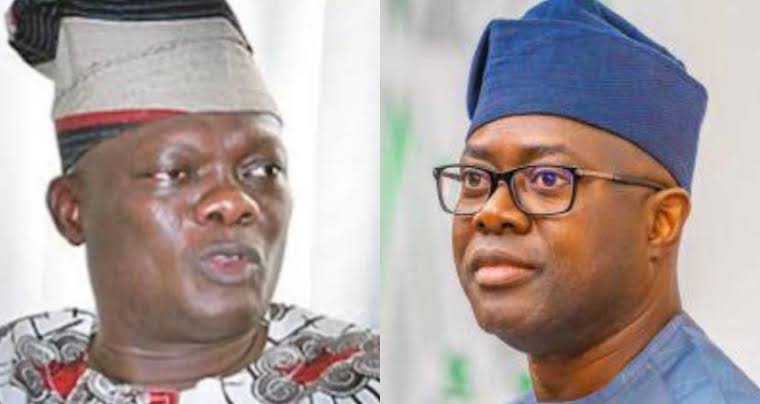
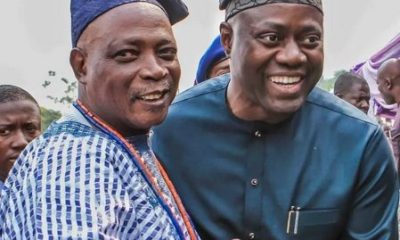
Post presidential and national assembly elections, Oyo State 2023 governorship has become a straight battle between the incumbent Governor Seyi Makinde of the Peoples Democratic Party (PDP) and a three-term Senator Teslim Folarin, the All Progressives Congress (APC) candidate.

Factors Against Seyi Makinde

The collapse of the coalition

It is no more news that Engr. Seyi Makinde won the 2019 election that brought him in as Governor of Oyo state on the wings of a political coalition mastered by a former governor of the state, High Chief Rashidi Ladoja against the All Progressives Congress (APC) led by late former Governor Abiola Ajimobi, who broke the jinx of a second term in the state. Not long into Governor Makinde’s tenure, major members and political juggernauts of the coalition had gone their separate ways.

Weakness of PDP in Oyo State

Hours before the 2023 governorship race, the Peoples Democratic Party (PDP) as a party in Oyo State is in tatters. G-5 alignment that Governor Makinde had with Governor Nyesom Wike of Rivers State dipped the fortunes of PDP in Oyo State. PDP leaders like, High Chief former Governor Rashidi Ladoja, ex-Deputy Governor Hazeem Gbolarunmi, ex-Reps member Mulikat Adeola, Alhaji Bisi Olopoeyan, Engr Femi Babalola among others have come out openly to declare that their supporters should vote against Governor Seyi Makinde.

The collapse of the Local Governments under Governor Makinde

Governor Makinde, who defended this publicly in a media chat that he opted not to empower the local governments. So these local governments became comatose, unable to deliver democratic dividends to the critical grassroots.

Legislators didn’t enjoy their tenures

Even if Governor Makinde survived the tsunami against himself, he’s likely to have problems with the State House of Assembly. The majority of house members, imagine the Speaker House of Assembly, Rt. Hon. Adebo Ogundoyin publicly complained about the governor’s styles, so, they have disillusioned them. Makinde didn’t make them perform. Most of these lawmakers may not be reelected. The PDP Speaker of the State House of Assembly publicly complained to his constituents about their frustrations.

Problems in the education sector

No fewer than 50 secondary schools in Oyo State were removed from the list of schools where WAEC examinations would be held henceforth due to cases of examination malpractice. Lecturers from higher institutions are against the governor as he foisted a sole administrator -consultant, a non-indigene to be in charge of all tertiary institutions. So, he did in many MDAs and LGs, rendering those organs of governance redundant, including the latest  poor rankings.

Debts Profile

The state of debts Profile of Oyo State, allegedly put at N400b, is not cheering. His critics quickly point out there are not many tangible, societally beneficial projects to justify such humongous debts profile.

Security

Comparatively, to the times of late Senator Abiola Ajimobi as Governor, the security of lives and properties has nosedived in Oyo State. It is believed that Governor Makinde didn’t help the situation as he was alleged to have empowered a “notorious thug”, Alhaji Mukaila Lamidi popularly known as ‘Auxilary’ to be the Chairman of Oyo State Park Management System (PMS).

Political Mis-Choice

In the quest to be the sole decider of things in the PDP, Governor Makinde independently choose Engr Joseph Tegbe over the incumbent Senator Lekan Balogun and foisted his will over the dictates of members of his party. He was also accused to assert severally that he has no political godfather and not reporting to any politician in Oyo State. Interestingly, Governor Makinde was reporting to Governor Wike in Rivers State.

He neglected core, indigenous and experienced PDP leaders in Oyo State and brought Governor Wike from Rivers State to inaugurate Oyo State projects and to lead his governorship campaigns.

Lack-Lustre Aides

In all the cabinet of Governor Seyi Makinde, one could not point to any of his commissioners who performed extraordinarily. All was done by Governor Makinde. In most cases, the names of his aides including commissioners are not known. Unlike most precious first ladies in Oyo State, his wife, Mrs Tamunominini Makinde didn’t quite have any tangible project ascribable to her.

Muslim Disposition

Having spent four years, many Muslim electorates believe it is the turn for a Muslim Governor in Oyo State. This disposition, it is believed by Muslims, that Sen. Teslim Folarin best represents this thought. Nevertheless, many civil servants are quite excited that regularly Governor Makinde pays their monthly salaries. Others feel satisfied with the level of infrastructure Makinde had been able to put in place. His gentlemanly postures are also attractive to many.

Despite his pluses, political pundits believe it will be a great task for Governor Seyi Makinde to survive the barrage of opposition and tsunami against him in the 2023 governorship election in Oyo State.

Things showing up for Teslim Folarin

Comparatively, especially after the Presidential election, the chances of the All Progressives Congress (APC) candidate in Oyo State, Senator Teslim Folarin emerging as the next Governor seems to be getting brighter. Some factors seem to help this:

Political Hardwork

Loathe him or like him, give it to Folarin, he has worked well and hard for this contest, while many of his opponents were undecided and confused. He understands the contest and has approached it as a very knowledgeable and experienced politician. He gave the contest his all.

Payback Time

Sen. Teslim Folarin did serious political work for the President-elect, Sen. Bola Tinubu, the three senatorial seats in Oyo State which APC won and the house of representatives seats. Give it to Folarin. He is a budding party leader and he has cutting-edge answers to emerging political issues. Curiously, he was able to inherit political leaders who the late Abiola Ajimobi and Adebayo Alao-Akala worked with, and he galvanized and managed them well. Indeed, the new Oyo State senators and the house of representatives newly elected are indebted to Sen. Teslim Folarin’s hybrid political mastery and blending of Oyo Amala politics with tech-savvy inputs. Folarin was there for them. They have vowed to wallop the Governor Makinde machinery in the guber contest as payback for ‘Oga Tessy’.

Ladoja’s endorsement

How Sen. Teslim Folarin was able to secure this remains miraculous. It is a Mastercard. High Chief Rashidi Ladoja, former Oyo State Governor, is not a baby politician in Oyo State, by any standard. He endorsed and galvanized a coalition for the incumbent governor before he could emerge as Governor against a ruling party. Ladoja has cult-like political followership, die-hard adherents and networks throughout Oyo State. A group of Mogajis, Baales and Chiefs have attacked former Ambassador Arapaja who double as Governor Makinde installed Deputy National Chairman for speaking against Ladoja, the highly revered Otun Olubadan of Ibadan land. They categorically asserted that whatever Chief Ladoja has said represented the Olubadan in Council.

Ibadan Chief Factor

Sen. Teslim Folarin is also a top-ranking chief in Ibadanland. It is not unexpected that they would not abandon their very own. High Chief Ladoja categorically stated:’ vote for Tessy, forget anything bad you may have against him.

Religious Factor

Sen. Folarin has already worked with the grassroots and established himself as a true unrepentant Muslim. Whereas, political analysts believe Chief Bayo Adelabu didn’t know which religion to claim. Governor Makinde hurriedly added ‘Bashiru’ to his name. Meanwhile, the vast Muslim electorates had adopted consistent Folarin as the Muslim candidate.

Oyo state cannot be an opposition

Asiwaju Bola Tinubu’s victory in February has gone to enhance Folarin ‘s chance in March as vast majority of the people do not imagine the State is under an opposition party as it was under Governor Makinde. People of the state want to be in the mainstream.

Image enhancement by Folarin

In days precedent to the election, Sen. Folarin engaged in several public interviews, debates and self-image marketing which sure worked on his behalf. Hitherto, the negative label was of a TKF, an illiterate, violence-loving, typical Amala politician from the Adedibu political dynasty who was just lucky in the political scenes. However, when he began to show forth his intellectual stuff, the negative label that he was not a sellable candidate went underground.

Adedibu political dynasty

Folarin was a leading member of the political dynasty of a late aristocratic power broker in Oyo State, Nigeria, Chief Lamidi Ariyibi Akanji Adedibu, the strong man of Ibadan politics, in their heydays. They didn’t abandon their very own, more so when Makinde betrayed PDP during the 2023 presidential election. Curiosity Adedibu ‘s PA, former Deputy Governor Gbolarunmi has taken up the fight against Seyi Makinde. Even the late Lamidi Adedibu’ widow, Chief Bose Adedibu, who also doubles as PDP Zonal Women Leader has been unusually quiet during the Guber campaigns. The PDP people’s support for Folarin, so massive, has made core APC conservative members so insecure of possible implosion in the Oyo State APC after the elections.

However, Sen. Folarin would still need the disgruntled APC members and leaders, especially those who have embraced other parties such as  Accord Party (AP).


Idowu Ayodele, writes from Ibadan, Oyo state.

Comments

Opinion

The Silent Thief in Nigeria’s Petrol Stations | By Solomon Oroge

Published

on

File photo of Dr. Solomon Oroge

• How systemic fraud is draining billions, weakening businesses and threatening the future of the downstream petroleum sector

The Nigerian petroleum retail industry remains one of the most important drivers of economic activity in the country. Every day, millions of litres of petrol, diesel and other petroleum products are sold through thousands of filling stations spread across cities, towns and rural communities.

To many Nigerians, a filling station is simply a place where vehicles are refuelled. To investors and operators, however, it is a complex business environment involving inventory management, transportation logistics, cash handling, procurement processes, technology systems and human resources. When properly managed, petrol retailing can be highly profitable. When poorly controlled, it can become a breeding ground for one of the most dangerous threats to business sustainability – systemic fraud.

Unlike isolated incidents of theft or misconduct, systemic fraud is far more sophisticated and destructive. It is not the work of a single dishonest employee acting alone. Rather, it is a pattern of fraudulent activities that gradually becomes embedded within an organisation’s operational processes and culture. Over time, such practices become normalised, tolerated and, in some cases, deliberately protected by those who benefit from them.

This is what makes systemic fraud particularly dangerous. It often operates quietly beneath the surface while management remains focused on sales growth, market expansion and operational targets. By the time the full extent of the problem becomes apparent, substantial damage may already have been done.

Across Nigeria’s downstream petroleum sector, systemic fraud continues to drain significant resources from businesses every year. Revenue leakages occur through fuel diversion, stock manipulation, sales suppression, procurement abuses, payroll fraud, inventory theft and cash skimming. In many organisations, these activities take place daily, gradually eroding profitability and shareholder value.

One of the most common schemes is fuel diversion during transportation. Products that leave depots in approved quantities may arrive at their destinations with unexplained shortages. Sometimes these losses are disguised as operational variances or transportation-related discrepancies. In reality, they may be the result of organised siphoning carried out during transit.

Another common practice involves pump calibration manipulation. In such situations, customers unknowingly receive less fuel than the quantity displayed on the dispensing pump. While the discrepancy may appear insignificant on a single transaction, the cumulative financial impact can be enormous when repeated hundreds of times daily across multiple stations.

Tank dip manipulation represents another major challenge. Deliberate alteration of stock measurements allows losses to be concealed, making it difficult for management to accurately determine actual inventory positions. Similarly, sales suppression occurs when transactions are intentionally omitted from official records, creating opportunities for revenue diversion and cash theft.

Procurement fraud, inflated maintenance costs, ghost workers on payrolls, fictitious vendors and collusion between employees and suppliers have also become recurring concerns within many petroleum retail operations.
The unfortunate reality is that systemic fraud thrives where governance is weak, accountability is limited and internal controls are either poorly designed or inadequately enforced. High daily cash transactions, large fuel inventories, multiple operating locations and limited real-time supervision further increase exposure to fraud risks.

The warning signs are often visible long before losses become catastrophic.

Persistent cash shortages, unexplained stock variances, delayed banking, repeated customer complaints, inflated procurement costs and declining profitability despite rising sales should immediately attract management attention. Likewise, employees who resist transfers, refuse annual leave, display unusual secrecy or maintain lifestyles far above their legitimate income levels may warrant closer scrutiny.

Many organisations make the mistake of assessing fraud only from the perspective of direct financial losses.

However, the true cost extends much further.

Systemic fraud distorts management information and weakens decision-making. It undermines operational efficiency, damages corporate reputation, attracts regulatory sanctions and erodes customer confidence. Investors become wary, employees lose morale and businesses struggle to achieve sustainable growth.

Perhaps most damaging is the fact that fraud weakens trust—the single most important asset any organisation possesses. Once trust is compromised, rebuilding it becomes both difficult and expensive.

Addressing this challenge requires a shift from fraud detection to fraud prevention.

The most successful organisations understand that preventing fraud is significantly less costly than investigating fraud after it has occurred. Prevention begins with strong corporate governance, ethical leadership and a clear commitment to accountability at every level of the organisation.

Technology has also become an indispensable ally in the fight against fraud.

Automated tank monitoring systems, CCTV surveillance, GPS tanker tracking, integrated enterprise resource planning systems and data analytics tools provide organisations with greater visibility over operational activities and help identify unusual patterns before they escalate into major losses.

Yet technology alone cannot solve the problem.

Organisations must also invest in people, processes and culture. Employees should receive regular ethics training.

Whistleblower mechanisms must be strengthened and protected.

Responsibilities should be properly segregated and surprise verification exercises should become part of routine operational oversight.

In this regard, Internal Audit has a strategic role to play.

Modern Internal Audit functions must evolve beyond traditional compliance checks and become proactive partners in fraud risk management. Through fraud risk assessments, data analytics, control testing, fraud mapping and unannounced verification exercises, Internal Audit can provide independent assurance that critical controls are operating effectively and that emerging fraud risks are identified before they become crises.

To strengthen organisational resilience against systemic fraud, the Sedabuk Fraud Risk Management Model (SFRMM) was developed as a practical framework for fraud prevention, detection, investigation and sustainable risk management within petroleum retail operations.

The model is built around seven strategic pillars: Surveillance, Fraud Risk Assessment, Robust Internal Controls, Monitoring and Data Analytics, Management Accountability, Detection and Investigation, and Ethical Culture and Employee Engagement. Together, these pillars create a continuous cycle of identifying risks, implementing controls, monitoring activities, detecting anomalies, conducting investigations and driving continuous improvement.

The message for operators in Nigeria’s downstream petroleum sector is simple but urgent: the greatest threat to profitability may not be competition, inflation or market volatility. It may well be the silent leakage of resources occurring within their own operations.

As the industry continues to evolve under ongoing reforms and changing regulatory expectations, organisations must recognise that sustainable profitability is achieved not merely by increasing sales but by protecting every litre of fuel, every naira of revenue, every operational process and every stakeholder’s trust.

Companies that embrace ethical leadership, strong governance, proactive Internal Audit, technology-enabled monitoring and a zero-tolerance culture towards fraud will not only reduce losses but also strengthen stakeholder confidence, improve operational efficiency and position themselves for long-term success.


Dr. Solomon Oroge, PhD, is an accomplished professional in Internal Audit, Risk Management, Corporate Governance, Compliance and Fraud Risk Management with extensive experience in Nigeria’s downstream petroleum industry.

He is the developer of the Sedabuk Fraud Risk Management Model (SFRMM), a proprietary framework designed to help petroleum retail organisations proactively identify, prevent, detect and manage systemic fraud risks.

Oroge can be reached via the following contact details: saoprofessional@gmail.com or +234 806 512 6192.

Continue Reading

Opinion

State Police, Local Government Autonomy: Answers to Nigeria’s Lingering Questions | By Titilope Gbadamosi

Published

on

File photo of Dr. Titilope Gbadamosi, the Special Assistant on Youth Initiatives (Monitoring and Delivery) to President Bola Ahmed Tinubu.

Almost every democratically elected administration in Nigeria has had to grapple with pockets of insecurity in one form or another. Nigerians have watched uprisings metamorphose into banditry and terrorism, as though every administration had its own uniquely tailored brand of insecurity, defined by the modus operandi of these vicious elements.

The faces change, the methods change, but the burden on whoever occupies the highest office in the land has remained heavy and constant.

Just two administrations ago, during President Goodluck Jonathan’s tenure, we witnessed the horror of the abduction of the Chibok girls and explosives going off in public spaces in Abuja, the nation’s capital. Every well meaning Nigerian was worried, and nowhere felt truly safe. The President’s seat was not the most desirable at the time, and it was clearly a difficult job.

President Muhammadu Buhari’s administration had its own share, mostly in the form of clashes between farmers and herders, driven by grazing routes lost to farming, droughts pushing herders toward greener pastures, and old accommodations between communities slowly breaking down.

I recall quite vividly, while serving as Special Assistant to the former Governor of Oyo State, the late Senator Abiola Ajimobi, joining the head of our team in several peace talks with farmers, traditional rulers, and the Hausa and Fulani community in the state. One lesson from those rooms has stayed with me ever since. The people who understood the grievances, the terrain, and the actors were all local, yet the command of security sat far away in Abuja. That gap is the question every administration has struggled to answer.

Today, President Bola Ahmed Tinubu is in charge, and Nigerians who are students of history watched to see what shape insecurity would take and, more importantly, what this President would do differently. In recent development, the country received an answer that previous decades only debated.

On June 11, following the President’s formal request to the National Assembly to restructure our security architecture, the House of Representatives passed the constitutional amendment to establish state police, with 289 members voting in support and barely a voice against, while the Senate works to complete passage before year end. Today June 12th,2026, in his Democracy Day address, the President spoke plainly: the insecurity we face is partly the product of collapsed grassroots governance, and his administration remains committed to financial autonomy for our 774 local government councils. There it is, a two pronged solution: state police and true local government autonomy.

The first prong closes the gap I saw in those Oyo State peace talks. The amendment to Section 214 of the Constitution creates a dual policing structure under which each state may establish its own force. Security decisions will now be taken by those who know the terrain, the actors, and the grievances at first hand.

To his credit, the President did not merely champion the idea; he asked the National Assembly to institute controls to prevent abuses, the mark of a leader interested in a reform that endures rather than one that backfires. All of this rides on the largest security investment in our history, a 5.41 trillion naira commitment in the 2026 budget and over 50,000 new police officers approved for recruitment.

The second prong puts resources where the new responsibility will live. Since the Supreme Court ruled in July 2024 that federation allocations belonging to local governments must reach them directly, monthly allocations to the 774 councils have grown from roughly 387 billion naira in March 2025 to nearly 530 billion naira by September 2025. The money has never been the problem; control of it was. By pressing autonomy to its conclusion, this administration is returning both funds and accountability to the communities where insecurity actually begins, so that the grassroots governance whose collapse the President identified can finally be rebuilt.

So who wins in all of these? Nigerians win, because security decisions and development funds will finally live where the people live. Governors win the powers they have long demanded, and with them the responsibility they can no longer pass to Abuja. And the country wins a President willing to attempt what others only discussed. The President reminded us on Democracy Day that Nigerians bend and bleed but do not break. With these two reforms, we may finally stop having to prove it so often.


Dr. Titilope Gbadamosi  is the Special Assistant on Youth Initiatives (Monitoring and Delivery) to President Bola Ahmed Tinubu.

Continue Reading

Opinion

Nigeria’s Insecurity: Why the System Rewards Reaction, Not Prevention

Published

on

The most foolish person in a burning house is not the one who cannot find the exit. It is the one who knew the house would burn, watched it happen, and only ran when the ceiling collapsed. That is Nigeria’s governance posture toward insecurity—a pattern so consistent that it has become normalized.

“Ikú tó pa ojúgbà ẹni, òwe ló fi pa. (The death that kills your neighbour is a proverb directed at you).

The bandits did not simply arrive. They sent warnings ahead of them through a trail of violence that crossed state lines and appeared in every massacre headline we filed away as someone else’s problem.

When Insecurity Was Still “Someone Else’s Problem”

When the North was burning and the Middle Belt bleeding, the South West treated it as distant noise. Kwara became the first warning sign—the bridge between North and South—slowly slipping under the shadow of insurgency. The question every serious observer should have asked was simple: what happens when it crosses the border?

South West governors issued statements—careful, brief, and reactive. None moved with the urgency the threat demanded. Before long, violence arrived at our doorstep: herder brutality in Oke-Ogun, attacks in Oyo and Ekiti, kidnappings along the Ibadan–Ijebu-Ode expressway, and forest camps emerging in Ondo.

The warning signs had matured into reality, yet we were still searching for an exit strategy that should have been built years earlier.

The Problem: We Only Count the Dead

In safety performance management, there is a critical distinction between lagging indicators—outcomes after failure (deaths, destruction, losses)—and leading indicators, which measure prevention before failure occurs.

Aviation, oil and gas, and other high-risk industries understand this clearly: a system that obsesses over lagging indicators will always arrive after the accident.

Nigeria’s security governance is built almost entirely on lagging indicators. We count attacks after they happen. We rebuild after a collapse. We mourn after preventable deaths.

We rarely ask:

How many attacks were prevented this quarter?

How many threats were neutralized before execution?

How many cells were dismantled at the planning stage?

We do not know the answers—because we are not measuring them. The system was never designed to prevent. It was designed to respond: loudly, visibly, expensively, and always too late.

Another Base. The Same Question Nobody Asks

The presidency is reportedly considering a military base in Oriire Local Government Area of Oyo state. It is a familiar pattern: a major security incident, public outrage, and an institutional response designed to signal seriousness.

But the critical question remains unanswered: what has been the leading-indicator performance of existing bases?

How have long-standing military formations in places like Jos, Benue, and Zamfara—some active for over two decades—actually shifted the security outcome?

A military base without actionable intelligence is a stationary slaughter ground for soldiers. It does not prevent attacks; it often becomes a reactive outpost in a repeating cycle: attack, deployment, statement, investigation, and then silence—while underlying threat networks remain intact.

The Incentive Structure Behind the Chaos

The deeper issue is not the capability of security forces. It is the incentive structure of the system.

When leadership is judged only by incidents that have already occurred, governance shifts from prevention to performance management of failure. The objective becomes managing optics, not reducing probability.

Nigeria’s security budget has grown significantly over the past decade, yet insecurity has worsened. Kidnappings have become more brazen. Why? Because funding is justified by the persistence of the crisis, not its resolution.

If the problem is solved, what justifies the next budget cycle?

For years, decentralization has been proposed as the structural reform that could change the system—but it remains trapped in political rhetoric. Why? Because decentralization disperses power, and power in Nigeria’s political economy is not dispersed. It is concentrated.

Sixteen Days. Full Stop.

Forty-six children and teachers were kidnapped in Oriire. It reportedly took sixteen days for the presidency to authorize a specialized rescue framework.

Sixteen days before the Commander-in-Chief treated the abduction of forty-six human beings as a crisis requiring formal executive activation.
But responsibility in moments like this is not singular.

The Oyo State Governor, by constitutional convention regarded as the Chief Security Officer of the state and a recipient of security votes, also occupies a central coordinating role in the security architecture of the state. Within a crisis of this scale, expectations of rapid intergovernmental coordination, visible command urgency, and sustained pressure on federal response mechanisms are not optional, hey are inherent to the office.

Yet, the response cycle, from abduction to high-level coordinated action and physical engagement with affected communities, unfolded at a pace that raised legitimate public concern about the speed and intensity of institutional reaction.

By the time visible field visits and coordinated engagements occurred, the delay had already become part of the public record of the crisis itself—shaping perception as much as the incident shaped fear on the ground.

In a functional security system, crisis response is measured in hours, not days. Not for symbolism, but because time directly affects outcomes: every passing hour in an active kidnapping reduces the probability of safe recovery and increases the leverage of perpetrators.

Sixteen days, therefore, is not merely a lapse in timing. It reflects a deeper structural problem—where urgency is often declared after pressure builds, rather than operationalized when intelligence first breaks.

And in that gap between incident and action, citizens are left to absorb the consequences of delayed coordination across all tiers of authority.

The Verdict

Nigeria does not primarily need more military bases. It needs a new security measurement architecture—one that prioritizes intelligence conversion rates, early-warning response times, and pre-emptive disruption metrics over post-incident operations.

Every threat must be treated as time-sensitive, where minutes and hours determine outcomes—not weeks and statements.

Most importantly, citizens must shift the accountability question:

Not only “why did the attack happen?”

But “why was it not prevented?”

Nigeria’s security challenge is ultimately a leadership and systems failure—an institutional preference for reaction over prevention, because prevention is politically invisible.

You cannot hold a press conference about the attack that never happened.

Until this reality is named and confronted with precision, the cycle will continue.

Continue Reading

Advertisement

Entertainment

Advertisement

MegaIcon Magazine Facebook Page

Advertisement

MEGAICON TV

Advertisement

Trending