TWO nights ago, when Adetunji called to inform me that he was relocating (back) to Ibadan from Lagos, the excitement in his voice instantly found family in a thought that has found seat in my heart for a while now. This thought that Ibadan, the largest city in West Africa, is presently experiencing rectification, a gradual shift of some sort into what’s truly befitting of Nigeria’s culture, intellectual and political capital.
For a city with this sociocultural, people and geographical expanse, and also proximity to the nation’s economic nerve centre, one would expect it to be more than a mere domiciliary where residents just subsist with lil’ or nil economic activity. But, when I berthed here 8 years ago in search of a second academic degree, that was the kind of city I met – bland, bare and boring, worse still, dirty.
Back then, to the average young mind with dreams to cease merely existing and get productive, acknowleging that Ibadan was in terminal decline practically became a conventional legend. Ibadan bled and suffered a menstrual efflux of its youth, they literally ditched the Ibadan identity and deserted in droves for the accepting anonymity of Lagos. They ran for dear life, from the slow death offered by an older generation that was trapped in rhetorical gossip, political illiberality, personal conflict and unproductive traditional rituals. They ran from the early evening shut downs and the lazy hand of routine that plagued the city. And, who could blame them?
That Ibadan of then was an existential testament to the fact that the state as a whole had lacked Promethean leaders right through the early years of Nigeria’s nascent democracy. Leadership in the state was infamously steeped in amala politics and gbegiri policies, so much that the unanswerable underdevelopment and palpable stagnate state of Ibadan and its people wasn’t really farfetched. For example, to insiders and outsiders alike who watched Oyo from a distance, governance and its delivery was mostly limited to the crude wit of the Mòlété generalissimo, Alhaji Lamidi Ariyibi Adedibu, albeit, in a 21st century; how contrasting, that. More so, quoting the common colloquial phrase, Ibadan was ‘big for nothing’, it was so obvious that its leaders at the time lacked insight to maximize its expanse for competitive good, per governance.
But as I said in the opening paragraph above, any keen and objective mind in the Ibadan of today, will observe that the state is presently undergoing a drift along the lines of rescue. This ongoing return to a place of pride is definitely gradual in pace, understandably procedural in delivery, arguably tardy in impact, but unarguably assured in intent. And without doubt, just as many residents of Oyo would unreluctantly attest, one can ascribe this gradual drift to the undamned style of governance of the self-christened “constituted authority”, Abiola Ajimobi, the incumbent governor of Oyo state.
His style of governance is a sharp departure from the towob’Obe (dilute) type that was obtainable prior to his term, and from reports, he “gored the ox” of the political establishment and stuck to his gun, whilst armed with a contagious intention to set his government on a course to redeem Ibadan and Oyo state from the damnifying effect of aged reverse. It took time, clearly.
Personally, as a rite to the idea of good governance, I’ve always had a thing for any government that thinks; nothing seldom besets a government with vision and the attendant chutzpah to implement it. For example, till date, anytime I enter the University of Ibadan (UI) and take in its organizational and structural expanse, I get lost in awe of the vision of the founding fathers. I mean, at a point in this same Nigeria, some leaders sat together, thought about setting up a university, and for that, they secured 1, 032 hectares of land? They made their vision occupy such huge stretch albeit from a little beginning? These men commissioned projects with a vision of the future in mind, and I’m always awed at that fact, while also always disappointed that years after, we’ve not been able to replicate such visionary mileage from a relay of leaders who rather choose to bask in cosmetic and/or transient achievements.
But then, this is why I’m somewhat impressed with the ongoing efforts at making Ibadan better via a similar ‘thinking’ perspective, and not a merely political perspective. I mean, for the first time in a tiring while, things now appear to be done for the electorate indeed, more than just seeking political or propagandist mileage. I say these after considering efforts the “constituted authority’s” government has channeled into making Ibadan a beehive of promising activities, where people, brands, institutions, parastatals, businesses and industries now come in to seek productivity and empower residents.
Before now as a case in point, I didn’t really understand why past governments in Oyo state could not seriously identify insecurity and dirt as the main and first antagonists to development and investments that’d make the state maximize its potentials to thrive. Prior to this present day, 6 out of every 10 people in Ibadan must have been either “obtained” by urchins of Idi-Arere or Molete, or must have stepped on human faeces at the city centre in Iwo road. And this was even toppled by the episodes of violence brewed by thugs. In fact, past governments and politicians actually seemed to have resolved to maintaining a romantic indulgence for rascals who produced man-made mayhem almost on a daily basis.
Don’t get me wrong, insecurity, even till date, is a national scourge happening everywhere in pockets, but, in this Ibadan of then, it was a staple, an almost subconscious expectation that lives and properties would be destroyed when these thugs chose to have their fill.
One would then ask – How could such city thrive or attract investments and human activities befitting of its history, expanse and heritage? How did past governments not know that the primal agenda of any thinking administration meaning to redeem Ibadan was to tackle insecurity and clean her up?
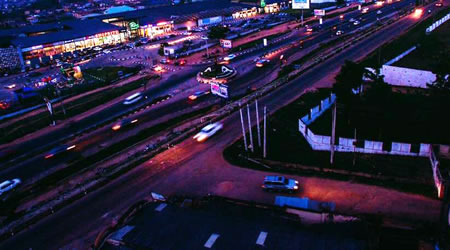
Well, this was what the Ajimobi administration got right at first cut by the manner of foremost thought. The preventive cum punitive policies, and the obvious headlong approach to discouraging crime and securing lives and property in the Ibadan of today have been nothing short of evidently effective; such that businesses are back, such that hotspots where no one dared to stay past 8pm, are now places where night life beams and booms. Relaxation spots and nightclubs now sprouting like autumn mistletoe leaves, one would never believe ’tis the same Ibadan.
Additionally, my friend is relocating back here because, like some other reported 3,000 skilled professionals, he just got a job (as a HR officer) with one of the over 100 foreign and indigent companies setting up shop in the 4,000 hectare (read that again, four thousand hectares!) Free Trade Zone and industrial park established by this government via a public-private-partnership (PPP) arrangement, right at the Ibadan end of the Lagos-Ibadan expressway. Just almost opposite this industrial park is the newly established Technical University by the Ajimobi government, another PPP initiative. The rave reviews this new university had before it was commissioned about two months ago were so good I had to attend that commissioning to see for myself; and impressive, it was. According to reports, this Ibadan Technical university was conceived by Ajimobi himself after visiting a technical university in Texas, USA. And basically, the idea behind a technical university is to equip young minds with applicable, practical, balanced, and most importantly, hands-on education that suits the needs of their immediate environment, thus making them direct participants in the development drive and active employers of labour.
Today, the Ibadan Technical University stretches over a million square metre of land on that expressway, it is the first of its kind in Nigeria and Africa, and it is set to propel the city into international limelight. The best part to this is the array of truly direct-impact courses to be offered – Bio-technology, Environmental engineering, Renewable Clean Energy Resource technology, In-vitro fertility technology, Aircraft Maintenance/ Repairs, Industrial and production engineering, nanotechnology, Robotics, Automation, Cyber-security, Mechatronics, Tropical Agricultural Engineering/Food processing amongst others. 12 of these courses have been approved by the National Universities Commission (NUC), the school already has a board, it is presently recruiting more administrative and academic staff, and the first set of students are to resume by October, 2017.
In short, the whole of Ibadan, and by extension Oyo state, is back buzzing, productive human activity is on the rise, all of this simply because there’s a thinking government fuelled by insight and foresight in Agodi.
No, chill, don’t fret. This isn’t to emblazon an individual or state executive that is simply doing a job it was elected to do, rather, I’m aiming adulation towards the fact that a job is being done relatively better than predecessors, visionarily at that, and most importantly that the people are better for it. That’s the kókó of all these atótónu of mine – the PEOPLE being better for it!
To the Ajimobi government, I advice not to take their foot off the gas in the drive to make Ibadan and Oyo state become a reference point for transformative governance. In the remaining two years of its unprecedented 2nd term, more should be done per maintenance of projects done so far, especially roads, and more effort should be channeled into educating and enforcing compliance amongst residents as regards keeping the city clean. To us the electorate, I advice not to stop contributing our quota, at least, by continous objective criticism of this government, while we arm our thoughts with the need to elect an even better state executive come 2019. This state I’ve come to fall in love with its people and rich heritage, MUST NOT get back into sóóyòyò and agbádá armada governance.
This Ibadan, this sprawling megalopolis on Seven Hills, this expression of all Oyo state represents, once described as a “running splash of rust; and gold, flung and scattered” by J. P Clark in his “Ibadan” poem, is an endearing city of the ancient that is presently enjoying gradual matrimony with the modern; and this needs to be beyond celebrated, sustained.
Is Ibadan or Oyo state already at Uhuru? No, not at all, not even near it per se. But, I like this drift towards what’s befitting for the state and benefitting for its residents. It is gradual as I said above, but it is accelerating, clearly upping pace as the seconds tick by. Beyond anything, I think this should just be encouraged.
Ibadan mèsìògò, e kú changing times ooo.
By Sayo Aluko, Ibadan.
Photo credit : Tolani Alli