Among developing countries, Nigeria is a relatively rich country with abundant human and natural resources. Nigeria is the most populous black nation in the world. In 2019 estimate, its population was approximately 200 million, Nigeria accounts for about 47% of West Africa’s population, and has one of the largest populations of youth in the world.
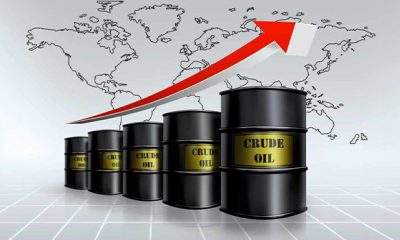
Nigeria’s economy depends heavily on the oil and gas sector, which contributes 99 percent of export revenues, 85 percent of government revenues, and about 52 percent of gross domestic product (GDP).
The petroleum sector being the mainstay of the Nigeria economy, contributing 36% to annual GDP, 75% to government revenues and accounting for virtually all foreign exchange earnings. In addition, despite the presence of millions of acreage of reserve mineral resources (oil and non-oil sectors) and large resources of humans found in Nigeria, the country has remained a victim of underdevelopment, several decades after the end of colonialism, most parts of Nigeria especially the rural area is still battling with problems such as high poverty rate, lack of basic infrastructural facilities in all sectors of the economy, unemployment, high mortality rate, and insecurity of lives and property. Nigeria hasn’t been able to unlock and maximize her potentials to build a prosperous economy, reduce poverty significantly, and provide health, education, and infrastructure services its population needs.
Nigeria was ranked the global poverty capital of the world with a high degree of unemployment by global development index. Despite possessing vast acreage of natural resources and experiencing positive economic growth, Nigeria’s Human Development Index (HDI) value in 2017 was 0.471, which places the country 154th out of 187 countries.
Furthermore, in the World Bank Human Development Report released in November 2018, Nigeria ranked 157th out of 189 countries. The Gross Domestic Product (GDP) growth, high poverty and unemployment rates has continued to highlight the need for Nigeria to pay more attention to achieving inclusive growth.
The key question is why improved economic and high revenue generation from oil and non-oil sectors have not translated into greater improvements in rapid infrastructural development and social welfare, especially among the rural-urban masses?
One of the goals of sustainable development goals (SDGs) is eradicating poverty in all its forms in year 2030. However, poverty remains one of the greatest challenges facing humanity in Nigeria. While the number of people living in extreme poverty dropped by more than half between 1990 and 2015, unfortunately, according to United Nation, 98 million of Nigerians are in multidimensional poverty; that’s 50% of Nigeria’s population are still struggling for the most basic human needs.
What this means is that as of 2019, about 98 million Nigerians still lived on less than US$1.90 a day; many lack food, access to clean drinking water and quality education.
In the last six decades, Nigeria has undergone many economic reform, growth and social investment policies before and after returns of democracy, every successive government has initiated one policy or the order on diversification of Nigeria’s economy from oil based economy to more competitive non-oil driven economy, yet it has always being a lip service with little or no efforts put to work in moving the economy from one commodity driven economy to a more open economy with low inflation, and high per capital base trade.
More so, according to the Microeconomics outlook by the Nigeria Economic Summit Group (NESG), the report stated in the 2000s, Nigeria enjoyed a decade of high GDP growth averaging 7.6 per cent, adding that the period under review was accompanied by high levels of unemployment and poverty, “which could be largely attributed to the concentration of growth in just a few sectors; hence the country’s growth was not broad-based.
Oddly enough, the role of the non-oil sectors remains under-performed, even though, it contribute 90.86 percentage to the nation’s Gross Domestic Product (GDP) as at first quarter of 2019 higher than recorded in the first quarter of 2018 (90.45%) but lower than the fourth quarter of 2018 (92.94%). Radically, both the oil sector and non-oil sectors have remain the bedrock of corruption, and with the privatization of state-owned enterprises in oil, telecommunications, airways and electricity, and despite huge money budgeted for infrastructure development, it hasn’t resulted to more growth, rather, it has resulted in more job losses and substantially discounted terminal benefit to Nigeria .
Why did Nigeria as a nation fail over and over again?
To answer this question, permit me to share a narratives by Mr. Moses Ihiabe in a book titled “Why Nation Fail’ all over again, the author postulates that corruption, oppression, absence of social justice and bad education has kept a nation perpetually poor. He says a few percentage of the people in the political class perpetuate themselves in such a way to amass public funds for self-aggrandizement, thereby creating an unnecessary scarcity of resources to fund public facilities and institutions. ‘Most nations are poor precisely because it has been ruled by a narrow elite that have organized society for their own benefit at the expense of the vast mass of people. Political power has been narrowly concentrated, and has been used to create great wealth for those who possess it’, he said.
To appreciate that view by the author, I decide to rephrase the author’s rhetorical question in Nigeria context, why Nigeria fail, over again? The author’s accurate premises suit Nigeria situation. I can’t agree less. It provides an insight why we failed as a nation despite abundant resources in human and natural resources.
Undoubtbly, our situation since 1960 that the destiny of our dear nation has being placed in the hand of her narrow minded political elites, it has been an outcry for cases of corruption, oppression, injustices, human right abuse and absence of sound economic policy framework to facilitate and accelerate creation of an inclusive economic opportunities for the vast majority of her populace, which is crucial in addressing the pertinent issues of poverty, unemployment and social exclusion, instead, the political elites have continued to organized society for their own benefits at the expense of the vast mass of people. Every successive government has continued to dance to the tone of few cabals or class of political elites that continued to hold our nation’s in hostage and dictating the wheel of her progress.
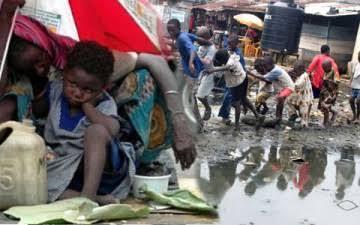
Unfortunately, despite the abundant resources in human and natural resources both tapped and untapped resources, there is prevalent scale of poverty in Nigeria, approximately, more than 60% of Nigeria’s populous can’t afford one meal a day, which is less than a dollar per day and significant percentage of majority of the children in Nigeria, especially those in rural areas have no access to basic education and avoidable health care services. Millions of households in Nigeria and the vulnerable have no access to quality health care delivery, and other basic necessities. Nevertheless, high poverty level persists, especially in rural areas, and the gap between income groups in terms of human capital and access to basic services is growing. In addition to chronic poverty, there is widespread vulnerability as environmental, economic, and other shocks frequently affect many households.
Nigeria remains an under developed country with a relatively high level of poverty index. According to UNICEF, as at 2018, close to 13.2 million children were out-of-school, which is the highest number in the world. In addition to the core challenge of access to portable water, children malnourished by hunger, basic education, epileptic power supply, high mortality index rate and poor infrastructure deficit, the quality of learning across government-owned schools from elementary to higher institutions is significantly low across the country, from North to South, East to West are being ravaged by the same problem of under-development.
Since 1960, the country has gone through series of internal war ranges from inter-ethnic war, religious war, territory control war and the country has turn to cesspool of corruption and misrule which has led to a remarkable sharp increase in rate of inflation and made life unbearable for her citizens with average Nigerian life expectancy at birth remains at 54 years, below the SSA average of 60.7 years. Nigeria continues to rank within the category of countries with ‘Low Human Development.
Colonization and Under-development
In a sense, most Africans independence came at a time in which many African leaders were only interested in grabbing power but were intellectually unprepared for governance, one might say, Nigeria progress has being compromiyse from the time of colonialism. The major reason while Africa continent remains in perpetual and underdeveloped despite many abundance is because most colonized Africa countries, got freedom hurriedly without any post plan for power sharing, resources control and governance.
If we are to compare our situation and that of many other African’s colonized nation to that of Ethiopia, the only uncolonized nation in Africa. Despite sharing the same geographical position on the plate of the world, Ethiopia is fast ahead of other Africa colonized Nations in development index from health, security, and infrastructural development, Ethiopia is more prosperous than many colonized African countries.
Africa continent prior to colonialism was not economically isolated from the rest of the world. Indeed, African states had engaged in documenting her history, trade from the time of the pharaohs of ancient Egypt. Who would ever believe that development started from Africa, particularly in the field of engineering, education, medicine, astronomical and that education actually started from Africa, Al-azhr University of Egypt, Cairo was the first and oldest university on earth and the very first place on earth where written was first done was Egypt and that west Africa specifically had developed extensively in international and regional trade with her own system of counting, money and trading pattern long before western world involving.
Without gain saying, I would say that colonization has done us more harm than good. Prior to the “Scramble for Africa,” or the colonization of Africa countries by the major European nations, African economies were advancing in every area, particularly in the area of trade, innovation, African science (metabolic power) and African were moving at very fast pace. Unfortunately, as soon as colonialism happened to her, we became a continent without direction and our rich history and natural development of the African economic system were altered completely. Our culture, food, dressing, and ways of life were viewed as uncivilized, in fact, everything about us was altered for foreign lifestyle.
Our situation in Nigeria is not lack of resources but lack of good and innovative leadership to turn around things with possible and shortest time.
Now, what could be done differently ?
By 2030, one of the goals of Sustainable Development Goals (SDGs) is significant reduction by half the proportion of men, women and children of all ages living in poverty in all its dimensions. This means that as a member of United Nation, we must triple our efforts and key into this goal, develop the right conditions for sustainable growth and reduced the disparities between low level class income and higher income earners.
Government must reduce inequality line between all men and women of all ages in all dimensions by leveraging resources across and develop the right enabling environment to reduced poverty rate and strengthen our economy through social investment program targeted towards the poor and the vulnerable .
There is need to improve opportunities in all dimensions. Government, non- government organizations must appropriate new technology and financial services, including micro-finance gear towards improving local innovations in science and technology to enhance global competitiveness and create sustainable 21st century jobs opportunity for the teaming youth. Hence, there is a need to map out strategic policies framework that would foster social investment and innovation by facilitating collaborations between government, non-governmental organizations and schools.
Government must appropriate new laws and implement old laws, fulfill their electoral promises and create policies to end poverty in all dimensions.
Non- governmental organizations must sustain their momentum towards significant mobilization of resources in order to provide adequate and predictable means in helping the poor and the vulnerable, while pushing for equal rights to economic resources, access to quality health care, education, this would help to reduce the disparities between the poor and rich to a minimum level for overall development of an inclusive and competitive economy.
Government must improve on transparency of social safety net programmes to ensure that the resources and other relief materials are targeted at the poor and the vulnerable irrespective of political ideology, while pushing and galvanizing support for passage of laws in National and State Assembly to ensure equal rights of all Nigerians.
There is need to create access to economic resources instead of what is presently obtainable in our society that few percentage of the people in the political circle amass public funds for their self and family aggrandizement.
To put Nigeria on the path of continuous economy growth, relevant cooperate organizations, individuals and non-governmental organizations must help government to develop strategies and create sound policy frameworks at the national, state and local government levels to accelerated investment in poverty eradication and open access of the poor and the vulnerable to basic services in rural area that will discourage rural urban migration and make life easier for the poor and the vulnerable.
Conclusively, there is need for attitudinal change and our ways of life, if Africa and indeed Nigeria is to catch up with the rest of the world. We need to focus on institutional reforms that would compel people to be more pragmatic, accountable either in their private business or in government position. Also, there is need to push for enactment of policies and strategic frameworks that will lead to inclusive economy growth and brake the barrier enacted by the oppressing system between the poor and rich.
Adediji Wasiu, is a petroleum technologist and public affairs analyst