Connect with us

Education

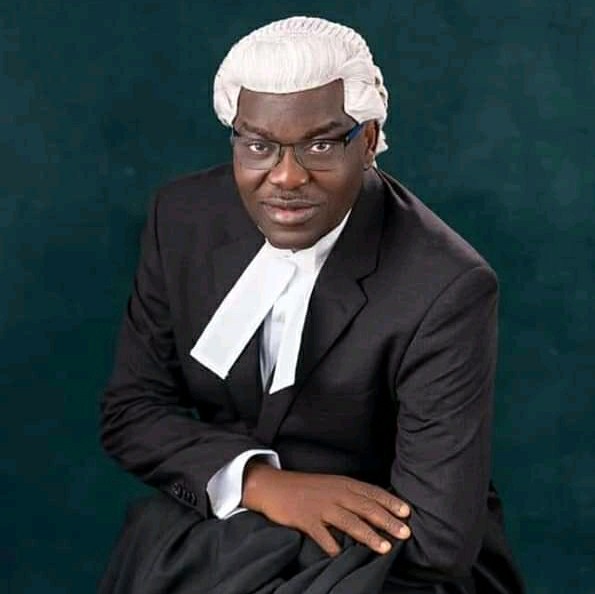
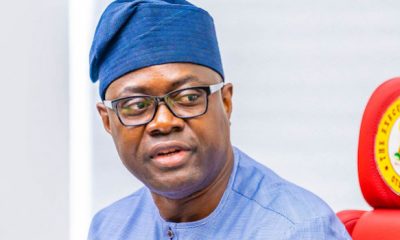
‘Many of my classmates called me daddy and taught me law’ – Adeolu Akande

Published

on

completed law programme after four attempts


I wasn’t the oldest in the class. I think there were at least three persons in the Abuja Campus of the Law School who were above 70 years of age. I, however, belonged to a generation of students called “the Elders,” most of us in our 50s and 60s. I was inspired by many of the older gentlemen, especially those who had been Senators, Members of the House of Representatives, Permanent Secretaries, Ambassadors, and successful professionals – Accountants, Doctors, Engineers, Actors, Journalists, etc. It was an irony that each time some of my younger classmates told me I inspired them, coming to the Law School at my age, I, in turn, took my inspiration from those above 70 and successful men who were in the same class.

My interest in Law was spurred by my interest in politics and the fact that many of the personalities that inspired my interest in politics like Chief Obafemi Awolowo, Chief Samuel Ladoke Akintola, Chief Bode Thomas were lawyers. My interest in Law deepened when I had opportunities to work in government (Federal and State), and from there, I concluded that knowledge of Law is a sine qua non for outstanding performance in government. As Chief of Staff to Governor Abiola Ajimobi, there were occasions when we had heated debates on issues. The governor would agree with my position but would end up accepting the counsel of the lawyers in the cabinet. His reasoning was always that if he followed my advice and there was a backlash, he would be left vulnerable. However, he could still take refuge in the fact that he followed the counsel of his lawyers, especially on matters bordering on legal issues. When the governor dissolved the cabinet in 2013, I resolved to go back to school and Igbinedion University, Okada, Edo State offered me a serene, stimulating and comfortable environment to pursue my dream.

It was both challenging and fun attending classes with younger classmates. Many of them called me daddy, and I often found that amusing. Many of them were also quite helpful. I believe this new generation is smarter. They grasp issues much faster, and they are quicker to adapt. They have access to more information and can sustain discussions across many disciplines, having no boundaries between what the older generations classify as “serious” and “unserious”. For instance, they don’t regard versatility in music as a sign of unseriousness. I encountered many of the best students in the class who were nimble dancers and almost fanatical football fans, especially the English Premier League.

Midway into the session, I was astonished when they discussed issues of Law, and I began wondering whether we were in the same class! This inspired me, or more accurately, pressured me to work harder.

Many of them taught me the mathematics aspect of Law, particularly in Corporate Law and Property Law. Believe me, it is helpful when people who are younger than you teach you a subject. You feel challenged to work harder, especially when the one teaching you does not have the patience to repeat himself. One of them once told me, “Daddy, this thing is not as difficult as you make it look! I was slightly jolted, but I calmed down and jokingly told him to take it easy with daddy!

..I SUCCEEDED AFTER FOUR ATTEMPTS.

I feel fulfilled because I finally succeeded in finishing the law programme after four attempts. I had to withdraw after one year at the University of Ibadan because some of my colleagues wrote a petition that I was a full-time staff of the Nigerian Tribune, so I had no business enrolling for a full-time law programme. I would have finished in 2001. I tried a second time to run the programme in 2010 at Buckingham University in the United Kingdom, but family commitments made me abort the trip a few days to my departure. I did one year with the University of London External Degree programme in 2014 but opted out when it looked like the Council of Legal Education would not shift ground on not allowing correspondence students to attend the Nigerian Law School. I felt there was no point reading law if you would not appear as counsel in court.

Law School is tough. You work round the clock. You must achieve 75 percent class attendance. You must attend group meetings and complete the daily assignments. You must be well prepared for every class as you may be called to anwer questions in class and you will not want to disgrace yourself before more than a thousand classmates amongst who call you daddy. Failing the bar examination was no option. In truth, it crossed my mind a number of occasions that it was quite possible to flunk the final bar examination. I always shrugged it off and wished it away, but felt pressured to work harder. The only reward for hard work is more work, and I am glad it has ended in praise.

To God be the glory.


Professor Adeolu Akande is a Professor of Political Science and Public Administration.He chairs the Nigerian Communications Commission (NCC)

Comments

Education

MAKPOLY holds maiden Music Technology performance exam

Published

on

Michael Adeniyi Koleosho Polytechnic, Saki, Oyo State, on Wednesday recorded a major milestone with the conduct of the maiden final-year performance examination for the pioneer student of its Department of Music Technology, marking a new chapter in the institution’s commitment to practical and creative education.

The examination, held at the TETFund Building of the School of Business and Communication Studies, featured Master Okegbola Moses Bright, the department’s first National Diploma student. Lecturers, students, family members and other guests gathered at the venue to witness what many described as a historic moment for the institution.

The practical assessment was coordinated by the Acting Head of the Department, Dr. Abegunrin Adebayo Olugbenga, while two external examiners from The Polytechnic, Ibadan, Dr. Rotimi Ologududu and Dr. Abiodun Akere, evaluated the student’s performance. The Dean of the School of Business and Communication Studies, Mr. Waheed Popoola, and other senior officials of the polytechnic also attended the exercise.

Welcoming guests, Abegunrin described the occasion as a landmark in the department’s history, saying it signalled that the vision behind establishing the programme was becoming a reality.

He said, “Today marks a milestone not just for our department, but for Michael Adeniyi Koleosho Polytechnic. We are witnessing the stage performance of our very first Music Technology student. This is the first of many, and it shows that the seed we planted has begun to bear fruit.”

He explained that the performance examination is a compulsory practical requirement for the award of the National Diploma in Music Technology, adding that it is designed to assess students’ creativity, technical competence and stage performance.

“Music Technology is not just about theory; it is about performance, production and impact. Our pioneer student is setting the standard for those who will come after him,” he added.

Congratulating the student for blazing the trail, Abegunrin urged him to perform with confidence, passion and professionalism. He also encouraged other students in the department to remain focused and committed, assuring them that they, too, would have the opportunity to showcase their talents in due course.

Speaking on the department’s future, the acting head said plans were underway to expand its studio facilities, strengthen collaboration with industry players and build a programme capable of producing graduates with the skills to thrive in the music and creative industries.

“Our goal is to make this department a hub for sound production, live performance, music business and digital creativity in Oyo State and beyond,” he said.

Abegunrin thanked the management of the polytechnic for its continued support and expressed appreciation to the Dean of the School of Business and Communication Studies, members of staff and other stakeholders for their contributions to the growth of the Department of Music Technology, saying their commitment had been instrumental to the programme’s success.

Continue Reading

Education

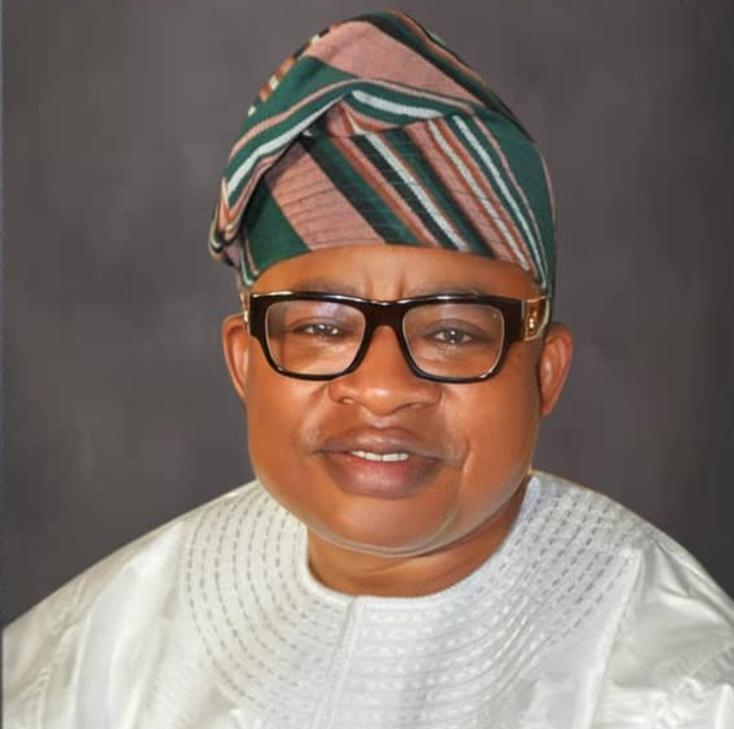
‎Oseni unveils AI learning hubs for Oyo South students

Published

on

The All Progressives Congress (APC) senatorial candidate for Oyo South in the 2027 election, Hon. Aderemi Oseni, on Thursday unveiled the Remi Oseni Smart Learning Intervention (ROSMA) Legacy Programme, introducing a network of Artificial Intelligence-powered learning hubs designed to prepare secondary school students for the demands of a fast-changing digital world.

‎The initiative, which also witnessed the commissioning of the first batch of ROSMA Smart Learning Hubs in Ibadan, is aimed at exposing students to Artificial Intelligence (AI), robotics, coding, digital literacy and mentorship, while supporting their preparation for public examinations, including WAEC, NECO and the Unified Tertiary Matriculation Examination (UTME).

Addressing an audience of students, teachers, parents and community leaders, Oseni who represents Ibarapa East/Ido federal constituency said the future would belong to nations that invest in knowledge and technology, stressing that education must move beyond conventional classroom learning to embrace innovation.

‎He described the project as a deliberate investment in the next generation, saying every child, regardless of background, deserves the opportunity to compete with peers anywhere in the world.

“This programme is not just about giving support; it is about opening doors. We want our students to understand Artificial Intelligence, embrace technology and develop the confidence to compete with their peers anywhere in the world. Every investment we make in a child today is an investment in a stronger society tomorrow,” Oseni said.

‎The federal lawmaker recalled that his intervention in education did not begin with politics, noting that over the years he had funded scholarships, bursaries, free WAEC and JAMB registrations, digital skills training and entrepreneurship programmes for thousands of young people, many of whom are now pursuing higher education across the country.

He also announced the proposed ROCOF Royal Ambassadors Initiative, which, according to him, will recognise exceptional students, innovators, entrepreneurs and youth leaders who distinguish themselves through academic excellence, creativity and integrity. Such recognition, he said, would inspire more young people to strive for excellence.

‎The Chairman , House Committee on Federal Roads Maintenance Agency (FERMA) added that his ambition to represent Oyo South in the Senate was driven by a desire to expand educational opportunities across the district, promising that if elected in 2027, programmes such as free WAEC and NECO registrations, JAMB sponsorships, scholarships, bursaries, AI education and digital empowerment would be extended to all nine local government areas.

‎Project Director of the ROSMA Legacy Programme, Dr. Demilade AkinAlabi, described the initiative as a bold response to the growing digital divide, saying children in Oyo South must not be left behind at a time when technology increasingly determines educational and economic success.

‎AkinAlabi disclosed that five of the proposed nine Smart Learning Hubs had been completed in Eruwa, Agbadagbudu, Ido, Oke-Ado and Oja’ba, while construction was ongoing at the remaining centres. He explained that the hubs would go beyond providing computers and internet access by offering practical training in coding, artificial intelligence, digital marketing, data analysis and other employable skills for students, artisans, farmers and small business owners.

‎”Our dream is simple. A child’s future should never be determined by where he or she was born. These hubs are more than classrooms with computers; they are places where ideas will grow, talents will be discovered and futures will be built. We want every child who walks through these doors to believe that anything is possible,” AkinAlabi said.

Oseni, however urged the students to remain disciplined, dream beyond their circumstances and embrace technology as a tool for solving real-life problems. He said the ROSMA Legacy Programme was conceived not merely to improve academic performance but to nurture a generation of innovative, confident and globally competitive young people capable of shaping the future of Oyo South and Nigeria.

Continue Reading

Education

Ayede Poly trains staff on FG skills scheme, targets employable graduates

Published

on

The Federal Polytechnic, Ayede, Oyo State, has intensified efforts to align with the Federal Government’s skills-based education policy by training its academic and non-academic staff on the implementation of the National Skills Qualification (NSQ), Nigerian Skills Qualifications Framework (NSQF) and Mandatory Skills Qualification (MSQ).

‎The capacity-building workshop, organised in collaboration with the National Board for Technical Education (NBTE) and JACL Consulting, was held at the institution’s Centre for Vocational, Skills Acquisition and Entrepreneurship Development, NDE Model Skills Centre, Onipaanu, Ogbomoso.

‎The training is part of the Polytechnic’s broader strategy to deepen competency-based education and ensure that its graduates leave school with practical and industry-relevant skills capable of improving their employability and entrepreneurial prospects.

The institution had earlier organised a similar exercise for students, a move that reinforces its commitment to preparing both staff and learners for the seamless implementation of the Federal Government’s national skills certification policy.

‎Declaring the workshop open, the Acting Rector, Dr. Morufat Adepoju, described the National Skills Qualifications Framework as a game-changing initiative that would bridge the long-standing gap between classroom learning and industry expectations.

‎According to her, the framework will produce graduates equipped with practical competencies required to meet the demands of a fast-changing economy while strengthening Nigeria’s technical and vocational education system.

‎Adepoju expressed appreciation to President Bola Ahmed Tinubu, the Chairman of the Governing Council, Hon. Yakubu Dati, and the Federal Government for their continued support for the institution. She also commended the Executive Secretary of the NBTE, Prof. Idris Bugaje, for driving reforms aimed at repositioning technical education in the country.

‎She equally acknowledged the contributions of the pioneer Rector,  Dr. Taofeek Abdul-Hameed, and other pioneer principal officers, noting that the institution was building on the solid foundation they laid.

‎Explaining the significance of the initiative, the Don  said the National Skills Qualifications Framework provides a nationally recognised system for assessing and certifying occupational knowledge, technical competence and practical skills across various sectors of the economy.

‎She added that the framework would not only improve the quality of technical education but also reduce unemployment by equipping graduates with hands-on skills capable of stimulating entrepreneurship, wealth creation and national development.

‎”The NSQ provides the compass we desperately need as a nation seeking to equip its workforce with relevant competencies for national growth and global competitiveness,” Adepoju said.

‎Earlier, in his welcome address, the Acting Director of the Centre for Vocational, Skills Acquisition and Entrepreneurship Development, Mr. Oluwaseun Owojori, said the workshop was organised to prepare members of staff for the effective implementation of the NSQ, NSQF and MSQ in line with NBTE guidelines.

‎He stressed that the success of the Federal Government’s skills development agenda would depend largely on the preparedness of institutions and their personnel to deliver quality competency-based education. Owojori thanked the Acting Rector, management, principal officers and participants for their support, while appreciating the resource persons for facilitating the training.

‎One of the facilitators, the Acting Director, South-West Zone of the NBTE, Dr. John Onyebuchi, urged participants to embrace skills acquisition, describing practical competence as a vital asset in today’s economy. “I encourage everyone to acquire a skill because skills are the driving force in today’s economy, not money,” he said.

‎Also speaking, Dr. Julius Ayodele of JACL Consulting encouraged both academic and non-academic staff to participate actively in entrepreneurship and vocational development programmes.

He said continuous skills acquisition would improve professional competence, enhance productivity and open up wider career opportunities, expressing optimism that the workshop would promote innovation and practical learning across the Polytechnic.

The workshop attracted principal officers of the institution, including the Registrar, Mr. Akinlolu Akinpade, represented by the Director of SERVICOM and Deputy Registrar (Council Affairs and Establishment), Mr. Kolapo Olatinwo; the Bursar, Mr. Mufutau Alao, represented by Deputy Bursar, Mr. Lukman Buhari; and the Acting Polytechnic Librarian, Mr. Dare Samuel Adeleke, represented by Dr.  Halimat Amuda, Coordinator of Women in Technical Education and Development.

Continue Reading

Advertisement

Entertainment

Advertisement

MegaIcon Magazine Facebook Page

Advertisement

MEGAICON TV

Advertisement

Trending