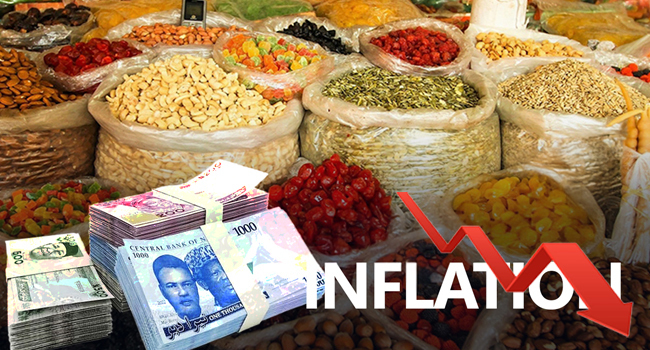
Nigeria’s headline inflation rate fell marginally to 15.39 per cent in August 2026 from 15.43 per cent in July, according to the National Bureau of Statistics.
The NBS disclosed this in its Consumer Price Index released on Tuesday, saying the latest figure represented a 0.04 percentage point decline from the previous month.
The statistics agency, however, reported a sharper decline in the month-on-month inflation rate, which dropped to 0.71 per cent in August from 1.57 per cent in July.
The month-on-month rate, according to the bureau, declined by 0.86 percentage points compared with the July figure.
The NBS explained that the development indicated that the rate at which the average price level increased in August was slower than that recorded in July.
The latest data also showed a significant moderation in food inflation, which stood at 19.57 per cent year-on-year in August.
The figure was substantially lower than the 25.30 per cent recorded in August 2025.
On a month-on-month basis, food inflation fell to 1.02 per cent in August from 5.56 per cent in July, representing a decline of 4.55 percentage points.
The NBS said the development showed that food prices were still rising, but at a slower rate during the month under review.
It attributed the decline largely to changes in the average prices of a number of food items, including palm oil, carrots, pepper, onions, cassava flour, beef, yam flour, water yam, melon (egusi), fresh ginger, fresh fish, Irish potatoes, wheat grain, frozen chicken and turkey meat.
At the state level, Adamawa recorded the highest year-on-year food inflation rate in August at 38.85 per cent.
It was followed by Zamfara with 37.96 per cent and Bayelsa with 36.20 per cent.
On the other hand, Borno recorded the lowest year-on-year food inflation rate at -4.04 per cent, followed by Jigawa at -0.23 per cent and Kebbi at 3.47 per cent.
The month-on-month figures presented a different picture, with Katsina recording the highest food inflation rate at 9.48 per cent.
Rivers and Osun followed with 8.86 per cent and 8.32 per cent respectively.
Taraba recorded the lowest month-on-month food inflation rate at -12.42 per cent, followed by Borno at -12.15 per cent and Bauchi at -8.88 per cent.
The latest figures indicate a moderation in the pace of price increases, particularly in the food sector, although the NBS data show that consumers continue to face varying price pressures across the states.