Connect with us

News

June 12: A Defining Moment in Nigeria’s Democracy

Published

on


June 12 holds a significant place in Nigeria’s history, marking a pivotal moment in our journey toward democracy. This watershed day remains etched in our collective memory, symbolizing the unity, struggles, and resilience of the Nigerian people.

The Struggle for Democracy.

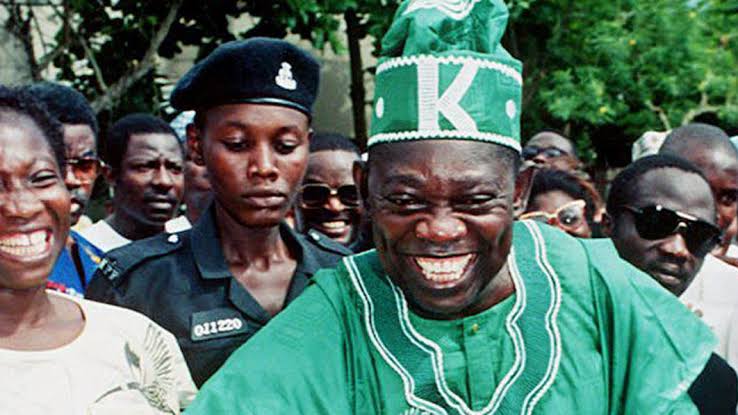
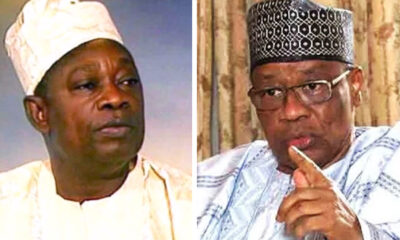
On June 12, 1993, Nigerians came together as never before, setting aside their differences in beliefs and worth. They united in casting their votes for Moshood Kasimawo Olawale Abiola, a beacon of hope representing the Social Democratic Party (SDP). The overwhelming support for Abiola’s candidacy overshadowed the National Republican Convention (NRC) in a decisive victory. However, little did we know that a sinister plan had been hatched by Ibrahim Babangida and his civilian co-conspirators.

Deception and Betrayal.

Despite the people’s mandate, a web of deception was spun, giving the impression that democracy had arrived. In reality, it was a ploy to rob the Nigerian people and our nation of the taste of victory and the gift of true democracy. On the eve of the election, Abiola emerged as the clear winner, yet armed men, mere puppets in the military’s game, stole his rightful triumph, igniting chaos and unrest across the country.

The Imprisonment of Hope:

Undeterred by this injustice, Abiola boldly declared himself as the President-elect, undaunted and unyielding. This act of defiance angered Sani Abacha, who emerged as a new force in the power game chess. Abiola was imprisoned, and confined to a desolate space, while the cry for justice resonated among the masses and the international community.

Years of Struggle.

For four long years, Abiola endured the harsh reality of life behind bars, deprived of human contact. Despite the immense pressure, he remained resolute, refusing to relinquish his hard-earned victory in exchange for his release. The spirit of Abiola stood firm, undeterred by the forces of oppression.

False Hopes and Tragic Loss.

As the second anniversary of his imprisonment approached, rumors circulated that Abacha had met his demise. Speculation arose that Abiola’s release was imminent, raising hopes across the nation. However, the military’s grip tightened as Abdulsalam assumed power, and Abiola’s supposed journey to freedom turned into a tragic tale. The nation was thrown into mourning when news broke that Abiola had passed away, denied the chance to reclaim his rightful position as the nation’s Commander-in-Chief.

Recognition and Reflection.

More than two decades later, Abiola was posthumously recognized for his contributions. The Grand Commander of the Federal Republic (GCFR) honor was bestowed upon him, a belated tribute to his enduring legacy. June 12 became Nigeria’s new Democracy Day, signifying not only disappointment and injustice but also the collective power of the Nigerian people in their fight against tyranny.

Lessons for the Future

On the occasion of June 12, we commemorate the advancements Nigeria has achieved despite the hurdles it confronts. However, as citizens, this commemoration binds us to acknowledge the necessity for robust establishments of strong institutions rather than powerful individuals, both men, and women. It is only when we establish institutions that will uphold the supremacy of the law and foster inclusivity can we take a backseat to saying our democracy has come of age.

As many have expressed, our democracy is still in its infancy, and like in other parts of the world, it remains an ongoing endeavor. Nevertheless, it requires our unwavering vigilance and active engagement by holding elected officials from various political affiliations answerable for their actions in fulfilling the benefits of democracy and as a means to prevent the impoverishment of the very people they have pledged to safeguard. Let us keep in mind this day and its significance in the annals of our democratic journey, ensuring that the sacrifices made on June 12 are not rendered futile. Instead, let us unite in our efforts to forge a Nigeria that is fair, just, and prosperous, where the color or creed of individuals holds no significance, and where humanity always takes precedence.

In conclusion, let us remember that our fallen heroes of June 12 serve as a poignant reminder that Nigeria’s journey toward democracy was not easily achieved. It was through the unwavering resilience and indomitable spirit of the Nigerian people that we have reached this day. This necessitates deep contemplation on how we handle this delicate gift, which has been entrusted to us by the struggles of the past. Today, many families struggle to secure even a single nourishing meal, let alone two. This compels us to reflect soberly on how we have missed opportunities in the past and how we are on the brink of missing them today. Unless we unite as a people, setting aside our collective greed and eradicating corruption from our nation, we will continue to face these challenges.

While our leaders have called for sacrifices from the citizens they lead, it is crucial to ask whether they are prepared to sacrifice their comforts and address the issue of wasteful spending that hinders progress and nation-building. They must be willing to make decisions that will shape our collective destiny and alter the course of governance at all levels, fulfilling the aspirations of all citizens.

Allow me to leave you with this profound quote by Obafemi Awolowo: “The government owes as much duty to the individual citizens as the latter does to them.”

Comments

News

Tegbe clarifies: No 3-month promise on power grid, outlines realistic reform timeline

Published

on

The Minister-designate for Power, Joseph Olasunkanmi Tegbe, has firmly clarified that he never promised to fix Nigeria’s national electricity grid within three months, describing such claims circulating in sections of the media as a misrepresentation of his Senate screening remarks.

A statement issued  after his appearance before the Senate stressed that Tegbe was deliberate and cautious in his presentation, avoiding unrealistic timelines while outlining a structured reform pathway for the power sector.

According to the clarification, Tegbe explained that while Nigerians can expect early signs of progress, particularly in grid stabilisation within his first 100 days in office, comprehensive reforms will be guided strictly by technical assessments, stakeholder consultations, and sector realities.

He noted that critical challenges such as gas supply constraints, metering gaps, infrastructure decay, and commercial inefficiencies require coordinated interventions that cannot be resolved through arbitrary timelines.

“My commitment to this distinguished chamber and to Nigerians is clear: we will deliver visible and measurable improvement in the power sector,” Tegbe stated during the screening.
He assured that his focus would include stabilising the national grid, modernising transmission and distribution infrastructure, strengthening commercial frameworks, and enforcing accountability across the electricity value chain.

On tariff policy, the minister-designate reaffirmed that reforms would be carefully designed to balance sustainability with social protection, ensuring that vulnerable households are shielded while also restoring investor confidence in the sector.

The statement further emphasised that Tegbe’s approach reflects discipline, technical understanding, and a reform-minded agenda aimed at delivering lasting solutions rather than short-term political promises.

It added that he remains open to responsible media engagement and constructive clarification where necessary, noting that accurate reporting is essential to public understanding of ongoing efforts to reposition Nigeria’s power sector.

Tegbe reaffirmed his readiness to lead a transparent, results-driven reform process anchored on accountability, realism, and measurable progress.

Continue Reading

News

Yoruba Heritage Festival Honouring Ogedengbe Begins July 29

Published

on

A grand cultural renaissance celebrating the enduring legacy of legendary Yoruba war hero and statesman, Ogedengbe Agbogungboro, will take centre stage as the 2026 edition of Ogedengbe Fiesta holds from July 29 to 31 across Osun State and Ekiti State.

The three-day heritage festival, unveiled by organisers on Wednesday, is themed, “Ogedengbe Agbogungboro Legacy: Leadership, Security, and Statecraft for Modern Governance in Nigeria.”

The event is designed to preserve Yoruba cultural heritage, deepen historical consciousness, promote tourism and stimulate national conversations on leadership, peacebuilding and governance.

According to the organisers, the fiesta will commence with traditional homage at Atorin and heritage excursions to notable Kiriji War historical sites in Imesi-Ile, where participants will relive significant moments in Yoruba military and political history.

The programme will also feature guided visits to the historic Ogedengbe Cave, Ibu Latoosa Site and the Yoruba Peace Treaty Grove, all regarded as symbolic monuments of Yoruba resilience, diplomacy and unity.

As part of activities lined up for the celebration, participants will tour the gardens of renowned legal icon and elder statesman, Afe Babalola, in Okemesi-Ekiti.

The organisers further disclosed that a Legacy Awards and Hall of Fame Investiture ceremony would hold in Ilesa to honour individuals who have contributed immensely to the promotion of Yoruba culture, leadership and community development.

A distinguished personality lecture in honour of Aare Afe Babalola, SAN, OFR, CON, and Arole Fabunmi of Okemesi-Ekiti is also expected to headline the event, with scholars, traditional rulers, cultural enthusiasts and public intellectuals billed to discuss pathways to strengthening governance and security through indigenous values and historical lessons.

The organisers noted that all activities would commence daily by 11am, adding that the festival would serve as a rallying point for lovers of Yoruba culture, history and tourism across Nigeria and beyond.

They described the fiesta as not only a celebration of the heroic exploits of Ogedengbe Agbogungboro, but also a strategic platform to inspire a new generation of leaders through the ideals of courage, unity, patriotism and visionary leadership.

Continue Reading

News

No Return to Fuel Subsidy, FG Insists Amid Rising Hardship

Published

on

Minister of Finance and Coordinating Minister of the Economy, Taiwo Oyedele

The Federal Government on Tuesday ruled out any plan to reinstate fuel subsidy despite worsening economic hardship and mounting public pressure.

The Minister of Finance and Coordinating Minister of the Economy, Taiwo Oyedele, stated this in Paris, France, during a meeting with global investors alongside President Bola Tinubu.

Oyedele said the government would also not introduce price controls, stressing that market forces remain the preferred mechanism for determining petrol prices.

“We will not bring back fuel subsidy because it creates distortions for the economy, and we won’t introduce price control because we believe in the market,” he said.

The minister argued that the subsidy regime had long undermined economic efficiency, adding that emerging global energy shifts, including developments in Iran, present fresh investment opportunities for Nigeria.

The removal of petrol subsidy in May 2023 triggered a steep rise in inflation, worsening the country’s cost-of-living crisis.

Nigeria’s headline inflation climbed from 22.41 per cent in May 2023 to 34.19 per cent by June 2024 — its highest level in nearly two decades — driven by surging fuel, food, and transportation costs.
Food inflation further accelerated, exceeding 39 per cent by October 2024, while transport fares soared by nearly 300 per cent, compounded by currency devaluation.

Despite the economic strain, Tinubu defended the policy, saying it had stabilised the foreign exchange market.

“Subsidy that was a burden to the entire country was removed, and ever since we have achieved FX stability,” the President said, according to his Special Assistant on Social Media, Dada Olusegun.

In a related statement, the President’s Special Adviser on Information and Strategy, Bayo Onanuga, said the administration’s reforms were aimed at eliminating structural distortions, strengthening macroeconomic stability, and laying the foundation for inclusive growth.

He added that the government remained committed to fiscal discipline and transparency.

Highlighting economic progress, Oyedele disclosed that Nigeria recorded an 11.2 per cent growth in Gross Domestic Product in dollar terms in 2025, describing it as a major step towards the country’s ambition of building a $1tn economy by 2030.

He also pledged that the government would begin publishing quarterly financial reports to enhance accountability and public trust.

Also speaking, the Director-General of the Debt Management Office, Patience Oniha, assured investors of Nigeria’s commitment to prudent borrowing and sustainable debt management.

The Federal Government has continued to defend its reform agenda despite growing public discontent, insisting that the long-term gains will outweigh the current economic pains.

Continue Reading

Advertisement

Entertainment

Advertisement

MegaIcon Magazine Facebook Page

Advertisement

MEGAICON TV

Advertisement

Trending