Connect with us

National Issues

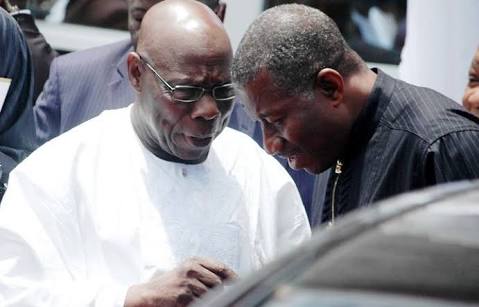
Insecurity: Obasanjo or Jonathan, who should Nigerians believe?

Published

on

I grew up in Ibadan, one of Africa’s most densely populated town, then, just few years ago, the sound and sight of bomb explosions were alien to us, except the ones we heard were happening in war-torn countries and the ones we probably watched in movies.

Today, terrorism and insecurity are right in our midst and those of our children.

Terrorism is incontrovertibly very deadly but the growing parlous insecurity situation is not limited to this alone; armed robbers are on the prowl, raping/gang-raping, maiming, cult violence and killing of innocent people on the roads, in their houses and even inside places of worship.

Killing for ritual purposes, political violence during which many Nigerians have been gunned down by the bullets of assassins to settle political scores. Kidnapping has become a lucrative business, maritime and airspace insecurity had claimed very many precious lives.

No place is safe, none is exempted; unborn babies, kids with promising future, helpless women, people of high and low status are affected daily by the insecurity malaise, in the only country they claim as their own.

Exactly when and how we got into this labyrinth is opaque but the effects stare us all in the face. Socio- economic implications of insecurity include loss of lives and properties, damaged psyche of the citizenry, rural-urban migration, dearth of skilled manpower and reliable data, more unemployment, low rating of the country, lack of foreign direct investment, negative effects’ on National Budget, distorted National Planning and myriads of other detrimental impacts.

As insecurity hit the nation, several solutions had been offered. These had included identifying, demystifying criminal groups, better policing with the use of intelligence reports, proper funding of security architecture, transparency and accountability in governance, food security, re-focused press coverage, dialogue and amnesty.

As there exists strong nexus between unemployment and insecurity, unarguably, jobs must be created to engage the hordes of youths roaming the streets.
In a Cable News Network (CNN) interview recently, while responding on how to tame the Boko Haram insurgence, former President Olusegun Obasanjo (OBJ) opined, “to deal with a group like that, you need carrot and stick.

The carrot is finding out how to reach out to them. When you try to reach out to them and they are not amenable to being reached out to, you have to use the stick”.

Ex- President, Goodluck Ebele Jonathan (GEJ) had continued to give assurances to Nigerians that his administration would soon be on top of the situation. That culprit would soon be apprehended. Bla, bla, bla…

Is OBJ Right or can we trust GEJ?
The state of insecurity has worsened since President Goodluck Ebele Jonathan won the presidential election in April 2011. Many believe that the growing terrorists activities and sectarian violence in the land were caused by some of those who contested against Jonathan.

President Goodluck Jonathan is not oblivious of the insecurity challenges in the land. The much touted national transformation agenda of the Jonathan administration came to nought when there was no solution to the menace of insecurity ravaging the country. In fact, policy analysts had posited that the ability of the past administration to nip in the bud the problem of insecurity and improve electricity supply would be major indices to evaluate the Jonathan administration at the end of his tenure.

GEJ had his good points; his rise to political ascendancy had not been, with any remarkable achievement in the area of good governance.

OBJ’s critics are quick to point out that in the first place, he foisted GEJ on Nigeria as President of Africa’s most populous country. That retrospectively, many of the factors responsible for insecurity now started during OBJ’s tenure and that some reached their peak when OBJ was President. Issues like corruption, super-ministers, assassinations and other malaise thrived under Obasanjo with reckless ignominy.

Nevertheless, OBJ as a statesman was right as he sure knows that security is central to development. His summation on Boko haram confirms this, “Boko Haram undermines security and anything that undermines security, undermines development, undermines education, undermines health, undermines agriculture and food, nutrition and security”.

From the vintage viewpoint of a country he had been opportune to govern over many years, for OBJ to posit that Nigeria has been caught in the web of high network insecurity and that obviously efforts to disengaged the nation from these social maladies had been futile are positions worth giving keen considerations.

The level of insecurity in the country is worrisome. Urgent steps need to be taken to address the problem. Nigerians had almost lost count of the number of terrorists’ attacks that had hit the country, in the last few years. Presidential condolences are not assuaging the pains; only a final stoppage can bring gain to the citizenry .

The Nigeria Police Force appears to have a little or no control over the situation; a situation that has made the ordinary law-abiding, tax-paying citizen to lose confidence in the ability and capacity of the State to protect lives and property of the citizens. It is on this weight that some people had advocated the creation of state police to tackle the security problem in the land.

There is a strong sceptism that if the level of insecurity in our country is not scaled down, Nigeria’s vision to be among the best countries of the world may be a mirage. The generation of leaders to which OBJ, GEJ and Buhari belonged, would be in history of the country, a failed generation. This is a fact that OBJ, GEJ know; this is the reality Buhari must face decisively.

By Dr. Ajibola Esuola.

Comments

National Issues

OLOJO FESTIVAL: Nigeria bigger than all of us, Ooni tells politicians

Published

on

Monarch begins seven-day seclusion, prays for peace, unity

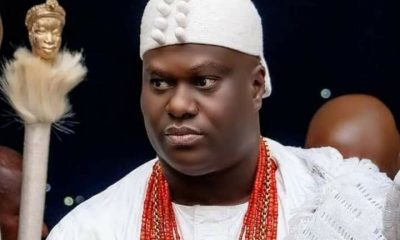
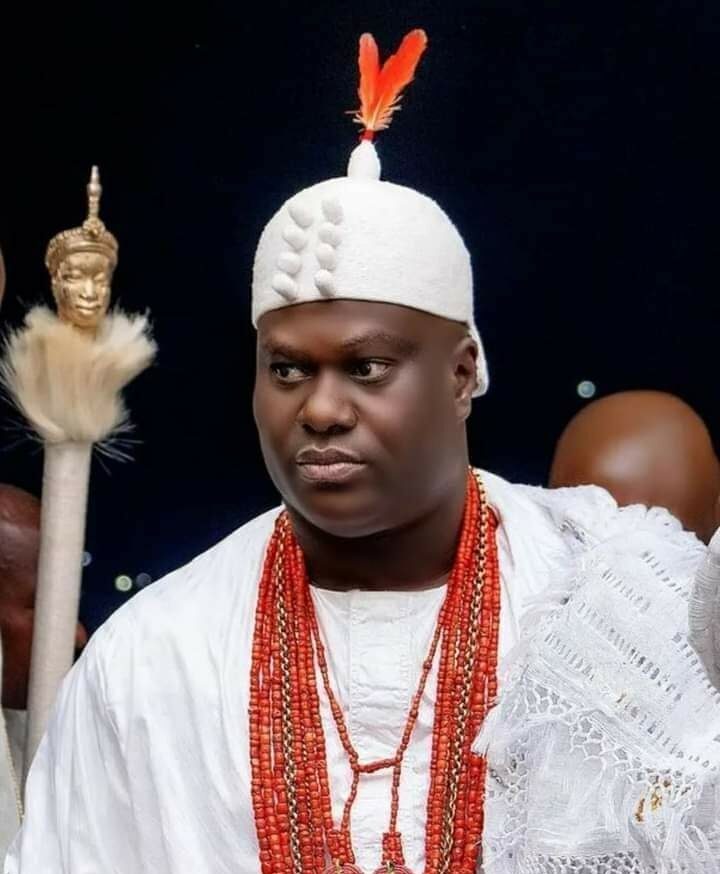
The Ooni of Ife, Oba Adeyeye Ogunwusi, Ojaja II, has urged Nigerian politicians to put the interest of the country above their political differences, saying Nigeria is bigger than any individual or political interest.

The monarch spoke on Sunday shortly before commencing a seven-day spiritual seclusion ahead of the 2026 Olojo Festival in Ile-Ife, Osun State.

The annual seclusion is part of the traditional rites preceding the Olojo Festival, one of the major cultural celebrations associated with Ile-Ife and the Yoruba people.

The Ooni, who is also the Co-Chairman of the National Council of Traditional Rulers of Nigeria, said his period in seclusion would be devoted to prayers for Nigeria, particularly for peace, unity and sustainable development.

“I am appealing to our politicians. They might have differences, but we should know ultimately that Nigeria is bigger than all of us,” the monarch said.

“It is very important for our political leaders to always look inwardly on how to better the lot of the average Nigerians.”

The Ooni urged political leaders to avoid words and actions capable of threatening national cohesion, reminding them that political power was temporary.

“Some have ruled this country before as political leaders, and others will come after them,” he said.

He said his prayers would also cover Nigeria’s democratic process, particularly as the country prepares for the next general elections.

The monarch commended President Bola Tinubu over what he described as non-interference in the activities of the Independent National Electoral Commission, saying such a practice could strengthen public confidence in the electoral process.

He also commended Osun residents for participating in the recently concluded governorship election, saying the outcome demonstrated the ability of citizens to determine their leaders through the ballot.

According to him, Nigerians should continue to have the opportunity to freely choose their leaders without actions capable of undermining the democratic process.

The Ooni’s seven-day seclusion, which began on Sunday evening, will also provide him with an opportunity to prepare spiritually for the sacred rites of the Olojo Festival and deepen his connection with the ancestors.

The exercise precedes the annual wearing of the sacred Aare Crown, one of the major highlights of the festival.

A statement by the Senior Media Officer of the Ooni’s Palace, Sodiq Lawal, issued on behalf of the Director of Media and Public Affairs, Otunba Moses Olafare, said the seclusion marked the beginning of the spiritual phase of the 2026 Olojo Festival.

The festival celebrates Ile-Ife’s indigenous traditions and ancestral heritage and attracts traditional rulers, cultural enthusiasts, visitors and members of the Yoruba diaspora.

The public ceremonies are expected to follow the spiritual rites and culminate in the Ooni’s emergence in the sacred crown.

Continue Reading

National Issues

Tinubu vows intelligence-led rescue of abducted Oyo pupils, teachers

Published

on

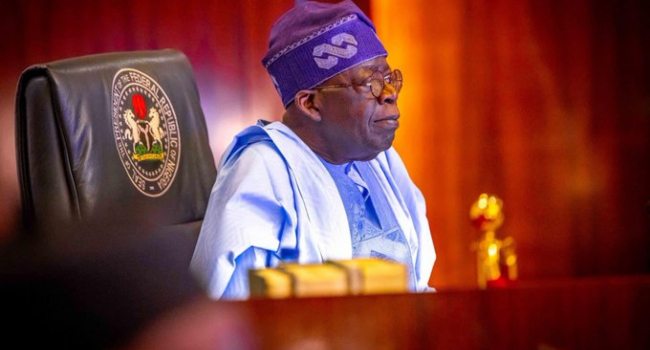
President Bola Tinubu on Monday assured residents of Oyo State that ongoing efforts to rescue abducted pupils and teachers in Oriire Local Government Area would be intelligence-driven, coordinated and sustained.

The President said the Federal Government would deploy every lawful means, including kinetic and non-kinetic measures, to ensure the safe return of the victims abducted during the May 15, 2026 attack in Esiele and Yawota communities.

“Our rescue efforts will be intelligence-led, careful, coordinated, and sustained. We will deploy every lawful tool available, both kinetic and non-kinetic, to ensure our children and teachers are safely returned home,” Tinubu stated in a statement posted on his X handle on Monday.

The President also expressed sorrow over the killing of a school teacher during the abduction and extended condolences to his wife, Mrs Mary Oyedokun, and the bereaved family.

“I also extend my deepest condolences to Mrs Mary Oyedokun, the wife of the late school teacher and her family. Their sacrifice will not be forgotten, and his family will not be abandoned,” he said.

Tinubu stressed that children should never be exposed to the trauma of abduction, noting that no parent should endure the pain associated with such incidents.

“No child should be taken from the safety of a classroom. No parent should have to endure this anguish,” the President added.

He assured affected communities that efforts to secure the release of the abducted pupils and teachers would remain sustained and intelligence-driven.

The statement comes amid growing concerns over insecurity in schools and rural communities following the abduction, which prompted the Federal Government to dispatch a high-powered delegation to the affected communities in Oriire Local Government Area.

The delegation included the Chief of Staff to the President, Femi Gbajabiamila; the National Security Adviser, Nuhu Ribadu; the Minister of Defence; and the Inspector-General of Police, Kayode Egbetokun, alongside other senior government and security officials.

Tinubu further disclosed that he had approved additional security measures, including the deployment of a specialised security unit equipped with advanced rescue capabilities to intensify efforts towards the safe return of the victims.

“I have also directed the deployment of a specialised security unit with advanced rescue capabilities to intensify efforts to secure the safe return of the abducted pupils and teachers,” he stated.

The President also revealed that the Federal Government, in collaboration with the Oyo State Government, was mobilising 1,000 forest guards to improve surveillance in forest corridors frequently exploited by criminal elements.

According to him, the initiative would be complemented by broader operational measures aimed at strengthening rescue operations and preventing future attacks.

Tinubu added that a request for the establishment of a military base in the affected area was receiving urgent consideration as part of efforts to bolster security.

Authorities have continued rescue operations amid rising concerns over the safety of schools and rural settlements, insisting that efforts remain focused on securing the release of the abducted victims and preventing a recurrence.

Continue Reading

National Issues

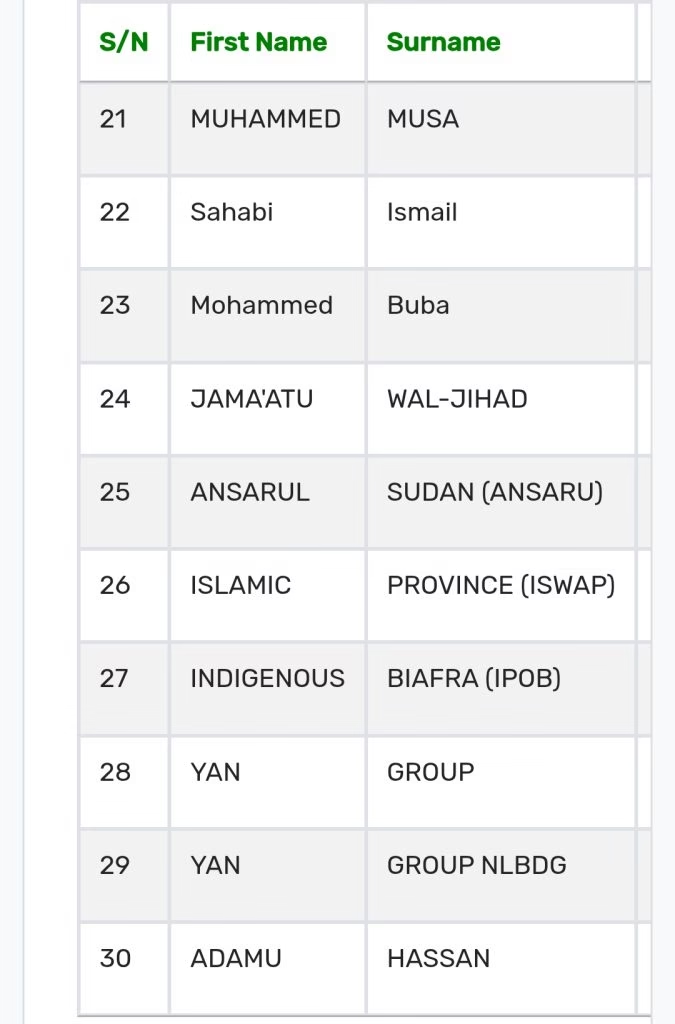
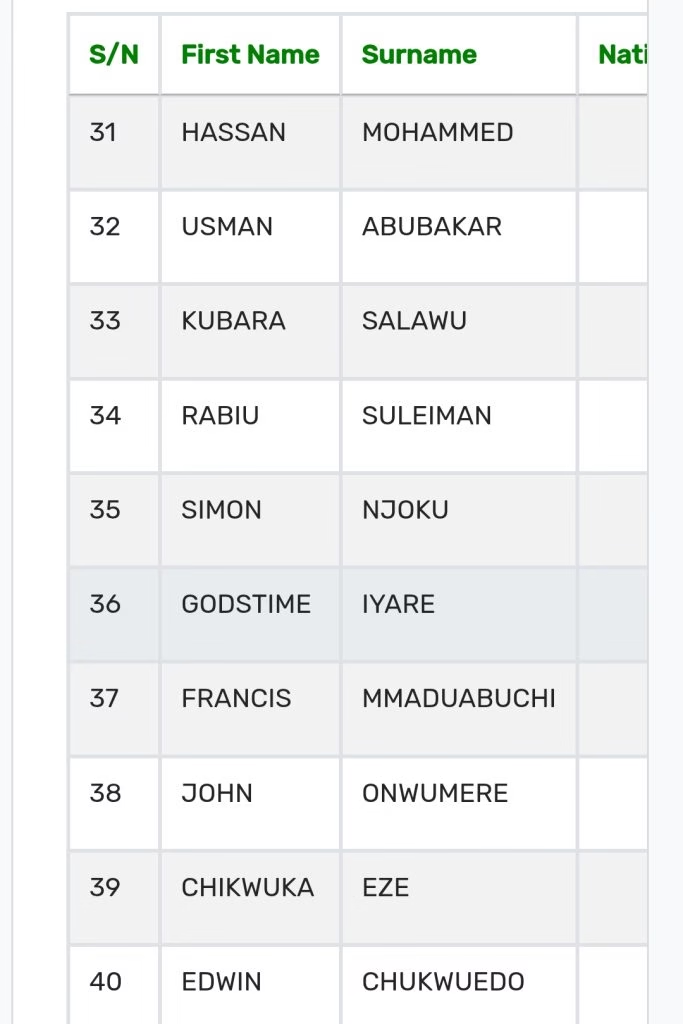
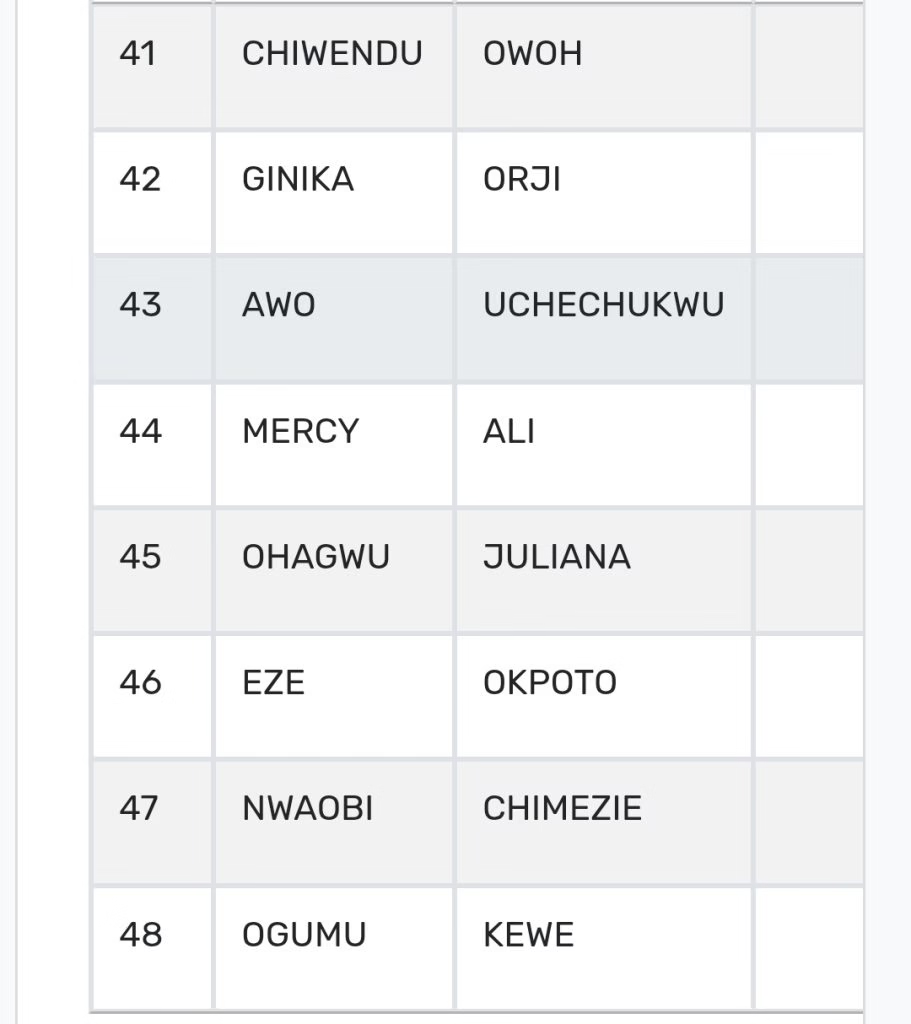
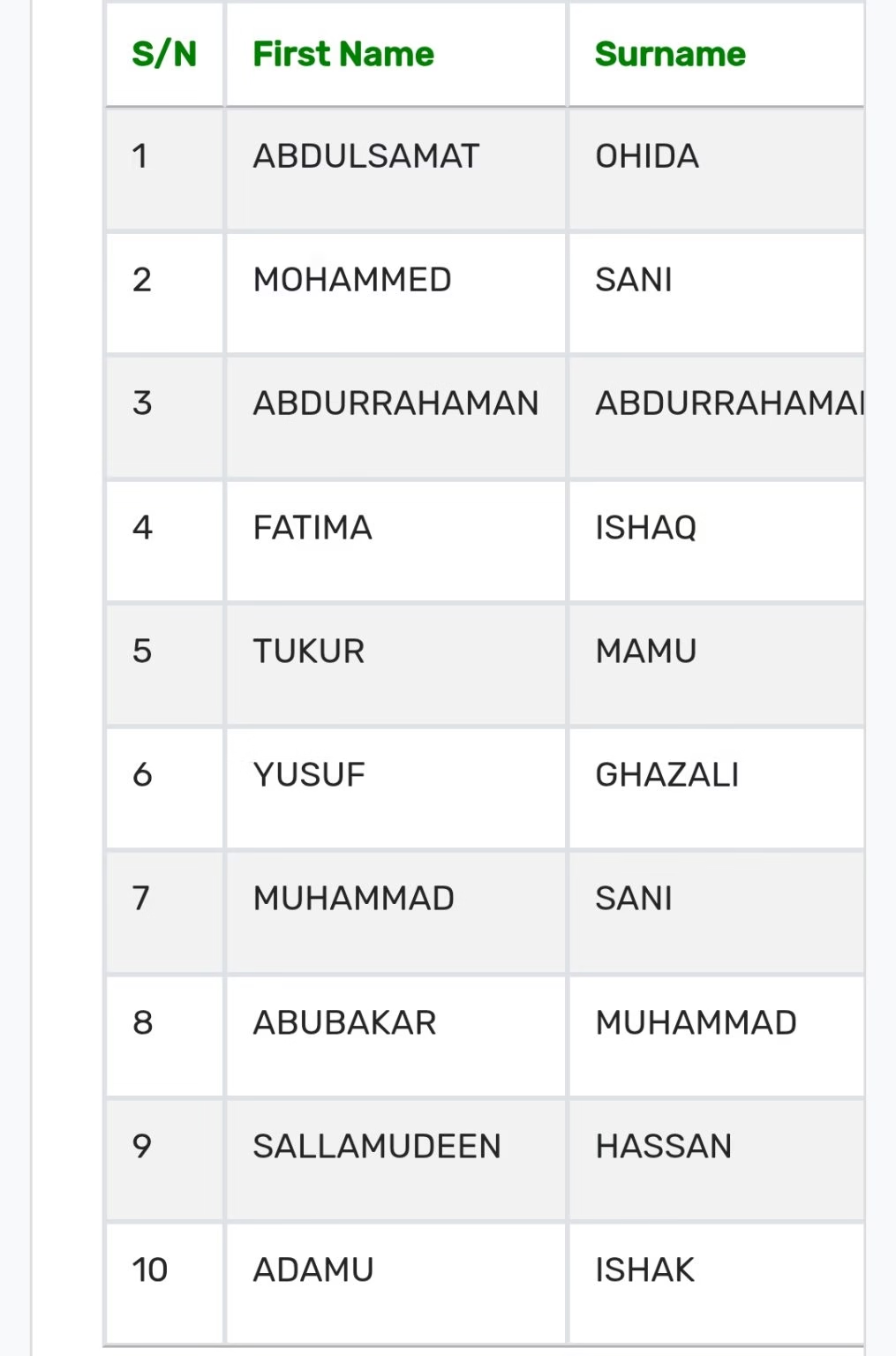
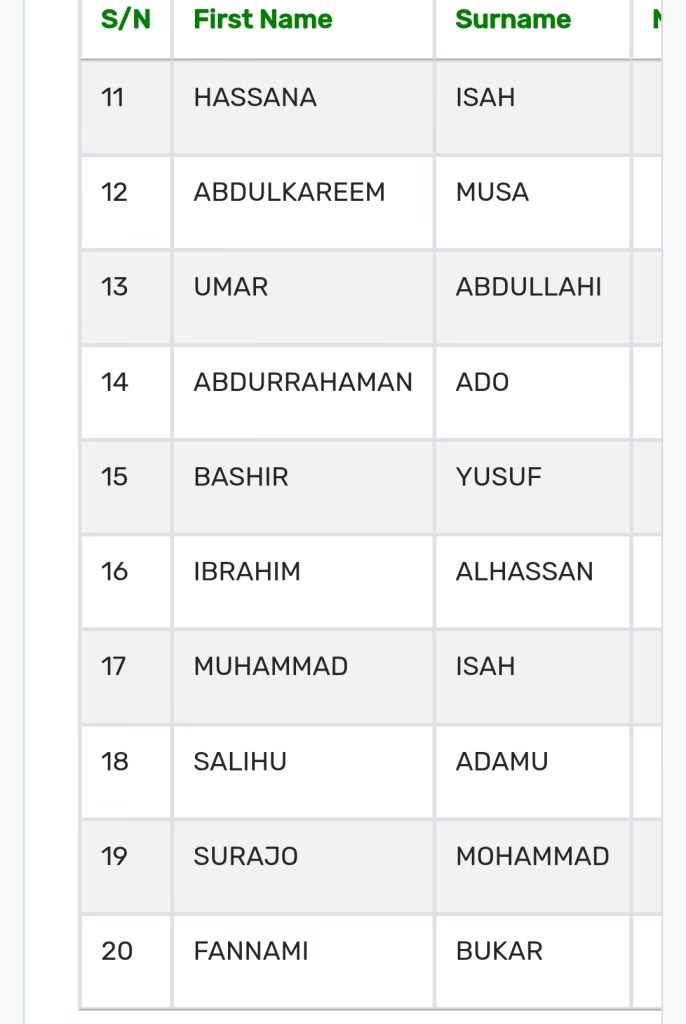
48 alleged terror financiers named by FG {SEE FULL LIST}

Published

on

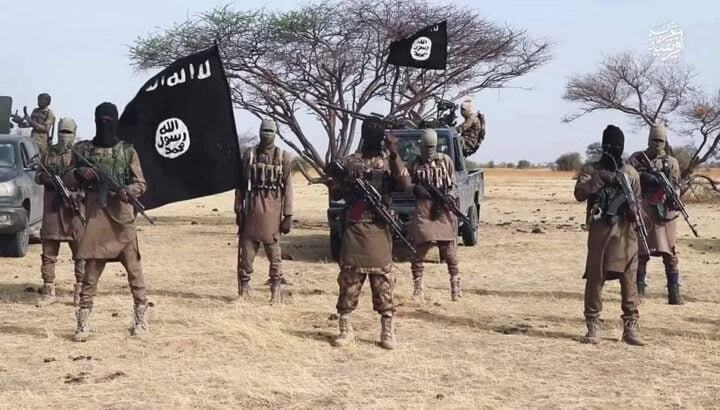
The Federal Government, on Saturday, published a list of 48 individuals and entities allegedly linked to terrorism financing in Nigeria, naming suspects with reported ties to outlawed groups including the Indigenous People of Biafra, Ansaru, and the Islamic State West Africa Province.

The list was released by the Nigeria Sanctions Committee as part of intensified efforts to disrupt financial networks sustaining terrorist activities across the country.

In a statement accompanying the publication, the committee said the designation of the individuals and organisations was in line with Nigeria’s legal and international obligations to combat terrorism financing.

“The Nigeria Sanctions Committee has approved the designation of the following individuals and entities for their alleged involvement in terrorism financing,” the statement read.

It added, “The action is pursuant to relevant laws and regulations aimed at identifying and freezing assets of persons and organisations linked to terrorist activities.”

The committee explained that the move was targeted at dismantling the financial backbone of insurgent and extremist groups operating within and beyond Nigeria’s borders.

Among those listed are individuals reportedly associated with the Indigenous People of Biafra, a proscribed separatist group; Ansaru, a faction linked to Al-Qaeda; and the Islamic State West Africa Province, one of the most active terrorist groups in the region.

Security experts have repeatedly stressed that cutting off funding sources remains a critical strategy in weakening terrorist operations.

Speaking on the development, a senior government official familiar with the process said the publication sends a strong signal about Nigeria’s resolve to confront terrorism at its roots.

“This is not just about naming names; it is about choking the financial lifelines of terror networks. Once funding is disrupted, their operational capacity is significantly weakened,” the source said.

The committee further noted that relevant authorities and financial institutions have been directed to take necessary steps in enforcing sanctions, including the identification and freezing of assets linked to the designated persons and entities.

“The public is also advised to remain vigilant and report suspicious financial activities to appropriate authorities,” the statement added.

The Federal Government reiterated its commitment to safeguarding national security, insisting that individuals or groups found culpable would face the full weight of the law.

As of the time of filing this report, detailed breakdowns of the sanctions and timelines for enforcement were yet to be made public.
 

Continue Reading

Trending