News
Five million people flee war in Ukraine
Published
4 years agoon
By
Mega Icon
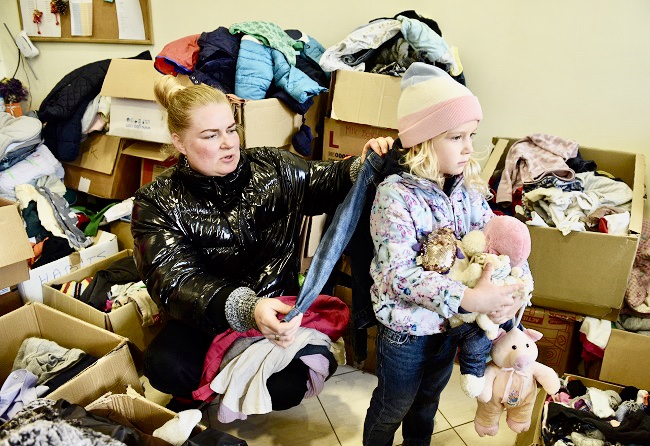
More than five million people have fled Ukraine since the Russian invasion, UN figures showed on Friday, in Europe’s fastest-growing refugee crisis since World War II.
UNHCR, the UN refugee agency, said 4,796,245 million Ukrainians had left the country since February 24.
The UN’s International Organization for Migration (IOM) says nearly 215,000 third-country nationals have also escaped to neighbouring countries.
Friday’s figures from the UNHCR were up 59,774 on those issued Thursday.
More than 2.7 million Ukrainian refugees — nearly six in 10 who have left since the war began — have fled to Poland. More than 725,000 reached Romania.
UNHCR figures show nearly 645,000 Ukrainians fled in February, with nearly 3.4 million doing so in March and more than 760,000 leaving so far this month.
Women and children account for 90 percent of those who escaped, with men aged 18 to 60 eligible for military call-up and unable to leave.
Nearly two-thirds of all Ukrainian children have been forced from their homes, including those still inside the country.
The nearly 215,000 third-country nationals who have fled — people who are citizens of neither Ukraine nor the country they entered — are largely students and migrant workers.
Beyond the refugees, the IOM estimates 7.1 million people have left their homes but are still in Ukraine.
Before the invasion, Ukraine had a population of 37 million in the regions under government control, excluding Russia-annexed Crimea and the pro-Russian separatist-controlled regions in the east.
Here is a breakdown of how many Ukrainian refugees have fled to neighbouring countries, according to UNHCR:
Poland
Nearly six out of 10 Ukrainian refugees — 2,720,622 so far — have crossed into Poland, according to the UN.
Many people who go to Ukraine’s immediate western neighbours travel on to other states in Europe’s Schengen open-borders zone.
The World Health Organization said Poland had made 7,000 hospital beds available for the sick and wounded from Ukraine, of which 20 percent were currently in use.
Some 652,000 people have crossed from Poland into Ukraine since the war began.
Before the crisis, Poland was already home to around 1.5 million Ukrainians, chiefly migrant workers.
Romania
A total of 726,857 Ukrainians entered the EU member state, including a large number who crossed over from Moldova, wedged between Romania and Ukraine.
The vast majority are thought to have gone on to other countries.
Russia
Another 484,725 refugees have sought shelter in Russia.
In addition, 105,000 people crossed into Russia from the separatist-held pro-Russian regions of Donetsk and Lugansk in eastern Ukraine between February 18 and 23.
Hungary
A total of 447,053 Ukrainians have entered Hungary.
Moldova
The Moldovan border is the closest to the major port city of Odessa. A total of 419,499 Ukrainians have crossed into the non-EU state, one of the poorest in Europe.
Most of those who have entered the former Soviet republic of 2.6 million people have moved on but an estimated 100,000 remain, including 50,000 children — of whom only 1,800 are enrolled in schools.
“Refugee children from Ukraine have fled a brutal war and have arrived dispossessed and traumatised in Moldova. They are very vulnerable and need immediate support,” said Yasmine Sherif, Director of Education Cannot Wait.
“Public schools are open to refugee children; however, the capacity is over-stretched and there is a need for urgent mental health and psycho-social services, sanitation, and teachers.”
Slovakia
A total of 329,597 people crossed Ukraine’s shortest border into Slovakia.
Belarus
Another 22,827 refugees have made it north to Russia’s close ally Belarus.

Related
You may like
News
Tegbe clarifies: No 3-month promise on power grid, outlines realistic reform timeline
Published
5 days agoon
May 8, 2026By
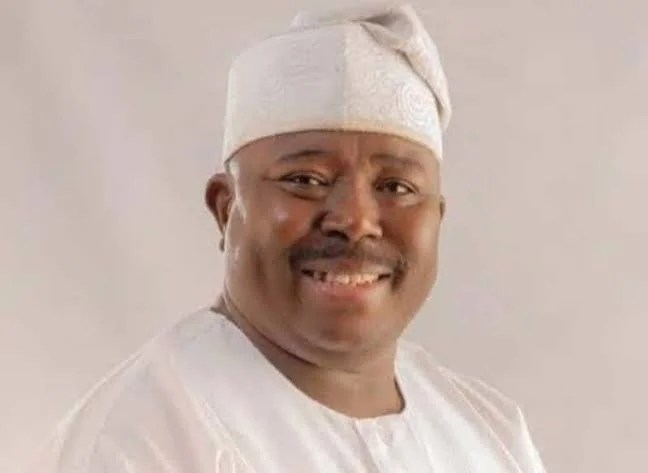
Mega IconThe Minister-designate for Power, Joseph Olasunkanmi Tegbe, has firmly clarified that he never promised to fix Nigeria’s national electricity grid within three months, describing such claims circulating in sections of the media as a misrepresentation of his Senate screening remarks.
A statement issued after his appearance before the Senate stressed that Tegbe was deliberate and cautious in his presentation, avoiding unrealistic timelines while outlining a structured reform pathway for the power sector.
According to the clarification, Tegbe explained that while Nigerians can expect early signs of progress, particularly in grid stabilisation within his first 100 days in office, comprehensive reforms will be guided strictly by technical assessments, stakeholder consultations, and sector realities.
He noted that critical challenges such as gas supply constraints, metering gaps, infrastructure decay, and commercial inefficiencies require coordinated interventions that cannot be resolved through arbitrary timelines.
“My commitment to this distinguished chamber and to Nigerians is clear: we will deliver visible and measurable improvement in the power sector,” Tegbe stated during the screening.
He assured that his focus would include stabilising the national grid, modernising transmission and distribution infrastructure, strengthening commercial frameworks, and enforcing accountability across the electricity value chain.
On tariff policy, the minister-designate reaffirmed that reforms would be carefully designed to balance sustainability with social protection, ensuring that vulnerable households are shielded while also restoring investor confidence in the sector.
The statement further emphasised that Tegbe’s approach reflects discipline, technical understanding, and a reform-minded agenda aimed at delivering lasting solutions rather than short-term political promises.
It added that he remains open to responsible media engagement and constructive clarification where necessary, noting that accurate reporting is essential to public understanding of ongoing efforts to reposition Nigeria’s power sector.
Tegbe reaffirmed his readiness to lead a transparent, results-driven reform process anchored on accountability, realism, and measurable progress.
Related
News
Yoruba Heritage Festival Honouring Ogedengbe Begins July 29
Published
5 days agoon
May 7, 2026By
Mega IconA grand cultural renaissance celebrating the enduring legacy of legendary Yoruba war hero and statesman, Ogedengbe Agbogungboro, will take centre stage as the 2026 edition of Ogedengbe Fiesta holds from July 29 to 31 across Osun State and Ekiti State.
The three-day heritage festival, unveiled by organisers on Wednesday, is themed, “Ogedengbe Agbogungboro Legacy: Leadership, Security, and Statecraft for Modern Governance in Nigeria.”
The event is designed to preserve Yoruba cultural heritage, deepen historical consciousness, promote tourism and stimulate national conversations on leadership, peacebuilding and governance.
According to the organisers, the fiesta will commence with traditional homage at Atorin and heritage excursions to notable Kiriji War historical sites in Imesi-Ile, where participants will relive significant moments in Yoruba military and political history.
The programme will also feature guided visits to the historic Ogedengbe Cave, Ibu Latoosa Site and the Yoruba Peace Treaty Grove, all regarded as symbolic monuments of Yoruba resilience, diplomacy and unity.
As part of activities lined up for the celebration, participants will tour the gardens of renowned legal icon and elder statesman, Afe Babalola, in Okemesi-Ekiti.
The organisers further disclosed that a Legacy Awards and Hall of Fame Investiture ceremony would hold in Ilesa to honour individuals who have contributed immensely to the promotion of Yoruba culture, leadership and community development.
A distinguished personality lecture in honour of Aare Afe Babalola, SAN, OFR, CON, and Arole Fabunmi of Okemesi-Ekiti is also expected to headline the event, with scholars, traditional rulers, cultural enthusiasts and public intellectuals billed to discuss pathways to strengthening governance and security through indigenous values and historical lessons.
The organisers noted that all activities would commence daily by 11am, adding that the festival would serve as a rallying point for lovers of Yoruba culture, history and tourism across Nigeria and beyond.
They described the fiesta as not only a celebration of the heroic exploits of Ogedengbe Agbogungboro, but also a strategic platform to inspire a new generation of leaders through the ideals of courage, unity, patriotism and visionary leadership.
Related
News
No Return to Fuel Subsidy, FG Insists Amid Rising Hardship
Published
7 days agoon
May 6, 2026By
Mega IconThe Federal Government on Tuesday ruled out any plan to reinstate fuel subsidy despite worsening economic hardship and mounting public pressure.
The Minister of Finance and Coordinating Minister of the Economy, Taiwo Oyedele, stated this in Paris, France, during a meeting with global investors alongside President Bola Tinubu.
Oyedele said the government would also not introduce price controls, stressing that market forces remain the preferred mechanism for determining petrol prices.
“We will not bring back fuel subsidy because it creates distortions for the economy, and we won’t introduce price control because we believe in the market,” he said.
The minister argued that the subsidy regime had long undermined economic efficiency, adding that emerging global energy shifts, including developments in Iran, present fresh investment opportunities for Nigeria.
The removal of petrol subsidy in May 2023 triggered a steep rise in inflation, worsening the country’s cost-of-living crisis.
Nigeria’s headline inflation climbed from 22.41 per cent in May 2023 to 34.19 per cent by June 2024 — its highest level in nearly two decades — driven by surging fuel, food, and transportation costs.
Food inflation further accelerated, exceeding 39 per cent by October 2024, while transport fares soared by nearly 300 per cent, compounded by currency devaluation.
Despite the economic strain, Tinubu defended the policy, saying it had stabilised the foreign exchange market.
“Subsidy that was a burden to the entire country was removed, and ever since we have achieved FX stability,” the President said, according to his Special Assistant on Social Media, Dada Olusegun.
In a related statement, the President’s Special Adviser on Information and Strategy, Bayo Onanuga, said the administration’s reforms were aimed at eliminating structural distortions, strengthening macroeconomic stability, and laying the foundation for inclusive growth.
He added that the government remained committed to fiscal discipline and transparency.
Highlighting economic progress, Oyedele disclosed that Nigeria recorded an 11.2 per cent growth in Gross Domestic Product in dollar terms in 2025, describing it as a major step towards the country’s ambition of building a $1tn economy by 2030.
He also pledged that the government would begin publishing quarterly financial reports to enhance accountability and public trust.
Also speaking, the Director-General of the Debt Management Office, Patience Oniha, assured investors of Nigeria’s commitment to prudent borrowing and sustainable debt management.
The Federal Government has continued to defend its reform agenda despite growing public discontent, insisting that the long-term gains will outweigh the current economic pains.
Related
Advertisement
Entertainment
Adekunle Gold, Simi welcome twins
Ayefele drops new album, Reflections
Reggae Legend, Jimmy Cliff, Dies At 81
Photos: Davido blows $3.7m on lavish Miami white wedding for Chioma
FAAN probes K1 for spilling alcohol on airport officer during boarding
Odunlade Adekola loses father
MegaIcon Magazine Facebook Page
MEGAICON TV
Advertisement
Trending
-
Politics1 day ago2027: Oyo APC Set for Credible Direct Primaries, Says Alake Adeyemo
-
News1 week agoTCN plans power outage in Ibadan over substation maintenance
-
News5 days agoTegbe clarifies: No 3-month promise on power grid, outlines realistic reform timeline
-
News5 days agoYoruba Heritage Festival Honouring Ogedengbe Begins July 29