Connect with us

News

Fayose: Judge threatens to arrest Obanikoro

Published

on

A Federal High Court in Lagos on Thursday ordered Sen. Musliu Obanikoro to appear in court on March.18.

NAN reports that Obanikoro’s appearance would be for the continuation of his cross-examination in the trial of the immediate past governor of Ekiti, Mr Ayodele Fayose who is facing charges of N6.9 billion fraud.

Justice Mojisola Olatoregun made the order at the resumed trial of Fayose, following the absence of Obanikoro, the former Minister of State for Defence.

Obanikoro has been under cross-examination as the fifth prosecution witness.

The court said it was important for the witness (Obanikoro) to be aware of the seriousness of his civic responsibility.

It, therefore, implored him to endeavor to show up on the next adjourned date.

The judge held that where the witness fails to appear on the next date, the court will have no option but to compel him.

Fayose alongside a company, Spotless Investment Ltd., was arraigned before Justice Olatoregun by The Economic and Financial Crimes Commission (EFCC) on 11 counts on Oct. 22, 2018.

He had pleaded not guilty to the charges, and the court had granted him bail in the sum of N50million with one surety in like sum.

The EFCC opened its case for the prosecution on Nov. 19, 2018 and called four witnesses.

On Jan. 21, 2019, the prosecution called its fifth witness, Sen. Obanikoro, a former Minister of State for Defence.

On Feb.5, 2019 which was the last adjourned date, Obanikoro was still under cross-examination by the second defence counsel, Mr. Olalekan Ojo (SAN).

However, the court had to adjourn the case until Feb. 7, for counsel to address it on the admissibility of an extra-judicial statement made by a party who is not standing trial.

At the resumed hearing of the case on Thursday, Obanikoro was not available in court.

The prosecutor, Mr Rotimi Jacobs (SAN), told the court that he called the witness phone line yesterday (Wednesday) to inform him of today’s proceedings but he could not reach him.

Jacobs said that he was later informed by a Special Assistant (SA) to the witness that Obanikoro was on admission in the hospital, and he exhibited a written medical report before the court, evidencing same.

In response, the defence counsel, Mr Ola Olanipekun (SAN), frowned at the absence of the witness, arguing that if learned counsel had made themselves available in court, then the witness had no right to be absent.

Consequently, Justice Olatoregun directed that Obanikoro be present in court at the next adjourned date, failing which the court may have to compel him to appear.

Meanwhile, in addressing the court on the admissibility of an extra-judicial statement made by a party who is not standing trial, Ojo urged the court to admit in evidence, a Certified True Copy (CTC) of a statement made by a former aide to Obanikoro, Mr Justin Erukaa (now late) .

At the last adjourned date, Ojo had sought to tender the statement from the bar, but the prosecutor raised an objection to oppose same.

He argued that the statement could only be tendered through its maker.

On Thursday, Ojo argued that the first “litmus test” of admissibility is relevance, urging the court to look at the content of the statement to determine its relevance to the trial or to the fact in issue.

He said that both in the oral evidence of the witness and even Erukaa’s, the witness admitted to have sent his aide on several errands.

He said that included the order that he should collect the sum of $1.601million from a Bureau De Change.

He argued that the fact depicted the relevance of Erukaa’s statement sought to be tendered from the bar.

Ojo citing the provisions of Sections 39, 40-50 and 83 of the Evidence Act as well as Pages 396 to 397 of the book “Contemporary Law On Evidence” authored by Jerry Amadi, urged the court to admit the evidence of Erukaa who he described as “Late”.

“Admissibility is not synonymous with weight; the court can admit the statement in evidence and in the cause of judgment, may choose to not to consider same,” he said.

He urged the court to uphold his argument.

In opposing the application, Mr Rotimi Jacobs reiterated the question for determination “whether the statement of a person not called as a witness can be admissible in evidence.”

He submitted that such evidence was not admissible in law as it is a hear-say piece of evidence.

Jacobs also argued that Section 39 of the Evidence Act relied on by the defence counsel was not relevant to the fact in issue, but only deals with “Res Gestae” or a dying declaration.

He added that the defence counsel had not drawn the court’s attention to any provision which makes Section 39 of the Evidence Act applicable.

He said that before such a statement made to a law enforcement agency could be admitted, it must comply with the requirement set out in Section 40 of the Act.

According to Jacobs, “The maker of the statement must come out to say it.”

He urged the court to refuse same.

After listening to submissions of the counsel, Justice Olatoregun adjourned the case until March.18 by 12 noon, March 19 and March 20, for continuation of trial.

According to the charge, on June 17, 2014, Fayose and Agbele were said to have taken possession of the sum of N1.2 billion, for purposes of funding Fayose’s gubernatorial election campaign in Ekiti State, which sum they reasonably ought to have known formed part of crime proceeds.

Fayose was also alleged to have received a cash payment of the sum of five million dollars, (about N1.8 billion) from the then Minister of State for Defence, Sen. Musiliu Obanikoro, without going through any financial institution and which sum exceeded the amount allowed by law.

He was also alleged to have retained the sum of N300million in his Zenith Bank account and took control of the aggregate sums of about N622million which sum he ought to have known formed part of crime proceeds.

Fayose was alleged to have procured De Privateer Ltd., and Still Earth Ltd., to retain in their Zenith and FCMB accounts, the aggregate sums of N851million which they reasonably ought to have known formed part of crime proceeds.

Besides, the accused was alleged to have used the aggregate sums of about N1.6billion to acquire properties in Lagos and Abuja, which sums he reasonably ought to have known formed part of crime proceeds.

The accused was also alleged to have used the sum of N200 million to acquire a property in Abuja in the name of his elder sister, Moji Oladeji, which sum he ought to have known also formed crime proceeds.

The offences contravene the provisions of Sections 15(1), 15 (2), 15 (3), 16(2)(b), 16 (d), and 18 (c) of the Money Laundering Prohibition Act 2011.

Comments

News

Iran War Disrupts Oil Supply, Global Loss Hits $50bn

Published

on

The global oil market has recorded losses exceeding $50bn following massive supply disruptions triggered by the ongoing Iran war, which has now stretched to nearly 50 days.

Data from energy analytics firm Kpler showed that more than 500 million barrels of crude oil and condensate have been wiped off the global market since the crisis began in late February, making it the largest energy supply disruption in modern history.

Iran’s Foreign Minister, Abbas Araqchi, on Friday said the Strait of Hormuz had been reopened after a ceasefire agreement reached in Lebanon.

However, tensions escalated again on Saturday as Tehran warned it could shut the strategic waterway if the United States sustains its blockade of Iranian ports.

Also, U.S. President Donald Trump expressed optimism that a deal to end the conflict could be reached “soon,” although he did not provide a definite timeline.

Analysts warned that the scale of disruption could have prolonged effects on global energy stability, with shocks expected to linger for months or even years.

Providing context, Principal Analyst at Wood Mackenzie, Iain Mowat, said the 500 million barrels lost is equivalent to grounding global aviation demand for 10 weeks, halting all road transport worldwide for 11 days, or shutting down the entire global oil supply for five days.

Further estimates showed that the lost volume is nearly equal to one month of oil demand in the United States or more than a month’s supply for Europe. It also represents about six years of fuel consumption by the U.S. military and could power global shipping activities for approximately four months.

The crisis has significantly affected oil-producing nations in the Gulf, with output losses reaching about eight million barrels per day in March—roughly equivalent to the combined production of two of the world’s largest oil companies.

Jet fuel exports from major producers, including Saudi Arabia, Qatar, the United Arab Emirates, Kuwait, Bahrain, and Oman, dropped sharply from 19.6 million barrels in February to just 4.1 million barrels recorded across March and April combined. Analysts said the shortfall could have powered about 20,000 round-trip international flights.

With crude prices averaging around $100 per barrel since the onset of the conflict, the lost volumes translate to an estimated $50bn in revenue. Experts noted that this figure is equivalent to about one per cent of Germany’s annual Gross Domestic Product, or roughly the size of the economies of smaller European countries.

Meanwhile, global onshore crude inventories have declined by about 45 million barrels in April alone, while total production outages have risen to approximately 12 million barrels per day since late March.

Industry experts cautioned that unless a lasting resolution is reached, the disruption could intensify volatility in global oil markets, worsen inflationary pressures, and further strain fragile economies worldwide.

Continue Reading

News

Oseni Secures Prestigious City People Political Award Nomination

Published

on

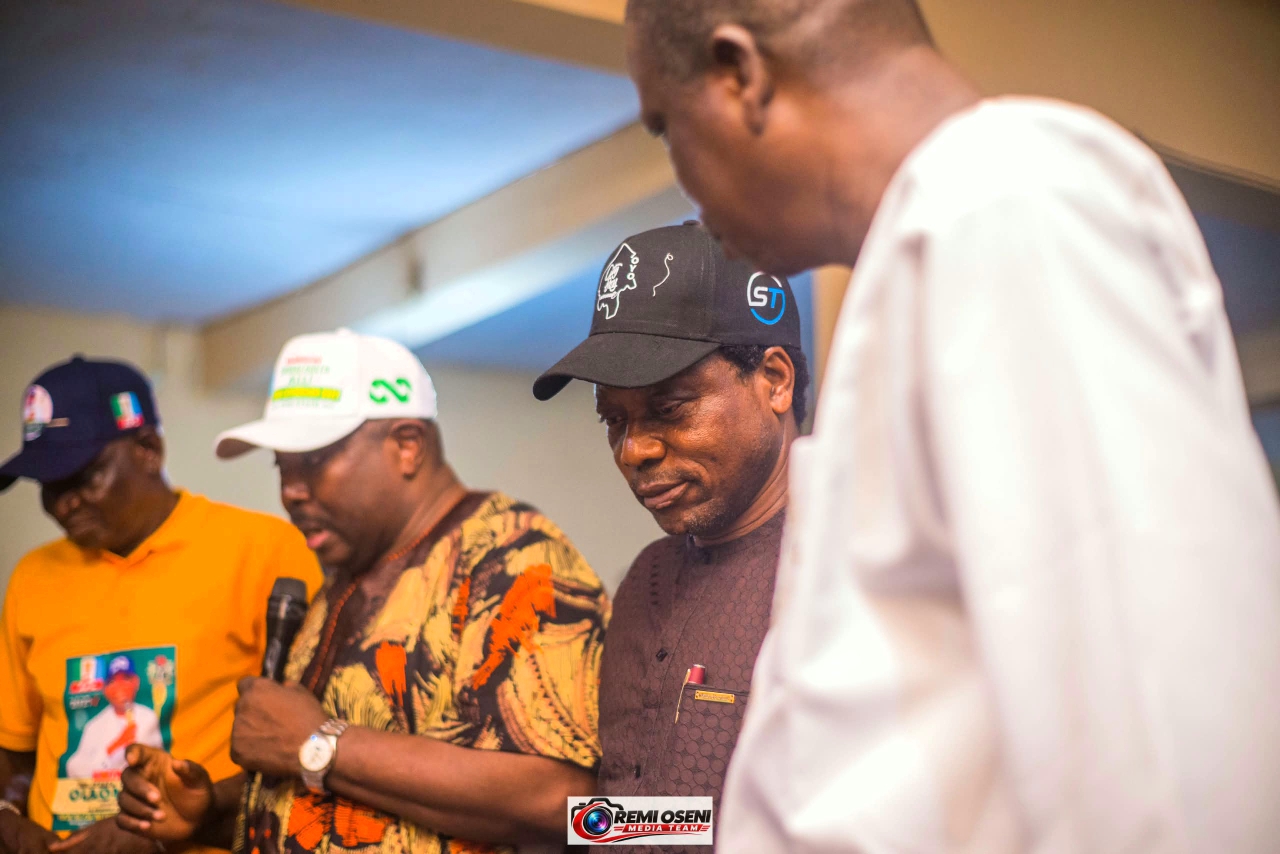
A member of the House of Representatives representing Ibarapa East/Ido Federal Constituency and Chairman of the House Committee on Federal Roads Maintenance Agency, Aderemi Oseni, has been nominated for a Special Award in Politics at the 2026 City People Political Awards.

The nomination was conveyed in a letter dated April 13, 2026, signed by the Publisher/Editor-in-Chief of City People Magazine, Seye Kehinde.

The development was disclosed in a statement issued by Oseni’s media aide, Idowu Ayodele, and made available to journalists in Ibadan on Thursday.

According to the statement, the lawmaker earned the nomination in recognition of his “outstanding contributions to politics in Oyo State, particularly in Ibarapa East/Ido Federal Constituency.”

The organisers noted that Oseni emerged as a nominee following a comprehensive review of performances across sectors by the award’s selection committee.

Part of the letter read, “Having performed creditably well in your sector last year, the Organising Committee presented you as a nominee in your sector.”

The award ceremony is scheduled to hold on Sunday, May 3, 2026, at Etal Hall, Kudirat Abiola Way, Oregun, Ikeja, Lagos, at 4pm.

The City People Awards is an annual event that recognises individuals who have distinguished themselves in governance, public service and other sectors of national development.

Continue Reading

News

Kaduna Electric to prosecute, expose attackers of staff

Published

on

The Kaduna Electricity Distribution Company has announced a crackdown on individuals who assault its staff, warning that offenders will face prosecution and public exposure.

In a statement issued on Thursday, the company expressed concern over what it described as a “disturbing surge” in attacks on its field workers and third-party partners.

It noted that the affected personnel were mainly engaged in meter installation, revenue collection and maintenance of electricity infrastructure.

According to the firm, the increasing cases of harassment, physical assault and unlawful detention of its workers pose a serious threat to employee safety and the stability of electricity service delivery across its franchise areas.

The Deputy Managing Director, Abubakar Mohammed, said the company would no longer tolerate any form of aggression against its workforce.

“Let this serve as a clear warning to anyone who engages in the assault of our staff. Kaduna Electric will pursue every case to its logical conclusion,” he said.

“We will work closely with security agencies to ensure offenders are brought to justice and face the full weight of the law,” Mohammed added.

He further disclosed that the company would publicly reveal the identities of individuals found culpable.

According to him, names, photographs and other details of offenders would be published on the company’s official platforms as well as in national and local media.

“This measure is intended to ensure accountability and serve as a strong deterrent. Anyone who chooses to attack our personnel should be prepared not only to face prosecution but also public exposure,” he added.

The company stressed that assaults on utility workers attract serious legal and financial consequences, noting that offenders risk criminal charges that may lead to fines or imprisonment.

It added that perpetrators could also face civil liabilities, including compensation for medical treatment, psychological trauma and loss of work hours.
While condemning the attacks, Kaduna Electric urged customers to adopt peaceful and lawful means of resolving disputes.

It advised aggrieved customers to channel complaints through its customer service units or appropriate regulatory bodies.

The management reaffirmed its commitment to protecting its workforce and partners, stressing that a safe working environment is essential for delivering reliable and efficient electricity services.

Although disputes between electricity providers and consumers are often linked to billing issues, metering challenges and service delivery concerns, the company maintained that such matters must be resolved through dialogue, insisting that violence against its staff will no longer be tolerated.

Continue Reading

Advertisement

Entertainment

Advertisement

MegaIcon Magazine Facebook Page

Advertisement

MEGAICON TV

Advertisement

Trending