Connect with us

Opinion

Exit of Alao-Akala: Onerous task to fill leadership vacuum in Oyo APC

Published

on

File photo of late Governor Adebayo Alao -Akala

Like him or hate him, Otunba Christopher Adebayo Alao-Akala was an enigma. Many things have been written and said about the late former Governor of Oyo state. ‘Oyato Governor’ as he was popularly addressed by his numerous fans and admirers, was not a push over politician in Oyo State politics, Southwest politics and by extension, Nigeria politics.

Before his transition to the great beyond, Alao-Akala, was the de facto leader of the All Progressives Congress (APC) in Oyo-State. But before then, he was deferring to late Sen. Abiola Ajimobi, a two term governor in the state when the latter was alive. With the exit of Ajimobi, the mantle of leadership of the opposition APC in the state, automatically falls on Governor Adebayo Alao- Akala.

File photo of late Governors of Oyo state, Abiola Ajimobi and Alao-Akala

Today, reality has dawned on the Oyo state chapter of the All Progressives Congress (APC). Its leading light Alao-Akala has passed away…the ‘man’ died! But as the saying goes, nature abhors and does not like vacuum, and filling the huge vacuum created by the demise of ‘Omo Iya Alaro’ is an urgent and onerous task for the party in the state. Interesting times lie ahead as the party is expected to face higher hurdles to select a conflict Manager, popular rallying point that would be acceptable and respected; otherwise, the 2023 general election may be a replica of the 2019 poll in the state. It is believed that the ‘star studded’ Oyo APC with a good Manager of both human and material resources, may become the next landlord of the Agodi Government Home.

The emergence of late Akala as the leader of APC, faced some challenges as his leadership position was tactly challenged, but for his strength laced with cognate experience in the power game, he would not have survived the intrigue and manoeuvre played out within the party politics in his lifetime.

However, before individual strengths and weaknesses are analysed, it is important to consider some benchmarks, compulsory characteristics the APC  must take into cognizance before concluding on the next leader especially at this time the party is entangled in internal crisis, couple with the fast approaching of 2023 general elections. One thing is certain, the emergence of a credible and widely accepted leader would make the party strong and enhance the party’s chances of returning to the Agodi Government House.

Even though the purpose of this write up is not to guide or provide framework in which the APC should follow to pick its leader but at the same time, giving the fact that political leader(s) of any state or nation sprouts out from party politics, it becomes incumbent to offer suggestions and or advices in this dire hours to a leading political party and for that matter, the ruling party at the center.

On this note, members and stakeholders of the APC in Oyo state should look out for political experience, large heart, charisma, constituency and mixed breed among arrays of its members who are aspiring to take over from late Alao-Akala.

Already some names are being mentioned, among whom are Otunba Moses Alake Adeyemo, Chief Iyiola Oladokun, Senator Ayo Adeseun, Chief Akin Oke and the minister of sports, Chief Sunday Dare.
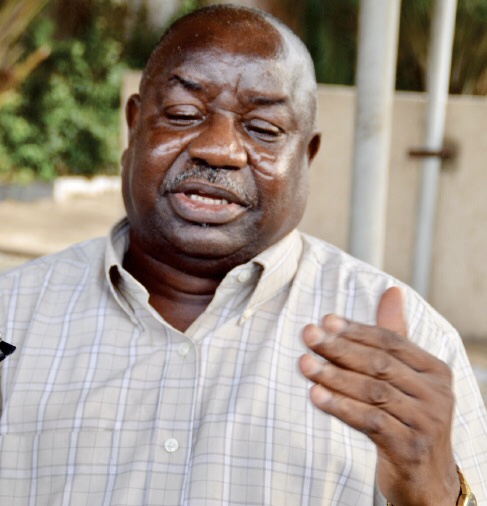
Chief Iyiola Oladokun

Otunba Moses Alake Adeyemo who hails from Igboho in Oorelope Local Government Area of Oyo State served two terms as the deputy governor in late Sen. Abiola Ajimobi’s administration, while Chief Iyiola Oladokun, was the deputy governor during late Alhaji Lam Adesina’s reign as the state’s gaffer.

Both Adeyemo and Oladokun are from Oke-Ogun zone, where the state’s party chairman is zoned to. Notably, the two men are former deputy governors and highest -ranking public office holders of the state within the party.
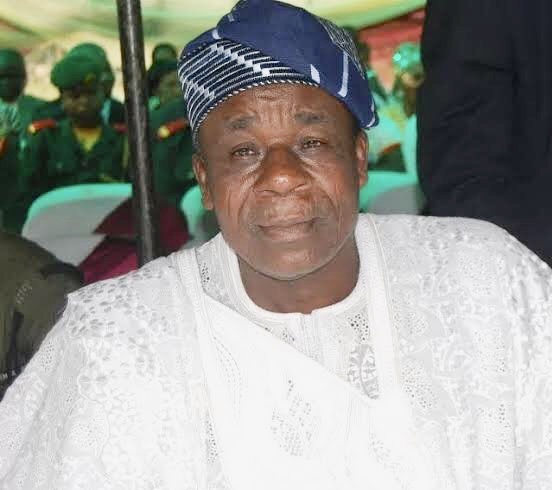
Otunba Alake Adeyemo

Also, both are core and committed progressives, however, political pundits posited that a mixed breed politician with some deep purse to finance the politics of his people is better as a State Leader.

Sen. Ayo Adeseun is an experienced politician. The former local government chairman of Surulere Local Government, Iresaadu, Ogbomoso has large heart, a mixed breed politician, charismatic and a good bridge builder.
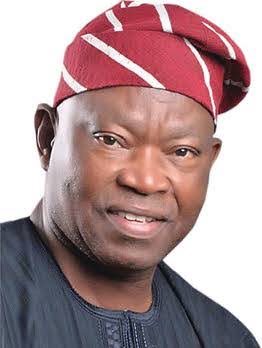
Sen. Ayo Adeseun

As a former House representatives member  and Senator represented Oyo Central, he has the requisite connections. What may count against him at this material time is his “long vacation”  from political schemings for some time now.

Chief Akin- Oke is the outgoing State Party Chairman who hails from same Ogbomoso as Akala. Chief Oke, who has been in the saddle for almost 11 years, is a committed progressive but does not have a strong political followership.

Chief Akin Oke

Some of his Exco members had parted ways with him and may not have the confidence of  the new Excos as he was alleged to have opposed the emergence of large numbers of the new faces.

Also, age, financial strength, ability to adapt to modern ideas are considered as some of his weaknesses.

Presently, Chief Sunday Dare is the highest holder of political post from Oyo state. In some clime, the minister for Sports, who also hails from Ogbomoso as late Alao-Akala, should have been the leader of the party.

 

Chief Sunday Dare

But giving some circumstances how politics is being playing in Nigeria, he would find the shoe too big  to put on. Aside, Dare, as many would argue, is too new to the intricacies of Oyo State politics, hence still needs some time to learn its dynamics.

The big question now is, who is the table tilting or turning to? Only time will tell as any decision make by the APC will either unite or further polarize the party ahead of the 2023 general elections.


Idowu Ayodele writes from Ibadan, Oyo state Nigeria

Comments

Opinion

Nigeria’s Insecurity: Why the System Rewards Reaction, Not Prevention

Published

on

The most foolish person in a burning house is not the one who cannot find the exit. It is the one who knew the house would burn, watched it happen, and only ran when the ceiling collapsed. That is Nigeria’s governance posture toward insecurity—a pattern so consistent that it has become normalized.

“Ikú tó pa ojúgbà ẹni, òwe ló fi pa. (The death that kills your neighbour is a proverb directed at you).

The bandits did not simply arrive. They sent warnings ahead of them through a trail of violence that crossed state lines and appeared in every massacre headline we filed away as someone else’s problem.

When Insecurity Was Still “Someone Else’s Problem”

When the North was burning and the Middle Belt bleeding, the South West treated it as distant noise. Kwara became the first warning sign—the bridge between North and South—slowly slipping under the shadow of insurgency. The question every serious observer should have asked was simple: what happens when it crosses the border?

South West governors issued statements—careful, brief, and reactive. None moved with the urgency the threat demanded. Before long, violence arrived at our doorstep: herder brutality in Oke-Ogun, attacks in Oyo and Ekiti, kidnappings along the Ibadan–Ijebu-Ode expressway, and forest camps emerging in Ondo.

The warning signs had matured into reality, yet we were still searching for an exit strategy that should have been built years earlier.

The Problem: We Only Count the Dead

In safety performance management, there is a critical distinction between lagging indicators—outcomes after failure (deaths, destruction, losses)—and leading indicators, which measure prevention before failure occurs.

Aviation, oil and gas, and other high-risk industries understand this clearly: a system that obsesses over lagging indicators will always arrive after the accident.

Nigeria’s security governance is built almost entirely on lagging indicators. We count attacks after they happen. We rebuild after a collapse. We mourn after preventable deaths.

We rarely ask:

How many attacks were prevented this quarter?

How many threats were neutralized before execution?

How many cells were dismantled at the planning stage?

We do not know the answers—because we are not measuring them. The system was never designed to prevent. It was designed to respond: loudly, visibly, expensively, and always too late.

Another Base. The Same Question Nobody Asks

The presidency is reportedly considering a military base in Oriire Local Government Area of Oyo state. It is a familiar pattern: a major security incident, public outrage, and an institutional response designed to signal seriousness.

But the critical question remains unanswered: what has been the leading-indicator performance of existing bases?

How have long-standing military formations in places like Jos, Benue, and Zamfara—some active for over two decades—actually shifted the security outcome?

A military base without actionable intelligence is a stationary slaughter ground for soldiers. It does not prevent attacks; it often becomes a reactive outpost in a repeating cycle: attack, deployment, statement, investigation, and then silence—while underlying threat networks remain intact.

The Incentive Structure Behind the Chaos

The deeper issue is not the capability of security forces. It is the incentive structure of the system.

When leadership is judged only by incidents that have already occurred, governance shifts from prevention to performance management of failure. The objective becomes managing optics, not reducing probability.

Nigeria’s security budget has grown significantly over the past decade, yet insecurity has worsened. Kidnappings have become more brazen. Why? Because funding is justified by the persistence of the crisis, not its resolution.

If the problem is solved, what justifies the next budget cycle?

For years, decentralization has been proposed as the structural reform that could change the system—but it remains trapped in political rhetoric. Why? Because decentralization disperses power, and power in Nigeria’s political economy is not dispersed. It is concentrated.

Sixteen Days. Full Stop.

Forty-six children and teachers were kidnapped in Oriire. It reportedly took sixteen days for the presidency to authorize a specialized rescue framework.

Sixteen days before the Commander-in-Chief treated the abduction of forty-six human beings as a crisis requiring formal executive activation.
But responsibility in moments like this is not singular.

The Oyo State Governor, by constitutional convention regarded as the Chief Security Officer of the state and a recipient of security votes, also occupies a central coordinating role in the security architecture of the state. Within a crisis of this scale, expectations of rapid intergovernmental coordination, visible command urgency, and sustained pressure on federal response mechanisms are not optional, hey are inherent to the office.

Yet, the response cycle, from abduction to high-level coordinated action and physical engagement with affected communities, unfolded at a pace that raised legitimate public concern about the speed and intensity of institutional reaction.

By the time visible field visits and coordinated engagements occurred, the delay had already become part of the public record of the crisis itself—shaping perception as much as the incident shaped fear on the ground.

In a functional security system, crisis response is measured in hours, not days. Not for symbolism, but because time directly affects outcomes: every passing hour in an active kidnapping reduces the probability of safe recovery and increases the leverage of perpetrators.

Sixteen days, therefore, is not merely a lapse in timing. It reflects a deeper structural problem—where urgency is often declared after pressure builds, rather than operationalized when intelligence first breaks.

And in that gap between incident and action, citizens are left to absorb the consequences of delayed coordination across all tiers of authority.

The Verdict

Nigeria does not primarily need more military bases. It needs a new security measurement architecture—one that prioritizes intelligence conversion rates, early-warning response times, and pre-emptive disruption metrics over post-incident operations.

Every threat must be treated as time-sensitive, where minutes and hours determine outcomes—not weeks and statements.

Most importantly, citizens must shift the accountability question:

Not only “why did the attack happen?”

But “why was it not prevented?”

Nigeria’s security challenge is ultimately a leadership and systems failure—an institutional preference for reaction over prevention, because prevention is politically invisible.

You cannot hold a press conference about the attack that never happened.

Until this reality is named and confronted with precision, the cycle will continue.

Continue Reading

Opinion

Why Ibadan North youths are rooting for Repete

Published

on

Growing support has continued to trail a youthful politician and technology advocate, Hon. Khalil Mustapha Adegboyega, popularly known as Repete, as many youths in Ibadan North Federal Constituency expressed confidence in his leadership style and vision for development.

Across several communities within the constituency, residents, particularly students, artisans and young professionals, described Repete as one of the emerging political figures with strong grassroots appeal and a passion for youth empowerment.

Supporters said his growing popularity stems from his consistent advocacy for innovation, entrepreneurship and skills development aimed at addressing unemployment and creating opportunities for young people.

As an engineer and technology enthusiast, Repete is also said to possess a deep understanding of the evolving digital economy and the need to position youths for global competitiveness.

Many of his supporters noted that his approach to leadership focuses on practical solutions, mentorship and capacity-building initiatives capable of helping young people become self-reliant and economically productive.

Some community stakeholders who spoke on his rising profile said his humility, accessibility and relationship with the grassroots have continued to endear him to many residents within the constituency.

They added that Repete’s engagement with youths and community groups reflects his commitment to inclusive governance and people-oriented representation.

Observers within the constituency also maintained that the increasing support for the politician reflects a growing desire among residents for a new generation of leaders driven by innovation, competence and accountability.

According to them, many young people see Repete as a symbol of hope and progressive leadership capable of contributing meaningfully to the development of Ibadan North Federal Constituency.

Continue Reading

Opinion

Repete or Regret: APC’s Moment of Truth in Ibadan North

Published

on

File photo of Hon. Khalil Mustapha Adegboyega (Repete)

The All Progressives Congress (APC) in Oyo State stands on the edge of a consequential decision—one that may define not only its fortunes in Ibadan North Federal Constituency but also its broader political relevance in the state.

As the countdown to the party primaries intensifies, the question before APC leaders is no longer routine. It is strategic. It is urgent. And it is decisive: will the party align with the clear preference of the people or risk repeating costly political miscalculations?

At the centre of this debate is Hon. Khalil Mustapha Adegboyega, widely known as Repete—a name that has, over time, evolved from a political identity into a grassroots phenomenon.

A Candidate Rooted in the People

In contemporary Nigerian politics, where voter awareness is rising and expectations are shifting, candidates are increasingly judged not by promises but by presence. On this scale, Adegboyega stands tall.

His political journey is marked by consistent engagement with constituents—far beyond the optics of election seasons. From youth empowerment initiatives that provide practical skills and startup support, to sustained interventions in healthcare access for the elderly and indigent, his footprint across Ibadan North reflects a model of leadership anchored on service.

Unlike the transactional approach that often defines political relationships, Adegboyega’s connection with the people appears organic—built on trust, accessibility, and continuity. These are not mere campaign attributes; they are political assets.

The Danger of Political Disconnect

History offers the APC a clear lesson: parties that ignore grassroots sentiment often pay a heavy electoral price. The imposition of candidates perceived as distant or untested has, in several instances, resulted in voter apathy, internal dissent, and eventual defeat at the polls.

Ibadan North presents no exception.

With opposition parties closely monitoring the APC’s internal dynamics, any misstep in candidate selection could provide a ready opening. A divided house, coupled with a candidate lacking widespread acceptance, is a formula the opposition is well-positioned to exploit.
The implication is straightforward: this is not merely about party loyalty; it is about electoral viability.

Echoes from the Grassroots

Across the length and breadth of Ibadan North—markets, motor parks, religious centres, and community gatherings—a consistent pattern emerges in political conversations. The name “Repete” resonates with familiarity and acceptance.

Such organic support is not easily manufactured. It is cultivated over time through visible impact and sustained presence. For a party seeking electoral certainty in a competitive environment, this level of grassroots validation is not just desirable—it is critical.

A Test of Leadership and Judgment

For the APC leadership in Oyo State, the moment calls for clarity of purpose. Decisions driven by narrow interests, personal alignments, or short-term calculations may carry long-term consequences.

The task, therefore, is to balance internal considerations with external realities. Elections are ultimately decided by voters, not by party caucuses. A candidate who commands public confidence offers the strongest pathway to victory.

The Stakes Are Clear

Ibadan North is too strategic a constituency for experimentation. The cost of error is not limited to a single seat; it extends to party cohesion, credibility, and future positioning within the state’s political landscape.

In this context, the argument for Adegboyega is less about sentiment and more about strategy. His visibility, acceptability, and record of engagement place him in a strong position to consolidate support and mobilise voters effectively.

Conclusion: A Choice with Consequences

As the APC moves closer to its primaries, the decision before it is both simple and significant: align with a candidate who reflects the mood of the electorate or risk conceding advantage to a watchful opposition.

In politics, moments such as this often separate foresight from hindsight.
For APC in Ibadan North, this may well be one of those defining moments.


Aderibigbe Akanbi, a political analyst, writes from Ibadan.

Continue Reading

Advertisement

Entertainment

Advertisement

MegaIcon Magazine Facebook Page

Advertisement

MEGAICON TV

Advertisement

Trending