Connect with us

Top Stories

Exclusive : Bench Warming At Oyo Assembly [SEE LIST]

Published

on

OYO State House of Assembly  is a lawmaking body in the state, and vested with the powers to check the excesses of the executive and other arms of government to ensure peace, order and good governance in the state, in respect to matters not in the exclusive legislative list, but in concurrent list. It could also legislate on other matters in which it is empowered by the Constitution to do so.

Similarly, it plays a representative function based on constituency arrangement for effective representation of the populace.

Each member therefore represents a section of the people in the state for avoidance of marginalization in the scheme of things.

And among other several functions, the House is further tasked with deliberative function and before any bill is passed into law, or a resolution taken on any matter, members must procedurally, engage in a careful and meticulous deliberation of all the facts therein, to arrive at definite and worthy decisions.

However, in addition to lawmaking, oversight and representation roles of these parliamentarians, they are also expected to perform constituency services, which sounds to be one of the most influential functions of a lawmaker.

In Oyo’s current 8th Assembly, there are some lawmakers who are perceived to have performed below the bar, while many others have completely gone into oblivion, by consistently remaining dormant during plenary sessions.

As the fight for political surviver draws nearer and halfway into the tenure of the 8th Assembly, interestingly, from 2015 to 2017, a total of seven (7) members of the current Assembly did not live up to expectations.

Mega Icon Magazine investigation reveals a dismay perform of these parliamentarians who are poised to contest future elections, judging from the in-depth of their debates and contributions in the house, standing committees as well as what impact they have made on the electorate whose mandate they hold in trust.

By popular demand, Mega Icon Magazine brings you the inactive lawmakers in Oyo’s Assembly.


Hon. Abiodun Wahab, popularly addressed as ‘Deen Abbey’  representing Oluyole State Constituency under the platform of the All Progressives Congress (APC) is one of the bench warmers in the House; he hasn’t done much to represent his constituents.

Many have termed him as a controversial candidate as those in the know claimed that the lawmaker is currently swimming in turbulence political water following a court case questioning his victory in the 2015 elections. He was also alleged to be part of the plot spare heading the impeachment of the Speaker, Hon. Michael Adeyemo so that he could secure the Deputy Speaker position.

Equally, Accord lawmakers , Hon. Oloya Ayinla representing Ibadan North East State Constituency I and his counterpart from Ibadan North East II, Hon. Adeoye Adeniyi were also caught in the web.

It seems second term members of the Assembly are there to relax, instead representing. These parliamentarians are one of those former legislatures who are benchwarmers in the Oyo State House of Assembly, not living up to the billing as lawmakers.

In a related development, Hon. Akinmoyede Olafioye who is also the Chief Whip of the House has served different governments in various capacities.

The APC lawmaker from Lagelu State Constituency, Olafioye, well known in the politics of Oyo State was the former council boss of Lagelu Local Government. The ex- Councilor also served as both acting and elected Council Chairman during Governor Adebayo Alao Akala’s regime and retained the position during Governor Abiola Ajimobi’s first term tenure before securing his present political post.

Despite his huge political experience, he’s also one of the benchwarmers in the House; it’s pretty bad from the ex – council chief.

To put up a list like this without mentioning Hon. Oladipo Abimbola (APC) and his colleague, Hon. Jimoh Akintunde (APC) is like trying to travel to Australia from Nigeria by foot. It is difficult for them to scale through this tangled web.

Hon. Abimbola represents the good people of Ibadan North West State Constituency and served during the previous 7th Assembly led by Senator Monsurat Sunmonu, who is currently representing Oyo Central Senatorial District.

In addition,  Hon. Jimoh Akintunde of Ibarapa Central/North-State Constituency performance’s has not been quite that impressive.

Both were among the lawmakers shirking their responsibilities in the Oyo State House of Assembly. They are not performing well as expected.

At this juncture, it is imperative to state that political representation is the activity of making citizens’ voices, opinions, and perspectives “present” in public policy making processes.

Unfortunately, Hon. Oguntade Olasunkanmi, another Accord Party member representing Egbeda State Constituency has not been given his constituents a decent representation. Nothing much from the lawmaker, he’s one of those benchwarmers fond of not contributing during plenary session. It’s pretty hard to glean out information on the lawmaker.

Comments

Opinion

Doctors’ Strike and the Price of Human Life | By Olusegun Hassan

Published

on

The popular Yoruba saying, “Ẹni kan l’ọmọ,” meaning that only the person wearing the shoes knows where they pinch, recently took on a deeper meaning for me. Just last week, I experienced its true significance beyond its familiar place as an aphorism.

Popular sayings often remain mere expressions in our consciousness until we find ourselves at the receiving end of the experiences they describe. Similarly, systemic flaws and structural deficiencies in society may seem distant until we become victims of them. News of kidnapping is just another newspaper report until a loved one is abducted and the family is thrown into a desperate search for money to pay a ransom. In the same vein, the news that “doctors are on strike” may appear to be just another headline until someone close to us dies because urgent medical attention was unavailable as a result of the strike.

Nigeria’s story is replete with such unfortunate experiences, which have given rise to another familiar expression: “May Nigeria not happen to you.”

While the media landscape was still reeling from reports of the death of popular gospel singer Toluwanisings, who reportedly died on October 14, 2026, following an alleged lack of urgent medical attention during a doctors’ strike, I also lost a close relative two days later, on October 16, under circumstances involving the same lack of timely medical care.

She was an asthma patient who suffered an attack in the middle of the night. After receiving first aid, she was rushed to the nearest hospital, a teaching hospital, only to be turned away because doctors were on strike and none was available to attend to her. By the time the family reached the nearest private hospital, she had died. Her death left the entire family, myself included, traumatised.

These are only two cases among many similar tragedies that have occurred over the years. They raise a painful question: how many of these deaths could have been prevented if essential medical services had remained accessible?

I cannot help but wonder: what is the value of human life in this country? At what point did the sanctity of human life become secondary to demands for improved welfare by medical unions?

This is not to suggest that the grievances of doctors are illegitimate. Far from it. Medical professionals deserve fair remuneration, adequate facilities, safe working conditions and an environment that enables them to perform their duties effectively. The question, however, is whether the pursuit of these legitimate demands should come at such a devastating cost to human life, particularly when the fundamental purpose of the medical profession is to preserve life through the provision of appropriate healthcare.

It is a troubling paradox.

Doctors undoubtedly have the right to demand fair treatment and safe working conditions. However, that right must be exercised in a manner that protects patients from abandonment and avoidable harm. When patients die because essential medical services have been withdrawn without adequate safeguards, the ethical justification for the action becomes a serious matter for scrutiny.

The World Medical Association (WMA), an international body that promotes widely recognised ethical standards for physicians, upholds principles that include respect for human life and the dignity of patients. These principles underscore the responsibility of doctors to protect the health and well-being of those under their care, provide competent and timely treatment, prevent avoidable harm and act in their patients’ best interests.

These are not merely ideals about compassion. They are professional obligations that must continue to guide medical decisions, including during industrial disputes.

In Nigeria, the Medical and Dental Council of Nigeria (MDCN) addressed this issue in January 2024, reportedly directing the heads of teaching hospitals, federal medical centres and specialised hospitals to ensure that industrial action did not result in the abandonment or premature discharge of patients.

Among the safeguards outlined were the following:

  • Accident and emergency departments must remain open and adequately staffed.
  • Emergency paediatric services, labour wards, neonatal units and intensive care units must continue to provide emergency and critical care.
  • Patients already admitted to hospital must not be discharged merely because a strike has commenced.
  • Patients with scheduled appointments before the strike must be attended to in accordance with the applicable directives.

These safeguards reinforce an important principle: the right to pursue employment-related demands does not extinguish a doctor’s professional obligation to protect patients from preventable harm.

Where emergency patients are turned away, critically ill patients are abandoned, or essential services are shut down without adequate arrangements for emergency care, the circumstances warrant investigation. Where evidence establishes a breach of professional obligations or applicable regulations, appropriate disciplinary or legal action should follow.

Similarly, when a patient dies after being denied emergency treatment during an industrial action, the circumstances surrounding the death deserve a thorough and impartial investigation. Where negligence, professional misconduct or a breach of applicable directives is established, appropriate sanctions should be imposed in accordance with the law and relevant professional regulations.

The point is simple: no legitimate grievance should justify abandoning a patient whose life is in immediate danger.

At this juncture, it is equally important to acknowledge the government’s share of the blame. While this article emphasises the ethical obligation of doctors to preserve human life, the government must also recognise that poor remuneration, unpaid allowances, inadequate medical facilities, excessive workloads and unsafe working conditions undermine doctors’ morale and their ability to provide quality healthcare.

The consequences are increasingly evident in Nigeria’s continuing loss of medical professionals to other countries.

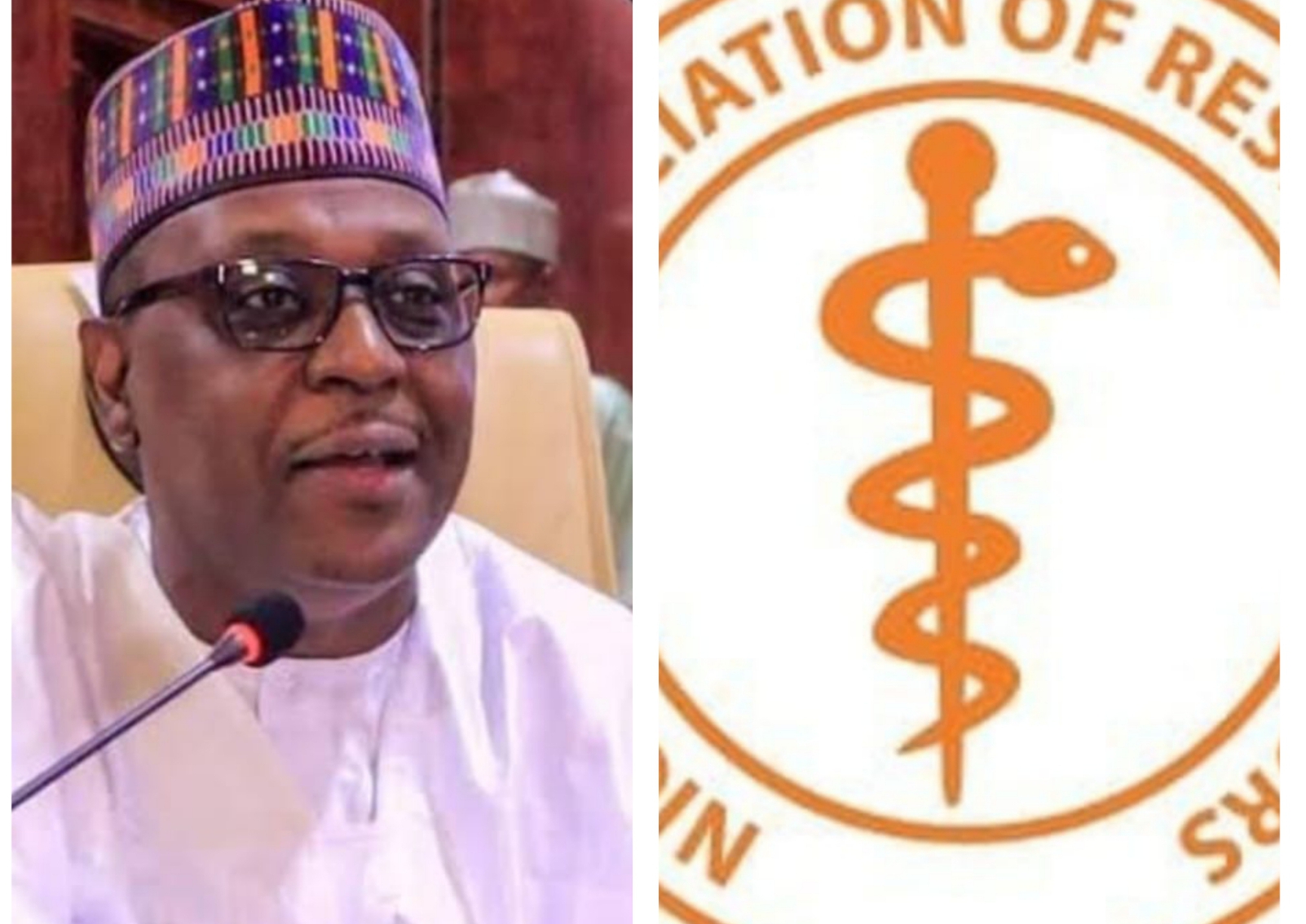
In 2025, the Coordinating Minister of Health and Social Welfare, Professor Muhammad Ali Pate, reportedly disclosed that more than 16,000 Nigerian doctors had emigrated over the preceding five to seven years, largely in search of better opportunities abroad. Furthermore, a 2025 report on Nigeria’s health statistics reportedly indicated that 4,193 doctors and dentists left the country in 2024 alone.

These departures deepen staffing shortages, increase the pressure on the doctors who remain and expose patients to longer waiting times and potentially avoidable deaths.

The government must therefore move beyond repeated negotiations and implement sustainable reforms. These should include the prompt payment of salaries and allowances, improved working conditions, adequate funding for public hospitals, transparent career progression and the effective implementation of agreements reached with medical unions.

The Federal Ministry of Health and relevant hospital authorities must also strengthen monitoring and oversight during industrial disputes to ensure that emergency and critical care services remain available in public hospitals. Patients in life-threatening conditions must not be turned away simply because doctors are on strike.

Ultimately, responsibility for Nigeria’s healthcare crisis cannot be placed entirely on one side. Doctors must uphold their professional and ethical obligations, while the government must fulfil its responsibility to create conditions in which those obligations can be discharged effectively.

Medicine is not an ordinary occupation. It carries a profound moral responsibility because, in certain circumstances, the timely intervention of a medical professional can make the difference between life and death. No employment grievance should be used to justify abandoning a patient whose life is in immediate danger.

The sanctity of human life demands responsibility from the doctors entrusted with treating patients and from the government authorities responsible for ensuring that appropriate treatment remains available.

A functional healthcare system depends on cooperation between these two critical stakeholders. When they fail to find common ground, it is the ordinary citizen who suffers the consequences. As the familiar saying goes, when two elephants fight, the grass suffers.

And trust me, I know what that suffering feels like. I have just experienced it.

Olusegun Hassan, Ph.D.
Public Policy Analyst and Social Commentator

Continue Reading

Politics

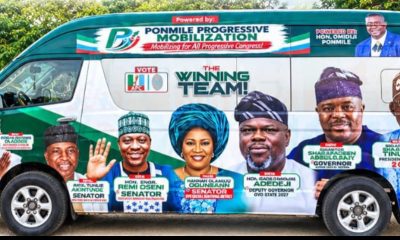
2027: Omidiji Donates Bus to Strengthen Oyo APC Mobilisation

Published

on

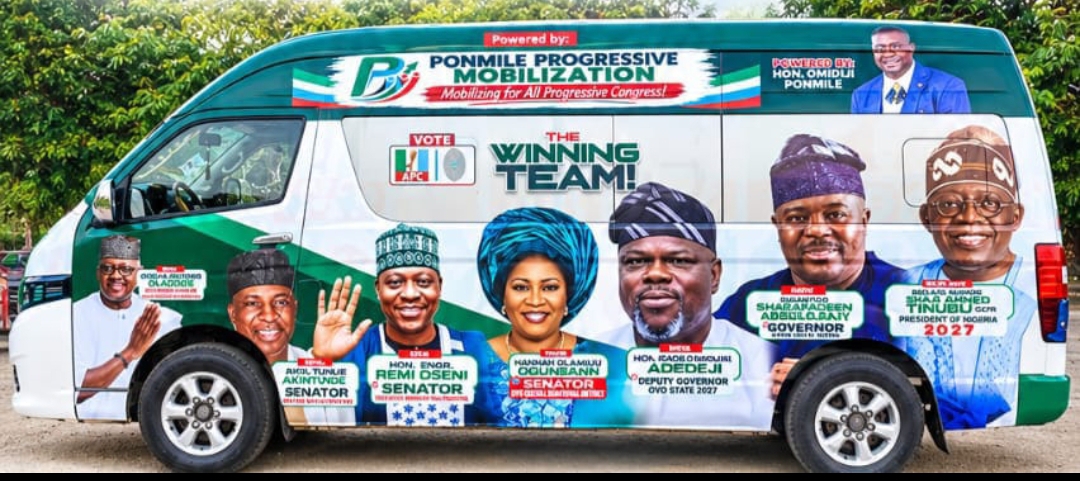
An All Progressives Congress chieftain in Oyo State, Hon. Ponmile Omidiji, has donated a brand-new bus to Ponmile Progressive Mobilization to strengthen the group’s activities ahead of the 2027 general elections.

Omidiji, who is the chairman of Ponmile Progressive Movement and Chief Executive Officer of Agbele Sporting Club, said the vehicle would facilitate members’ movement and help the group extend its grassroots mobilisation across the state.

Ponmile Progressive Mobilization operates as a subsidiary of Ponmile Progressive Movement under the motto, “Mobilizing for All Progressives Congress.”

The organisation said the bus would improve its capacity to reach communities, coordinate members and promote awareness of the APC’s programmes and agenda ahead of the 2027 polls.

Omidiji is a former National Financial Secretary of the National Association of Nigerian Students (NANS) and a former supervisor at the local government level during the administration of the late Governor Abiola Ajimobi.

He also served as Deputy Youth Leader of the Presidential and Governorship Campaign Council during the 2023 election cycle.

The organisation said the vehicle would be deployed for outreach and other activities across Oyo State as preparations for the next general elections gather momentum.

Continue Reading

News

Published

on

Swegop to Politicians: Stop Mudslinging, Fix Roads

The South West Guild of Online Publishers (SWEGOP) has urged politicians to stop mudslinging and focus on issues affecting Nigerians, while calling on the Federal Government and state governments to declare a state of emergency on roads ravaged by rainfall.

The guild said political campaigns should be centred on policies, development plans and practical solutions to the people’s problems, rather than false information, unsubstantiated allegations and personal attacks.

The position was contained in a statement signed by the guild’s Acting Chairman, Chief Tunde Busari, and Publicity Secretary, Mr Remi Oladoye.

SWEGOP warned that spreading misinformation during political campaigns could erode public confidence in the democratic process, urging politicians to tell the electorate what they intend to do and how they plan to deliver on their promises.

It called on political actors to embrace responsible communication and constructive engagement, stressing that campaigns should provide voters with clear choices on policies and programmes capable of improving their lives.

In a related development, the guild called on the Federal Government and state governments to urgently address the worsening condition of roads following damage caused by rainfall in several areas.

It expressed concern that some roads had been washed away or rendered impassable, making movement difficult for motorists and other road users.

The guild urged the relevant authorities to prioritise the rehabilitation of damaged roads, improve drainage systems and implement lasting solutions to prevent recurring damage, particularly during the rainy season.

It warned that the deteriorating road network posed risks to road users and could disrupt the movement of people and goods, with consequences for commercial activities and the wider economy.

SWEGOP stressed that emergency repairs must be backed by proper drainage, effective maintenance and coordinated action by the different levels of government to prevent the problem from recurring.

The guild maintained that responsible political campaigns and urgent action on failing infrastructure were both necessary to address public concerns and improve the lives of Nigerians.

Continue Reading

Trending