Connect with us

Opinion

Emefiele the tortoise wants to marry the king’s daughter

Published

on

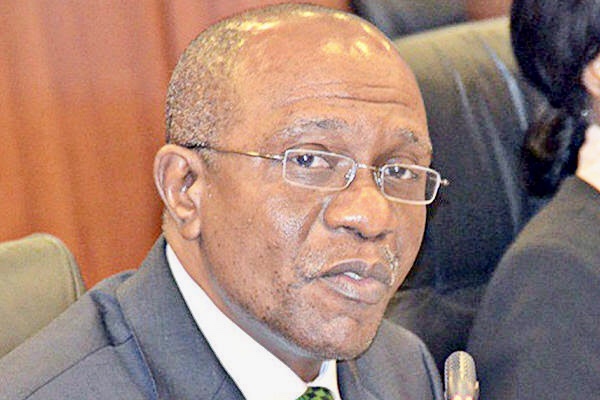
File photo of Nigeria’s CBN Governor, Godwin Emefiele,

As the melee I describe as the Godwin Emefiele malady gains traction, one anecdote that seems to capture it can be found in the song of late Ibadan, Oyo State-born Yoruba Awurebe music maestro, Alhaji Dauda Epo Akara. The malady is unexampled for its cunning. In it, Central Bank of Nigeria (CBN) governor, Emefiele, seeks to disadvantage others in the scramble for Nigeria’s Number One office, simply because he holds the key to the Nigerian vault and opens it at will to President Muhammadu Buhari, his home and a coterie of hangers-on.

Epo Akara, in one of his vinyl, had told the story of Tortoise, the Master of cunning, who wanted to marry the Princess of his town whose name nobody knew. As the contest for the heart of the Princess got hotter, the King announced that the man who would win his beautiful daughter’s heart must tell the world her name. After wracking his brain endlessly, one day, Tortoise devised a stratagem. So he woke up very early and scurried to the farm. He then headed for a mango tree which he climbed and hid himself. This was the tree the Princess and his sisters often went in search of its fruits. When he eventually sighted them at the feet of the tree, Tortoise, armed with mango fruits he had soaked in honey, threw the fruits down. As he did so, one of the sisters, picking the mango fruits up, quickly called on the Princess whose heart was being contested for, shouting, “Opobipobi, come and see a sweet mango!” Tortoise then quickly ran to the king’s palace with drummers and singers making a ring round him and asked the King to bring the Princess for betrothals.

As the circus of the Muhammadu Buhari presidential years winds to a close, a fitting descriptive image of the administration will likely be the mythical head of Medusa. In Greek mythology, the Medusa, also called Gorgon, was a monstrous winged female which, in place of hairs, had living venomous snakes. Anyone who was unlucky to gaze into the Medusa’s eyes would instantly turn into stone. Like the Medusa, virtually everything the Buhari government laid its hands upon in the last seven years lost its savour. A badly hit economy under Goodluck Jonathan is today comatose; security that was on the verge of hitting the canvass is gasping for life and society, under which politics is woven, is such that, in the words of Oscar Wilde, the gutter and the things that live in it fascinate.

In the last two weeks, politics, with Buhari superintending, has faced a major deconstruction in the jostle for presidential office. Though you will say that the shenanigan of political office is as old as Nigerian politics, what Nigerians have witnessed in the last few weeks is weird, grim and combined, have deconstructed the highest office in the land as a hub of dirty and petty intrigues.

First was the jerking up of expression of interest fee to N100 million by the Buhari party, the All Progressives Congress, (APC) in a way that has made fatal mockery of purity in politics, conferring jostling for office as exclusive preserve of those who have stolen huge sums from the Nigerian coffers. It is so bad that known malefactors who stole this country blind, rationalizing where they got the humongous money paid to collect forms, claim that some unnamed proxies paid on their behalf.

The second deconstruction of the highest office in the land is the scramble of all manner of Charlie Chaplin characters to become Nigeria’s Number One citizen. It is such that two reasons have been adduced for the scramble: One, that Buhari had cheapened the worth of the office of Nigeria’s president to such inconsequential level, through his tooth-picking, indolent, you-may-jump-inside-the-lagoon-disposition-to-Nigeria’s-travails-government he runs, so much that every chicken and cockerel feels that they could do better than him. Or that Buhari wanted to legitimize the coronation of his eventual candidate as successor and needed plural democratic contest as alibi. Nothing else seems capable of explaining this fervor for Aso Rock that is assuming the level of the scandalous.

The rat race to the Villa has provoked one of the most iconic comic reactions in Nigerian history, as well as the standing of democratic logic on its head. We began the circus with candidates whose emergence provoked mis-labeling. Bola Ahmed Tinubu and Yemi Osinbajo’s fans riled the public sphere with their very empty typecasts of who the duo were. One was qualified to aspire and the other disqualified by these partisans. Thereafter, the list began to metastasize. You would think it was an ensemble of the travelling company of acrobats, clowns, and other entertainers.

While on the list is Chris Ngige, a man whose fatal handling of the crisis in our health sector as Minister of Labour has led to doctors leaving federal clinics in droves, Emeka Nwajiuba, Minister of State for Education, under whom our children are idling on the streets and roaming about, also purchased the N100 million form. We also have Rotimi Amaechi, whose laughable but scornful ambition to administer Nigeria is as long as the huge debts his 19th century locomotives have excavated in the purse of Nigeria. The blood of those killed on the Kaduna-Abuja train had hardly coagulated when Amaechi, suddenly locating his consanguinity to the Igbo, began to run round the field of Abuja.

In saner societies, Buhari, with constitutional powers to sanction his ministers for unexampled lust for power, when they have had no cognizable track record of performance, should have been the first to wield the big stick against his appointees who filed out to contest for his office. Again, why didn’t Mr. Integrity see the absence of integrity in a minister under him pulling off N100 million like one pulling leaf off a tree and setting it alight in a barren presidential contest? Buhari could not and cannot, for some obvious reasons. The first is that, in seven years, the president has allowed his appointees to fester in their ignominious fare in office, without sanction. Reports of monumental corruption, rank indolence and wanton disrespect for rules fly about on these appointees with Buhari busy picking his teeth. By not replacing them in seven years, Buhari has lent official stamp to their ill performance and sleaze, basically adjudging them to have met his expectations. Armed with this presidential assent on their rot, it is no wonder that these ministers are proceeding to the next level by seeking to replace their effete boss in office.

To worsen matters, Buhari has been at the vanguard of seeking constitutional lacuna and alibi as shield for these appointees, so that they can eat their cake and have it. As we speak, none of these presidential contender ministers has resigned their appointments. This is in utter disregard for the immorality inherent in such gluttony. The norm in other democracies is that anyone with an eye on another office – except the presidency – should vacate the one he holds at the moment, in respect for equity and justice. Running a lax government exemplified by see-no-evil, say-no-evil, Buhari has played dumb to this moral assault.

Of all these aspirations, apparently funneled by greed and over-bloated estimation of selves, the one that has astounded Nigerians the most is that of Godwin Emefiele. Dubbing himself the ‘Development Central Banker,’ akin to that of Roberto Calvi, an Italian banker named “God’s Banker” by the Italian press due to his close affinity with the Holy See, Calvi, native of Milan, was Chairman of Banco Ambrosiano, a bank that  collapsed under one of Italy’s hugest political scandals. He was murdered in London in June 1982.

Like Calvi, Emefiele has sat on a Nigerian monetary policy which is high in theory but an unmitigated disaster in practice. Beginning his apex bank round in 2014 after a career in commercial banking, he is said to have held the otherwise tribally bigoted mind of Buhari captive. Those who are in the know about this queer aspiration of his put it at the feet of an incongruously political management of the CBN institution and the reach of its policies in the past eight years of his being in the saddle. What Emefiele is about in the presidency is exemplified by a viral photograph of him groveling by one of Buhari’s Man Fridays. Emefiele is said to have acted as funnel to sieve Nigeria’s scarce forex inside the parachute of the cabal’s insatiable babanriga.

Outside of late Aba Kyari and in close contest with Minister of Justice, Abubakar Malami, no one in this government is said to have Emefiele’s access to Buhari. Considering Buhari’s renowned loath for the Igbo, it is one of the wonders of the world that a Delta Igbo at the apex of Nigeria’s cash cozens up to the Daura-born General with baffling closeness.

The reason why Buhari cannot wholly disclaim a vicarious responsibility for this flourishing of the worst of us aspiring for his office is that, virtually everyone who went to him to seek his consent to vie for Nigeria’s presidency got the retort, “you have my support.” This is either a gross inability to argue otherwise, the subsisting evil of his infamous taciturnity or a wily attempt to populate the traffic for the office by his successor. This will then ultimately obfuscate the process and give democratic legitimacy to his coronation of an anointed favourite.

On Friday, some proxies collected the N100 million expression of interest form of the APC for Emefiele. This audacity to contest for the Nigerian presidency by stealth has been effectively and robustly impugned by the governor of Ondo State, the indefatigable and fearless Rotimi Akeredolu. In a statement he posted on his Twitter handle on Friday, Akeredolu called on Buhari to sack the CBN governor, except he immediately resigns his office.

While referring to it as “a joke taken too far,” the governor said it was difficult to imagine that Emefiele, who occupied such “exalted and sensitive office,” would undertake the brazenness of using proxies to aspire for Nigeria’s No 1 office while at the same time occupying Nigeria’s No 1 Banker’s office. The SAN reeled into the Public Service Rules, CBN Act and the 1999 Constitution to show the insult and assault on society that Emefiele’s rumoured presidential aspiration constitutes.

In March, in an unexampled instance of public office impunity, Emefiele’s supporters swarmed the APC convention, openly campaigning that he be elected Nigeria’s next president. Earlier, photographs of hundreds of branded vehicles being prepared for the presidential contest flooded the social media, bearing Emefiele’s name. Multiple of millions of Naira-worth advertorials have also been sponsored in newspapers which were attributed to some nameless fronts. In all this, Emefiele has refused to distance himself from the campaigns.

On Saturday, Emefiele, basking in the time-worn Nigerian politicians’ belief that the rest of the people are dunderheads, put out a wonky and spineless rebuttal thus: “I have not come to that decision (italics mine). I note and salute the sacrifices of those farmers and patriots going as far as raising personal funds and offering me Presidential Nomination Forms: I thank them most profusely. However, Should I answer their calls (italics mine again) and decide to seek presidential nomination, I will use my own hard-earned savings from over 35 years of banking leadership (simulating the image of a public-spirited official) to buy my own Nomination Forms, without proxies…” He then added a caveat that is unequivocally the language of those who think the rest of us are simpletons: “This is a serious decision that requires God’s Divine intervention: in the next few days, (my italics) the Almighty will so direct.”

The greatest responsibility for the festering of Emefiele and the army of funny characters aspiring for the office of the Nigerian president lies with Buhari. He is either too timid to publicly stand on the path of normalcy or his Tortoise cunning, similar to Emefiele’s, has overwhelmed his sense of probity. Emefiele and Buhari will definitely know that the end of Tortoise and his cunning is always fatal. Or, don’t they know?

Dr. Festus Adedayo, a journalist, lawyer and columnist writes from Ibadan, Oyo State 


Comments

Opinion

Nigeria’s Insecurity: Why the System Rewards Reaction, Not Prevention

Published

on

The most foolish person in a burning house is not the one who cannot find the exit. It is the one who knew the house would burn, watched it happen, and only ran when the ceiling collapsed. That is Nigeria’s governance posture toward insecurity—a pattern so consistent that it has become normalized.

“Ikú tó pa ojúgbà ẹni, òwe ló fi pa. (The death that kills your neighbour is a proverb directed at you).

The bandits did not simply arrive. They sent warnings ahead of them through a trail of violence that crossed state lines and appeared in every massacre headline we filed away as someone else’s problem.

When Insecurity Was Still “Someone Else’s Problem”

When the North was burning and the Middle Belt bleeding, the South West treated it as distant noise. Kwara became the first warning sign—the bridge between North and South—slowly slipping under the shadow of insurgency. The question every serious observer should have asked was simple: what happens when it crosses the border?

South West governors issued statements—careful, brief, and reactive. None moved with the urgency the threat demanded. Before long, violence arrived at our doorstep: herder brutality in Oke-Ogun, attacks in Oyo and Ekiti, kidnappings along the Ibadan–Ijebu-Ode expressway, and forest camps emerging in Ondo.

The warning signs had matured into reality, yet we were still searching for an exit strategy that should have been built years earlier.

The Problem: We Only Count the Dead

In safety performance management, there is a critical distinction between lagging indicators—outcomes after failure (deaths, destruction, losses)—and leading indicators, which measure prevention before failure occurs.

Aviation, oil and gas, and other high-risk industries understand this clearly: a system that obsesses over lagging indicators will always arrive after the accident.

Nigeria’s security governance is built almost entirely on lagging indicators. We count attacks after they happen. We rebuild after a collapse. We mourn after preventable deaths.

We rarely ask:

How many attacks were prevented this quarter?

How many threats were neutralized before execution?

How many cells were dismantled at the planning stage?

We do not know the answers—because we are not measuring them. The system was never designed to prevent. It was designed to respond: loudly, visibly, expensively, and always too late.

Another Base. The Same Question Nobody Asks

The presidency is reportedly considering a military base in Oriire Local Government Area of Oyo state. It is a familiar pattern: a major security incident, public outrage, and an institutional response designed to signal seriousness.

But the critical question remains unanswered: what has been the leading-indicator performance of existing bases?

How have long-standing military formations in places like Jos, Benue, and Zamfara—some active for over two decades—actually shifted the security outcome?

A military base without actionable intelligence is a stationary slaughter ground for soldiers. It does not prevent attacks; it often becomes a reactive outpost in a repeating cycle: attack, deployment, statement, investigation, and then silence—while underlying threat networks remain intact.

The Incentive Structure Behind the Chaos

The deeper issue is not the capability of security forces. It is the incentive structure of the system.

When leadership is judged only by incidents that have already occurred, governance shifts from prevention to performance management of failure. The objective becomes managing optics, not reducing probability.

Nigeria’s security budget has grown significantly over the past decade, yet insecurity has worsened. Kidnappings have become more brazen. Why? Because funding is justified by the persistence of the crisis, not its resolution.

If the problem is solved, what justifies the next budget cycle?

For years, decentralization has been proposed as the structural reform that could change the system—but it remains trapped in political rhetoric. Why? Because decentralization disperses power, and power in Nigeria’s political economy is not dispersed. It is concentrated.

Sixteen Days. Full Stop.

Forty-six children and teachers were kidnapped in Oriire. It reportedly took sixteen days for the presidency to authorize a specialized rescue framework.

Sixteen days before the Commander-in-Chief treated the abduction of forty-six human beings as a crisis requiring formal executive activation.
But responsibility in moments like this is not singular.

The Oyo State Governor, by constitutional convention regarded as the Chief Security Officer of the state and a recipient of security votes, also occupies a central coordinating role in the security architecture of the state. Within a crisis of this scale, expectations of rapid intergovernmental coordination, visible command urgency, and sustained pressure on federal response mechanisms are not optional, hey are inherent to the office.

Yet, the response cycle, from abduction to high-level coordinated action and physical engagement with affected communities, unfolded at a pace that raised legitimate public concern about the speed and intensity of institutional reaction.

By the time visible field visits and coordinated engagements occurred, the delay had already become part of the public record of the crisis itself—shaping perception as much as the incident shaped fear on the ground.

In a functional security system, crisis response is measured in hours, not days. Not for symbolism, but because time directly affects outcomes: every passing hour in an active kidnapping reduces the probability of safe recovery and increases the leverage of perpetrators.

Sixteen days, therefore, is not merely a lapse in timing. It reflects a deeper structural problem—where urgency is often declared after pressure builds, rather than operationalized when intelligence first breaks.

And in that gap between incident and action, citizens are left to absorb the consequences of delayed coordination across all tiers of authority.

The Verdict

Nigeria does not primarily need more military bases. It needs a new security measurement architecture—one that prioritizes intelligence conversion rates, early-warning response times, and pre-emptive disruption metrics over post-incident operations.

Every threat must be treated as time-sensitive, where minutes and hours determine outcomes—not weeks and statements.

Most importantly, citizens must shift the accountability question:

Not only “why did the attack happen?”

But “why was it not prevented?”

Nigeria’s security challenge is ultimately a leadership and systems failure—an institutional preference for reaction over prevention, because prevention is politically invisible.

You cannot hold a press conference about the attack that never happened.

Until this reality is named and confronted with precision, the cycle will continue.

Continue Reading

Opinion

Why Ibadan North youths are rooting for Repete

Published

on

Growing support has continued to trail a youthful politician and technology advocate, Hon. Khalil Mustapha Adegboyega, popularly known as Repete, as many youths in Ibadan North Federal Constituency expressed confidence in his leadership style and vision for development.

Across several communities within the constituency, residents, particularly students, artisans and young professionals, described Repete as one of the emerging political figures with strong grassroots appeal and a passion for youth empowerment.

Supporters said his growing popularity stems from his consistent advocacy for innovation, entrepreneurship and skills development aimed at addressing unemployment and creating opportunities for young people.

As an engineer and technology enthusiast, Repete is also said to possess a deep understanding of the evolving digital economy and the need to position youths for global competitiveness.

Many of his supporters noted that his approach to leadership focuses on practical solutions, mentorship and capacity-building initiatives capable of helping young people become self-reliant and economically productive.

Some community stakeholders who spoke on his rising profile said his humility, accessibility and relationship with the grassroots have continued to endear him to many residents within the constituency.

They added that Repete’s engagement with youths and community groups reflects his commitment to inclusive governance and people-oriented representation.

Observers within the constituency also maintained that the increasing support for the politician reflects a growing desire among residents for a new generation of leaders driven by innovation, competence and accountability.

According to them, many young people see Repete as a symbol of hope and progressive leadership capable of contributing meaningfully to the development of Ibadan North Federal Constituency.

Continue Reading

Opinion

Repete or Regret: APC’s Moment of Truth in Ibadan North

Published

on

File photo of Hon. Khalil Mustapha Adegboyega (Repete)

The All Progressives Congress (APC) in Oyo State stands on the edge of a consequential decision—one that may define not only its fortunes in Ibadan North Federal Constituency but also its broader political relevance in the state.

As the countdown to the party primaries intensifies, the question before APC leaders is no longer routine. It is strategic. It is urgent. And it is decisive: will the party align with the clear preference of the people or risk repeating costly political miscalculations?

At the centre of this debate is Hon. Khalil Mustapha Adegboyega, widely known as Repete—a name that has, over time, evolved from a political identity into a grassroots phenomenon.

A Candidate Rooted in the People

In contemporary Nigerian politics, where voter awareness is rising and expectations are shifting, candidates are increasingly judged not by promises but by presence. On this scale, Adegboyega stands tall.

His political journey is marked by consistent engagement with constituents—far beyond the optics of election seasons. From youth empowerment initiatives that provide practical skills and startup support, to sustained interventions in healthcare access for the elderly and indigent, his footprint across Ibadan North reflects a model of leadership anchored on service.

Unlike the transactional approach that often defines political relationships, Adegboyega’s connection with the people appears organic—built on trust, accessibility, and continuity. These are not mere campaign attributes; they are political assets.

The Danger of Political Disconnect

History offers the APC a clear lesson: parties that ignore grassroots sentiment often pay a heavy electoral price. The imposition of candidates perceived as distant or untested has, in several instances, resulted in voter apathy, internal dissent, and eventual defeat at the polls.

Ibadan North presents no exception.

With opposition parties closely monitoring the APC’s internal dynamics, any misstep in candidate selection could provide a ready opening. A divided house, coupled with a candidate lacking widespread acceptance, is a formula the opposition is well-positioned to exploit.
The implication is straightforward: this is not merely about party loyalty; it is about electoral viability.

Echoes from the Grassroots

Across the length and breadth of Ibadan North—markets, motor parks, religious centres, and community gatherings—a consistent pattern emerges in political conversations. The name “Repete” resonates with familiarity and acceptance.

Such organic support is not easily manufactured. It is cultivated over time through visible impact and sustained presence. For a party seeking electoral certainty in a competitive environment, this level of grassroots validation is not just desirable—it is critical.

A Test of Leadership and Judgment

For the APC leadership in Oyo State, the moment calls for clarity of purpose. Decisions driven by narrow interests, personal alignments, or short-term calculations may carry long-term consequences.

The task, therefore, is to balance internal considerations with external realities. Elections are ultimately decided by voters, not by party caucuses. A candidate who commands public confidence offers the strongest pathway to victory.

The Stakes Are Clear

Ibadan North is too strategic a constituency for experimentation. The cost of error is not limited to a single seat; it extends to party cohesion, credibility, and future positioning within the state’s political landscape.

In this context, the argument for Adegboyega is less about sentiment and more about strategy. His visibility, acceptability, and record of engagement place him in a strong position to consolidate support and mobilise voters effectively.

Conclusion: A Choice with Consequences

As the APC moves closer to its primaries, the decision before it is both simple and significant: align with a candidate who reflects the mood of the electorate or risk conceding advantage to a watchful opposition.

In politics, moments such as this often separate foresight from hindsight.
For APC in Ibadan North, this may well be one of those defining moments.


Aderibigbe Akanbi, a political analyst, writes from Ibadan.

Continue Reading

Advertisement

Entertainment

Advertisement

MegaIcon Magazine Facebook Page

Advertisement

MEGAICON TV

Advertisement

Trending