Connect with us

National Issues

Ejigbadero’s Case: 43 Years After.

Published

on

THE judge who handled the celebrated Ejigbadero case in the 1970s has finally broken his silence on the case.

Justice Isiaka Ishola Oluwa who clocked 100 years old spoke on the case in his recently released autobiography titled: ‘A Life in Motion Reminiscence of a Jurist at 100 years’.
Justice Oluwa said he believed the celebrated murder case influenced the enactment of the Land Use Decree (now known as Land Use Act) by the military government of General Olusegun Obasanjo.

Justice Oluwa’s account of the case as contained in the book is as follows:

“As a judge, many controversial cases were brought before me that made headlines in the newspapers. One of such cases was the criminal case of Ejigbadero. I was assigned the Ejigbadero case by the Honourable Chief Justice of Lagos State in 1975. The case attracted a lot of public interest because it involved a well-known socialite, one Jimoh Ishola who was the executive chairman of Jimsol Nigeria Ltd, a nail manufacturing company in Lagos. Ishola was better known by his alias, Ejigbadero. He had his factory at the Matori Industrial Estate, and lived in Mushin with his large family, including his four wives. Apart from being an industrialist, Ejigbadero was a well-known land speculator and property dealer. What brought him to my court was a case of murder when he was accused of killing one Raji Oba.

“As a judge, one must remain impartial about every case and not allow public sentiments to affect one’s judgement. Evidence must be presented and witnesses must be led to support or disprove every evidence. I would like to dwell more on the Ejigbadero case, which I believe generated a lot of public interest and in the long run, had more impact on the policy formulation of land matters both at the Federal level and at the State level.

“The Lagos State Director of Public Prosecution led the prosecution and built an impregnable fortress of evidence against Ejigbadero. Sometime in 1974, Ejigbadero had gone to Alimosho village on the outskirt of Lagos, to clear a piece of land which he claimed he had bought. He was challenged by some of the villagers who disputed Ejigbadero’s claim to ownership.

“The land which Ejigbadero decided to clear for a new building construction, contained cocoa, kolanut and some other cash crops. The villagers accused Ejigbadero of an attempt to seize their land illegally. Ejigbadero had come to the land with some boys alleged by the villagers to be thugs. Ejigbadero claimed they were his workers. When the villagers did not allow them to work, Ejigbadero retreated after the first encounter. He returned several times thereafter and this led to clashes during which some of the villagers, including Raji Oba, were wounded. The police at Alimosho intervened and tried to bring peace but to no avail. No one was charged to court at that stage and the police also did not make any arrest.

“On August 22, 1975, Raji Oba was relaxing in front of his house at Alimosho. It was around 7.30 p.m. as his wife hurried in. She said she had seen Ejigbadero in the neighbourhood and warned her husband that he may have come again to cause trouble. The husband agreed with his wife, saying he suspected that Ejigbadero may have come to bury charms on the farm, an all too familiar occurrences in disputes over land owernership in Yorubaland. It was at this point that a gunshot shattered the stillness of the night. Raji Oba fell. His wife, Sabitu Oba, was later to give evidence that she saw Ejigbadero fleeing from the scene of the crime in the company of six other persons. Raji Oba was rushed to the hospital where he was pronounced dead.

“Later that night on August 22, policemen arrested Ejigbadero in his Mushin residence. He was in the middle of a family celebration. Ramota, his young wife, who was delivered of a baby eight days earlier, was having a lavish naming ceremony with its attendant lavish party worthy of a big socialite of Ejigbadero’s social status. The party was attended by many top Nigerians including lawyers, judges, policemen, businessmen and women, socialites, top military officers and public servants. That was his alibi before the court. On the day of Raji Oba’s murder, Ejigbadero claimed he was far from the scene, attending to guests at his baby’s naming ceremony.

“Evidence presented to court was convincing enough, including that of policemen who saw Ejigbadero at Alimosho on the night of the murder. Some other villagers also gave evidence insisting that Ejigbadero came to Alimosho that night in the company of others in a Peugeot 504 station wagon. One Kehinde, one of the prosecution witnesses, gave evidence before the court. He said he was a security guard at Ejigbadero’s factory premises at Matori. He said on the night of the murder, the accused took time off from his naming ceremony, to visit the factory in the company of six other persons who were well-known to Kehinde. He named the six of them. He said they left from the factory premises in a white Peugeot 504 station wagon and returned in the night around 9p.m.

“The defence, led in evidence by Chief Sobo Sowemimo, made great effort to cast doubt on the testimonies of the prosecution witnesses. They also called witnesses to support their alibi that Ejigbadero never left his naming ceremony on that day. They called witnesses but not one of them was with Ejigbadero throughout the day. From the evidence presented before me, I had no doubt in arriving at my verdict that Ejigbadero was our man and that he committed the cold-blooded murder. He was guilty and sentenced to death.

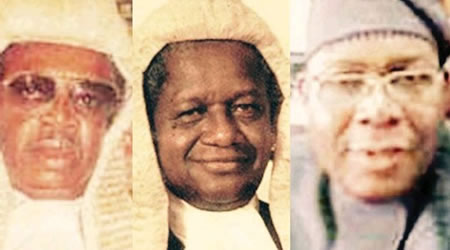
“He appealed my judgement, but the Federal Court of Appeal in 1977 affirmed the judgement. The appeal was heard by Their Lordships Mamman Nasir, Adetunji Ogunkeye and Ijoma Aseme. Dissatistfied, Ejigbadero moved to the Supreme Court and a panel of Their Lordships Alexander, Fatai-Willimans, Irikefe, Bello and Idigbe, affirmed my judgement. The death sentence on Ejigbadero was carried out in 1979.

“The Ejigbadero case was sensational and became of national interest. It highlighted the human aspect of the chaotic land laws in Nigeria, especially in Lagos and its environs and its attendant capacity to disrupt and even destroy the lives of ordinary people. By the time the case came before my court, Nigeria was undergoing tremendous changes. The regime of General Yakubu Gowon, which came into power in 1966, had been toppled and replaced by another military regime headed by General Murtala Muhammed. When Muhammed was killed in the abortive coup of February 13, 1976, he was replaced by General Olusegun Obasanjo.

“I believed General Obasanjo or those close to him were interested in the Ejigbadero case. In 1978, the Obasanjo regime came out with the Land Use Decree which tried to streamline the issue of land ownership in Nigeria. Though it was a one blanket solution for the whole country, the decree is especially useful in Lagos for it gives full discretion to state governors on the issue of land. It also vested the ownership of all land in the state in the governor who can decide to acquire any land for the public interest.

“In the subsequent years, the decree has been replaced with the Land Use Act, but its essential features remained intact. In the past few years and especially since 2016, various state governments have attempted to address the issue of indiscriminate land-grabbing. Both the Ogun and the Lagos State governments have passed laws to prohibit seizure of land by force.”

Comments

National Issues

OLOJO FESTIVAL: Nigeria bigger than all of us, Ooni tells politicians

Published

on

Monarch begins seven-day seclusion, prays for peace, unity

The Ooni of Ife, Oba Adeyeye Ogunwusi, Ojaja II, has urged Nigerian politicians to put the interest of the country above their political differences, saying Nigeria is bigger than any individual or political interest.

The monarch spoke on Sunday shortly before commencing a seven-day spiritual seclusion ahead of the 2026 Olojo Festival in Ile-Ife, Osun State.

The annual seclusion is part of the traditional rites preceding the Olojo Festival, one of the major cultural celebrations associated with Ile-Ife and the Yoruba people.

The Ooni, who is also the Co-Chairman of the National Council of Traditional Rulers of Nigeria, said his period in seclusion would be devoted to prayers for Nigeria, particularly for peace, unity and sustainable development.

“I am appealing to our politicians. They might have differences, but we should know ultimately that Nigeria is bigger than all of us,” the monarch said.

“It is very important for our political leaders to always look inwardly on how to better the lot of the average Nigerians.”

The Ooni urged political leaders to avoid words and actions capable of threatening national cohesion, reminding them that political power was temporary.

“Some have ruled this country before as political leaders, and others will come after them,” he said.

He said his prayers would also cover Nigeria’s democratic process, particularly as the country prepares for the next general elections.

The monarch commended President Bola Tinubu over what he described as non-interference in the activities of the Independent National Electoral Commission, saying such a practice could strengthen public confidence in the electoral process.

He also commended Osun residents for participating in the recently concluded governorship election, saying the outcome demonstrated the ability of citizens to determine their leaders through the ballot.

According to him, Nigerians should continue to have the opportunity to freely choose their leaders without actions capable of undermining the democratic process.

The Ooni’s seven-day seclusion, which began on Sunday evening, will also provide him with an opportunity to prepare spiritually for the sacred rites of the Olojo Festival and deepen his connection with the ancestors.

The exercise precedes the annual wearing of the sacred Aare Crown, one of the major highlights of the festival.

A statement by the Senior Media Officer of the Ooni’s Palace, Sodiq Lawal, issued on behalf of the Director of Media and Public Affairs, Otunba Moses Olafare, said the seclusion marked the beginning of the spiritual phase of the 2026 Olojo Festival.

The festival celebrates Ile-Ife’s indigenous traditions and ancestral heritage and attracts traditional rulers, cultural enthusiasts, visitors and members of the Yoruba diaspora.

The public ceremonies are expected to follow the spiritual rites and culminate in the Ooni’s emergence in the sacred crown.

Continue Reading

National Issues

Tinubu vows intelligence-led rescue of abducted Oyo pupils, teachers

Published

on

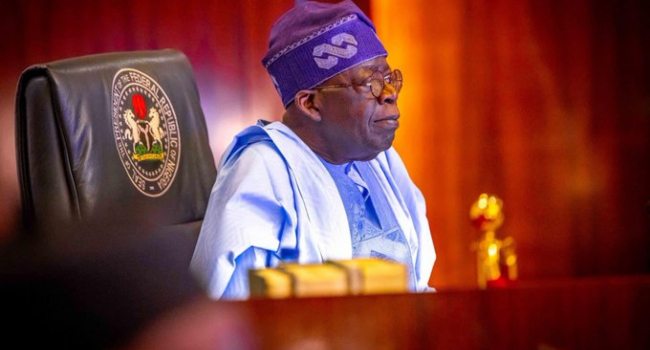
President Bola Tinubu on Monday assured residents of Oyo State that ongoing efforts to rescue abducted pupils and teachers in Oriire Local Government Area would be intelligence-driven, coordinated and sustained.

The President said the Federal Government would deploy every lawful means, including kinetic and non-kinetic measures, to ensure the safe return of the victims abducted during the May 15, 2026 attack in Esiele and Yawota communities.

“Our rescue efforts will be intelligence-led, careful, coordinated, and sustained. We will deploy every lawful tool available, both kinetic and non-kinetic, to ensure our children and teachers are safely returned home,” Tinubu stated in a statement posted on his X handle on Monday.

The President also expressed sorrow over the killing of a school teacher during the abduction and extended condolences to his wife, Mrs Mary Oyedokun, and the bereaved family.

“I also extend my deepest condolences to Mrs Mary Oyedokun, the wife of the late school teacher and her family. Their sacrifice will not be forgotten, and his family will not be abandoned,” he said.

Tinubu stressed that children should never be exposed to the trauma of abduction, noting that no parent should endure the pain associated with such incidents.

“No child should be taken from the safety of a classroom. No parent should have to endure this anguish,” the President added.

He assured affected communities that efforts to secure the release of the abducted pupils and teachers would remain sustained and intelligence-driven.

The statement comes amid growing concerns over insecurity in schools and rural communities following the abduction, which prompted the Federal Government to dispatch a high-powered delegation to the affected communities in Oriire Local Government Area.

The delegation included the Chief of Staff to the President, Femi Gbajabiamila; the National Security Adviser, Nuhu Ribadu; the Minister of Defence; and the Inspector-General of Police, Kayode Egbetokun, alongside other senior government and security officials.

Tinubu further disclosed that he had approved additional security measures, including the deployment of a specialised security unit equipped with advanced rescue capabilities to intensify efforts towards the safe return of the victims.

“I have also directed the deployment of a specialised security unit with advanced rescue capabilities to intensify efforts to secure the safe return of the abducted pupils and teachers,” he stated.

The President also revealed that the Federal Government, in collaboration with the Oyo State Government, was mobilising 1,000 forest guards to improve surveillance in forest corridors frequently exploited by criminal elements.

According to him, the initiative would be complemented by broader operational measures aimed at strengthening rescue operations and preventing future attacks.

Tinubu added that a request for the establishment of a military base in the affected area was receiving urgent consideration as part of efforts to bolster security.

Authorities have continued rescue operations amid rising concerns over the safety of schools and rural settlements, insisting that efforts remain focused on securing the release of the abducted victims and preventing a recurrence.

Continue Reading

National Issues

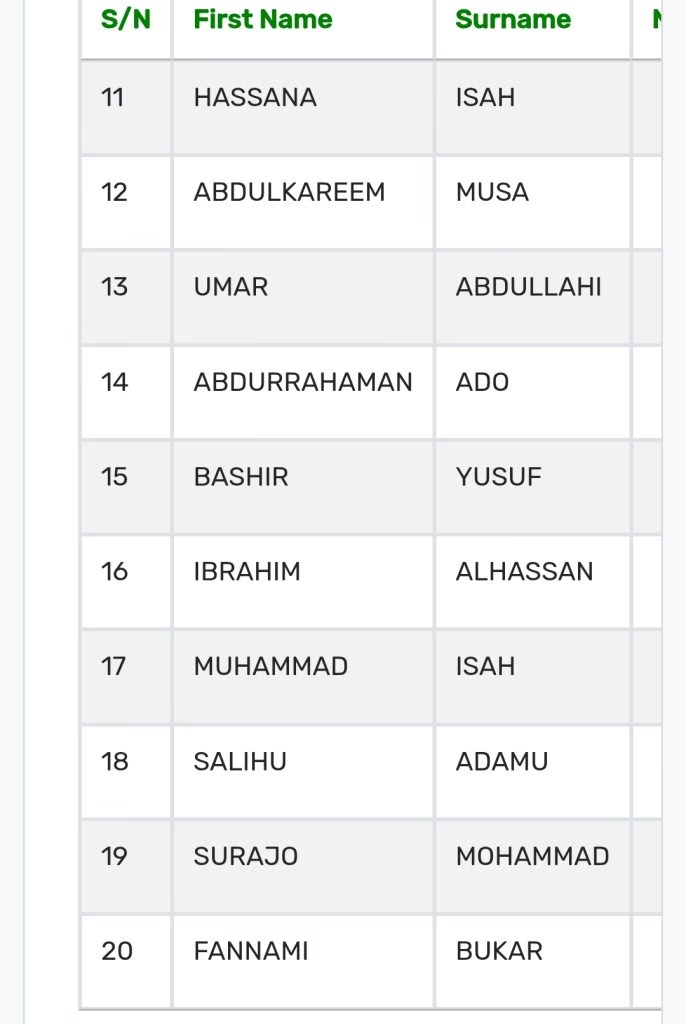
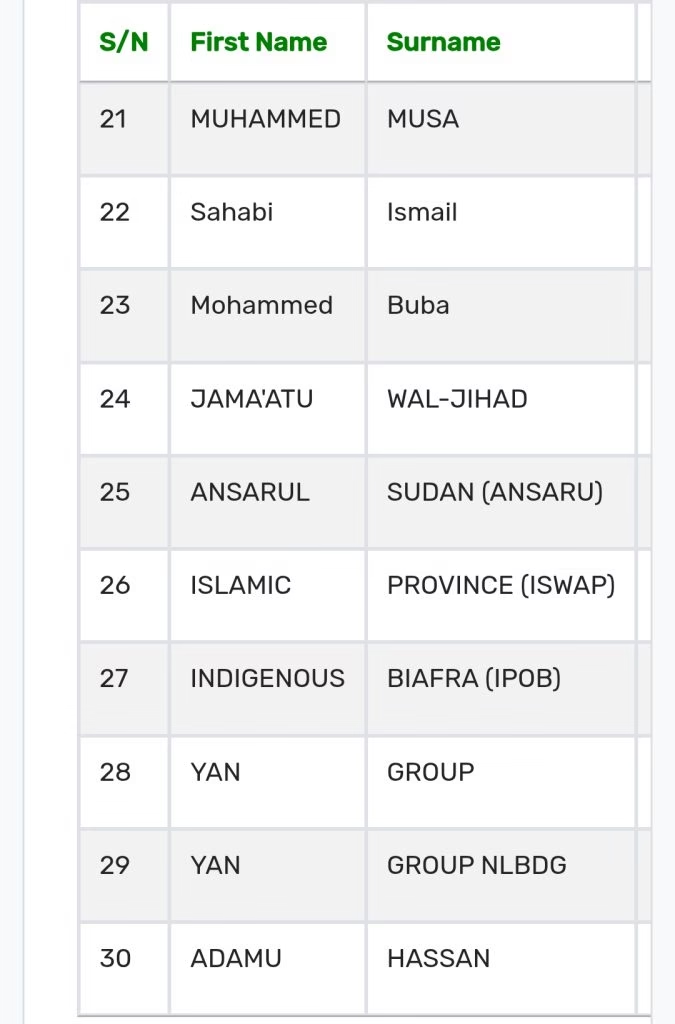
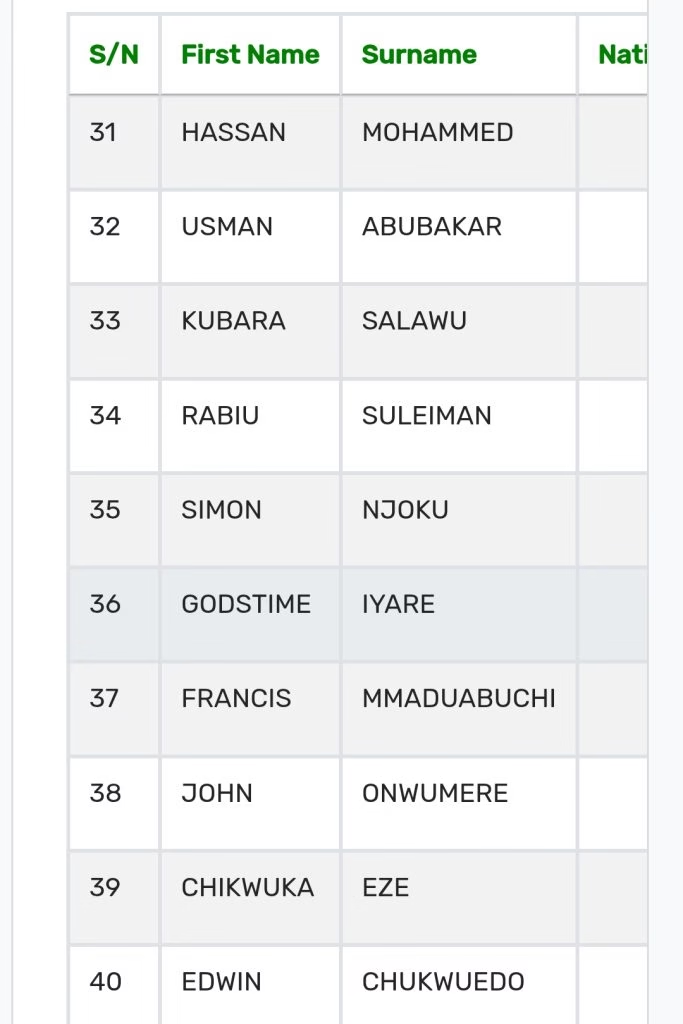
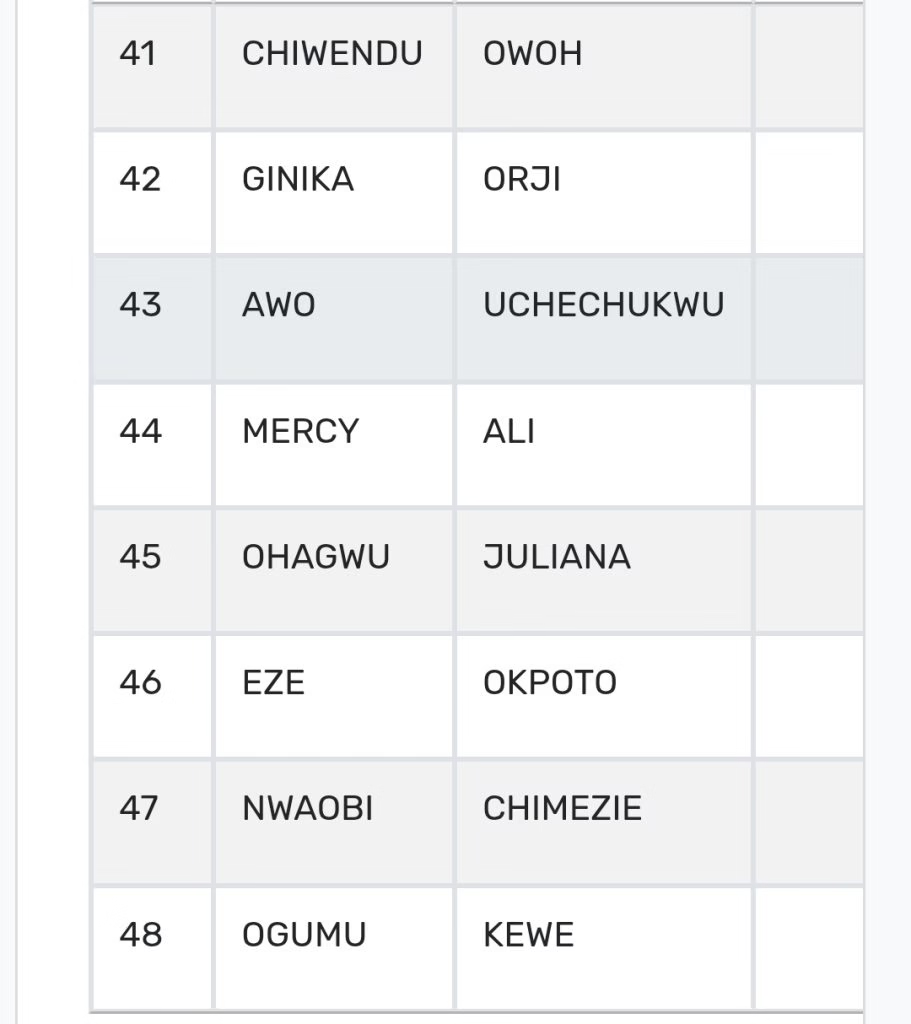
48 alleged terror financiers named by FG {SEE FULL LIST}

Published

on

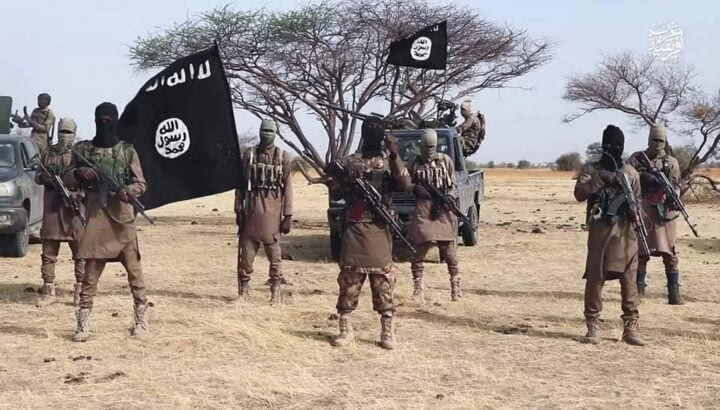
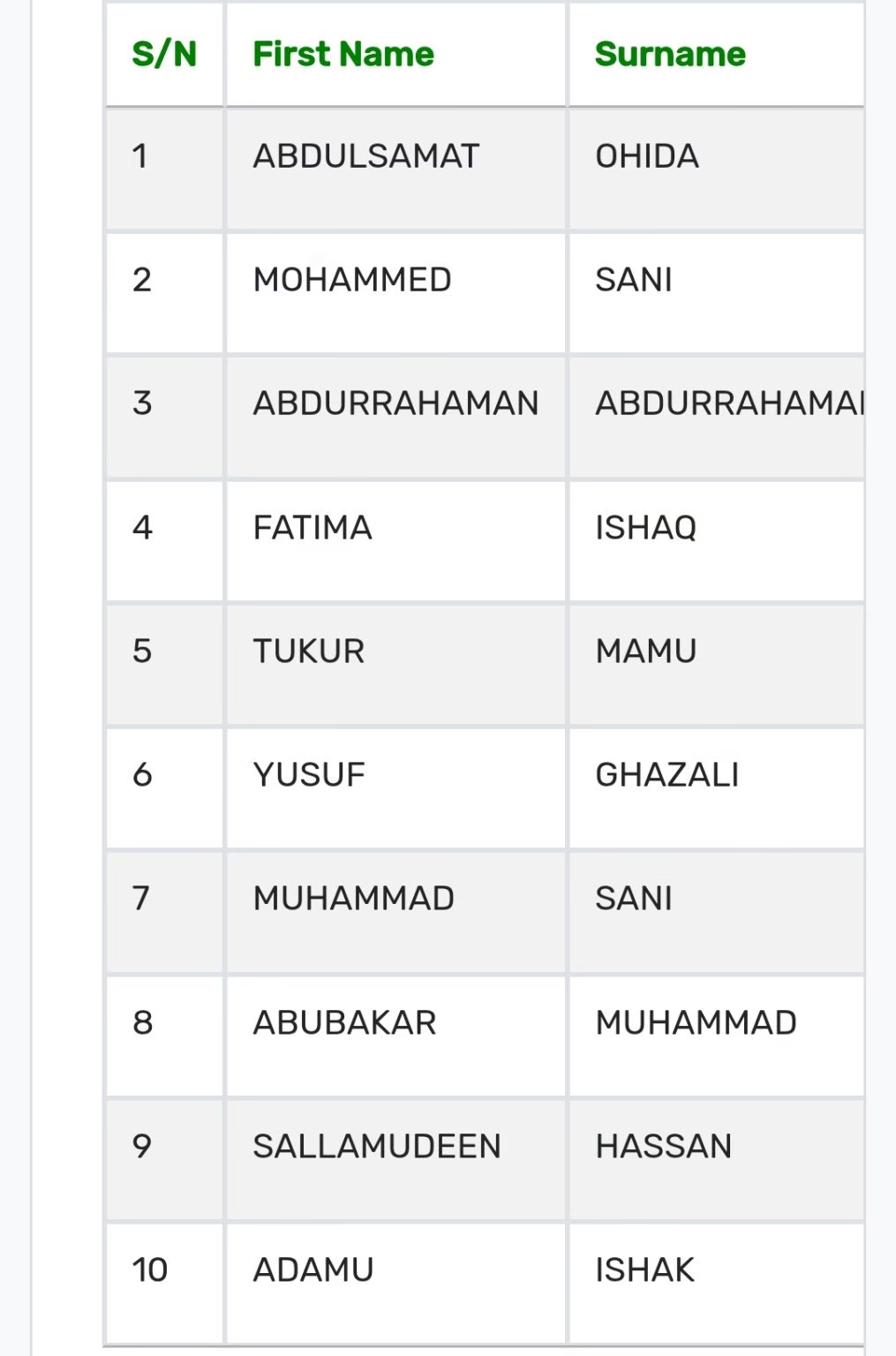
The Federal Government, on Saturday, published a list of 48 individuals and entities allegedly linked to terrorism financing in Nigeria, naming suspects with reported ties to outlawed groups including the Indigenous People of Biafra, Ansaru, and the Islamic State West Africa Province.

The list was released by the Nigeria Sanctions Committee as part of intensified efforts to disrupt financial networks sustaining terrorist activities across the country.

In a statement accompanying the publication, the committee said the designation of the individuals and organisations was in line with Nigeria’s legal and international obligations to combat terrorism financing.

“The Nigeria Sanctions Committee has approved the designation of the following individuals and entities for their alleged involvement in terrorism financing,” the statement read.

It added, “The action is pursuant to relevant laws and regulations aimed at identifying and freezing assets of persons and organisations linked to terrorist activities.”

The committee explained that the move was targeted at dismantling the financial backbone of insurgent and extremist groups operating within and beyond Nigeria’s borders.

Among those listed are individuals reportedly associated with the Indigenous People of Biafra, a proscribed separatist group; Ansaru, a faction linked to Al-Qaeda; and the Islamic State West Africa Province, one of the most active terrorist groups in the region.

Security experts have repeatedly stressed that cutting off funding sources remains a critical strategy in weakening terrorist operations.

Speaking on the development, a senior government official familiar with the process said the publication sends a strong signal about Nigeria’s resolve to confront terrorism at its roots.

“This is not just about naming names; it is about choking the financial lifelines of terror networks. Once funding is disrupted, their operational capacity is significantly weakened,” the source said.

The committee further noted that relevant authorities and financial institutions have been directed to take necessary steps in enforcing sanctions, including the identification and freezing of assets linked to the designated persons and entities.

“The public is also advised to remain vigilant and report suspicious financial activities to appropriate authorities,” the statement added.

The Federal Government reiterated its commitment to safeguarding national security, insisting that individuals or groups found culpable would face the full weight of the law.

As of the time of filing this report, detailed breakdowns of the sanctions and timelines for enforcement were yet to be made public.


Continue Reading

Trending