News
Cooks, nurses, mall santas in short supply in Canada

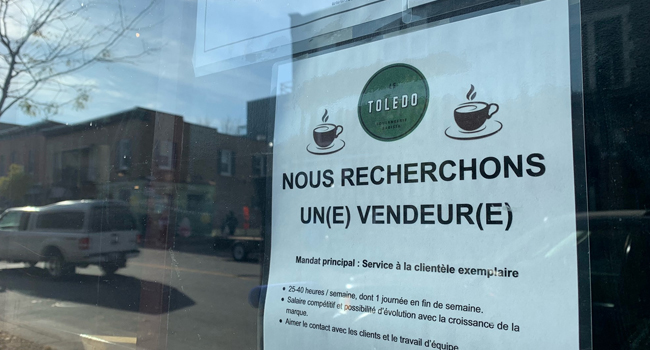
The signs of an unprecedented labor shortage in Canada are glaring: hospital emergency rooms closed because of a lack of nurses, restaurants skipping meals, and fewer Santas in malls.
In Ottawa, a “Help Wanted” notice in the window of Corazon De Maiz restaurant — like those in storefronts across Canada — has gone mostly unanswered since the recent lifting of public health restrictions introduced 19 months ago to slow the spread of the coronavirus.
The end of Covid-19 lockdowns brought droves of customers to the capital city eatery, but with kitchen staffing levels down, the restaurant has been unable to meet the demand for burritos and tacos.
“We’re suddenly busier, but we’re having to close early because my wife and I are exhausted after working all day,” owner Eric Igari told AFP.
One new hire worked three hours and quit, saying the job was too hard for not enough pay, Igari said.
“We’ve asked friends to pitch in, and even a few regular customers offered to help,” Igari said. Two customers actually worked a few shifts.
No ‘ho ho ho’
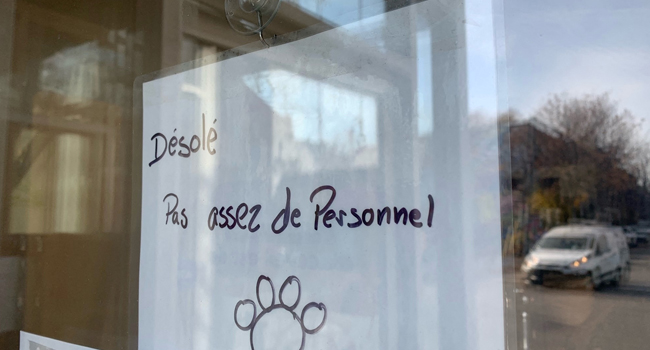
A sign says “sorry, shortage of employees” outside of the restaurant La Panthere Verte in Montreal, Quebec, taken on November 11, 2021. Anne-Sophie THILL / AFP
Studies by the government and industry associations found that up to two-thirds of Canadian businesses are facing worker shortages, and claim the deficit is limiting their growth.
The industries most affected are health care, food services, manufacturing, and construction.
According to the latest from Statistics Canada, there were a total of 1,014,600 job vacancies in September, including 196,100 in food services and 131,200 in health care — double the numbers from two years ago.
Trevin Stratton, a partner at Deloitte Canada, said factors contributing to the shortfall include an aging population leaving the workforce and lower recent immigration due to travel restrictions — which Canada lifted in September.
Some sectors are adapting through the use of technologies such as increased automation in manufacturing, e-commerce in retail, or allowing staff to work from home.
But in others, “many workers might not necessarily yet feel comfortable working somewhere where their physical presence is required,” Stratton said.
This is particularly true in the restaurant industry, which also shed workers fed up with the cycle of lockdowns and re-openings throughout the pandemic. “They’re now looking for more stability,” Stratton said.
With Christmas just weeks away, the trend has also impacted the supply of Santa actors usually hired for photos with children on their knee at shopping malls or professional mixers.
Jeff Gilroy of Just Be Claus said he’s turned down 200 Santa gigs in Ontario. After large gatherings were banned last Christmas, he told AFP, “people are looking to have a Santa to make it a more festive Christmas.”
Catherine Lacasse of the Professional Santa Claus Agency of Quebec said her province has ample Santas, “but we’re struggling to find enough elves.”
Nurses’ Burnout
“In health care, we’ve seen an exodus, particularly of nurses this year,” Stratton said. “Some of that has to do with the stress of the job right now.”
Lachine hospital in Montreal was forced to close its emergency room at night due to a “critical shortage of nurses,” said spokeswoman Gilda Salomone.
Several others, she said, “are experiencing a major labor shortage that is limiting the quality and access to care.”
Observers have suggested simply raising salaries to lure workers.
But Jasmin Guenette of the Canadian Federation of Independent Business (CFIB), said this “isn’t an option for many small businesses still struggling to recoup pandemic losses.”
“We see things slowly getting back to normal, going out to restaurants, for example, and we think that means businesses are doing well. But that’s not the case. The impact of the pandemic was severe, and is still being felt,” he said.
According to a CFIB survey, the average small business in Canada racked up Can$170,000 (US$135,000) in debts over the pandemic. And an estimated 180,000 businesses, or one in six, are now “at risk of closing.”
Chez Mere-Grand restaurant in Montreal sought for 21 weeks to hire a cook and a barista. Its owner Romain Beiso explained that the hiring pool is smaller because many people now insist on a better work-life balance and job security found in other sectors.
“Our wages are not competitive because we cannot afford it,” he also acknowledged.
Over at Hotel Place d’Armes, manager Benoit Pretet worries about being short 25 staff going into the holiday season.
“The clientele is back,” he said, “but we can’t open all our rooms.”


Traditional rites, medical outreach, sporting events and youth competitions feature in weeklong celebration
AGO-IWOYE came alive with cultural displays, sporting activities and community development initiatives as indigenes and residents gathered for the 2026 Ago-Iwoye Day celebration.
The weeklong programme, which began on Monday, October 5, brought together indigenes from across Nigeria and the diaspora to celebrate the town’s cultural heritage and promote unity and grassroots development.
The celebration opened with the traditional Woro Plucking Programme at Ojuade Olooto at 7am on Monday. This was followed by intellectual and strategy games at the Ebumawe Palace, where participants competed in chess, draughts, Scrabble and Ayo Olopon.

Health and sports featured prominently on Tuesday, October 6, as residents took part in a medical check-up and eye screening exercise at the Ago-Iwoye City Hall.
At the Ago-Iwoye Stadium, sports enthusiasts watched the table tennis finals and the final of the Quarters Football Competition.
The activities continued on Wednesday, October 7, with the finals of the secondary school football competition for male and female categories at the stadium.
Students returned to the spotlight on Thursday, October 8, for a quiz and debate competition at the City Hall. The academic activities were complemented by a public lecture on sustainable community development and youth empowerment.
On Friday, October 9, the Ebumawe of Ago-Iwoye led a health walk from the Omoedumare Roundabout at 7am, drawing residents into another activity designed to promote healthy living and community participation.
The day ended with Ebiripo Night at the Imososi Primary School Field, where music, dance and folklore accompanied celebrations around the town’s popular local delicacy.
The grand finale is scheduled for today, Saturday, October 10, at the Imososi Primary School Field, with traditional performances, civic honours and fundraising activities on the programme.
A thanksgiving service at the Methodist Cathedral, Imere, Ago-Iwoye, is expected to bring the celebration to a close on Sunday, October 11.
Speaking on the significance of the event, the Secretary of the Planning Committee, Dr Samuel O. Awobona, said the turnout demonstrated the commitment of indigenes and residents to preserving the town’s identity and advancing its development.
He said, “This weeklong celebration underscores our collective resolve to preserve our identity while driving grassroots development. The massive turnout across all generations reflects the enduring spirit of Ago-Iwoye.”
The annual celebration provides an opportunity for the community to showcase its traditions while bringing residents, young people and indigenes in the diaspora together around shared cultural and developmental goals.



2027: Oseni Support Islamic Group’s Building Project With N10m, Urges Voters to Prioritise Competence Over Religion

Oyo 2027: Alli’s campaign accuses Adekanmbi’s APM supporters of vandalising APC billboards

DIPHTHERIA OUTBREAK: ALLI QUERIES ₦9.9BN IMPACT FUNDS AS OYO LAGS IN CHILD VACCINATION



-
 Politics3 weeks ago
APM Rally: APC Tackles Makinde Over Use of ‘CAF-Rejected’ ₦5.5bn Stadium
-
News4 weeks ago
OYO 2027: ‘Fact-Check Always’ – Oseni’s Aide Replies Ex-AGF , Ojo Over Alli’s Campaign Billboard Claims
-
Politics3 weeks ago
Oyo: No APC Defection To APM, Makinde Lied — APM Scribe
-
Crime & Court4 weeks ago
Oyo school abduction: DSS to re-arraign five suspects Thursday