
Business
China Retreats Globally | By Milton Ezrati

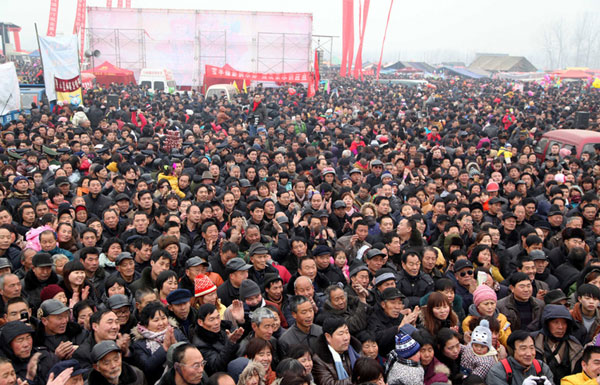

China has retreated globally – not from its artificial islands in the South China Sea but economically and financially. It seems just yesterday that the Middle Kingdom, as China calls itself, resembled an unstoppable juggernaut, cutting constructions contracts and buying properties all over the world. That is no longer the case.
Trade war with the United States bears much of the blame (or gets the credit, depending on one’s perspective), but even if Washington and Beijing were to sign a deal tomorrow, China would not regain its old momentum.
Official Ministry of Finance (MOF) figures, not surprisingly, offer a soothing picture of moderate decline, but private sources tell a much more dramatic story. According to the American Enterprise Institute’s well-regarded China Global Investment Tracker (CGIT), Chinese overseas investments of all kinds in the first half of this year averaged only $27.5 billion, half the rate averaged during the same time in 2018 and barely a quarter the rate of 2017’s first half. This year’s figures are lower than any time since 2008. Construction contracts, largely in the third world as part of China’s Belt and Road initiative, have fallen off, too, but less dramatically. China clearly has become much less engaged with the world than it was.
Two things have caused this retreat. One is a growing hostility among host countries toward Chinese investment. Especially developed countries, the United States in particular, have balked over the Chinese practice of extracting technology. Suspicions along these lines have held up approvals for Chinese purchases and other direct flows of funds. Some familiar with Chinese practice have gone a step further. The European Chamber of Commerce has warned against developing a dependence on China and Chinese funds. This combination of concerns and suspicions have centered primarily on China’s huge state owned enterprises and less on private Chinese investment. But if private investment has fallen off less dramatically, this growing reluctance in the West has had its effect there, too.
More significant is China’s relative shortage of hard currency. Despite Beijing’s efforts to make the yuan a global currency, it is little used in currency transactions – no more than 2% of the total in fact – and so is of little use in overseas purchases. Meanwhile the trade war with the United States has already begun to cut into Beijing’s supplies of foreign exchange. Beijing actually anticipated the problem and in 2017 and began to ration foreign exchange even before the White House added any tariffs. The first major investment declines occurred in late 2018, when the While House first imposed 10% tariffs on a range of Chinese products. The next drop coincided with this past spring’s increased tensions. To be sure, Beijing’s foreign exchange hoard remains huge, but officials are wary of how rapidly it has shrunk, falling some 25% from almost $4 trillion at its peak in 2014 to barely over $3 trillion during the first half of this year. Beijing’s rationing of these financial resources has affected the state-owned sector in particular. Private companies have a greater willingness and ability to borrow hard currencies abroad.
Within the investment pullback, North America, which historically has accounted for some 17% of China’s overseas investment flows, has seen the biggest drop. No doubt, the hostility created by trade friction has played a role. But China has also pulled back in Europe, where British and Swiss destinations have long dominated. Australia and Singapore, which historically have accounted for about 10% of Chinese overseas investment flows, have seen less relative shortfall but some nonetheless.
China has concentrated its remaining financial resources on less developed countries. The reasons are two fold. First, activities in these countries center more on construction contracting than investing. Such efforts may require subsidies, but they demand little hard currency. Indeed, China collects fees on many of these projects. Second, Beijing has clearly made its Belt and Road initiative (BRI) a political priority. This effort at land trade routes between China on one side and Europe and the Middle East on the other may not generate the secure financial returns that investments in the developed world offer, but monies spent in these projects pay Beijing huge political dividends by tying these countries to China and by advancing a project that China has touted as an alternative to U.S.-led, mostly maritime trade arrangements. BRI historically has captured more than three-fifths of China’s overseas construction volumes with almost three quarters of the monies involved in energy and transportation in such places as Pakistan and Iran, Saudi Arabia and Nigeria. Preliminary figures for 2019 show that as all other efforts have diminished BRI has captured a still larger proportion of China’s efforts.
Even if China and the United States were to sign a trade deal tomorrow, these trends would likely persist. Though trade would increase with a new treaty, the terms would no doubt create a more even balance than previously, making it highly unlikely that China could replenish its reserves of hard currency quickly, if at all. At the same time, suspicions of Beijing’s agenda and practices, especially China’s state-owned enterprises, will persist, trade deal or no. Political imperatives will, of course, keep China focused on BRI and its construction projects. For the investment flows, the best to expect is stability. It seems that for better or worse, the world has already seen the high water mark of Chinese investment flows.
Source : Forbes


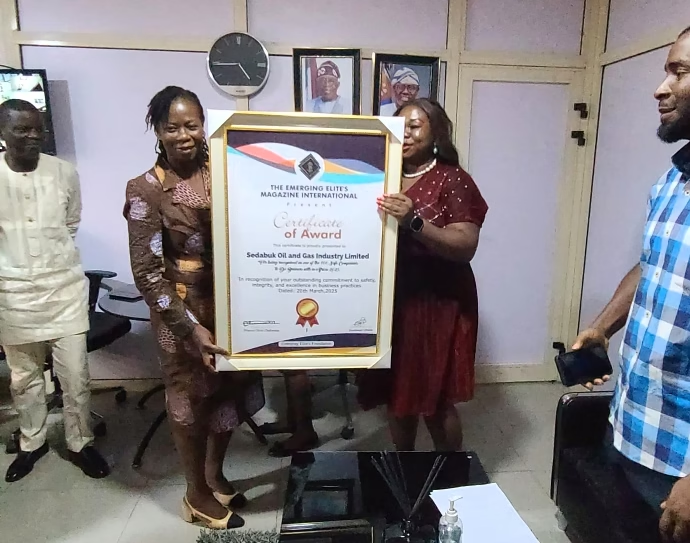
Sedabuk Oil and Gas Industry Limited has been listed among the 100 Safe Companies to Do Business With in Africa for 2025 by Emerging Elites Magazine International, in recognition of the firm’s integrity-driven operations, strict compliance culture, and employee-focused policies.
The award was presented to the Managing Director of the company, Engr. Adunola Oseni, at a ceremony attended by members of Sedabuk’s management and staff, alongside the editorial board and team of Emerging Elites Magazine in Lagos.
Presenting the award, the Editor-in-Chief of Emerging Elites Magazine International, Princess Olivia Chukwuma, said Sedabuk emerged after a “thorough, transparent and merit-based selection process” designed to identify African businesses that exemplify excellence and ethical conduct.
According to her, the 100 Safe Companies to Do Business With in Africa Award is an international initiative created to recognise indigenous African companies with proven records of integrity, safety, and best business practices, noting that awardees are continuously monitored and recertified every three years if standards are sustained.
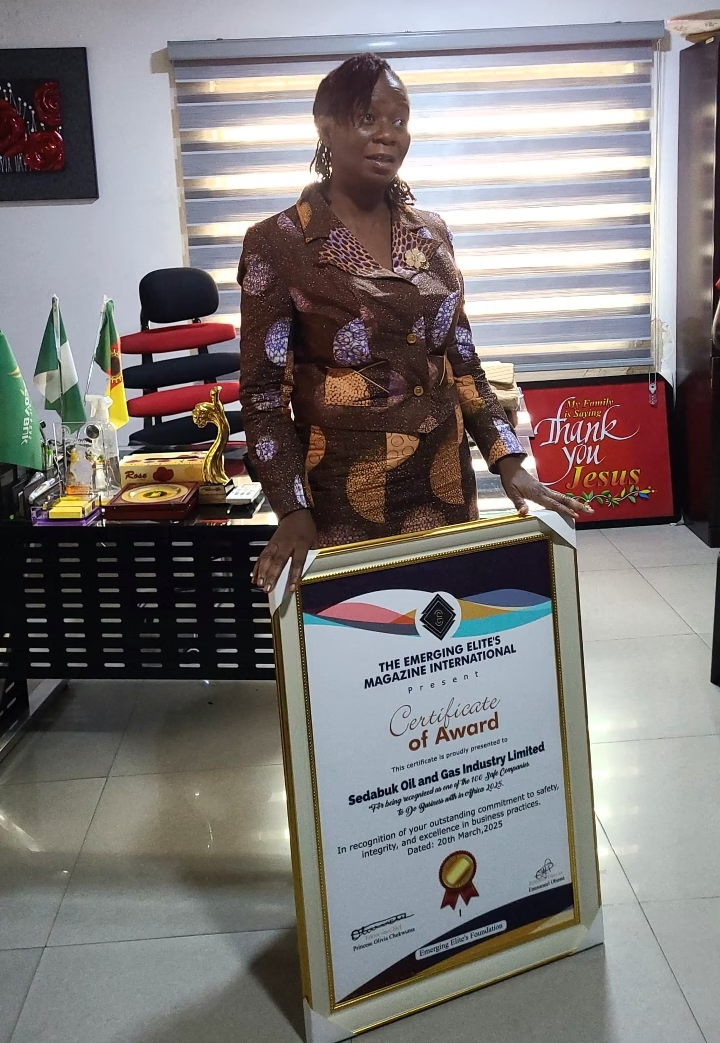
The MD of Sedabuk Oil and Gas Industry Limited, Engr. Adunola Oseni, poses with the Certificate of Award shortly after the company was recognised among Africa’s 100 safest companies to do business with.
Chukwuma said Sedabuk was selected for its employee-centric culture, stressing that the company has no record of unpaid salaries since inception, maintains fair wages, and prioritises staff welfare through initiatives such as its “One Nutritional Meal a Day” programme, which she described as “rare and commendable” in Nigeria’s oil and gas sector.
She also cited the firm’s zero-tolerance policy for fraud, recalling a June 2022 incident in which a pump attendant was sanctioned for under-dispensing fuel while affected customers were compensated, an action she said “clearly reflects Sedabuk’s philosophy of integrity in service delivery.”
Other factors that earned the company the award, she said, include its reputation for honouring contracts, absence of contract-related court cases, strict adherence to safety standards, and voluntary compliance with regulatory obligations, taxes, and statutory dues without coercion.
“With these attributes and more, Sedabuk Oil and Gas has become a beacon of hope—a new breed of Nigerian company that is trustworthy, valuable, and safe to do business with,” Chukwuma said, as she inducted the firm into the Hall of Fame of the 100 Businesses Safe to Do Business With in Africa 2025.

MD, Engr.Adunola Oseni and staff of Sedabuk Oil and Gas Industry Limited during the presentation of a Certificate of Award by The Emerging Elites Magazine International, honouring the company’s adherence to safety standards and best business practices.
Responding, the Managing Director, Engr. Adunola Oseni described the recognition as “a validation of our core values and a strong motivation to do more,” adding that the award belonged to the entire workforce of the company.
“We will continue to uphold integrity, safety, and transparency in all our operations, remain committed to staff welfare and regulatory compliance, and set standards that others in the industry can emulate,” the Sedabuk boss said.
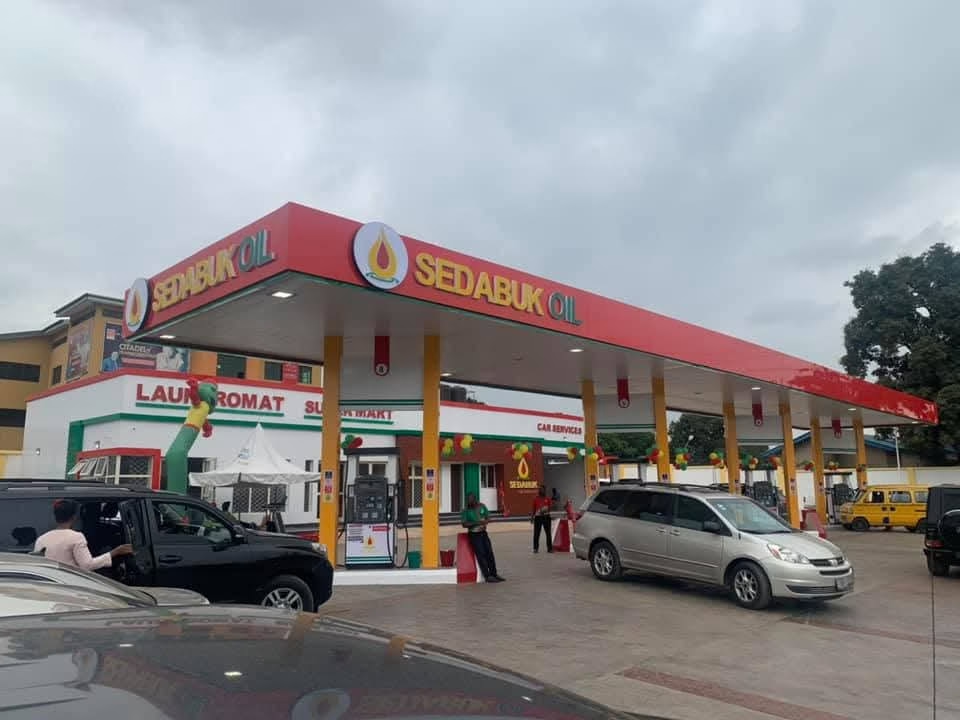
Sedabuk Oil and Gas Industry on Tuesday reinforced its reputation as a people-centred organisation as it rewarded outstanding employees with cash prizes totalling over ₦10 million at its 2025 Employee Recognition and Awards ceremony held in Lagos.
The event, which attracted over 300 staff members alongside top management officials from across the company’s divisions and subsidiaries, was organised to celebrate excellence, dedication, and loyalty within the Sedabuk workforce.
Speaking at the ceremony, the Managing Director, Engr. Adunola Oseni, described the occasion as one of the proudest moments in the company’s journey, noting that Sedabuk’s steady growth has been deliberately anchored on staff welfare and well-being. She said the company, from inception, made a firm commitment to put its people first, stressing that no organisation can truly thrive if its workforce is neglected.
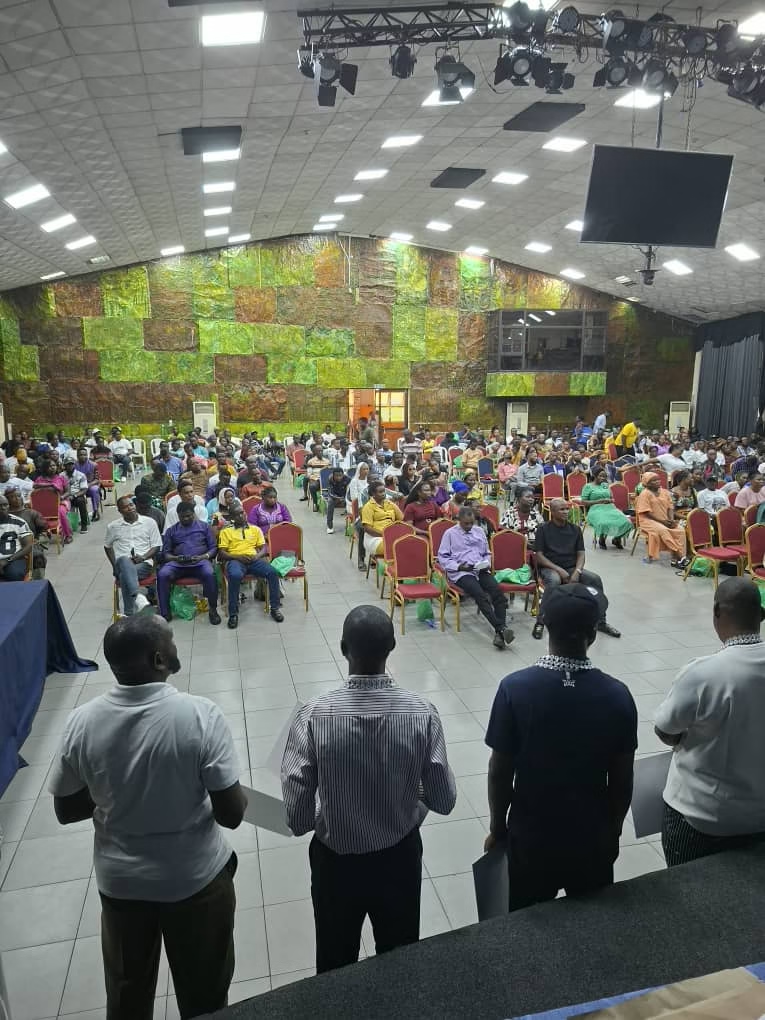
Oseni disclosed that Sedabuk has never owed or delayed salaries since it commenced operations, describing prompt payment as a mark of respect and responsibility. She added that the company reviewed and increased salaries twice in 2025, improved wages across the board, and sustained its seven-year-old One-Day-Meal Programme to ensure employees do not work hungry.
The managing director announced cash awards spanning retail operations, station-based roles, marts, laundromats, and group-wide excellence categories, explaining that the initiative was not just about financial rewards but about recognising hard work and reinforcing a culture of appreciation. According to her, a loyal and motivated workforce remains the company’s most valuable asset.
She assured staff that management is entering 2026 with stronger welfare policies, better incentives, and more opportunities, with the aim of positioning Sedabuk as one of the best organisations to work in Nigeria. Oseni further urged employees to raise the bar in the coming year by working harder, smarter, and together.
Several employees emerged winners across key categories, including Pump Attendant of the Year, Station Captain of the Year, Mart and Laundromat Excellence Awards, and Special Recognition honours.
The highlight of the ceremony was the Group Chairman’s Spirit of Excellence Award, where Adediran Segun Aderonke emerged Sedabuk Star of the Year with a ₦2 million prize, while Ibiloye Olayinka won the Most Outstanding Employee of the Year award with ₦1 million.
In his remarks, the Group Head, Human Resources and Administration, Mr. Adeleye Olusanjo, lauded the managing director for her consistent leadership and unwavering commitment to staff welfare, assuring employees that more incentives and improved support structures are already being planned for 2026.
The event was attended by senior executives, including the General Manager, Finance and Strategy, Mr. Aderoju Sola; the Group Head, Operations and Logistics, Mr. Rufus Enioshunwa; and the Group Head, Corporate Audit, Risks and Ethics, Mrs. Tolulope Omotola, among others.
Established in 2018, Sedabuk Oil & Gas Industry Ltd operates over 12 petrol stations across Lagos, Ogun, and Oyo states.
The Securities and Exchange Commission (SEC) has raised a red flag over two cryptocurrency products — Zugacoin and Samzuga GPT — warning the Nigerian public to steer clear of them.
In a strongly worded statement issued on Wednesday, the apex capital market regulator described the digital assets as unauthorised crypto schemes with no legal backing or regulatory approval in Nigeria.
According to the Commission, neither the promoters nor issuers of Zugacoin and Samzuga GPT are registered to operate in any capacity within the Nigerian capital market.
“Preliminary investigations revealed that Zugacoin and Samzuga GPT are meme coins,” the SEC said. “Meme coins generally have no use case, intrinsic value, or tangible projects backing them.”
The regulator added that the only perceived value of such coins often stems from aggressive promotion by their creators or community hype, making them prime candidates for “pump-and-dump” fraud — a deceptive scheme where promoters artificially inflate the price of a coin through misleading information before dumping it at peak value, leaving unsuspecting investors with massive losses.
“Once the promoters dump their coins and stop hyping the coin, the coin price typically falls and investors lose money,” the SEC warned.
The Commission urged members of the public to avoid engaging in the purchase or promotion of Zugacoin, Samzuga GPT, or any similar crypto assets, noting that anyone who chooses to invest in such schemes does so entirely at their own risk.
To further safeguard investors, the SEC advised the public to always verify the legitimacy of any virtual, crypto, or digital assets and their promoters through its official platforms:
https://home.sec.gov.ng/fintech-and-innovation-hub-finport/registered-fintech-operators/
www.sec.gov.ng/cmos
This warning is the latest in the SEC’s ongoing crackdown on fraudulent digital asset operations targeting unsuspecting Nigerians amid a rise in crypto-related scams.







-

 Politics3 days ago
Ibarapa East Assembly Hopeful, Ramon Congratulates Ajiboye, Says Emergence Good for Oyo APC
-

 Politics7 days ago
Makinde: My Successor Must Be Loyal to Oyo, Not Me
-
 Politics3 days ago
2027: Former Oyo Deputy Governor Adeyemo Emerges APC Chairman (See Full List)
-
 Politics7 days ago
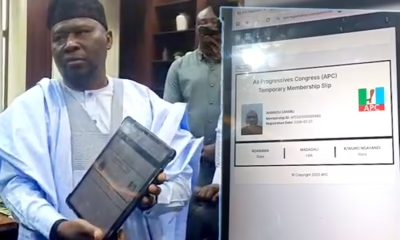
Fintiri Dumps PDP for APC, Moves with Cabinet, 14 Adamawa Lawmakers