Connect with us

News

Britain and the world bid adieu to Queen Elizabeth II

Published

on

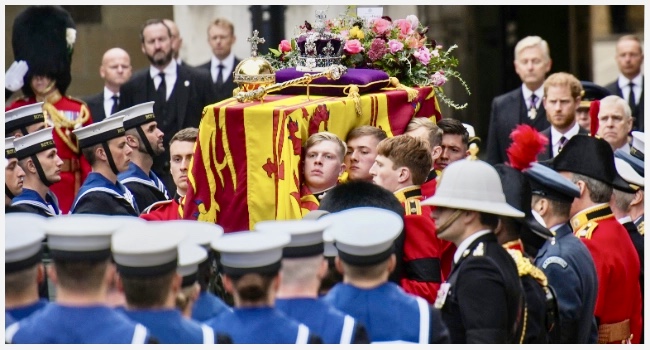
A Bearer Party of The Queen’s Company, 1st Battalion Grenadier Guards places the coffin of Queen Elizabeth II, draped in the Royal Standard, onto the State Gun Carriage of the Royal Navy outside Westminster Hall, at the Palace of Westminster in London on September 19, 2022, where it has been Lying in State since September 14. AFP

Britain said farewell to Queen Elizabeth II on Monday at a state funeral attended by world leaders, before a historic last ceremonial journey through the streets of London packed with sorrowful mourners.

Huge crowds gathered in near silence to watch as the queen’s flag-draped coffin, topped with the Imperial State Crown, her orb and sceptre, was carried slowly to a gun carriage from parliament’s Westminster Hall where it had lain in state since Wednesday.

To the tune of pipes and drums, the gun carriage — used at every state funeral since Queen Victoria’s in 1901 — was then drawn by 142 junior enlisted sailors in the Royal Navy to Westminster Abbey.

The thousand-year-old church’s tenor bell tolled 96 times at one-minute intervals — one for every year of her life — stopping a minute before the service began at 11:00 am (1000 GMT).

In his funeral sermon, Archbishop of Canterbury Justin Welby praised the queen’s life of duty and service to the UK and Commonwealth.

“People of loving service are rare in any walk of life. Leaders of loving service are still rarer,” he told the 2,000 guests, who included US President Joe Biden and Japan’s reclusive Emperor Naruhito.

“But in all cases, those who serve will be loved and remembered,” the Anglican leader added, before the coffin was borne on another procession towards her final resting place in Windsor Castle, west of London.

The longest-serving monarch in British history died at Balmoral, her Scottish Highland retreat, on September 8 after a year of declining health.

Her eldest son and successor, King Charles III, dressed in ceremonial military uniform, followed the solemn processions, alongside his three siblings.

‘She was my boss’

Charles’s eldest son Prince William accompanied them alongside William’s estranged brother, Prince Harry, and other senior royals.

William’s two eldest children, George and Charlotte, who are next in line to the throne, also walked behind the coffin inside the abbey.

Late Sunday, Charles, 73, and his wife, Queen Consort Camilla, said they had been “deeply touched” by the public’s flood of messages.

“As we all prepare to say our last farewell, I wanted simply to take this opportunity to say thank you,” he said.

Britain, a country much changed since the queen’s coronation in the same abbey in 1953, has dug deep into its centuries of tradition to honour the only monarch that most of its people have ever known.

“It’s once in a lifetime,” said student Naomi Thompson, 22, camped out in the crowds at London’s Hyde Park.

“It’s a moment of history… She’s everyone’s granny,” added engineer Alice Garret, 28.

Others unable to be in London gathered in cinemas and churches around England, Scotland, Wales and Northern Ireland to watch the service and procession on big screens.

Auto engineer Jamie Page, a 41-year-old former soldier, stood on Whitehall to observe the funeral procession, wearing his military medals from service in the Iraq war.

“Sixteen years old, I swore an oath of allegiance to the queen. She’s been my boss. She means everything, she was like a gift from God,” he said.

Two minutes of silence

But on Charles, the oldest person yet to ascend the British throne, Page added: “Who knows, time will tell.”

The funeral lasted just under an hour, brought to an end by a bugler playing “The Last Post”, before two minutes of silence and the reworded national anthem, “God Save the King”.

After an hour-long procession that was to go past Buckingham Palace, the coffin was to be taken west by road to Windsor Castle, where thousands had lined the route since early morning.

Some 6,000 military personnel have been drafted in to take part in proceedings in what Britain’s highest-ranking military officer has called “our last duty for Her Majesty the Queen”.

The queen will be buried alongside her father king George VI, her mother queen Elizabeth and sister princess Margaret, reuniting in death the family who once called themselves “us four”.

The coffin of her husband, Prince Philip, who died last year aged 99, will also be transferred to lie alongside her.

Elizabeth’s funeral could not be more different from Philip’s at St George’s Chapel, Windsor, in April 2021.

Coronavirus restrictions limited mourners to just 30, led by the queen, a solitary figure in mourning black and a matching facemask.

The contrast was profound on Monday, the abbey packed with dignitaries and some ordinary Britons who were honoured for their military or community service, especially during the Covid pandemic.

Biden’s tribute

“You were fortunate to have had her for 70 years; we all were,” Biden said on Sunday after signing a book of condolence. “The world is better for her.”

In the abbey pews was Liz Truss, whom the queen appointed as the 15th British prime minister of her reign just two days before her death, in her last major ceremonial duty.

All of Truss’s living predecessors were there plus her counterparts and representatives from the 14 Commonwealth countries outside Britain where Charles is also head of state.

Whether they remain constitutional monarchies or become republics is likely to be the defining feature of Charles’s reign.

The queen’s death has prompted deep reflection about the Britain she reigned over, the legacy of its past, its present state and what the future might hold, as well as the values of lifelong service and duty she came to represent during her 70-year reign.

Hundreds of thousands of people are estimated to have queued, sometimes for up to 25 hours and overnight, to file past the queen’s coffin as it lay in state.

Chrissy Heerey, a serving member of the Royal Air Force who joined the marathon queue twice, was the last person through the doors and described the experience as “amazing”.

“When they came to me and said, ‘right, you’re the last person’, I said, really?!” she told AFP, before heading off to join the crowds for the coffin’s procession through London.

Big Ben tolls

Throughout the procession after the funeral, Big Ben, the giant bell atop the Elizabeth Tower at one end of the Houses of Parliament, tolled and military guns fired at one-minute intervals.

At Windsor, the Sebastopol Bell — captured in Crimea in 1856 — and the Curfew Tower Bell also sounded.

A vast television audience was expected to watch the funeral worldwide and live online, in a sign of the enduring fascination with the woman once described as “the last global monarch”.

Those lining the streets of London — already jammed at sunrise on Monday — said they had to bear witness.

“I will talk about this moment to my children,” said Jack Davies, 14, camped out for the procession with his parents at Hyde Park Corner, where the coffin will be transferred from the gun carriage for the drive to Windsor.

“I’ll say: ‘I was there!’”

At Windsor, the queen’s crown, orb and sceptre will be removed and placed on the altar.

The most senior officer of the royal household, the lord chamberlain, breaks his “wand of office” and places it on the coffin, symbolising the end of her reign.

The lead-lined oak casket, draped with the queen’s colours, will be lowered into the Royal Vault as a lone bagpiper plays a lament.

A private interment ceremony will take place at the adjoining King George VI Memorial Chapel at 1830 GMT.

Comments

News

Oseni mourns ex-Oyo lawmaker Akeem ‘Able’, says Oyo APC has lost loyal progressive

Published

on

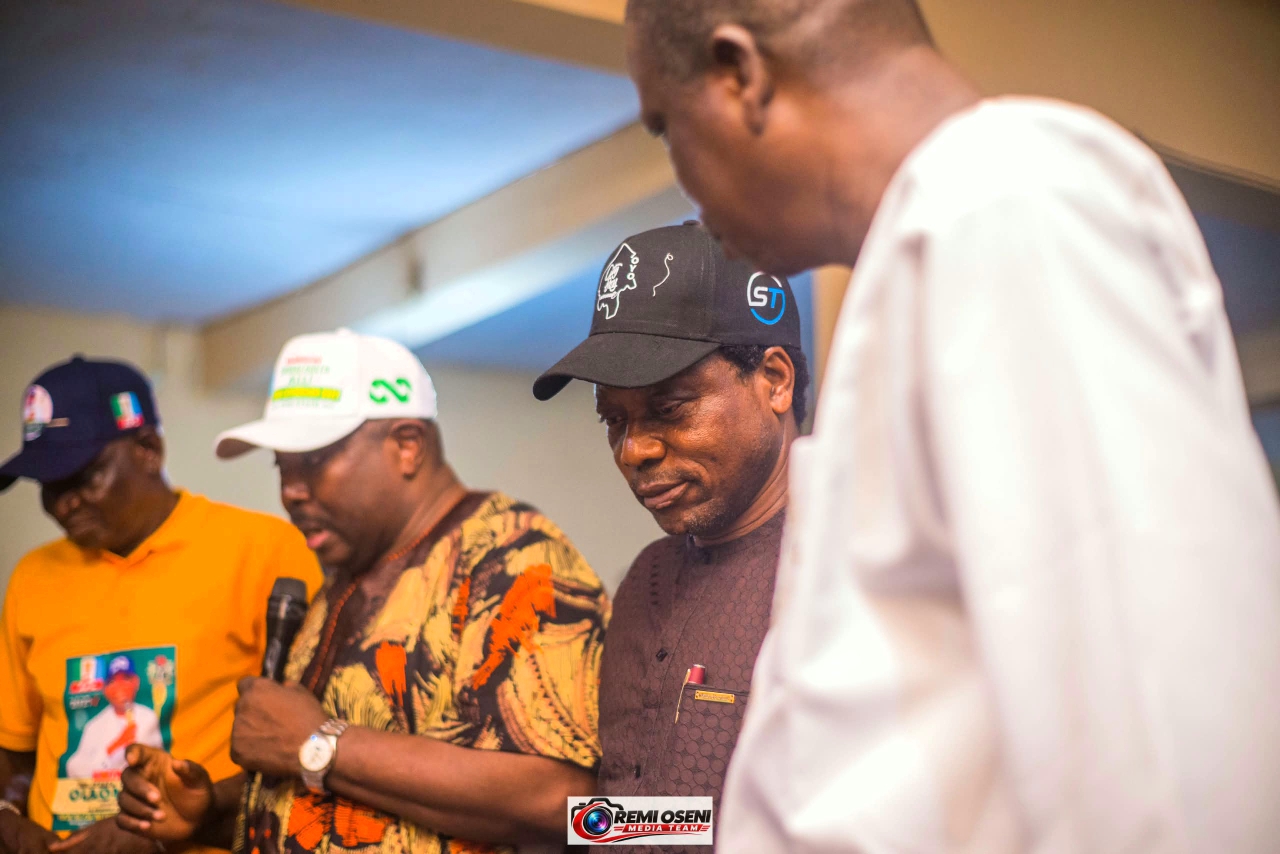
The lawmaker representing Ibarapa East/Ido Federal Constituency in the House of Representatives, Engr. Aderemi Oseni, has mourned the death of a chieftain of the All Progressives Congress (APC) in Oyo State and former member of the Oyo State House of Assembly, Hon. Akeem Abimbola Oladipupo, popularly known as Able, describing his demise as a painful loss to the progressive family.

Oladipupo, who represented Ibadan North-West Constituency in the Oyo State House of Assembly, was widely regarded as a grassroots politician and committed party loyalist until his passing.

Oseni, who is also the Chairman, House Committee on Federal Roads Maintenance Agency and the APC candidate for Oyo South Senatorial District, said the late politician’s death had created a vacuum within the party and among those who benefitted from his unwavering commitment to public service.

In a condolence statement issued on Monday by his Media Aide, Idowu Ayodele, and made available to journalists in Ibadan, the Oyo State capital, the federal lawmaker described the late Oladipupo as a dependable progressive, humble political actor and loyal party stalwart whose impact would remain indelible.

He said the deceased dedicated his life to serving humanity, strengthening the progressive movement and supporting the aspirations of many at the grassroots.

Oseni said, “The death of Hon. Akeem Abimbola Oladipupo (Able) came to me as a rude shock. Oyo State and the progressive family have indeed lost a committed, loyal and selfless leader whose passion for service, humility and dedication to the people stood him out.

“He was not just a politician but a bridge-builder, a dependable ally and a grassroots mobiliser who believed strongly in the ideals of our great party. His contributions to the growth of the APC in Oyo State and his service to humanity will remain unforgettable.”

The APC senatorial candidate noted that the late former lawmaker remained steadfast in promoting peace, unity and political development, adding that his simplicity and accessibility endeared him to many across political divides.

According to Oseni, the late politician’s legacy of service and sacrifice would continue to inspire younger politicians and party faithful.

He, however, urged members of the APC, associates and family members of the deceased to take solace in the remarkable life he lived and the positive impact he made during his lifetime.

Oseni also prayed for the repose of the deceased’s soul and for God to grant his family the fortitude to bear the painful loss.

Continue Reading

News

Governors Push N100,000 Minimum Wage to Ease Workers’ Economic Burden

Published

on

State governors have proposed a new national minimum wage of N100,000 for Nigerian workers as part of efforts to cushion them from the biting effects of inflation and the rising cost of living.

Governor AbdulRahman AbdulRazaq of Kwara State, who is also the Chairman of the Nigeria Governors’ Forum (NGF), disclosed the proposal on Saturday in a post by the state government’s official Facebook page. He said the move aims to improve workers’ welfare while ensuring that government finances remain sustainable.

“State governments recognise the urgent need to improve workers’ welfare in response to the current economic realities facing Nigerians,” AbdulRazaq said.

“We are actively engaging with the Federal Government and organised labour to arrive at a wage structure that is fair to workers and sustainable for government finances.”

The NGF chairman explained that ongoing discussions are focused on balancing the need to boost workers’ purchasing power with the capacity of governments to deliver essential public services and development projects.

“The goal is to improve the living conditions of workers while ensuring that states can continue to meet their obligations and sustain projects that directly impact citizens,” he added.

The proposed N100,000 minimum wage is expected to intensify national debates on salaries, inflation, and broader economic reforms as Nigerians continue to contend with rising food prices, transportation costs, and other living expenses.

Currently, Nigeria’s statutory minimum wage stands at N70,000 per month. Some states, including Lagos, Rivers, and Imo, are already paying above the national benchmark to support workers amid the country’s economic challenges.

Meanwhile, the Nigeria Labour Congress (NLC) has continued to call for a comprehensive review of salaries, insisting that workers deserve a living wage that reflects present-day economic realities rather than merely guaranteeing survival.

Continue Reading

News

Petrol hits N1,533/litre as cooking gas prices jump nationwide

Published

on

The average retail price paid by consumers for Premium Motor Spirit, popularly known as petrol, rose to N1,532.93 per litre in April 2026, representing a 23.69 per cent increase compared to the N1,239.33 recorded in the corresponding period of 2025, findings by the National Bureau of Statistics (NBS) have shown.

The sharp rise in petrol prices came amid mounting inflationary pressure and worsening living costs, with Nigerians grappling with soaring transportation and food expenses that have continued to shrink household purchasing power.

The NBS disclosed this in its Premium Motor Spirit (Petrol) Price Watch for April 2026, released on Friday.

The report further showed that on a month-on-month basis, petrol prices rose by 18.97 per cent from N1,288.54 recorded in March 2026, underscoring persistent volatility in the downstream petroleum market.

A breakdown of prices across states revealed that Yobe recorded the highest average retail price for petrol at N1,599.05 per litre during the review period.

Edo and Bauchi followed closely with average prices of N1,595.74 and N1,589.07, respectively.

However, Niger residents paid the least for petrol at an average of N1,403.89 per litre, while Sokoto and Katsina recorded N1,404.16 and N1,406.28 respectively.

At the zonal level, the South-South recorded the highest average retail price at N1,566.76 per litre, while the North-West posted the lowest at N1,508.81.

The latest petrol price increase comes as millions of Nigerians continue to battle the ripple effects of rising inflation, with higher energy costs worsening transportation fares and the prices of essential commodities.

Similarly, the NBS said the average retail price for refilling a 5kg cylinder of Liquefied Petroleum Gas, also known as cooking gas, rose by 13.73 per cent month-on-month to N8,706.93 in April 2026 from N7,655.73 recorded in March.
On a year-on-year basis, the price increased by 10.42 per cent from N7,885.60 recorded in April 2025.

Lagos recorded the highest average price for refilling a 5kg cylinder at N9,745.10, followed by Nasarawa at N9,451.70 and Bayelsa at N9,422.74.

In contrast, Anambra recorded the lowest average price at N7,204.76, while Ondo and Ogun followed with N7,239.49 and N7,825.75, respectively.

At the regional level, the North-West recorded the highest average retail price for refilling a 5kg cylinder at N9,025.07, followed by the North-East at N8,847.16, while the South-East posted the lowest average price at N8,224.37.

Also, the average retail price for refilling a 12.5kg cylinder of cooking gas increased by 13.89 per cent month-on-month to N22,382.20 in April 2026 from N19,652.83 in March.

Compared to April 2025, the price rose by 10.43 per cent from N20,268.06.

According to the NBS LPG Price Watch for April, Katsina recorded the highest average retail price for refilling a 12.5kg cylinder at N25,596.71, followed by Kogi at N24,558.25 and Gombe at N24,438.97.

Ogun recorded the lowest average price at N19,564.36, while Bauchi and Anambra followed at N20,178.87 and N20,511.90 respectively.

The North-West recorded the highest zonal average retail price for refilling a 12.5kg cylinder at N23,276.95, followed by the North-Central at N22,865.29, while the South-East posted the lowest average at N21,060.92.

The latest figures signal growing pressure on household energy costs, raising concerns over the implications for inflation and the cost of living in the coming months.

Continue Reading

Advertisement

Entertainment

Advertisement

MegaIcon Magazine Facebook Page

Advertisement

MEGAICON TV

Advertisement

Trending