Top Stories
Brilliance of Nigerians challenges politicians
Published
8 years agoon
By
Mega Icon|
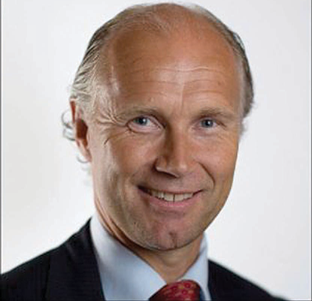
As far back as 1890, Nigerians got exports of stock fish from Norway. This expanded to other sectors including shipping, ship building, oil and gas, renewable energy, making Nigeria Norway’s most important economic partner in Africa. The Norwegian Ambassador to Nigeria, Mr. Jens-Petter Kjemprud, in this interview, outlines potentials for further cooperation between the two friendly countries.
How would you assess relations between Nigeria and Norway?
I would describe it as very good. We opened an embassy in Nigeria at independence, but already had long trade relations dating back to the 1890s predominantly through stock fish exports. Trade, shipping, ship building, oil and gas, renewable energy are the main economic sectors, making Nigeria Norway’s most important economic partner in Africa with potentials for further growth. Political relations have become much closer in the past years with frequent meetings at political level and political visits both ways. The annual Nordic African foreign ministers meeting held once in Oslo and once in Abuja within the past three years is a good arena to discuss issues of common concern and the annual Nordic African Business Summit held every November in Oslo is an arena to develop further economic cooperation. We are also in the process of developing a bilateral political consultation mechanism and for two years now have had a very proactive Nigerian-Norwegian Chamber of Commerce based in Lagos.
Norway hosted the humanitarian conference on Nigeria and the Lake Chad region. How would you assess the outcome? We are quite happy with the outcome. The two main ambitions of the conference which we hosted with the UN, Germany and the Nigerian government was to broaden international attention on the humanitarian needs in the Lake Chad region and secure solid funding to respond to the needs. Both ambitions were achieved. We are now in the process of planning for “Oslo 2” conference in cooperation with the UN and Germany, to be held in Berlin. We follow closely the government’s efforts to alleviate the humanitarian crisis which affects up to seven million people and urge the Nigerian government to cooperate fully in preparation for the new conference. Such a conference should go beyond the humanitarian funding to bridge the gap towards development, peace and stability and supplement necessary peace initiatives for the Northeast. There is no military or humanitarian solution alone. https://iso.keq.mybluehost.me/fg-supports-googles-next-billion-users-plan/
Have other projects been initiated since then? The government, UN, national and international NGOs have all responded to the humanitarian crisis, specifically the Northeast of Nigeria and Borno State in particular, as this is the epicenter of the conflict and the humanitarian crisis. The UN in particular has strengthened its presence but the pledges and commitments to the humanitarian response plan for 2018 is relatively weak, hence the need for “Oslo 2”. Norway upgraded its response through the UN, national and international NGOs in 2017 to approximately $35m. The Norwegian Refugee Council has also established a solid presence to support refugees and internally displaced persons.
Having been in Nigeria for some time, how will you describe your stay? I am enjoying my stay, coming to two years, very much. Nigeria has a deep reservoir of brilliant, well educated, innovative and bright people, many of whom I have had the privilege to meet. But also, as I had the opportunity to discuss when I visited the National Institute for Policy and Strategic Studies (NIPSS) in Kuru, there is a gap between all those brilliant people and the way the country is organized. That continues to puzzle me and should pose a challenge to the politicians of this great country. How is the bilateral trade tie between Nigeria and Norway? As I said, the trade volume is good, with the bulk concentrated in shipping, ship building and oil and gas sectors. I still feel there is much untapped potential and we try to promote further trade including through special efforts to remove wrong perceptions of the Nigerian market. There is still an inclination among many business people not to engage in the Nigerian market because of the bad reputation. We thus support the Buhari government’s fight against corruption and we cooperate to urge our companies to avoid corruption. We are pleased with the improvement in Nigeria’s ranking on the ease of doing business, but still see the energy sector as an important impediment to foreign investment in Nigeria. The manufacturing sector cannot be competitive without safe, cheap and stable power supply. If Nigeria succeeds in improving the fight against corruption, the ease of doing business and puts it energy sector in order, you will see a new, more prosperous Nigeria which could also respond better to the needs of the fast growing population, thereby reducing conflicts caused by competition for scarce resources. These are the issues politicians should be judged by. The Nigerian government has called on Norway to invest in the seafood sub-sector in Nigeria, do you see this working? Trade between the two countries is imbalanced in our favour indeed, mostly due to the fact that we are both oil producing countries. We do however think that this might change. Today, the surplus in trade is mostly due to Norwegian technology inputs into the Nigerian oil sector. As the Nigerian local content policy develops, we can envisage changes in the near future. The Norwegian branch of TechnipFMC recently produced manifolds for the oil sector with 80% local content and a Lagos-based company, Marine Platforms, won a local content award this year for acquiring high technology ships for Nigeria’s subsea offshore industry from Norway. As for the seafood sector we believe and have offered assistance in developing aquaculture in Nigeria. The domestic supply only covers one-third of the demand for fish, so there is an enormous potential to develop the sector on land and at sea. Norway has the expertise as the seafood sector is our third biggest export sector. We would be happy to share our experiences. The Nigerian- Norwegian Chamber of Commerce is focusing on this and we will have a seafood/fisheries week in Lagos this October in cooperation with the Norwegian Seafood Council.
You once expressed Norway’s readiness to collaborate with Nigeria on the film industry. How far has this gone?
I visited the Nigerian Film Institute in Jos only last week to take this initiative further. The Nigerian film industry is a big success employing some say, over a million people directly or indirectly. It also has a strong impact on people in Nigeria and across Africa. We have agreed to participate in Nigerian film festivals and arrange a Nigerian film festival in Norway through this cooperation establishing direct contact between the two NFIs – Nigerian Film Institute (NFI) and Norwegian Film Institute (NFI). What would you want to tell Nigerians about Norway? Maybe two things: First, we have deliberately used only a small part of our oil income to fund running costs and extraordinary investments, and as a result, now have the biggest sovereign wealth fund in the world, which is established to secure the welfare of future Norwegian generations. It’s all based on the principle of saving on good days for bad days. Secondly, women’s rights and equal access to work is probably the biggest contributor to the wealth of the nation, and happiness of all people in Norway (if happiness can be measured). |
Related
Politics
2027: APC Perfects Consensus Strategy for Oyo
Published
9 hours agoon
May 12, 2026By
Mega Icon
Ahead of the 2027 general elections, the national leadership of the All Progressives Congress (APC) on Tuesday held a high-level strategic meeting with the Oyo State chapter of the party as part of efforts to reposition the APC for victory and prevent internal crisis ahead of the polls.
The development was first scooped by OYOINSIGHT.COM which quoted multiple party sources familiar with the closed-door deliberations.
Sources disclosed that the meeting, held in Abuja, focused largely on a consensus arrangement being considered by stakeholders of the party in Oyo State, in line with political templates reportedly being adopted in Lagos and Ogun states ahead of the next electoral cycle.
Party insiders said the move was aimed at strengthening unity within the fold of the opposition party in the state, minimising rancour during the primaries and presenting a formidable front against rival parties in 2027.
It was further gathered that some members of the state executive committee may have been subtly informed about preferred consensus candidates being considered for elective positions across the state.
Though details of the deliberations were still sketchy as of press time, sources hinted that the national leadership stressed the need for cohesion, discipline and strategic alignment among stakeholders to improve the party’s electoral fortunes in Oyo.
Those at the meeting included the Oyo APC Chairman, Moses Alake Adeyemo; the state secretary, Fatai Adesina Adeniyi; the Publicity Secretary, Olawale Sadare; the Organising Secretary, Aderemi Adepoju; and the Legal Adviser, Sunday Aborisade.
Others were the Women Leader, Adekemi Opatunde; the Youth Leader, Olalekan Oladejo; Joshua Oyebamiji; Tunde Oloyede; Sunday Babalola; Joseph Omoniyi; and Mojeed Adebayo.
As of the time of filing this report, the party had yet to issue an official statement on the outcome of the meeting.
Related
Politics
2027: Oyo APC Set for Credible Direct Primaries, Says Alake Adeyemo
Published
2 days agoon
May 11, 2026By
Mega IconThe Chairman of the All Progressives Congress (APC) in Oyo State, Chief Moses Alake Adeyemo, on Monday assured aspirants and party members that the party would conduct transparent, peaceful and credible direct primaries ahead of the 2027 general elections.
Adeyemo declared that no aspirant would be victimised or denied a level playing field, stressing that the party leadership remained committed to internal democracy and progressive ideals.
The former deputy governor spoke while receiving members of the APC Screening and Appeal Committees deployed from the party’s National Secretariat in Abuja at the APC Secretariat in Oke-Ado, Ibadan.
He disclosed that although the party initially explored consensus arrangements across elective positions, prevailing realities indicated that direct primaries would be conducted in some areas, including the governorship contest.
Adeyemo said the party had already put necessary structures in place to ensure a hitch-free exercise capable of strengthening unity within the APC.
He said: “We set machineries in motion for us to achieve the aim of consensus across board but reports available to me indicate that we would have to go by the second option which is direct primary in certain cases including the governorship ticket.
“To this end, we shall work towards organising free, fair and credible exercise in all the affected areas even as we cannot rule out the possibility of some aspirants having a rethink and supporting the consensus arrangement as necessary.
“Where we have more than an aspirant, Abuja would send people to conduct primaries and we at the state level would provide the required support to make everything work out in the interest of our great party.”
The APC chairman explained that all registered party members would participate fully in the exercise at their respective wards on dates to be announced by the National Secretariat.
According to him, affirmation would be adopted in areas where consensus candidates emerge, while voting would be conducted wherever direct primaries become necessary.
“For consensus, members will lend their voices for affirmation while voting will be done in the cases of direct primary,” he added.
Speaking earlier, Chairman of the Screening Committee and former Speaker of the Ondo State House of Assembly, Rt. Hon. Taofiq AbdusSalam, assured party faithful that the committee would carry out a thorough, transparent and unbiased screening process.
He said only eligible aspirants would be cleared to participate in the primaries and eventually fly the APC flag in the forthcoming elections.
Other members of the Screening Committee are Kamal Sanusi (Secretary), Smart Oluwole, Tunde Kolade and Olabamiji Agunloye.
Members of the Screening Appeal Committee are Jibola Oduwole (Chairman), Abimbola Jack (Secretary) and Jelil Jimoh.
Related
Politics
NDC zones 2027 presidency to South, reserves 2031 for North
Published
4 days agoon
May 9, 2026By
Mega IconThe Nigeria Democratic Congress on Saturday zoned its 2027 presidential ticket to Southern Nigeria, declaring that the party’s candidate would serve a single four-year term if elected.
The decision was reached during the party’s national convention held in Abuja amid growing momentum within the opposition platform following a wave of high-profile defections from other political parties.
Announcing the development on its official social media handle, the party stated, “NDC presidential ticket is zoned to the South!!”
The party also resolved that its 2031 presidential ticket would be ceded to Northern Nigeria as part of efforts to maintain regional balance and internal equity.
The convention comes as key opposition figures, including former Labour Party presidential candidate, Peter Obi, and former New Nigeria People’s Party presidential candidate, Rabiu Kwankwaso, joined party leaders and delegates at the Abuja gathering.
Saturday’s convention is expected to ratify several recent decisions taken by the party’s National Executive Committee, including zoning arrangements, amendments to the party constitution, and the election of new national executives.
According to the convention agenda obtained by journalists, discussions centred on zoning, ratification of the amended constitution, and leadership restructuring ahead of the 2027 general elections.
The NDC has in recent weeks witnessed a surge in defections from rival opposition parties, particularly the African Democratic Congress and the Peoples Democratic Party.
On Tuesday, no fewer than 17 members of the House of Representatives defected from the ADC to the NDC.
Their defections were formally announced during plenary at the House of Representatives.
The lawmakers include Yusuf Datti, Uchenna Okonkwo, Adamu Wakili, Thaddeus Attah, George Ozodinobi, Lilian Orogbu, Oluwaseyi Sowunmi, Peter Aniekwe, Mukhtar Zakari, George Oluwande and Munachim Umezuruike.
Others are Emeka Idu, Jesse Onuakalusi, Ifeanyi Uzokwe, Afam Ogene, Murphy Omoruyi and Abdulhakeem Ado.
The defections came barely two days after Obi and Kwankwaso formally joined the NDC from the ADC.
The duo were presented with the party’s membership cards last Sunday shortly after a closed-door meeting with party leaders.
A former Governor of Bayelsa State and NDC national leader, Seriake Dickson, officially welcomed the opposition figures into the party.
Obi had attributed his exit from the ADC to worsening internal crises, external interference and what he described as increasing hostility within party structures.
The former Anambra State governor said Nigeria’s political environment had become increasingly toxic, marked by intimidation, insecurity and sustained scrutiny of opposition figures.
He also lamented that institutions meant to protect citizens were now often deployed against them, while individuals committed to genuine public service faced mounting pressure both publicly and privately.
Related
Advertisement
Entertainment
Adekunle Gold, Simi welcome twins
Ayefele drops new album, Reflections
Reggae Legend, Jimmy Cliff, Dies At 81
Photos: Davido blows $3.7m on lavish Miami white wedding for Chioma
FAAN probes K1 for spilling alcohol on airport officer during boarding
Odunlade Adekola loses father
MegaIcon Magazine Facebook Page
MEGAICON TV
Advertisement
Trending
-
Politics2 days ago2027: Oyo APC Set for Credible Direct Primaries, Says Alake Adeyemo
-
Politics9 hours ago2027: APC Perfects Consensus Strategy for Oyo
-
News1 week agoTCN plans power outage in Ibadan over substation maintenance
-
News5 days agoTegbe clarifies: No 3-month promise on power grid, outlines realistic reform timeline