Connect with us

National Issues

ANATOMY OF NIGERIA’S SICKLY DEMOCRACY.

Published

on

SINCE 1999 that democracy become entrenched in Nigeria, it has been a narrative dotted by the experiences of poor governance. This is often reinforced by continuous desire and expectation of a brighter future for the country in spite of the inherent contradictions and systemic lapses in our democratic culture and practices . As a country, our democracy has not fully developed and grown to help the citizens achieve the economic prosperity, social advancement and political development, eighteen years after its enthronement . Every May 29 is therefore a unique day in the annals of Nigeria, for being dedicated as the nation’s democracy day. The day is not just for fanfare but it is rather an occasion for the citizens to reflect on the state of the nation.

This is an appropriate period for re-examination of prospects of the country’s democracy. By using every known performance index, the country’s democracy could at best be described as ill. Our democracy is so described because it is dysfunctional and deeply rooted in corruption, maladministration and social injustices.

Out of all the predictors of our sickly democracy, corruption remains a major anathema. It is obviously the main fabrics of all other social ills afflicting the nation. Despite the huge investment on awareness campaigns by the government, legal control mechanism in place and whistle blowing policy of President Muhammed Buhari’s administration, corruption is still a major national concern and unbeatable menace.

This calls for attitudinal change. Except this done, Nigeria will continue to be stigmatised as a country peopled by fantastically corrupt persons. Of course, war against corruption needs to be extended beyond prosecution and retrieval of looted funds from political officer holders and public servants.

For the country to win the ongoing war against corruption, programmes of instructions in schools and the nation’s educational curriculum need a review to strategically emphasise moral teachings. As the nation marks the year 2017 democracy day, the current National economic challenges is expected to dominate people’s thoughts and public discourse across the nation.

Of course, the government efforts to halt recession notwithstanding, the direct negative impacts of this global economic crisis is still being felt by the citizens from rural to urban communities across the country. Apparently, there is no clear sign and proof that Nigerians will soon overcome the challenges of the economic recession as citizens complain daily of hunger, malnutrition, poverty, unemployment and high inflationary trends.

Worst hit with the realities of the current economic recession are the Nigerian workers. Without doubts, the nation’s public/civil servants are either groaning or lamenting daily as a result of persistent delay in the payment of their monthly salaries and allowances. The state governors under different guises have not been paying salaries and other entitlements of workers as and when due. In some states, workers are owing between ten to twelve months salary arrears.

In a situation whereby workers receive twenty five percent fraction of their salaries on monthly basis as subvention from government , it is predictive that the efficiency and productivity of such workforce will be dwindled and greatly diminished. It appears most of the state governors lack the proper understanding of roles of the public servants in policy formulation, policy review, policy interpretation,policy implementation, project execution and evaluation otherwise the workers could have been treated well.

Given the strategic roles of civil/public servants in the attainment of ideal democracy and realisation of the nation’s quest for social development, greater attention would have been paid to the workers’ welfare. If government at various levels fail to address the workers’ plight which is a consequence of irregularities in salary payments, I am sure the quest to achieve good governance in the country would remain a mirage.

This is because, the workforce by virtue of training, experience, professionalism and schedule of duties are the engine room of public administration and the driving force of any government. Regrettably, most governors and their top cabinet members enjoy limitless benefits of office including security votes without any constraints; whereas, an average worker has been pauperised by persistent delay in salary payment.
Under the present dispensation, public servants are now being classified ‘dependent group’ as vast majority of the Nigerian workers do what is called ‘begging by single’ to survive. This current reality exposes the shame of the nation.

The performance of the 8th National Assembly is not only degrading under the present dispensation but it has exposed the ills of the nation’s democracy. So far, the social conduct and public perception of the leadership of the National Assembly is a minus on the ratings of the legislative arm of government under the current democracy.

There is no way the Nigeria’s democracy can survive without a functional and dynamic parliament. The future of Nigeria’s democracy therefore depends on the credibility, integrity, competencies and performances of the nation’s legislators. In a way, occasional coup threats, alarms and rumours are parts of signs of the sickly state of the nation’s democracy.Of equal note is the relevance and the question of autonomy for the local government administration in Nigeria.Apparently, the governors run the local government system as an appendage of the state. It is worrisome that local governments now serve as conduit pipe with which the public funds are siphoned by the state governors.

Indeed, the local council system as the third arm of government needs urgent and critical reform to strengthen the nation’s democracy.

It is against this background that the writer concludes by praying for the sustainability and prosperity for the nation as we mark the year 2017 democracy day. It is my prayer that God heal the president Muhammed Buhari and grant him and his team the wisdom, knowledge and enablement to move the nation forward and at the same time heal her sickly democracy.

Except our leaders are guided to the right path, the desire to achieve an enduring and sustainable democracy for the nation will remain an illusion.


By Rahaman Onike, Oyo.

He is an author, public administrator and policy analyst.

Comments

National Issues

OLOJO FESTIVAL: Nigeria bigger than all of us, Ooni tells politicians

Published

on

Monarch begins seven-day seclusion, prays for peace, unity

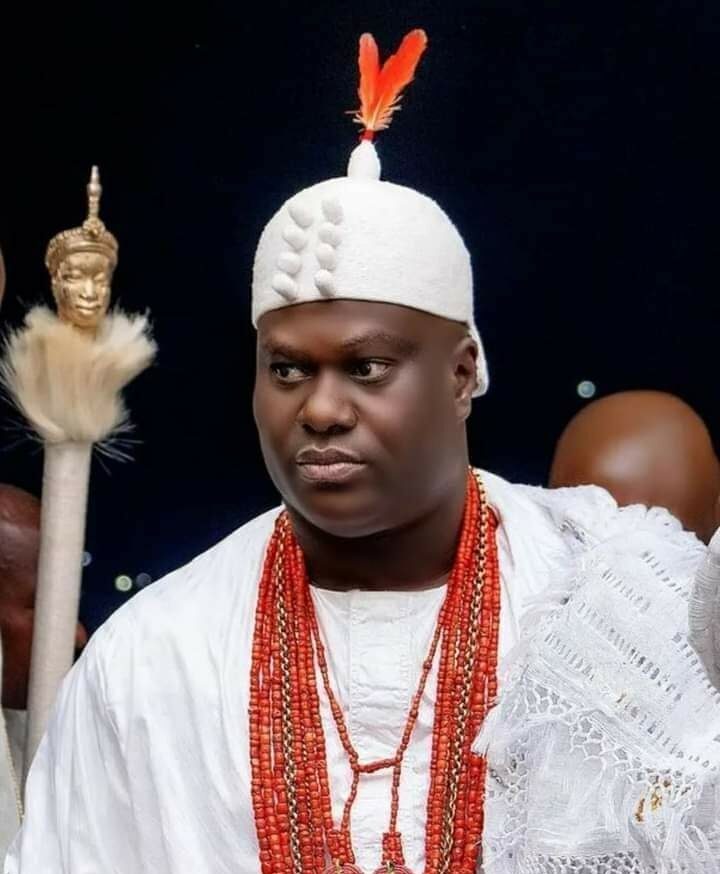
The Ooni of Ife, Oba Adeyeye Ogunwusi, Ojaja II, has urged Nigerian politicians to put the interest of the country above their political differences, saying Nigeria is bigger than any individual or political interest.

The monarch spoke on Sunday shortly before commencing a seven-day spiritual seclusion ahead of the 2026 Olojo Festival in Ile-Ife, Osun State.

The annual seclusion is part of the traditional rites preceding the Olojo Festival, one of the major cultural celebrations associated with Ile-Ife and the Yoruba people.

The Ooni, who is also the Co-Chairman of the National Council of Traditional Rulers of Nigeria, said his period in seclusion would be devoted to prayers for Nigeria, particularly for peace, unity and sustainable development.

“I am appealing to our politicians. They might have differences, but we should know ultimately that Nigeria is bigger than all of us,” the monarch said.

“It is very important for our political leaders to always look inwardly on how to better the lot of the average Nigerians.”

The Ooni urged political leaders to avoid words and actions capable of threatening national cohesion, reminding them that political power was temporary.

“Some have ruled this country before as political leaders, and others will come after them,” he said.

He said his prayers would also cover Nigeria’s democratic process, particularly as the country prepares for the next general elections.

The monarch commended President Bola Tinubu over what he described as non-interference in the activities of the Independent National Electoral Commission, saying such a practice could strengthen public confidence in the electoral process.

He also commended Osun residents for participating in the recently concluded governorship election, saying the outcome demonstrated the ability of citizens to determine their leaders through the ballot.

According to him, Nigerians should continue to have the opportunity to freely choose their leaders without actions capable of undermining the democratic process.

The Ooni’s seven-day seclusion, which began on Sunday evening, will also provide him with an opportunity to prepare spiritually for the sacred rites of the Olojo Festival and deepen his connection with the ancestors.

The exercise precedes the annual wearing of the sacred Aare Crown, one of the major highlights of the festival.

A statement by the Senior Media Officer of the Ooni’s Palace, Sodiq Lawal, issued on behalf of the Director of Media and Public Affairs, Otunba Moses Olafare, said the seclusion marked the beginning of the spiritual phase of the 2026 Olojo Festival.

The festival celebrates Ile-Ife’s indigenous traditions and ancestral heritage and attracts traditional rulers, cultural enthusiasts, visitors and members of the Yoruba diaspora.

The public ceremonies are expected to follow the spiritual rites and culminate in the Ooni’s emergence in the sacred crown.

Continue Reading

National Issues

Tinubu vows intelligence-led rescue of abducted Oyo pupils, teachers

Published

on

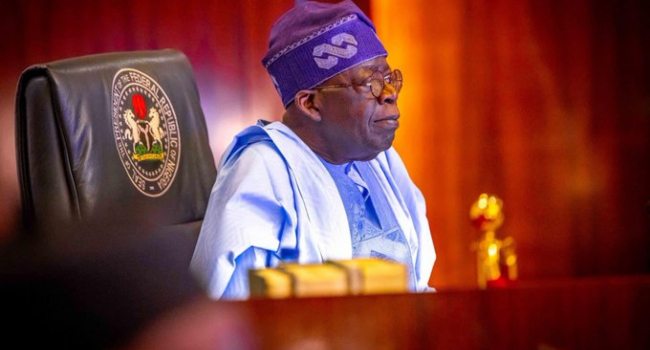
President Bola Tinubu on Monday assured residents of Oyo State that ongoing efforts to rescue abducted pupils and teachers in Oriire Local Government Area would be intelligence-driven, coordinated and sustained.

The President said the Federal Government would deploy every lawful means, including kinetic and non-kinetic measures, to ensure the safe return of the victims abducted during the May 15, 2026 attack in Esiele and Yawota communities.

“Our rescue efforts will be intelligence-led, careful, coordinated, and sustained. We will deploy every lawful tool available, both kinetic and non-kinetic, to ensure our children and teachers are safely returned home,” Tinubu stated in a statement posted on his X handle on Monday.

The President also expressed sorrow over the killing of a school teacher during the abduction and extended condolences to his wife, Mrs Mary Oyedokun, and the bereaved family.

“I also extend my deepest condolences to Mrs Mary Oyedokun, the wife of the late school teacher and her family. Their sacrifice will not be forgotten, and his family will not be abandoned,” he said.

Tinubu stressed that children should never be exposed to the trauma of abduction, noting that no parent should endure the pain associated with such incidents.

“No child should be taken from the safety of a classroom. No parent should have to endure this anguish,” the President added.

He assured affected communities that efforts to secure the release of the abducted pupils and teachers would remain sustained and intelligence-driven.

The statement comes amid growing concerns over insecurity in schools and rural communities following the abduction, which prompted the Federal Government to dispatch a high-powered delegation to the affected communities in Oriire Local Government Area.

The delegation included the Chief of Staff to the President, Femi Gbajabiamila; the National Security Adviser, Nuhu Ribadu; the Minister of Defence; and the Inspector-General of Police, Kayode Egbetokun, alongside other senior government and security officials.

Tinubu further disclosed that he had approved additional security measures, including the deployment of a specialised security unit equipped with advanced rescue capabilities to intensify efforts towards the safe return of the victims.

“I have also directed the deployment of a specialised security unit with advanced rescue capabilities to intensify efforts to secure the safe return of the abducted pupils and teachers,” he stated.

The President also revealed that the Federal Government, in collaboration with the Oyo State Government, was mobilising 1,000 forest guards to improve surveillance in forest corridors frequently exploited by criminal elements.

According to him, the initiative would be complemented by broader operational measures aimed at strengthening rescue operations and preventing future attacks.

Tinubu added that a request for the establishment of a military base in the affected area was receiving urgent consideration as part of efforts to bolster security.

Authorities have continued rescue operations amid rising concerns over the safety of schools and rural settlements, insisting that efforts remain focused on securing the release of the abducted victims and preventing a recurrence.

Continue Reading

National Issues

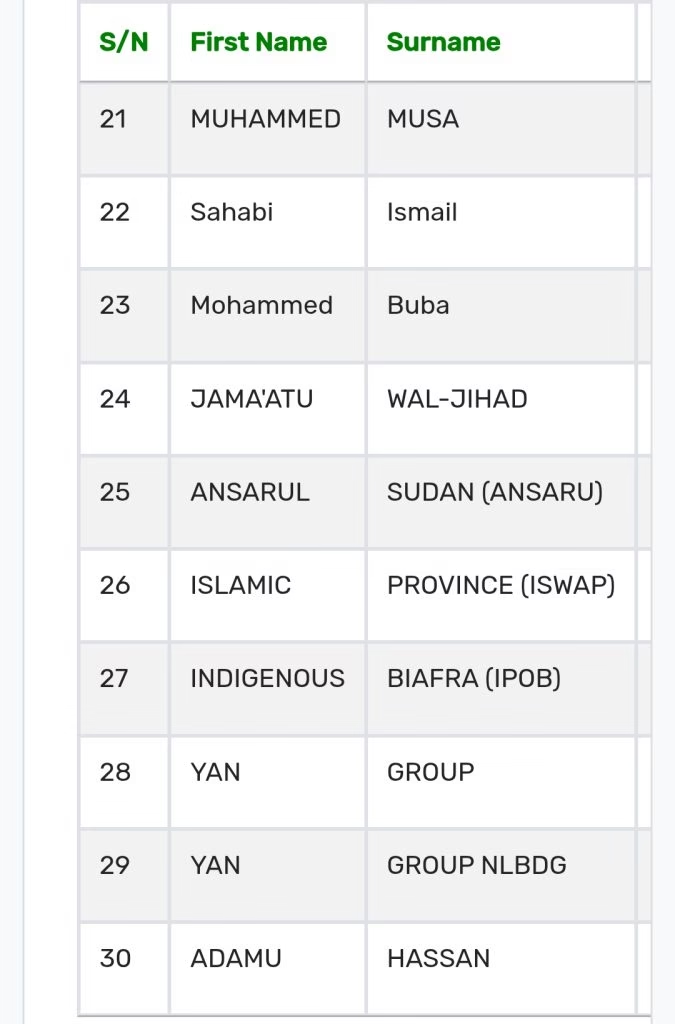
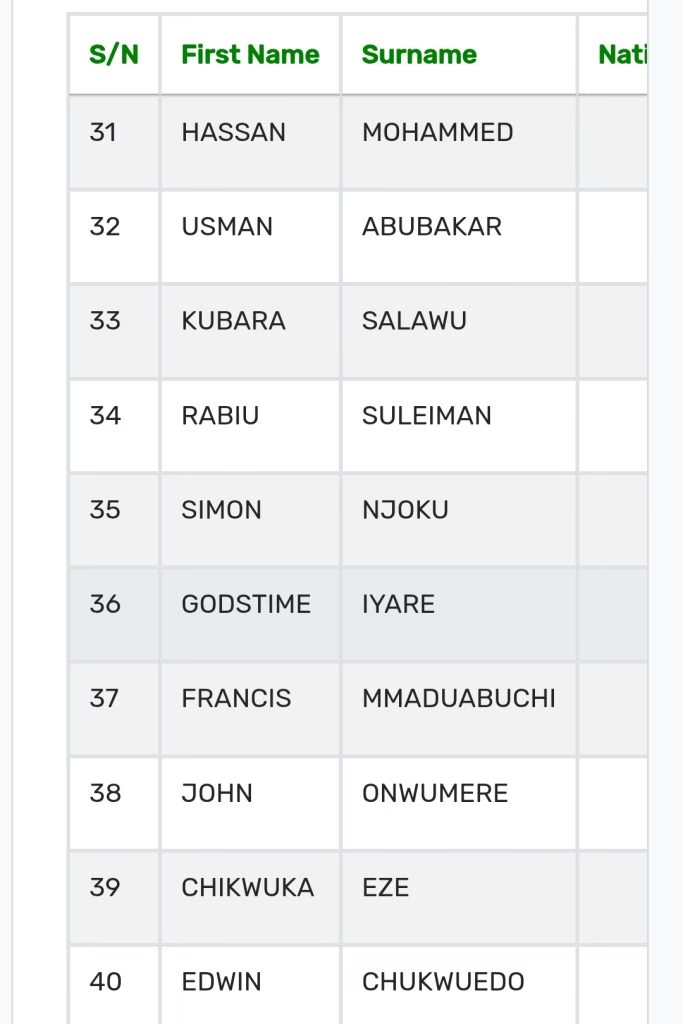
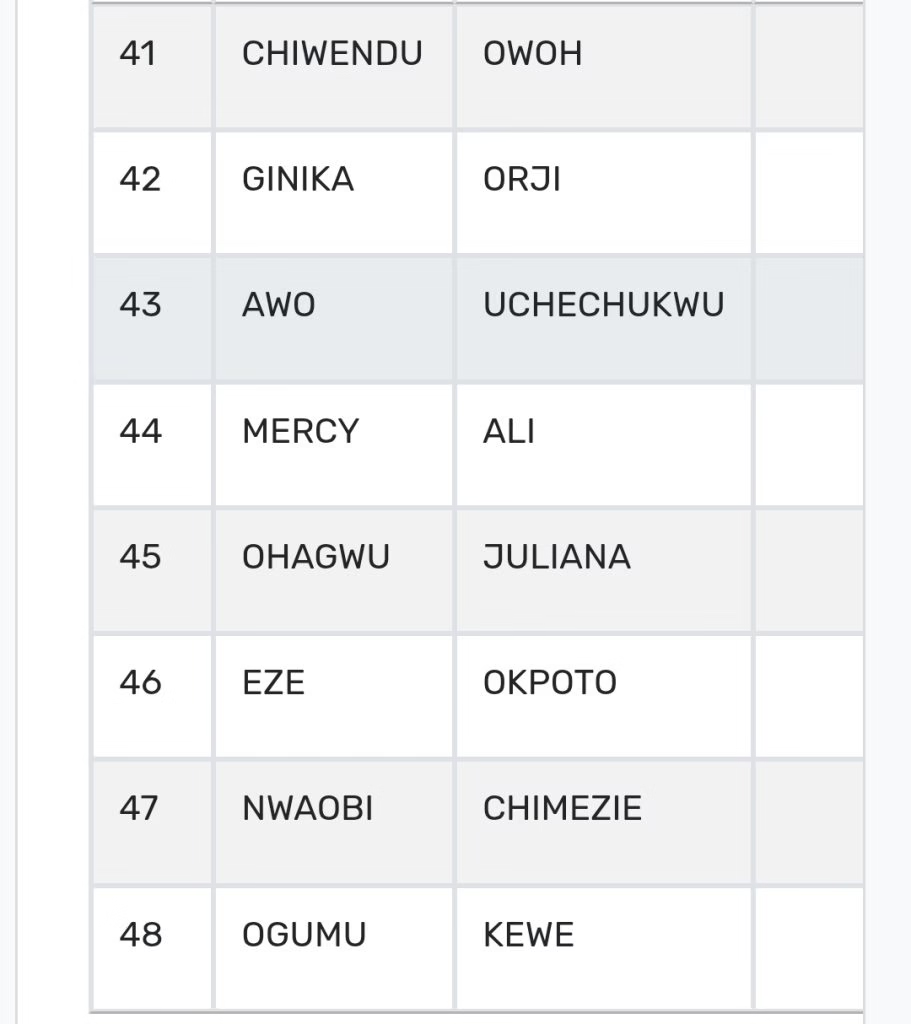
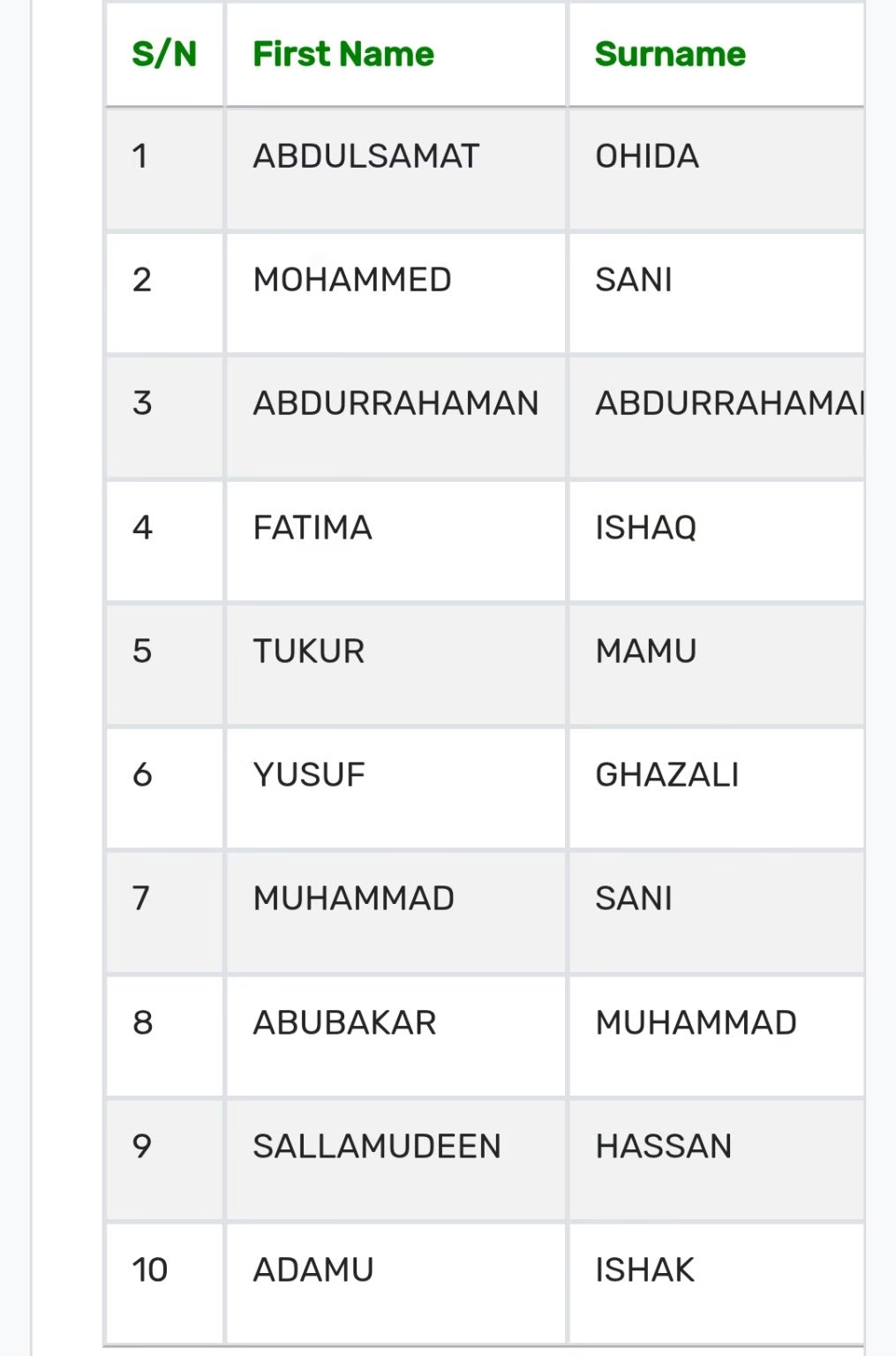
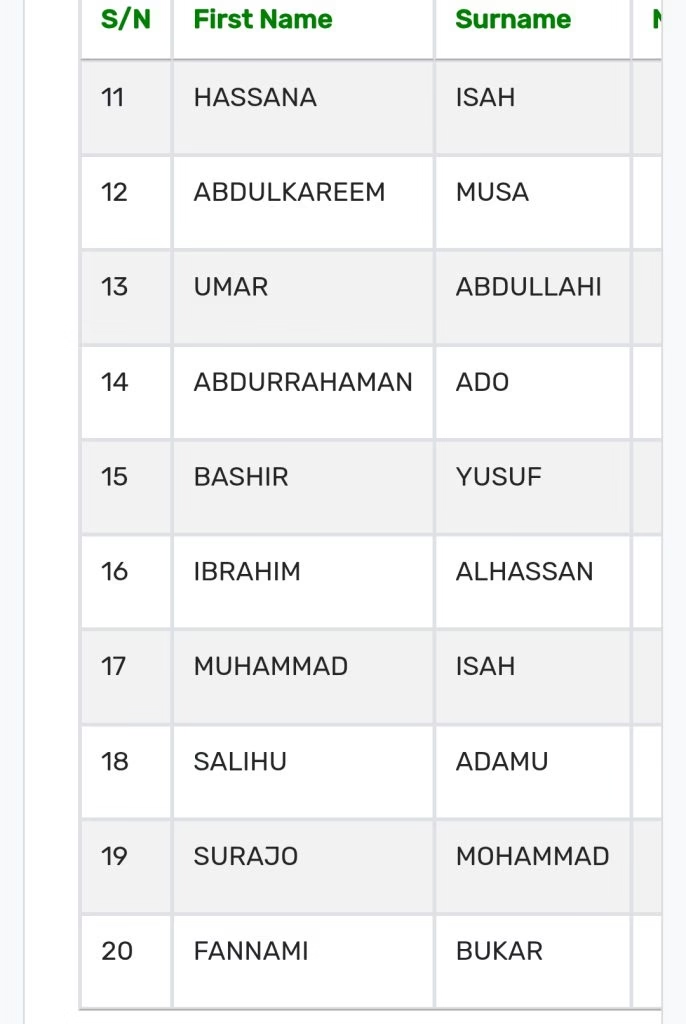
48 alleged terror financiers named by FG {SEE FULL LIST}

Published

on

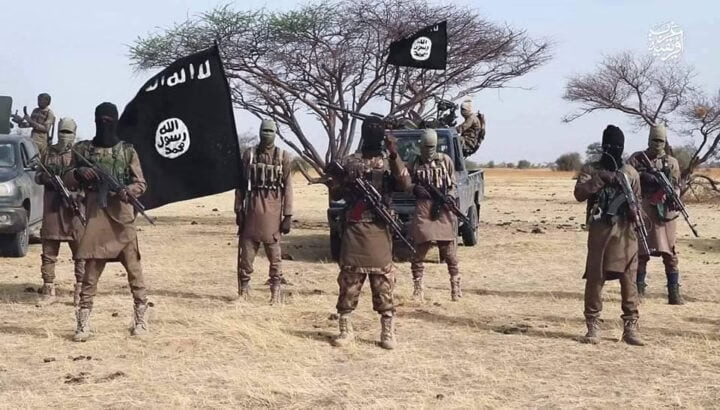
The Federal Government, on Saturday, published a list of 48 individuals and entities allegedly linked to terrorism financing in Nigeria, naming suspects with reported ties to outlawed groups including the Indigenous People of Biafra, Ansaru, and the Islamic State West Africa Province.

The list was released by the Nigeria Sanctions Committee as part of intensified efforts to disrupt financial networks sustaining terrorist activities across the country.

In a statement accompanying the publication, the committee said the designation of the individuals and organisations was in line with Nigeria’s legal and international obligations to combat terrorism financing.

“The Nigeria Sanctions Committee has approved the designation of the following individuals and entities for their alleged involvement in terrorism financing,” the statement read.

It added, “The action is pursuant to relevant laws and regulations aimed at identifying and freezing assets of persons and organisations linked to terrorist activities.”

The committee explained that the move was targeted at dismantling the financial backbone of insurgent and extremist groups operating within and beyond Nigeria’s borders.

Among those listed are individuals reportedly associated with the Indigenous People of Biafra, a proscribed separatist group; Ansaru, a faction linked to Al-Qaeda; and the Islamic State West Africa Province, one of the most active terrorist groups in the region.

Security experts have repeatedly stressed that cutting off funding sources remains a critical strategy in weakening terrorist operations.

Speaking on the development, a senior government official familiar with the process said the publication sends a strong signal about Nigeria’s resolve to confront terrorism at its roots.

“This is not just about naming names; it is about choking the financial lifelines of terror networks. Once funding is disrupted, their operational capacity is significantly weakened,” the source said.

The committee further noted that relevant authorities and financial institutions have been directed to take necessary steps in enforcing sanctions, including the identification and freezing of assets linked to the designated persons and entities.

“The public is also advised to remain vigilant and report suspicious financial activities to appropriate authorities,” the statement added.

The Federal Government reiterated its commitment to safeguarding national security, insisting that individuals or groups found culpable would face the full weight of the law.

As of the time of filing this report, detailed breakdowns of the sanctions and timelines for enforcement were yet to be made public.
 

Continue Reading

Trending