
Tourism
Ajimobi pledges to revitalize cultural tourism in Oyo



- Oyo State Governor, Senator Abiola Ajimobi has disclosed that the culture sector is one in which his administration would leave a legacy with tangible projects to ensure the revitalization of the cultural tourism sector in the state.
The Governor stated this on Monday at the Government House, Ibadan during the cultural activities marking 2018 World Culture Day and the official launch of the state’s quarterly cultural magazine tagged ‘Dundun’ produced by the Ministry of Information, Culture and Tourism to promote and document our culture, values and historical places among others.
Ajimobi maintained that Ibadan is the melting point of the Yoruba Culture, stressing that the promotion and preservation of our culture and heritage is one of the legacy pillars of his administration.
He explained further that the other legacy pillars are Education, Technology, Agriculture and Health, assuring that his administration will strive hard to ensure the revival of the cultural tourism sector of the Oyo State economy which he said can be easily modeled after the Californian economy given the inherent similarities.
The governor, also hinted that his administration has embarked on the establishment of the Ibadan Media City as a first step in the realization of this noble objective pointing out that the facilities of the Broadcasting Corporation of Oyo State would serve as its launch pad.
Senator Ajimobi pointed out that Yoruba Culture is centred on Godliness, integrity, morality and good value system which are the Omoluabi ethos, adding “it is unfortunate that we are losing this ethos. People no longer have respect for our culture, fear of God is missing, there is disrespect for people and people no longer value integrity.
“There should be fear of God in what we do, integrity and morality should be part of our life and this is why we must use our culture to reclaim the Omoluabi ethos
“We will ensure that we leave a formidable legacy in the cultural tourism sector of the state,” the governor reiterated.
Also, in his own remarks, the state Commissioner for Information, Culture and Tourism, Mr. Toye Arulogun noted that culture should be used to propagate peace and unity among the different tribes in the country, saying “we should always remember our culture. A wise man once said ‘a people without culture is like a tree without root.’ And therefore, like you all know that culture is the way of life. We must always remember our way of life.
Arulogun said, ” if you look at the insecurity that we have, if you look at all the disturbances here and there, they are also related to culture. Our understanding and appreciation of it is crucial, because culture is not just related to the way we do things, there is also religion. We have religions and our culture to shape our life.
“The United Nations Educational, Scientific and Cultural Organisation (UNESCO) set May 21 aside for people all over the world to remember their culture, to celebrate their culture and to promote their culture. But more importantly for us here, it is to preserve our culture, because if you notice you will see that our culture is going into extinction.
“So today is a day of celebration. And that is why you would see that the students have gone to school today in their traditional attires and will be engaged in cultural activities. If you go to offices, you will see that everybody is dressed in traditional outfits.
“It is a way of remembering where we came from, the way we do our things and one of the ways you can distinguish people is the way of their culture. We have gathered people from diverse culture at the cultural center and we are having a cultural rendezvous. Everybody is going to be there, the local food, music, dance, arts and craft and everything that is related to culture will be exhibited there today. We will be showcasing the culture of Oyo State,” he continued.






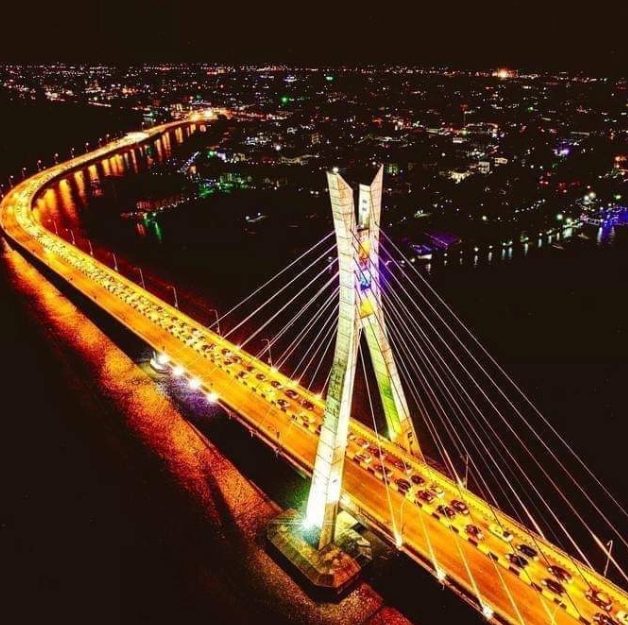
In a recent ranking by British media and hospitality company – Time Out, Lagos has secured the 19th spot as one of the best cities to visit globally.
The rankings, based on a survey of over 20,000 city dwellers worldwide and insights from Time Out’s editorial network, highlight the diverse appeal of cities around the globe.
New York City claimed the top spot, while Cape Town in South Africa secured the second position among the 50 cities listed.
Time Out’s evaluation considered various criteria such as food quality and affordability, cultural offerings, nightlife, the overall atmosphere of the city, community vibes, access to green spaces, historic sites, and more.
Claiming the 19th position, Lagos outshone cities like Melbourne, Australia; Naples, Italy; Singapore; Miami, US; Dubai, UAE; Beijing, China; and Montreal, Canada, among others in Time Out’s global rankings.
This comprehensive list not only showcases cities that are great tourist destinations but also emphasises their suitability for living.
Time Out encourages global citizens to explore Lagos, describing it as Africa’s most populous city with something for everyone, whether one is a staunch mainlander or from Lekki. The praise extends to Posh Victoria Island, which continues to captivate visitors with its blend of swanky resorts, culinary delights, and vibrant nightlife.
“Lekki is for the brunchers – make Maple Lagos your first stop. On the mainland, Kuti’s Bistro in Ikeja, owned by the legendary afrobeat family, serves up reliably delicious food and hosts parties, karaoke, and games nights.
“And then there are the beaches – hit up Oniru Beach for some fun in the sun, but be sure to bring naira for this private beach. For those who live for the night, Hard Rock Cafe Lagos provides a massive indoor-outdoor playground with top artists including DJ Obi (‘Obi’s House’ on Mondays), who set a Guinness World Record in 2016 for a 240-hour marathon set.”
See full list below:
The World’s 20 Best Cities In 2024
New York City
Cape Town, South Africa
Berlin, Germany
London, U.K.
Madrid, Spain
Mexico City, Mexico
Liverpool, U.K.
Tokyo, Japan
Rome, Italy
Porto, Portugal
Paris, France
Mumbai, India
Lisbon, Portugal
Chicago
Manchester, U.K.
São Paulo, Brazil
Los Angeles
Amsterdam, The Netherlands
Lagos
Melbourne, Australia

The Guild of Tourism Journalists in Nigeria (GTJ) has congratulated Barrister Wale Ojo-Lanre on his recent appointment as the Director-General of the Ekiti State Tourism Development Bureau by Governor Abiodun Oyebanji.
Wale Ojo-Lanre’s appointment, officially announced just last week, comes after his dedicated service as the Special Assistant to the former Governor, Dr. Kayode Fayemi, with a focus on Tourism Development.
Ojo-Lanre, an extensively traveled and seasoned tourism journalist, not only excels in his profession but also proudly holds membership within the association that collaborates with several states, the Federal Government and private enterprises to promote tourism in their respective regions.
In an official press statement, signed by Mr. Oladoye Oluremi, the Organising Secretary of the Association, the Guild of Tourism Journalists expressed full confidence that Ambassador Wale Ojo-Lanre’s appointment will act as a catalyst for advancing tourism development in Ekiti State, opening doors to numerous opportunities for the region.
The association extended gratitude to Governor Biodun Oyebanjo for recognising Ojo-Lanre’s qualifications for this pivotal role and entrusting him with this crucial responsibility.
They hold unwavering trust in Ojo-Lanre’s ability to excel in this significant position.
Also, the Guild of Tourism Journalists reaffirms its steadfast commitment to nurturing and promoting domestic tourism in Nigeria.
They pledge to work closely with Ekiti State and other regions, strategically increasing visitor numbers to their localities by highlighting heritage sites and other enticing attractions.
The association’s dedication to the development of Nigeria’s tourism sector remains unwavering.


For the third year on the bounce, there will be no summer travel overseas for average holidaymakers in the country. No thanks to the prevailing foreign exchange liquidity crisis that has further raised airfares by at least 200 per cent and average Economy Class tickets above the N1 million-mark.
Findings show that foreign airlines are just as hard-pressed by harsh economic realities as their Nigerian customers that have been looking forward to the season. Quite a number of airlines that had earlier positioned capacity in readiness for the summer peak period are now deploying backend-pricing mechanisms to weather the effects of the forex crisis, invariably passing the cost to consumers.
• Foreign airlines ditch lowest fares, adjust exchange rate to hedge devaluation shocks
• Average travellers lament weak naira to dollar rates, fares
• ‘Demand still resilient’, top travel agencies say
Travel agencies were not unanimous on the extent of attendant dip in demand among average travellers. Undisputed, however, was the upward movement in fares, yet with resilience in patronage, especially among die-hard holidaymakers that would not mind surging costs.
Emerging from two years of pandemic disruptions, the world is fully reopening to summer travels this year. Besides the chaotic scenes at major airports in Europe and America over staff shortages, there is another disincentive for summer travellers in Nigeria – high airfare.
The Guardian survey of booking platforms of major airlines showed a major spike in available tickets to European, United States and Canadian routes among other holiday destinations. On the platforms are the traditional least airfares quoted, though not available for purchase.
Consequently, a Lagos-London-Lagos Economy Class ticket that earlier sold for an average of N350, 000 on platforms of European carriers is now available at higher layers of N1.1 million-plus. Early June 2022, the same tickets were sold for an average of N600, 000 and N650, 000 as at this time last year. Their Business Class variants, where available, were quoted for between N3.5 million to N4.8 million per seat, depending on the airline of choice and time of inquiry.
Lagos-Atlanta-Lagos Economy Class ticket was offered for between N500, 000 to N850, 000 as at June. It now sells for N1.3 million-plus where available. The Business Class fares hover between N3.6 to N5 million per person.
African and some middle-east carriers are offering fairly affordable deals for leisure travellers that would not mind hours of layover at transit airports. On their platforms are an average of N750, 000 fares to major destinations in the Middle-east and Europe.
Some air travellers have described the foregoing quotations as ‘ridiculous’. Abuja-based systems engineer and travel freak, Hameed Ailero, said air travel had gone beyond the middle class earners in Nigeria going by the rates airlines are offering tickets.
Ailero, who also traded-off summer travel last year due to high cost, said the Nigerian authorities should query the foreign airlines for “the discriminatory airfare.”
“For me, that is ridiculous and typical of countries where there are no consumer protection measures. Aviation is supposed to be the business of freedom where almost everybody should be able to fly. But how does one explain a six-hour return ticket that now goes for N1 million and in a country where minimum wage is N30, 000? How many people can afford that? That is what I mean by discrimination against average Nigerians, by both the airlines and complicit regulators.
“In June, when I was planning for a holiday trip, I got a quotation of about N680, 000 to London. Because I was calculating for a family of seven, I felt it was too much. Barely a week later, the rates jumped to over N900, 000. Such leaps in price should be questioned by a government that cares. It does not sound good even for our economy. Whatever could have caused the leap, it is sheer discriminatory against the travelling public,” Ailero said.
Another traveller that would be missing the summer party abroad, Yemisi Ogunleye, said she was banking on summer promo fares on two of the foreign carriers. “I have been travelling for summer holidays for about nine years before the pandemic, and had always got fairly good tickets. This time around, the more I hunt for promo fares, the higher the tickets keep going.
“This N1 million ticket to the UK sounds like a joke to me. Unfortunately, it is not the airlines’ fault. They know that there are categories of people that will still afford it. But if the country is better secured and people can move around on holidays, why should I bother about foreign airlines’ flight tickets?”
Publicity Secretary of the National Association of Nigerian Travel Agencies, Yinka Ladipo, however, said that the airlines did not increase the airfares, but for the rate of exchange that rapidly spiked for reasons not unconnected with decline in the value of the naira and airlines’ funds currently stuck in Nigeria.
The International Air Transport Association (IATA), the clearing house for over 280 airlines globally, recently raised the alarm over a rise in the amount of unrepatriated funds in Nigeria, put at $450 million as at April this year.
Findings showed that the stuck fund, from accumulated sales of flight tickets in local currencies, was in excess of $800 million in November 2021. It was brought down to about $283 million as at March this year, but further increased to $450 million in May, and is estimated to have reached almost $600 million in June.
In that circumstance, foreign airlines had adjusted its perpetually fluctuating Rate of Exchange (RoE) from N411 to as high as N450-plus per dollar, raising airfares some notches to mitigate losses of having funds tied down in a volatile economy.
Ladipo, a travel expert at Dart Travels and Tour, added that the foreign airlines have also blocked layers of affordable airfares for the Nigerian travelling public. “On the platforms, you will, for instance, see fares of N300,000 for London, but it is not available, except for those of N650,000 upward. It is really tough on everybody,” he said.
Chairman of the Airline Passenger Joint Committee of the International Air Transport Association (IATA), Bankole Bernard, added that Nigeria was reaping the dividend of its failure to accord priority to foreign airlines and their cash-calls.
Bernard explained that airlines made monies either by volume or by yield. “Volume is when they sell their cheap tickets so that a lot of people will be able to travel because they are given access to cheap fares. In the absence of volume, they turn to yield and the money they are supposed to make from five people, they will make it from one person and deny the other four that want to travel. So, the airlines did not increase the fares, they only removed the cheap ones for the expensive ones.”
Bernard, who is also the Chief Executive Officer of Finchglow Holdings, added that people, especially the well-off Nigerians, are still braving the odds to travel, though with a tweak in choices of destinations and budget size.
“There are people that will do everything possible to travel because movement has become inevitable. The only difference is that instead of two or three destinations on a summer trip, they will do either two or one. So, the market is booming for summer travel, though people are paying through their nose,” he said.
President of Skal Nigeria, Daisi Olotu, affirmed that without government making allowances for the travelling public, airfares have become cut-throat and even Basic Travel Allowance (BTA) are not readily accessible at the banks.
“Should we then blame the airlines if they insist that they want to sell in dollars? We can’t blame them, but the cost will eventually be passed down to the travellers. Yet travelling is part of education.
“The entire world is moving while we have decided to remain on self-imposed lockdown. That is unfortunate. Yes people are still breaking their banks to travel, but the industry has not grown the way it should and the authorities should be worried,” Olotu said.
IATA’s Regional Vice-President, Africa, and the Middle East, Kamil Al-Awadhi, had described efforts to persuade the Central Bank of Nigeria (CBN) to reduce the backlog as “a hectic ride”.
Al-Awadhi, however, warned that countries with foreign airlines’ trapped funds are sure to have airfares that are three times higher than global rates, to enable airlines to make profit from one leg of the trip instead of on return.
“It is sad that Nigeria owes the bulk of the entire blocked funds. This is very unacceptable. We heard that there is a shortage of dollars. Airlines are scrambling to get more flights to Nigeria. Nigerian travellers are willing to pay for it. But the trapped fund is not helping the airlines and not helping other Nigerians to travel. The prices are ridiculously expensive, more than twice the price. We urgently need the funds for more work,” Al-Awadhi said.







-

 Politics4 days ago
Ibarapa East Assembly Hopeful, Ramon Congratulates Ajiboye, Says Emergence Good for Oyo APC
-

 Politics1 week ago
Makinde: My Successor Must Be Loyal to Oyo, Not Me
-
 Politics4 days ago
2027: Former Oyo Deputy Governor Adeyemo Emerges APC Chairman (See Full List)
-

 News3 days ago
NERC orders DisCos to refund ₦20.33bn meter costs to customers