News
Africa spends $35 billion on food imports each year, AfDB boss reveals
Published
8 years agoon
By
Mega Icon• Over 800 million people worldwide suffering from hunger
WITH over 800 million people worldwide suffering from hunger and more than two billion affected by malnutrition, food insecurity remains a real threat to global development.
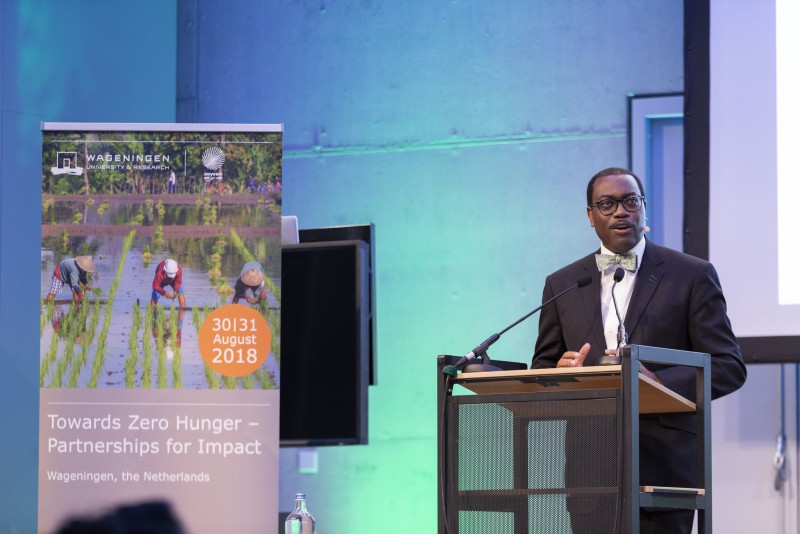
Adesina, who is making a global pitch for renewed visionary leadership and strategic alliances, “the future of food in the world will depend on what Africa does with Agriculture.”
The African Development Bank, which he leads, envisions a food secure continent which uses advanced technologies, creatively adapts to climate change, and develops a whole new generation of what he describes as ‘agripreneurs’ – empowered youth and women who he expects to take agriculture to the next level.
By 2050, an additional 38 million African will be hungry. The paradox of lack in the midst of plenty, and Africa’s growing youth bulge are some of the reasons why Adesina’s sense of urgency is resonating with numerous government, private sector, and multilateral leaders during recent European and Asian trips. The banker and 2017 World Food Prize Laureate will be the first to admit that he considers himself the ‘evangelist-in-chief’ for a food secure Africa.
Africa continues to import what it should be producing, spending $35 billion on food imports each year, a figure that is expected to rise to $110 billion in 2025 if present trends continue.
A few days later, Adesina joined Rockefeller Foundation President Raj Shah, Unilever CEO Paul Polman, and 2018 World Food Prize nominees Lawrence Haddad and David Navarro, among other prominent global academic, development, and agriculture experts at Wageningen University and Research, in the Netherlands, to make the case for urgent collective action by State and non-State players to accelerate Africa’s agricultural growth and transformation.
https://iso.keq.mybluehost.me/african-development-bank-launches-coding-for-employment-program/
Africa receives only 2 percent of the $100 billion annual revenues from chocolates globally. Adesina tells his audience that “adding value to what nations produce, is the secret to their wealth. Producing chocolate instead of simply exporting cocoa beans does not require rocket science.”
To expand opportunities for youth, women, and private sector players, Adesina is on a global mission to promote and seek support for the bank’s Affirmative Finance for Women in Africa (AFAWA) program which aims to mobilize $3 billion to support women entrepreneurs who historically lack access to finance, land, and land titles; a $300 million ENABLE Youth program to develop the next generation of agribusiness and commercial farmers for Africa; and a new global investment marketplace, the African Investment Forum, which will be held in Johannesburg November 7-9.
In separate meetings with Sigrid A.M. Kaag, Minister for Foreign Trade and Development Cooperation, in the Hague; Peter van Mierlo, CEO of the Dutch Entrepreneurial Development Bank (FMO), key private sector players, and members of the Dutch Foreign Affairs Advisory Council, Adesina said Africa and its partners must seize unprecedented opportunities for innovative partnerships and increased development impact.
Mierlo believes, “a huge benefit for Africa is that it can skip development cycles that often almost all developed countries had to go through, by deploying new technologies such as artificial intelligence and robotics in agriculture”.
In a continent where more than 640 million are without electricity, Adesina says the private sector is key to Africa’s development in Africa’s energy and agriculture sectors.
“If Africa is going to turn the tide of irregular migration, this is critical. There are three ways in which we can collaborate: either through the NEPAD Infrastructure Project Preparation Facility, Africa 50 – a private equity institution which has raised more than US$ 850 million from 22 countries, and the new Africa Investment Forum.”
Adesina, recognizes that the lack of electricity is Africa’s biggest development impediment. The Bank’s new and ambitious Desert-to-Power initiative which aims to generate 10,000MW of power across Africa’s Sahel region will be critical to reducing migration and climate change impacts. We will do this through a blended finance mechanism with guarantees”, Mr. Adesina said.
https://iso.keq.mybluehost.me/korea-announces-5-billion-financial-package-for-africa-at-afdb-annual-meetings/
Speaking to a High-level Roundtable of Dutch Business Leaders at the Netherlands Enterprise Agency (RVO), informed key private sector leaders that “governance structures and business regulatory environments are changing in Africa. Indeed, several African countries have already made significant progress in improving their general business and investment environments. Africa is doing better than some of the Asian countries,” he reminded his audience. “In the energy sector, the African Development Bank is investing $12 billion over the next 5 years, with the goal of leveraging $40-50 billion; and an additional $US 24 billion, over ten years, in agriculture to implement its Feed Africa Strategy.”
Agriculture steadily taking center-stage
The strategy is already bearing fruit with the establishment of Staple Crop Processing Zones in several African countries, including Ethiopia, Togo, Democratic Republic of Congo, and Mozambique, with a plan to reach 15 countries in a few years.
Strategically located in and around rural farming communities Adesina says “these agriculture zones will form the nucleus of a new wave of agro-industries and greenfield ventures, attracting agripreneurs, biotechnology firms, intellectual and capital investments. They will also ensure that foods are processed and packaged right where they are produced, rather than in urban centers far removed from centers of production.”
Described as a visionary optimist by many colleagues, Adesina believes the bank’s policies and investments will help turn rural areas from zones of economic misery into zones of economic prosperity.

Related
You may like
News
Iran War Disrupts Oil Supply, Global Loss Hits $50bn
Published
3 days agoon
April 18, 2026By
Mega IconThe global oil market has recorded losses exceeding $50bn following massive supply disruptions triggered by the ongoing Iran war, which has now stretched to nearly 50 days.
Data from energy analytics firm Kpler showed that more than 500 million barrels of crude oil and condensate have been wiped off the global market since the crisis began in late February, making it the largest energy supply disruption in modern history.
Iran’s Foreign Minister, Abbas Araqchi, on Friday said the Strait of Hormuz had been reopened after a ceasefire agreement reached in Lebanon.
However, tensions escalated again on Saturday as Tehran warned it could shut the strategic waterway if the United States sustains its blockade of Iranian ports.
Also, U.S. President Donald Trump expressed optimism that a deal to end the conflict could be reached “soon,” although he did not provide a definite timeline.
Analysts warned that the scale of disruption could have prolonged effects on global energy stability, with shocks expected to linger for months or even years.
Providing context, Principal Analyst at Wood Mackenzie, Iain Mowat, said the 500 million barrels lost is equivalent to grounding global aviation demand for 10 weeks, halting all road transport worldwide for 11 days, or shutting down the entire global oil supply for five days.
Further estimates showed that the lost volume is nearly equal to one month of oil demand in the United States or more than a month’s supply for Europe. It also represents about six years of fuel consumption by the U.S. military and could power global shipping activities for approximately four months.
The crisis has significantly affected oil-producing nations in the Gulf, with output losses reaching about eight million barrels per day in March—roughly equivalent to the combined production of two of the world’s largest oil companies.
Jet fuel exports from major producers, including Saudi Arabia, Qatar, the United Arab Emirates, Kuwait, Bahrain, and Oman, dropped sharply from 19.6 million barrels in February to just 4.1 million barrels recorded across March and April combined. Analysts said the shortfall could have powered about 20,000 round-trip international flights.
With crude prices averaging around $100 per barrel since the onset of the conflict, the lost volumes translate to an estimated $50bn in revenue. Experts noted that this figure is equivalent to about one per cent of Germany’s annual Gross Domestic Product, or roughly the size of the economies of smaller European countries.
Meanwhile, global onshore crude inventories have declined by about 45 million barrels in April alone, while total production outages have risen to approximately 12 million barrels per day since late March.
Industry experts cautioned that unless a lasting resolution is reached, the disruption could intensify volatility in global oil markets, worsen inflationary pressures, and further strain fragile economies worldwide.
Related
News
Oseni Secures Prestigious City People Political Award Nomination
Published
5 days agoon
April 16, 2026By
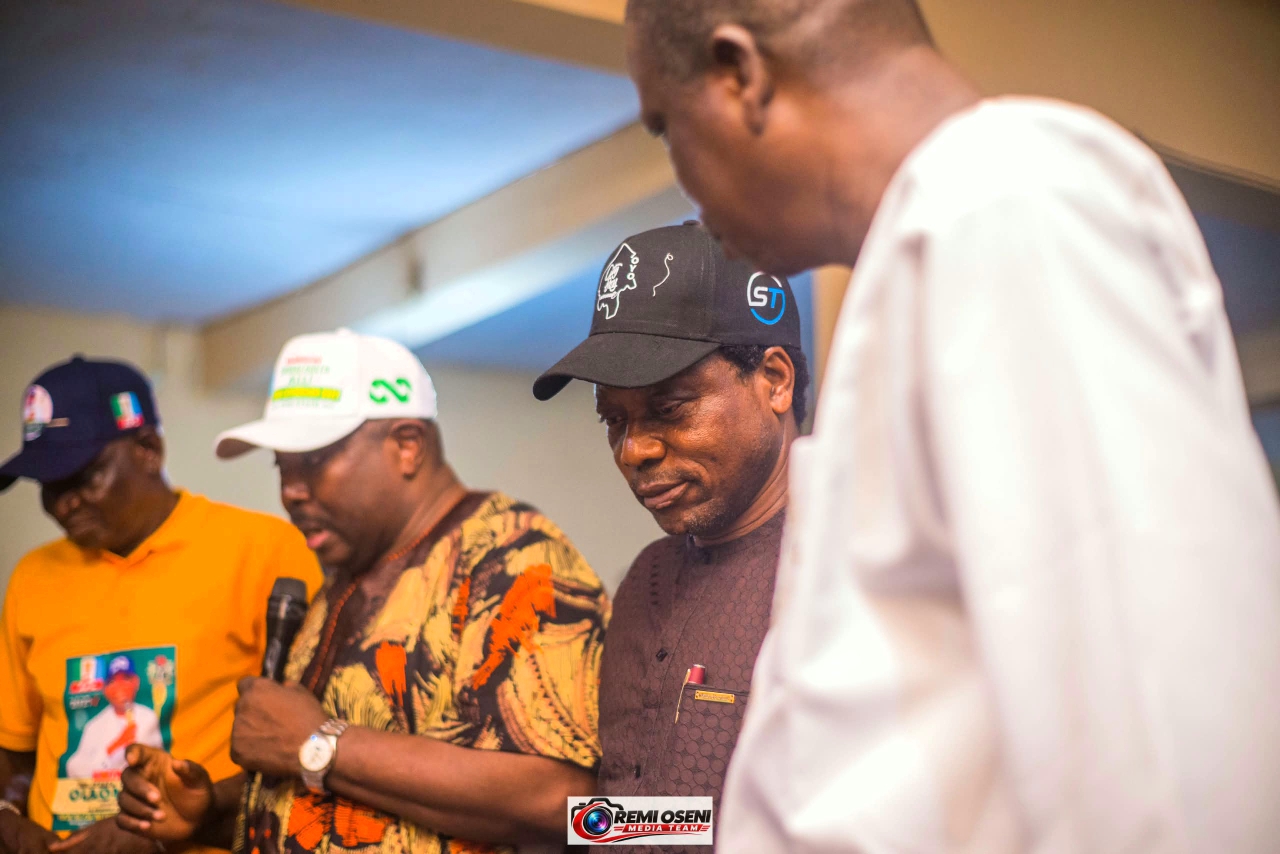
Mega IconA member of the House of Representatives representing Ibarapa East/Ido Federal Constituency and Chairman of the House Committee on Federal Roads Maintenance Agency, Aderemi Oseni, has been nominated for a Special Award in Politics at the 2026 City People Political Awards.
The nomination was conveyed in a letter dated April 13, 2026, signed by the Publisher/Editor-in-Chief of City People Magazine, Seye Kehinde.
The development was disclosed in a statement issued by Oseni’s media aide, Idowu Ayodele, and made available to journalists in Ibadan on Thursday.
According to the statement, the lawmaker earned the nomination in recognition of his “outstanding contributions to politics in Oyo State, particularly in Ibarapa East/Ido Federal Constituency.”
The organisers noted that Oseni emerged as a nominee following a comprehensive review of performances across sectors by the award’s selection committee.
Part of the letter read, “Having performed creditably well in your sector last year, the Organising Committee presented you as a nominee in your sector.”
The award ceremony is scheduled to hold on Sunday, May 3, 2026, at Etal Hall, Kudirat Abiola Way, Oregun, Ikeja, Lagos, at 4pm.
The City People Awards is an annual event that recognises individuals who have distinguished themselves in governance, public service and other sectors of national development.
Related
News
Kaduna Electric to prosecute, expose attackers of staff
Published
5 days agoon
April 16, 2026By
Mega IconThe Kaduna Electricity Distribution Company has announced a crackdown on individuals who assault its staff, warning that offenders will face prosecution and public exposure.
In a statement issued on Thursday, the company expressed concern over what it described as a “disturbing surge” in attacks on its field workers and third-party partners.
It noted that the affected personnel were mainly engaged in meter installation, revenue collection and maintenance of electricity infrastructure.
According to the firm, the increasing cases of harassment, physical assault and unlawful detention of its workers pose a serious threat to employee safety and the stability of electricity service delivery across its franchise areas.
The Deputy Managing Director, Abubakar Mohammed, said the company would no longer tolerate any form of aggression against its workforce.
“Let this serve as a clear warning to anyone who engages in the assault of our staff. Kaduna Electric will pursue every case to its logical conclusion,” he said.
“We will work closely with security agencies to ensure offenders are brought to justice and face the full weight of the law,” Mohammed added.
He further disclosed that the company would publicly reveal the identities of individuals found culpable.
According to him, names, photographs and other details of offenders would be published on the company’s official platforms as well as in national and local media.
“This measure is intended to ensure accountability and serve as a strong deterrent. Anyone who chooses to attack our personnel should be prepared not only to face prosecution but also public exposure,” he added.
The company stressed that assaults on utility workers attract serious legal and financial consequences, noting that offenders risk criminal charges that may lead to fines or imprisonment.
It added that perpetrators could also face civil liabilities, including compensation for medical treatment, psychological trauma and loss of work hours.
While condemning the attacks, Kaduna Electric urged customers to adopt peaceful and lawful means of resolving disputes.
It advised aggrieved customers to channel complaints through its customer service units or appropriate regulatory bodies.
The management reaffirmed its commitment to protecting its workforce and partners, stressing that a safe working environment is essential for delivering reliable and efficient electricity services.
Although disputes between electricity providers and consumers are often linked to billing issues, metering challenges and service delivery concerns, the company maintained that such matters must be resolved through dialogue, insisting that violence against its staff will no longer be tolerated.
Related
Advertisement
Entertainment
Adekunle Gold, Simi welcome twins
Ayefele drops new album, Reflections
Reggae Legend, Jimmy Cliff, Dies At 81
Photos: Davido blows $3.7m on lavish Miami white wedding for Chioma
FAAN probes K1 for spilling alcohol on airport officer during boarding
Odunlade Adekola loses father
MegaIcon Magazine Facebook Page
MEGAICON TV
Advertisement
Trending
-
News1 week ago500,000 risk eviction as Ibadan landlords reject Makinde’s 1,000m road plan
-
News5 days agoOseni Secures Prestigious City People Political Award Nomination
-
National Issues1 week ago48 alleged terror financiers named by FG {SEE FULL LIST}
-
Health5 days agoOyo confirms Lassa fever death in Ibadan, activates emergency response, traces contacts