Connect with us

News

ADEA commends Ghana’s, Seychelles’ for strong Higher Education Management Information System.

Published

on

THE Association for the Development of Education in Africa (ADEA) congratulated Ghana and Seychelles for having well-developed management information systems for their higher education institutions.

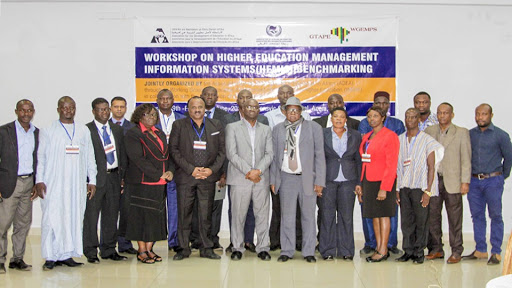
This was at a technical workshop on Higher Education Management Information Systems (HEMIS) benchmarking organized by ADEA’s Working Group on Education Management and Policy Support (WGEMPS) and that of Higher Education (WGHE), in collaboration with the Association of African Universities (AAU). The technical workshop took place in Accra (Ghana) from 29th to 30th of June 2017.

The workshop attracted 25 participants, among them Prof. Mohammed Salifu, the Executive Secretary of the Ghana National Council for Tertiary Education (NCTE), who was the Chairperson during the opening session. Other key delegates included Dr. Yohannes Woldetensae, Senior Education Expert, African Union Commission (AUC); Ms. Rachel Ogbe, Principal Programme Officer for Education, Economic Community of West African States (ECOWAS); Mr. David Blaise Ossene, Education and Culture Expert, Economic Community of Central African States (ECCAS); Ms. Nodumo Dhlamini, Director of  ICT Services & Knowledge Management, AAU; several senior HEMIS experts from Burkina Faso, Ghana, Mauritius, Senegal; senior Educational Management Information Systems (EMIS) experts from the University of Moundou in Chad and from five universities from Ghana (Kwame Nkrumah University of Science and Technology; University of Cape Coast; University of Ghana; University of Mines and Technology and University for Professional Studies of Accra). ADEA’s WGEMPS and WGHE staff as well as different media representatives were also in attendance.

The workshop aimed to build a strong HEMIS to provide quality information that supports informed decision making in leadership, governance and management of higher education institutions, and for facilitating sound sector planning, monitoring and evaluation, financing and quality assurance. This will be done by identifying best practices, and needs in terms of capacity building and strategy development with specific areas that the universities would provide.

Higher Education is one of education sub sectors in Africa where it is very difficult to get comprehensive and reliable statistics

The opening session included key note speeches from representatives of AAU, AUC, ECOWAS, ADEAWGEMPS and NCTE. All the speakers lamented on the numerous challenges in the collection, compilation and analysis of statistical data in higher education sub sector in particular at institutional level in Africa. They also mentioned the lack of clear and comprehensive indicators to underpin the monitoring and evaluation framework for the Higher Education sector. These indicators are critical for tracking the implementation of the Continental Education Strategy for Africa 2016 – 2025 (CESA 16-25), Africa’s Agenda 2063 and the 2030 Global Agenda for Sustainable Development Goals (SDGs), in particular SDG 4 on “Quality Education”.

Mr. Makha Ndao, WGEMPS Coordinator, speaking on behalf of Ms. Oley Dibba-Wadda, the ADEA Executive Secretary, stressed the difficulty of obtaining comprehensive and reliable statistics for the higher education sub sector. “Higher Education is one of education sub sectors in Africa where it is very difficult to get comprehensive and reliable statistics. Only 2 out of 23 countries (i.e. Ghana and Seychelles) in Sub-Saharan Africa completed the Higher and Tertiary Education questionnaire to UNESCO Institute for Statistics in 2015”, said Mr. Ndao. He cited coordination of the fragmented and parallel systems in place as one of the biggest challenges in many countries: the monitoring of education systems is the responsibility of multiple ministries, agencies and departments across different levels of government. Mr. Ndao reiterated ADEA’s and AAU’s commitment to support countries to systematically examine and strengthen the performance of their HEMIS using the country led Norms and Standards tools.

Prof. Mohammed Salifu, Executive Secretary of NCTE, in his opening statement agreed that access to basic information in the higher education sub-sector was a challenge. However, he expressed his gratitude to the organizers of the HEMIS workshop and also acknowledged the fact that Ghana was one of the two countries that have been consistent in reporting and providing higher education data. “We know that African universities are the sources of data on higher education and we are keen to strengthen their capacities to capture and provide information for national, regional and continental needs”, Ms. Nodumo Dhlamini, AAU’s Director of Information and Communications Technology Services and Knowledge Management and ADEA’s WGHE Coordinator stated during her intervention. In addition, she reminded the meeting that this workshop was a follow up from the AUC recommendations that ADEA would use the lessons learnt based on the EMIS Norms and Standards to help strengthen the African Universities’ HEMIS.

In his remarks, Dr. Yohannes Woedetensae, AUC’s Senior Education Expert also emphasized that benchmarking of HEMIS would be supportive and complementary to the African Quality Rating Mechanism. He said robust management information system were essential for effective policy development based on sound, accurate, timely and meaningful statistical information.

Lastly, Ms. Rachael J. Ogbe, Principal Programme Officer, ECOWAS, expressed her delight for the timely august gathering. She pointed out that EMIS was a key priority for the ECOWAS region. She also praised ADEA for being a very reliable partner in developing the EMIS Norms and Standards since the process of strengthening the management information system in the region started in Lomé in 2010. The joint collaboration between ECOWAS and ADEA has also resulted in the useful EMIS Peer Reviews in Ghana and Mali. To this end, she was hopeful that this collaboration would continue to ensure that a lasting solution is found for EMIS in general.

Mr. Youssouf Ario Maiga, WGEMPS Programs Manager and Mr. Alpha Bah, WGEMPS resource person led the facilitation of the workshop with technical backstopping thanks to Mr. Kwesi Acquah Sam from the AAU Secretariat and member of ADEA/WGHE.

Comments

News

Iran War Disrupts Oil Supply, Global Loss Hits $50bn

Published

on

The global oil market has recorded losses exceeding $50bn following massive supply disruptions triggered by the ongoing Iran war, which has now stretched to nearly 50 days.

Data from energy analytics firm Kpler showed that more than 500 million barrels of crude oil and condensate have been wiped off the global market since the crisis began in late February, making it the largest energy supply disruption in modern history.

Iran’s Foreign Minister, Abbas Araqchi, on Friday said the Strait of Hormuz had been reopened after a ceasefire agreement reached in Lebanon.

However, tensions escalated again on Saturday as Tehran warned it could shut the strategic waterway if the United States sustains its blockade of Iranian ports.

Also, U.S. President Donald Trump expressed optimism that a deal to end the conflict could be reached “soon,” although he did not provide a definite timeline.

Analysts warned that the scale of disruption could have prolonged effects on global energy stability, with shocks expected to linger for months or even years.

Providing context, Principal Analyst at Wood Mackenzie, Iain Mowat, said the 500 million barrels lost is equivalent to grounding global aviation demand for 10 weeks, halting all road transport worldwide for 11 days, or shutting down the entire global oil supply for five days.

Further estimates showed that the lost volume is nearly equal to one month of oil demand in the United States or more than a month’s supply for Europe. It also represents about six years of fuel consumption by the U.S. military and could power global shipping activities for approximately four months.

The crisis has significantly affected oil-producing nations in the Gulf, with output losses reaching about eight million barrels per day in March—roughly equivalent to the combined production of two of the world’s largest oil companies.

Jet fuel exports from major producers, including Saudi Arabia, Qatar, the United Arab Emirates, Kuwait, Bahrain, and Oman, dropped sharply from 19.6 million barrels in February to just 4.1 million barrels recorded across March and April combined. Analysts said the shortfall could have powered about 20,000 round-trip international flights.

With crude prices averaging around $100 per barrel since the onset of the conflict, the lost volumes translate to an estimated $50bn in revenue. Experts noted that this figure is equivalent to about one per cent of Germany’s annual Gross Domestic Product, or roughly the size of the economies of smaller European countries.

Meanwhile, global onshore crude inventories have declined by about 45 million barrels in April alone, while total production outages have risen to approximately 12 million barrels per day since late March.

Industry experts cautioned that unless a lasting resolution is reached, the disruption could intensify volatility in global oil markets, worsen inflationary pressures, and further strain fragile economies worldwide.

Continue Reading

News

Oseni Secures Prestigious City People Political Award Nomination

Published

on

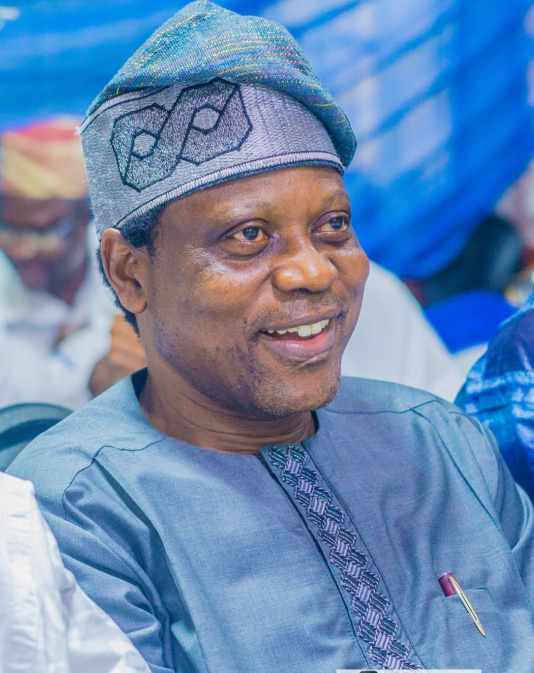
A member of the House of Representatives representing Ibarapa East/Ido Federal Constituency and Chairman of the House Committee on Federal Roads Maintenance Agency, Aderemi Oseni, has been nominated for a Special Award in Politics at the 2026 City People Political Awards.

The nomination was conveyed in a letter dated April 13, 2026, signed by the Publisher/Editor-in-Chief of City People Magazine, Seye Kehinde.

The development was disclosed in a statement issued by Oseni’s media aide, Idowu Ayodele, and made available to journalists in Ibadan on Thursday.

According to the statement, the lawmaker earned the nomination in recognition of his “outstanding contributions to politics in Oyo State, particularly in Ibarapa East/Ido Federal Constituency.”

The organisers noted that Oseni emerged as a nominee following a comprehensive review of performances across sectors by the award’s selection committee.

Part of the letter read, “Having performed creditably well in your sector last year, the Organising Committee presented you as a nominee in your sector.”

The award ceremony is scheduled to hold on Sunday, May 3, 2026, at Etal Hall, Kudirat Abiola Way, Oregun, Ikeja, Lagos, at 4pm.

The City People Awards is an annual event that recognises individuals who have distinguished themselves in governance, public service and other sectors of national development.

Continue Reading

News

Kaduna Electric to prosecute, expose attackers of staff

Published

on

The Kaduna Electricity Distribution Company has announced a crackdown on individuals who assault its staff, warning that offenders will face prosecution and public exposure.

In a statement issued on Thursday, the company expressed concern over what it described as a “disturbing surge” in attacks on its field workers and third-party partners.

It noted that the affected personnel were mainly engaged in meter installation, revenue collection and maintenance of electricity infrastructure.

According to the firm, the increasing cases of harassment, physical assault and unlawful detention of its workers pose a serious threat to employee safety and the stability of electricity service delivery across its franchise areas.

The Deputy Managing Director, Abubakar Mohammed, said the company would no longer tolerate any form of aggression against its workforce.

“Let this serve as a clear warning to anyone who engages in the assault of our staff. Kaduna Electric will pursue every case to its logical conclusion,” he said.

“We will work closely with security agencies to ensure offenders are brought to justice and face the full weight of the law,” Mohammed added.

He further disclosed that the company would publicly reveal the identities of individuals found culpable.

According to him, names, photographs and other details of offenders would be published on the company’s official platforms as well as in national and local media.

“This measure is intended to ensure accountability and serve as a strong deterrent. Anyone who chooses to attack our personnel should be prepared not only to face prosecution but also public exposure,” he added.

The company stressed that assaults on utility workers attract serious legal and financial consequences, noting that offenders risk criminal charges that may lead to fines or imprisonment.

It added that perpetrators could also face civil liabilities, including compensation for medical treatment, psychological trauma and loss of work hours.
While condemning the attacks, Kaduna Electric urged customers to adopt peaceful and lawful means of resolving disputes.

It advised aggrieved customers to channel complaints through its customer service units or appropriate regulatory bodies.

The management reaffirmed its commitment to protecting its workforce and partners, stressing that a safe working environment is essential for delivering reliable and efficient electricity services.

Although disputes between electricity providers and consumers are often linked to billing issues, metering challenges and service delivery concerns, the company maintained that such matters must be resolved through dialogue, insisting that violence against its staff will no longer be tolerated.

Continue Reading

Advertisement

Entertainment

Advertisement

MegaIcon Magazine Facebook Page

Advertisement

MEGAICON TV

Advertisement

Trending