Business
A paradigm shift for conflict-affected rice producers in rural Borno









Sedabuk Oil and Gas Industry Limited has been listed among the 100 Safe Companies to Do Business With in Africa for 2025 by Emerging Elites Magazine International, in recognition of the firm’s integrity-driven operations, strict compliance culture, and employee-focused policies.
The award was presented to the Managing Director of the company, Engr. Adunola Oseni, at a ceremony attended by members of Sedabuk’s management and staff, alongside the editorial board and team of Emerging Elites Magazine in Lagos.
Presenting the award, the Editor-in-Chief of Emerging Elites Magazine International, Princess Olivia Chukwuma, said Sedabuk emerged after a “thorough, transparent and merit-based selection process” designed to identify African businesses that exemplify excellence and ethical conduct.
According to her, the 100 Safe Companies to Do Business With in Africa Award is an international initiative created to recognise indigenous African companies with proven records of integrity, safety, and best business practices, noting that awardees are continuously monitored and recertified every three years if standards are sustained.
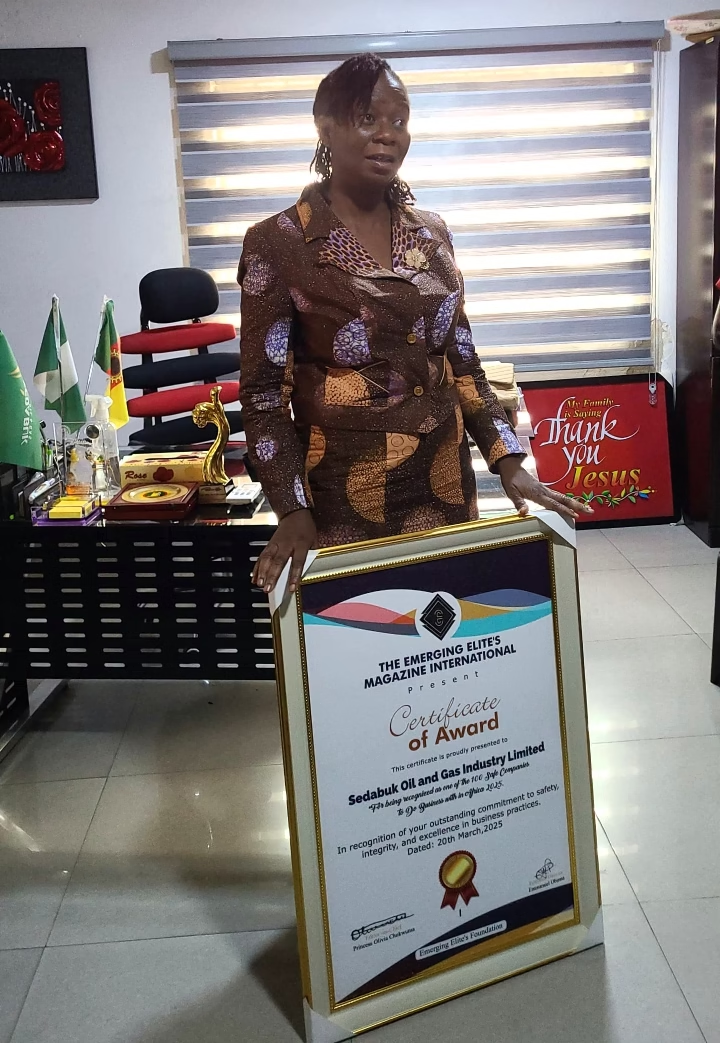
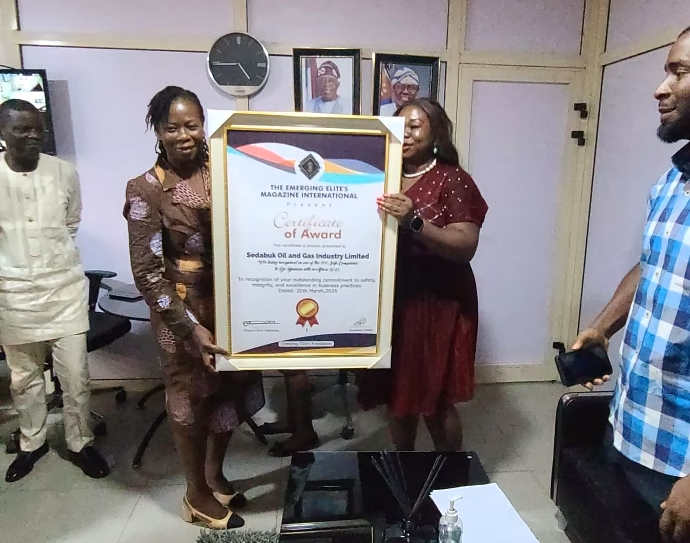
The MD of Sedabuk Oil and Gas Industry Limited, Engr. Adunola Oseni, poses with the Certificate of Award shortly after the company was recognised among Africa’s 100 safest companies to do business with.
Chukwuma said Sedabuk was selected for its employee-centric culture, stressing that the company has no record of unpaid salaries since inception, maintains fair wages, and prioritises staff welfare through initiatives such as its “One Nutritional Meal a Day” programme, which she described as “rare and commendable” in Nigeria’s oil and gas sector.
She also cited the firm’s zero-tolerance policy for fraud, recalling a June 2022 incident in which a pump attendant was sanctioned for under-dispensing fuel while affected customers were compensated, an action she said “clearly reflects Sedabuk’s philosophy of integrity in service delivery.”
Other factors that earned the company the award, she said, include its reputation for honouring contracts, absence of contract-related court cases, strict adherence to safety standards, and voluntary compliance with regulatory obligations, taxes, and statutory dues without coercion.
“With these attributes and more, Sedabuk Oil and Gas has become a beacon of hope—a new breed of Nigerian company that is trustworthy, valuable, and safe to do business with,” Chukwuma said, as she inducted the firm into the Hall of Fame of the 100 Businesses Safe to Do Business With in Africa 2025.

MD, Engr.Adunola Oseni and staff of Sedabuk Oil and Gas Industry Limited during the presentation of a Certificate of Award by The Emerging Elites Magazine International, honouring the company’s adherence to safety standards and best business practices.
Responding, the Managing Director, Engr. Adunola Oseni described the recognition as “a validation of our core values and a strong motivation to do more,” adding that the award belonged to the entire workforce of the company.
“We will continue to uphold integrity, safety, and transparency in all our operations, remain committed to staff welfare and regulatory compliance, and set standards that others in the industry can emulate,” the Sedabuk boss said.
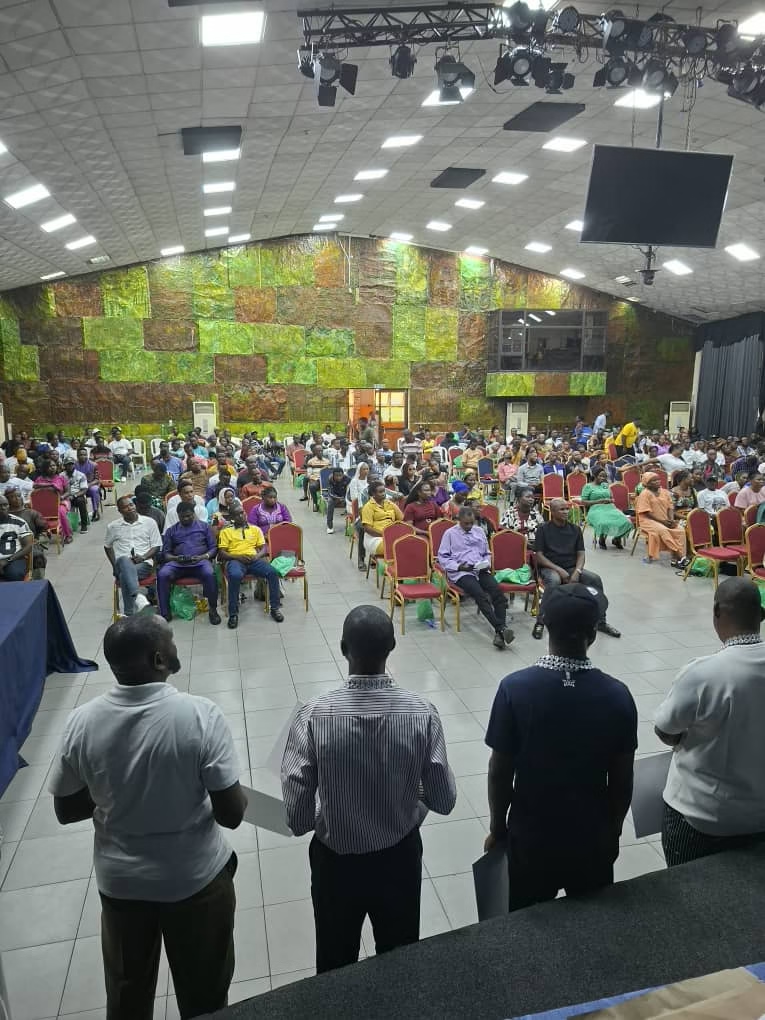
Sedabuk Oil and Gas Industry on Tuesday reinforced its reputation as a people-centred organisation as it rewarded outstanding employees with cash prizes totalling over ₦10 million at its 2025 Employee Recognition and Awards ceremony held in Lagos.
The event, which attracted over 300 staff members alongside top management officials from across the company’s divisions and subsidiaries, was organised to celebrate excellence, dedication, and loyalty within the Sedabuk workforce.
Speaking at the ceremony, the Managing Director, Engr. Adunola Oseni, described the occasion as one of the proudest moments in the company’s journey, noting that Sedabuk’s steady growth has been deliberately anchored on staff welfare and well-being. She said the company, from inception, made a firm commitment to put its people first, stressing that no organisation can truly thrive if its workforce is neglected.
Oseni disclosed that Sedabuk has never owed or delayed salaries since it commenced operations, describing prompt payment as a mark of respect and responsibility. She added that the company reviewed and increased salaries twice in 2025, improved wages across the board, and sustained its seven-year-old One-Day-Meal Programme to ensure employees do not work hungry.
The managing director announced cash awards spanning retail operations, station-based roles, marts, laundromats, and group-wide excellence categories, explaining that the initiative was not just about financial rewards but about recognising hard work and reinforcing a culture of appreciation. According to her, a loyal and motivated workforce remains the company’s most valuable asset.
She assured staff that management is entering 2026 with stronger welfare policies, better incentives, and more opportunities, with the aim of positioning Sedabuk as one of the best organisations to work in Nigeria. Oseni further urged employees to raise the bar in the coming year by working harder, smarter, and together.
Several employees emerged winners across key categories, including Pump Attendant of the Year, Station Captain of the Year, Mart and Laundromat Excellence Awards, and Special Recognition honours.
The highlight of the ceremony was the Group Chairman’s Spirit of Excellence Award, where Adediran Segun Aderonke emerged Sedabuk Star of the Year with a ₦2 million prize, while Ibiloye Olayinka won the Most Outstanding Employee of the Year award with ₦1 million.
In his remarks, the Group Head, Human Resources and Administration, Mr. Adeleye Olusanjo, lauded the managing director for her consistent leadership and unwavering commitment to staff welfare, assuring employees that more incentives and improved support structures are already being planned for 2026.
The event was attended by senior executives, including the General Manager, Finance and Strategy, Mr. Aderoju Sola; the Group Head, Operations and Logistics, Mr. Rufus Enioshunwa; and the Group Head, Corporate Audit, Risks and Ethics, Mrs. Tolulope Omotola, among others.
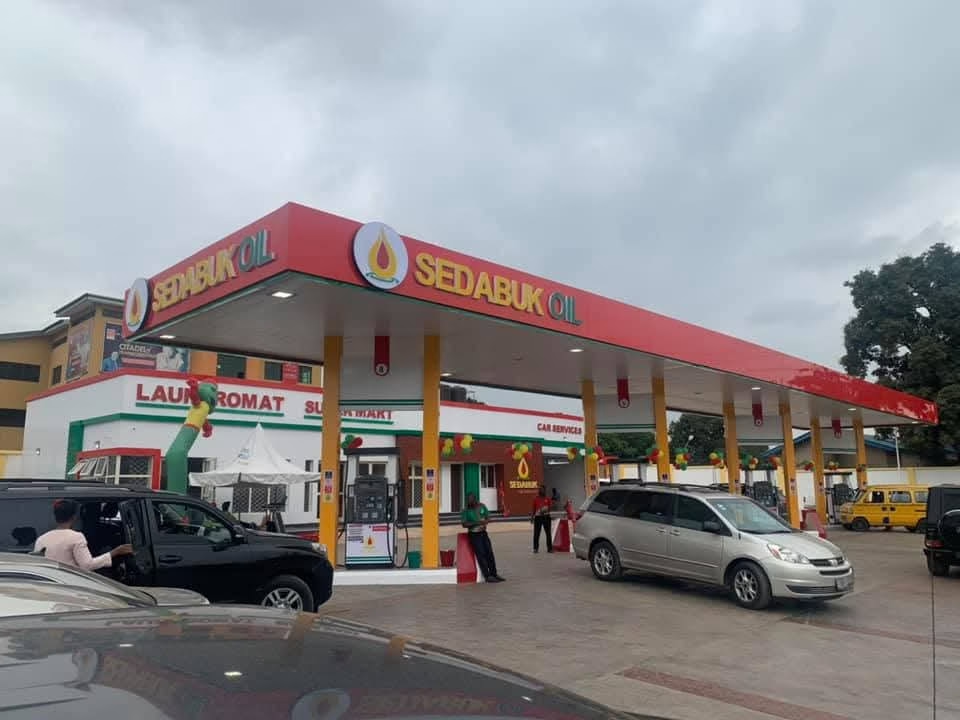
Established in 2018, Sedabuk Oil & Gas Industry Ltd operates over 12 petrol stations across Lagos, Ogun, and Oyo states.

Alli hails Tinubu, Uzodimma over rescue of 20 Oyo corps members

2027: Oseni condemns attack on campaign train, demands probe

2027: Oseni urges Oyo voters to collect PVCs as INEC begins distribution



-
 Politics2 weeks ago
APM Rally: APC Tackles Makinde Over Use of ‘CAF-Rejected’ ₦5.5bn Stadium
-
News4 weeks ago
Oyo South: Oseni Approves N100m for Ibadan Community Road Rehabilitation
-
Politics4 weeks ago
Oyo 2027: Alli appoints Oladele, Olaosebikan, Tunji media directors
-
Politics4 weeks ago
Oyo South: Ibadan security groups back Oseni’s senatorial bid