Connect with us

News

Facebook’s Chief Product Officer storms Ghana to learn from its tech, creative talent

Published

on

Chris Cox, Chief Product Officer at Facebook, visited the Meltwater Entrepreneurial School of Technology (MEST) in Accra, Ghana yesterday  to meet with Ghanaian entrepreneurs and see how they are working to build sustainable technology businesses. Later in the day he witnessed the force of Ghana’s creative talent in an event at ANO Gallery, which was co-hosted by ANO Gallery and Bless the Mic.

Chris’s visit is part of a week-long trip to Nigeria, Ghana and Senegal where Chris is keen to understand how creatives, developers and entrepreneurs are using mobile technology to create services, content and businesses that address local needs.

Says Cox: “With Facebook and its family of apps, we aim to give people around the world the ability to connect with each other, grow their businesses and tell their own stories. I am excited to see how Ghana’s entrepreneurs are using mobile, video and other technologies to build products and services that empower the community and that address local needs or solve local problems in innovative ways.”

The Meltwater Entrepreneurial School of Technology and the MEST Incubator program provide training, investment and mentoring for aspiring technology entrepreneurs with the goal of creating globally successful companies that create wealth and jobs locally in Africa. Each year top graduates from Ghana, Nigeria, Kenya and South Africa are selected to receive comprehensive training across the spectrum of skills required to build successful tech businesses, including computer programming, software development and product management.

Jorn Lyseggen, CEO of Meltwater and Founder of MEST, says: “We’re excited to host Facebook at MEST and to share how we can work together to drive innovation in Africa. Mobile technology is giving people in Africa new opportunities to become entrepreneurs and content creators – and we were proud to show the Facebook team how young companies and entrepreneurs on our programme are making a difference.”

Nana Opoku Agyeman-Prempeh, CEO, Asoriba, says: “Churches are one of the oldest and most powerful forms of social networking. Platforms such as Asoriba and Facebook help them give their congregations access to more information and stay in touch with churches and congregation members worldwide, especially in the diaspora.”

“I’ve been honoured to meet some of Ghana’s top talent today and here how they are using technology to share their stories and perspectives within Ghana and around the globe”.

Edwin Tsatsu Selormey, CEO, Devless, says: “Thanks to the cloud, African startups can get to market with solutions tailored to the needs of their own territories as well as target a global customer base. We are pleased that companies such as Facebook are investing in and supporting Africa’s growing technology industry.”

Cox later attended an event at the ANO Gallery where he was part of a panel discussion with art, music, food and fashion design entrepreneurs, discussing how they use the Facebook and Instagram to tell powerful and engaging stories to audiences in Ghana and beyond.

Director of ANO Institute of Contemporary Arts Nana Oforiatta-Ayim, says: “I was very happy to introduce some of Ghana’s talented artists to the team at Facebook. I am passionate about showcasing Ghana’s art and cultural narratives to the world and platforms like Facebook offer powerful new ways do that.”

The event brought together a host of local talent including Bless the Mic, a platform for local and international artists to showcase their talent in Ghana. Bless the Mic began in 2006 where they organised weekly small scale open-mic nights in bars and pubs across Accra for young poets and hip hop artists to rhyme and battle. In 2017 things are now on a larger scale, Bless The Mic has graduated to big concert events whilst helping to launch the careers of many of Ghana’s now leading musicians.

PY Addo-Boateng Creative Director of Bless The Mic said: “Facebook and Instagram have given music fans new ways to interact with their favourite artists and bands – from behind the scenes photos to LIVE videos from gigs. For Bless the Mic it’s been one of the ways we’ve been able to to take Ghanian music to people across the world. But more than that, it has enabled us to be part of a global community that is truly passionate about creativity and music.”

Ghanaian musician M.anifest appeared on the panel and said, “We have some really compelling stories to share in Ghana, not just with other Ghanaians but with audiences around the world. The remarkable thing about Facebook is that it gives us cutting-edge and exciting new ways to connect with people and to tell our stories ourselves and in our own way.”

Chris Cox said: “Stories matter, whether it’s the stories of our lives or the story of Africa’s growth and ascendance. We want Ghana’s storytellers — the musicians, the filmmakers, the bloggers — to take their stories to the rest of the world. I’ve been honoured to meet some of Ghana’s top talent today and hear how they are using technology to share their stories and perspectives within Ghana and around the globe.”

Comments

News

Ajimobi’s Legacy Still Guides Us, Oladele Urges Oyo APC Unity

Published

on

A chieftain of the All Progressives Congress in Oyo State and aspirant for the Irepo/Oorelope/Olorunsogo Federal Constituency seat in the 2027 general elections, Hon. Bosun Oladele, has called on members of the party and the wider progressive family in the state to embrace unity in order to preserve and advance the legacy of the late former Governor, Senator Abiola Ajimobi.

Oladele made the appeal on Thursday as political associates, loyalists and admirers marked the remembrance of the former governor, whose administration was widely associated with the popular slogan, “Koseleri.”

In a statement he personally issued,  the federal lawmaker hopeful described Ajimobi as a visionary leader whose passion for development transformed Oyo State and left an enduring footprint in its political history.

According to him, the annual remembrance of the late governor offers an opportunity for progressives to reflect on the ideals, discipline and commitment that defined Ajimobi’s leadership.

“It is that time of the year to remember the passion that once drove the developmental strides of the Pace Setter State, the centre of politics in Nigeria and a state renowned for many firsts,” Oladele said.

He noted that although the former governor had departed, his contributions to governance and public service remain fresh in the minds of many residents and party faithful.

“Oyo State still misses his sharp mind, problem-solving abilities, oratory prowess, focused leadership and developmental initiatives. His style of governance inspired confidence and demonstrated what purposeful leadership could achieve,” he stated.
Oladele stressed that Ajimobi’s legacy should continue to serve as a source of inspiration for members of the APC, urging them to close ranks and work towards a common goal.

“Even though he is gone, his legacy gives the progressive family in Oyo State hope that the future he envisioned for our dear state remains achievable through oneness and unity of purpose.

“I therefore call on all members of the APC and the progressive family at large to join hands, put aside differences and work together towards winning future elections as part of efforts to actualise the developmental aspirations our departed leader had for Oyo State,” he added.

The APC stalwart also prayed for the repose of Ajimobi’s soul and sought divine strength for his family, particularly his widow, Ambassador Florence Ajimobi, as she continues to shoulder public and private responsibilities.

He expressed optimism that Oyo State would once again witness progressive governance driven by visionary leadership, inclusiveness and a shared commitment to the welfare of the people.

Continue Reading

News

Senate passes state police bill, governors to appoint CPs

Published

on

The Senate on Wednesday passed a bill seeking to amend the 1999 Constitution to establish state police services across the country, a major milestone in ongoing efforts to decentralise policing and tackle Nigeria’s worsening security challenges.

The proposed legislation introduces a dual policing framework comprising a Federal Police Service and State Police Services, effectively replacing the existing structure under which policing is exclusively controlled by the Federal Government through the Nigeria Police Force.

The bill was passed after Senate Leader, Opeyemi Bamidele, presented its general principles on the floor of the Red Chamber.

It subsequently scaled second reading, underwent a rigorous clause-by-clause consideration and was passed for third reading after securing the support of more than two-thirds of the senators.

A key provision of the constitutional amendment empowers governors to appoint Commissioners of Police for their respective states, subject to confirmation by the state Houses of Assembly.

Clause 17 of the bill provides that a State Police Service shall be headed by a Commissioner of Police appointed by the governor on the recommendation of the National Police Council and confirmed by the House of Assembly of the state.

The proposed law further defines the operational relationship between governors and state police commands, allowing governors to issue lawful written directives of a general policy nature to Commissioners of Police on matters relating to the maintenance of public safety and order within their states.

To address widespread concerns over possible abuse of the proposed policing structure, lawmakers incorporated safeguards aimed at protecting political freedoms and civil liberties.

The bill expressly states that a state Commissioner of Police shall not arrest, detain, investigate or deploy force against any individual, political party or group merely for criticising the government, except in accordance with the law.

The provision is intended to prevent state police formations from being used to intimidate political opponents, activists, journalists and other dissenting voices while ensuring that all actions taken conform with due process.

The amendment also empowers the Federal Police Service to temporarily intervene in the internal security affairs of a state where there is an actual or imminent breakdown of public order or public safety which the state police are unable or unwilling to contain.

Such intervention must be authorised in writing by the President, who is required to state the grounds, territorial scope, functions and duration of the operation.

The President must also notify the governor, the Speaker of the state House of Assembly, the National Police Council and the National Assembly within 48 hours of the commencement of the intervention.

The bill further provides that no federal intervention shall continue beyond a period to be prescribed by an Act of the National Assembly unless approved by a resolution of the Senate.

The Senate’s approval came barely a day after President Bola Tinubu transmitted the bill to the National Assembly as part of his administration’s efforts to reform Nigeria’s security architecture.

According to the President, the proposed amendment is designed to provide a legal framework for a dual policing structure that would allow states to establish and operate their own police services alongside the federal police.

Tinubu said the proposal is a critical component of ongoing efforts to reorganise the country’s policing system, enhance security and better protect citizens, adding that communities, municipalities and local government areas would play more active roles in policing responsibilities under the new arrangement.

The renewed push for state police comes amid growing concerns over insecurity, banditry and mass kidnappings across parts of the country.

Supporters of the proposal argue that decentralised policing would strengthen grassroots intelligence gathering, deepen community-based security initiatives and ensure quicker responses to crimes and emergencies.

Critics, however, have cautioned against possible political interference by governors, funding challenges and the risk of exacerbating ethnic or communal tensions.

Tinubu had earlier described state police as inevitable in addressing the nation’s security challenges and urged lawmakers to fast-track constitutional amendments aimed at bringing the proposal to fruition.

Continue Reading

News

Tinubu sends state police bill to Senate

Published

on

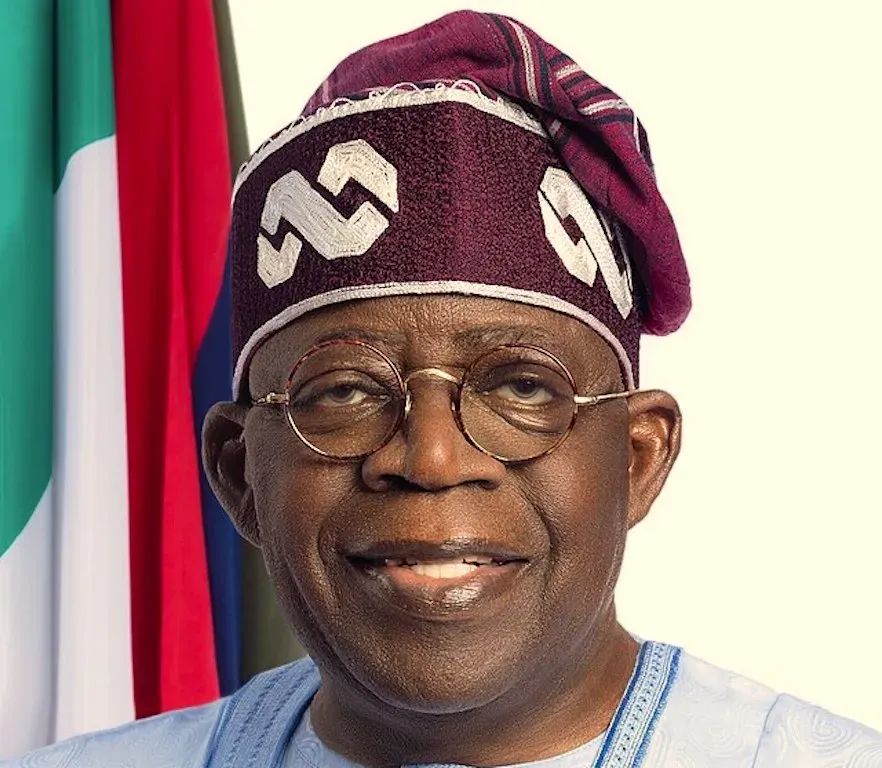
President Bola Tinubu has transmitted a Constitution Alteration Bill to the Senate seeking the establishment of state police as part of efforts to reform Nigeria’s security architecture.

The proposed legislation, contained in a communication dated June 15, 2026, was read during plenary on Tuesday by Senate President Godswill Akpabio.

Tinubu said the bill was aimed at providing a legal framework for a dual policing structure that would allow states to establish and operate their own police services alongside the Nigeria Police Force.

According to the President, the proposed amendment forms a key component of ongoing efforts to restructure the country’s policing system to improve security and enhance the protection of lives and property.

He explained that under the arrangement, communities, municipalities and local government areas would play more active roles in policing, enabling local authorities to detect suspicious activities and promptly relay intelligence to security agencies.

Following the presentation, Akpabio referred the bill to the Senate Committee on Constitution Review and directed it to report back on Wednesday.

Speaking on the importance of community-based policing, the Senate President said local authorities were better placed to identify security threats and support proactive responses by law enforcement agencies.

“You will know when foreigners infiltrate Nigeria and alert security agencies so they can react proactively rather than reactively,” he said.

Akpabio expressed optimism that sustained collaboration between the executive and legislative arms would ensure the successful passage and implementation of the initiative.

He disclosed that the process would be undertaken in phases through constitutional amendments and subsequent Acts of Parliament.

“We will do it in two phases through alteration and an Act of Parliament. There will be a lot of safeguards; let us come and do this important task. It is extremely important that we come tomorrow,” he said.

The Senate President also informed lawmakers that plenary would not entertain other major business following the death of a member of the House of Representatives, Yahaya Tongo of Gombe State.

Similarly, the Senate Leader urged senators to attend the next sitting, stressing the significance of the proposed state police framework.

“We need a minimum of two-thirds of members to vote on constitutional alterations. The issue of state police is non-partisan and cuts across geopolitical zones and interests,” he said.

The latest development came barely two weeks after the Senate passed an executive bill on state police for second reading.

Akpabio said the fresh Constitution Alteration Bill transmitted by the President builds on the earlier proposal and seeks to provide the constitutional foundation necessary for the establishment and operation of state police services across the country.

Continue Reading

Advertisement

Entertainment

Advertisement

MegaIcon Magazine Facebook Page

Advertisement

MEGAICON TV

Advertisement

Trending