Connect with us

Opinion

Ibadan blast, Abuja kidnaps and calamities

Published

on

Big calamities seldom knock before opening the door. Calamities’ sneaky essence is articulated in one song by grand old Odolaye Aremu, Ilorin, Kwara state-born Dadakuada song minstrel. While philosophizing the concept of calamity, which Yoruba call “eemo”, Odolaye sang that surprise and swiftness are primary features of calamities, holding tight to them like leeches. So he sang, “Peki laa k’eemo,” (calamity is met suddenly). The singer points at horses used in races and in ancient wars meeting their end unprepared during races. It is the same with soldiers who mount horses and ride them to death. Odolaye sang that, as sudden death pounces upon warhorses, so also do buffalos meet their end in the treacherous thickets of the savannah.

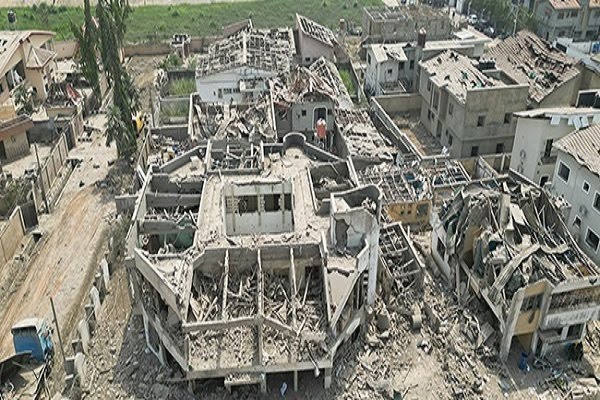
Last week, though not racing on horses nor does it have anything in similarity with buffalos, calamity swiftly walked into the capital of Oyo state and like Odolaye aptly dissected it, it was sudden. It came with its handmaidens – weeping, wailing and gnashing of teeth. Residents of Bodija, Ibadan, suddenly heard a late evening loud bang which reverberated around many parts of the ancient city. By the time the bang settled, lives had been lost, property destroyed and Ibadan suddenly became an epicentre of bad New Year news. Buildings were reduced to rubble, vehicles destroyed and a yet-to-be-ascertained number of people killed by the explosion.

Preliminary investigation found out that this calamity was the handiwork of some Malian miners who lived there. They had allegedly brought in high-level dynamite into a human neighbourhood. As at the time of writing this, official sources put the number of dead at five while excavation of bodies was still being done. One of the dead was said to be a United Kingdom returnee who met his untimely death while visiting. Mining activities have become harbingers of “eemo” in Nigeria’s lucrative mining fields, Zamfara state being an earlier example. In this state, foreigners perch on gold sites like bees on nectar with its attendant incubation of banditry.

Still on the sneaky bang of calamities, Abuja, the Federal Capital Territory, also witnessed an implosion in the number of kidnapped persons. From January 2021 to June 30, 2023, 40 kidnap cases were said to have been recorded in the FCT, with heart-wrenching 236 victims. The modus operandi of the kidnappers has today witnessed a mutation. Before now, waylaying commuters on the highway and ferrying them into the bush to demand ransom was the style. Today, under President Bola Tinubu, kidnappers have gone haywire. They are daring and disrespectful of Abuja as Nigeria’s seat of government. So, kidnappers boldly walk into people’s homes to cart away their victims without batting an eyelid.

Nigeria is under the siege of bandits who have terrorised the country non-stop, castrating the government’s expected proactive interventions and reducing successive governments to, in the words of Yakubu Dogara, mourners-in-chief. On the Abuja–Kaduna highway last week, about 30 people were said to have been abducted at Dogon-Fili near Katari, along the Kaduna-Abuja highway in Kachia local government area of Kaduna state. Eleven other persons were kidnapped in the Dutse-Alhaji area of the FCT, Abuja. Those who dispensed “eemo” to these fellow Nigerians and their families were gunmen dressed in the camouflage of military men, while the kidnappers dressed like herders.

The most pathetic and tear-jerking narration from the Dutse-Alhaji kidnap came from Oladosu Ariyo, lawyer and father of a slain 13-year-old. In an SOS that brimmed with frustration, pain and sorrow, Ariyo wrote to the Nigerian Bar Association to narrate the calamity that suddenly walked into his dwelling place. He narrated how the band of kidnappers invaded Sagwari Layout Estate in Dutse and kidnapped his lawyer wife and four children. They promptly demanded N60 million ransom. Being able to pay only a small percentage of the ransom, the kidnappers killed his firstborn and dumped the corpse on Kaduna Road. They threatened to kill the three other minor children and his wife if the whole ransom was not paid. They were said to have so far killed three of the eleven residents of the Sagwari Estate Layout in the Dutsen-Alhaji area they abducted.

The most immediate issue that the kidnaps evoke, bringing to the fore, is the disconcerting reality that kidnappings have gone outside the grips of the Nigerian government. Often orchestrated by persons who don military uniforms and inflict havoc recklessly for hours on citizens, this calamity has persisted since the Muhammadu Buhari government. It was often followed by official denials, especially during the Buhari era. That government was a seeming legitimisation of the infliction of violence and death on the people. States that border and surround the FCT like Niger, Kogi, Nasarawa and Plateau states had been hotbeds of kidnaps and wanton killings since the Buhari government. In saner climes and environments, this proximity is enough indication and foretell of imminent preying on the FCT by the bloodthirsty hounds called kidnappers and bandits. For a proactive and sensitive national security apparatus, a mechanism to arrest the imminent descent on Abuja ought to be on the drawing board, even before they struck. Unfortunately, in Abuja, unlike many civilised cities of the world, there are no statistics of ingress and egress into and outside the national capital. In the same vein, the census of landlords who live in the various suburbs of the city remains an illusion.

The issue of absence of governance is the cause of the spike in insecurity in Abuja and other parts of Nigeria. If you bore a hole through it, you will find corruption as well. There is also no doubting the fact that national security inertia juts out as a core issue in the Ibadan blast. Why would such destructive dynamite pass through the cordon of security agencies to wreak such havoc? Apart from those issues, existential matters are also trapped in the spate of kidnappings in Abuja and the blast in Ibadan. The existential issues come in rhetorical questions. Why must it be Oladosu Ariyo and his family who were abducted that night at Dutsen-Alhaji and not other families? Why was the UK returnee who met his untimely death in the Ibadan blast the one who must die? Why didn’t he delay his journey by some days, to arrive in Ibadan after the blast? Why did that calamity zero in on those who died? Why was Bodija the scene where the dynamites must explode and not elsewhere? These are questions that have defied satisfactory answers to humanity, science and religion. They have been asked consistently since the beginning of creation.

The above questions have procreated a set of people called fatalists who believe that human beings are helpless about the future, as well as the fortune or calamities that come to them. In Yoruba epistemology, this fatality is expressed as “ayanmo” or predestination. Its similar variant is “Kadara,” which is strictly identical to destiny. Kadara is woven around the concept of ‘Ori’ or the bearer of one’s destiny. The third of the tripod is called “Akosile” which holds that every individual’s destiny, as well as all that will happen to them in their life journey, are already written down in heaven before human beings begin to journey down to earth. An affirmation of this is mirrored in the saying “Ori yeye ni Mogun, ipin aise lo po,” which translates to mean, among the dry skulls at the Mogun shrine are many innocent heads.

The “Ori yeye…” narration, best explained by an anecdote said to have taken place a long time ago, apparently in pre-colonial Yoruba, has a few other slants different from the one below. The king of a town called Otolu had his trumpet called Kakaki stolen by persons he couldn’t fathom. The trumpet was a monarchical insignia used during ancestral festivals and was blown to announce the imminence of the festival. Upon the disappearance of the trumpet, Oba Otolu summoned his 17 servants for an explanation on the missing ancestral trumpet. Each swore his innocence but, miffed, literally spitting fire from his mouth like Sango, the king ordered the servants to be beheaded by the Ogun shrine. A few months after their decapitation, an Oba Otolu king friend in the neighbouring town apprehended two of his aides who had the trumpet and sent them to the Otolu king. Upon interrogation, they confessed that the heir to the Otolu throne, the king’s son, had handed it over to them. The king then ordered the beheading of the prince and the two culprits. As they were about to be decapitated at the Ogun shrine, pensive, the Otolu king muttered, pained about the shedding of innocent people’s blood thus, “See the number of heads of innocent persons we wrongly beheaded at the Mogun shrine!” The king was said to have committed suicide upon arriving at the palace.

So, were those 17 palace servants fated to be beheaded by the Orolu king? Was it their “ayanmo” (destiny) to die such gory, painful deaths? The Yoruba concept of the human person believes every human being has an ayanmo which can be positively or negatively manipulated by the nature of the head (Ori) that the person brought into this world. Thus, if an ayanmo is lopsided, failing in efforts, the Ori can help restructure the person’s destiny. This is why they say destiny has no remedy but Ori is the judge, “ayanmo o gb’ogun, ori l’elejo.”

Destiny, as articulated by Professor Segun Gbadegesin in his “Eniyan: The Yoruba Concept of a Person” in The African Philosopher Reader, edited by P.H Coetzee and A. P Roux., Routledge (New York, 1998) P.144, is “pre-ordained portion of life wound and sealed up on Ori”. According to him, “Human beings have an allotment of… destiny which determines the general course of life”. Bolaji Idowu, however, sees the Ori as a complete human personality who came before Olodumare (God) shortly before departing for this world. The human knelt before Him for allotment of his destiny and was open to what is called a “trimorphous conception of destiny”. This is in three and they are, Akunleyan (destiny got when kneeling to choose); Akunlegba (destiny got when kneeling to receive) and Ayanmo (irrevocably stamped on the person).

Some of these beliefs, made into proverbs, aphorisms, mores and lore are predicated on predestination. For instance, an ancient wise saying says that a tree will not fall in the forest and kill one who sits at home; and the rafter will not fall and kill the wayfarer (igi o ni da, k’o pa’ra ile; aja o ni jin k’o pa ero ona). Almost in line with this epistemology are the teachings of the two dominant religions, Christianity and Islam. They also believe that human beings are destined for some of the fates that befall them. However, as architects of their fates, human beings can tinker with their destinies through the worship of God. The third leg of this belief system is a doctrine called fatalism. Held by fatalists, they believe, without recourse to theology, that human beings are powerless to tinker with their future. They also hold that anything that happens to human beings is not within their human remit to change.

Many people have tried to examine why African leaders seem to cavalierly allow calamities to befall their people rather than taking proactive measures to ensure that they do not occur. I tend to think that this thinking by governments is an outcome of a very injurious but longstanding romance with theological submissions about calamities, as well as traditional Africa’s explanation of predestination. Data have proven that the more religiously or traditionally inclined government runners are, the sloppy it becomes for them to do the needful in safeguarding the lives of their people. The Buhari government, for instance, was so steeped in this belief in the God-ordained nature of human calamities that it firmed out the most important of its governmental responsibilities to God. Most times, it called on God to help it attack its attackers which is downright senseless.

Many events that happen in this modern age perforate some of the traditional African theses we have held for centuries. The Ibadan dynamite blast of last Tuesday is one. Contrary to a saying cited above, trees are now falling in the forest and killing people who sit in their homes; and rafters are falling, killing wayfarers in the process. The Ibadan blast attests to these. If the Tinubu government will not follow the footsteps of Buhari’s administration and thus be less fatalistic in its security architecture master plan, it should not be rocket science to exterminate kidnappers and be victorious over the menace of kidnapping. It is penny-wise pound-foolish to remove subsidy on petrol, with its attendant hardships on the people, then extend national pain by yawning while insecurity takes over the national capital. The truth is, if the FCT could be this unsafe, with information of its porosity to evildoers available all over the world, no investor would come to Nigeria.

Tinubu must urgently reduce the frequency of calamities in Nigeria by tackling insecurity frontally. By doing this, he will be redrawing the map of the sneakiness of calamities in Nigeria. Above all, he will render Odolaye Aremu’s thesis on calamity (eemo) and its suddenness (peki) irrelevant.

Comments

Opinion

State Police, Local Government Autonomy: Answers to Nigeria’s Lingering Questions | By Titilope Gbadamosi

Published

on

File photo of Dr. Titilope Gbadamosi, the Special Assistant on Youth Initiatives (Monitoring and Delivery) to President Bola Ahmed Tinubu.

Almost every democratically elected administration in Nigeria has had to grapple with pockets of insecurity in one form or another. Nigerians have watched uprisings metamorphose into banditry and terrorism, as though every administration had its own uniquely tailored brand of insecurity, defined by the modus operandi of these vicious elements.

The faces change, the methods change, but the burden on whoever occupies the highest office in the land has remained heavy and constant.

Just two administrations ago, during President Goodluck Jonathan’s tenure, we witnessed the horror of the abduction of the Chibok girls and explosives going off in public spaces in Abuja, the nation’s capital. Every well meaning Nigerian was worried, and nowhere felt truly safe. The President’s seat was not the most desirable at the time, and it was clearly a difficult job.

President Muhammadu Buhari’s administration had its own share, mostly in the form of clashes between farmers and herders, driven by grazing routes lost to farming, droughts pushing herders toward greener pastures, and old accommodations between communities slowly breaking down.

I recall quite vividly, while serving as Special Assistant to the former Governor of Oyo State, the late Senator Abiola Ajimobi, joining the head of our team in several peace talks with farmers, traditional rulers, and the Hausa and Fulani community in the state. One lesson from those rooms has stayed with me ever since. The people who understood the grievances, the terrain, and the actors were all local, yet the command of security sat far away in Abuja. That gap is the question every administration has struggled to answer.

Today, President Bola Ahmed Tinubu is in charge, and Nigerians who are students of history watched to see what shape insecurity would take and, more importantly, what this President would do differently. In recent development, the country received an answer that previous decades only debated.

On June 11, following the President’s formal request to the National Assembly to restructure our security architecture, the House of Representatives passed the constitutional amendment to establish state police, with 289 members voting in support and barely a voice against, while the Senate works to complete passage before year end. Today June 12th,2026, in his Democracy Day address, the President spoke plainly: the insecurity we face is partly the product of collapsed grassroots governance, and his administration remains committed to financial autonomy for our 774 local government councils. There it is, a two pronged solution: state police and true local government autonomy.

The first prong closes the gap I saw in those Oyo State peace talks. The amendment to Section 214 of the Constitution creates a dual policing structure under which each state may establish its own force. Security decisions will now be taken by those who know the terrain, the actors, and the grievances at first hand.

To his credit, the President did not merely champion the idea; he asked the National Assembly to institute controls to prevent abuses, the mark of a leader interested in a reform that endures rather than one that backfires. All of this rides on the largest security investment in our history, a 5.41 trillion naira commitment in the 2026 budget and over 50,000 new police officers approved for recruitment.

The second prong puts resources where the new responsibility will live. Since the Supreme Court ruled in July 2024 that federation allocations belonging to local governments must reach them directly, monthly allocations to the 774 councils have grown from roughly 387 billion naira in March 2025 to nearly 530 billion naira by September 2025. The money has never been the problem; control of it was. By pressing autonomy to its conclusion, this administration is returning both funds and accountability to the communities where insecurity actually begins, so that the grassroots governance whose collapse the President identified can finally be rebuilt.

So who wins in all of these? Nigerians win, because security decisions and development funds will finally live where the people live. Governors win the powers they have long demanded, and with them the responsibility they can no longer pass to Abuja. And the country wins a President willing to attempt what others only discussed. The President reminded us on Democracy Day that Nigerians bend and bleed but do not break. With these two reforms, we may finally stop having to prove it so often.


Dr. Titilope Gbadamosi  is the Special Assistant on Youth Initiatives (Monitoring and Delivery) to President Bola Ahmed Tinubu.

Continue Reading

Opinion

Nigeria’s Insecurity: Why the System Rewards Reaction, Not Prevention

Published

on

The most foolish person in a burning house is not the one who cannot find the exit. It is the one who knew the house would burn, watched it happen, and only ran when the ceiling collapsed. That is Nigeria’s governance posture toward insecurity—a pattern so consistent that it has become normalized.

“Ikú tó pa ojúgbà ẹni, òwe ló fi pa. (The death that kills your neighbour is a proverb directed at you).

The bandits did not simply arrive. They sent warnings ahead of them through a trail of violence that crossed state lines and appeared in every massacre headline we filed away as someone else’s problem.

When Insecurity Was Still “Someone Else’s Problem”

When the North was burning and the Middle Belt bleeding, the South West treated it as distant noise. Kwara became the first warning sign—the bridge between North and South—slowly slipping under the shadow of insurgency. The question every serious observer should have asked was simple: what happens when it crosses the border?

South West governors issued statements—careful, brief, and reactive. None moved with the urgency the threat demanded. Before long, violence arrived at our doorstep: herder brutality in Oke-Ogun, attacks in Oyo and Ekiti, kidnappings along the Ibadan–Ijebu-Ode expressway, and forest camps emerging in Ondo.

The warning signs had matured into reality, yet we were still searching for an exit strategy that should have been built years earlier.

The Problem: We Only Count the Dead

In safety performance management, there is a critical distinction between lagging indicators—outcomes after failure (deaths, destruction, losses)—and leading indicators, which measure prevention before failure occurs.

Aviation, oil and gas, and other high-risk industries understand this clearly: a system that obsesses over lagging indicators will always arrive after the accident.

Nigeria’s security governance is built almost entirely on lagging indicators. We count attacks after they happen. We rebuild after a collapse. We mourn after preventable deaths.

We rarely ask:

How many attacks were prevented this quarter?

How many threats were neutralized before execution?

How many cells were dismantled at the planning stage?

We do not know the answers—because we are not measuring them. The system was never designed to prevent. It was designed to respond: loudly, visibly, expensively, and always too late.

Another Base. The Same Question Nobody Asks

The presidency is reportedly considering a military base in Oriire Local Government Area of Oyo state. It is a familiar pattern: a major security incident, public outrage, and an institutional response designed to signal seriousness.

But the critical question remains unanswered: what has been the leading-indicator performance of existing bases?

How have long-standing military formations in places like Jos, Benue, and Zamfara—some active for over two decades—actually shifted the security outcome?

A military base without actionable intelligence is a stationary slaughter ground for soldiers. It does not prevent attacks; it often becomes a reactive outpost in a repeating cycle: attack, deployment, statement, investigation, and then silence—while underlying threat networks remain intact.

The Incentive Structure Behind the Chaos

The deeper issue is not the capability of security forces. It is the incentive structure of the system.

When leadership is judged only by incidents that have already occurred, governance shifts from prevention to performance management of failure. The objective becomes managing optics, not reducing probability.

Nigeria’s security budget has grown significantly over the past decade, yet insecurity has worsened. Kidnappings have become more brazen. Why? Because funding is justified by the persistence of the crisis, not its resolution.

If the problem is solved, what justifies the next budget cycle?

For years, decentralization has been proposed as the structural reform that could change the system—but it remains trapped in political rhetoric. Why? Because decentralization disperses power, and power in Nigeria’s political economy is not dispersed. It is concentrated.

Sixteen Days. Full Stop.

Forty-six children and teachers were kidnapped in Oriire. It reportedly took sixteen days for the presidency to authorize a specialized rescue framework.

Sixteen days before the Commander-in-Chief treated the abduction of forty-six human beings as a crisis requiring formal executive activation.
But responsibility in moments like this is not singular.

The Oyo State Governor, by constitutional convention regarded as the Chief Security Officer of the state and a recipient of security votes, also occupies a central coordinating role in the security architecture of the state. Within a crisis of this scale, expectations of rapid intergovernmental coordination, visible command urgency, and sustained pressure on federal response mechanisms are not optional, hey are inherent to the office.

Yet, the response cycle, from abduction to high-level coordinated action and physical engagement with affected communities, unfolded at a pace that raised legitimate public concern about the speed and intensity of institutional reaction.

By the time visible field visits and coordinated engagements occurred, the delay had already become part of the public record of the crisis itself—shaping perception as much as the incident shaped fear on the ground.

In a functional security system, crisis response is measured in hours, not days. Not for symbolism, but because time directly affects outcomes: every passing hour in an active kidnapping reduces the probability of safe recovery and increases the leverage of perpetrators.

Sixteen days, therefore, is not merely a lapse in timing. It reflects a deeper structural problem—where urgency is often declared after pressure builds, rather than operationalized when intelligence first breaks.

And in that gap between incident and action, citizens are left to absorb the consequences of delayed coordination across all tiers of authority.

The Verdict

Nigeria does not primarily need more military bases. It needs a new security measurement architecture—one that prioritizes intelligence conversion rates, early-warning response times, and pre-emptive disruption metrics over post-incident operations.

Every threat must be treated as time-sensitive, where minutes and hours determine outcomes—not weeks and statements.

Most importantly, citizens must shift the accountability question:

Not only “why did the attack happen?”

But “why was it not prevented?”

Nigeria’s security challenge is ultimately a leadership and systems failure—an institutional preference for reaction over prevention, because prevention is politically invisible.

You cannot hold a press conference about the attack that never happened.

Until this reality is named and confronted with precision, the cycle will continue.

Continue Reading

Opinion

Why Ibadan North youths are rooting for Repete

Published

on

Growing support has continued to trail a youthful politician and technology advocate, Hon. Khalil Mustapha Adegboyega, popularly known as Repete, as many youths in Ibadan North Federal Constituency expressed confidence in his leadership style and vision for development.

Across several communities within the constituency, residents, particularly students, artisans and young professionals, described Repete as one of the emerging political figures with strong grassroots appeal and a passion for youth empowerment.

Supporters said his growing popularity stems from his consistent advocacy for innovation, entrepreneurship and skills development aimed at addressing unemployment and creating opportunities for young people.

As an engineer and technology enthusiast, Repete is also said to possess a deep understanding of the evolving digital economy and the need to position youths for global competitiveness.

Many of his supporters noted that his approach to leadership focuses on practical solutions, mentorship and capacity-building initiatives capable of helping young people become self-reliant and economically productive.

Some community stakeholders who spoke on his rising profile said his humility, accessibility and relationship with the grassroots have continued to endear him to many residents within the constituency.

They added that Repete’s engagement with youths and community groups reflects his commitment to inclusive governance and people-oriented representation.

Observers within the constituency also maintained that the increasing support for the politician reflects a growing desire among residents for a new generation of leaders driven by innovation, competence and accountability.

According to them, many young people see Repete as a symbol of hope and progressive leadership capable of contributing meaningfully to the development of Ibadan North Federal Constituency.

Continue Reading

Advertisement

Entertainment

Advertisement

MegaIcon Magazine Facebook Page

Advertisement

MEGAICON TV

Advertisement

Trending