Connect with us

Opinion

Obasanjo’s Bode Thomas discourtesy to Oyo Obas | By Festus Adedayo

Published

on

The social and cultural setting in Yorubaland literally exploded last Friday. It almost took the shine off the Oyo State government’s highly commendable inauguration of a 34.85 km Oyo-Iseyin Road and the completed Ladoke Akintola University of Technology, Iseyin Campus. The highly disputatious ex-Nigerian president, Olusegun Obasanjo, was in his usual sabre-rattling element. At that event, he tongue-lashed Yoruba Obas in the most irreverent display of gross disdain for the traditional stool and institution.

As I write this, an inclement anger of the people, like a vulture, is feasting on Obasanjo on the social media. He is minute by minute lacerated with all manner of irreverent words. A group from Iseyin, where the tongue-lash took place, even declared him persona-non-grata in the Oke-Ogun area of Oyo State.

The unkindest epithet given to Obasanjo as comment on his Iseyin discourtesy to the Obas is the ar’obafin – disrespecter of the monarchy. It reminds me of Alukoro, a Yoruba movie starring Fuji singer, Saheed Osupa; a man who, to me, sings as if he is an incarnate of my musical idol, Ayinla Omowura. Osupa laces his songs with an effusion of language, culture, depth and native wisdom which all answer to the profound musical calling of Omowura. In the movie, Osupa had played the role of Pela, a village bard. Strapping his agidigbo round his neck, with the musical instrument protruding on his belly, the flick began with him instigating townsfolk against an Ajisafe who he alleged had an incestuous liaison with his daughter. In rousing them up, Pela lectured the people on the boomeranging effect of silence to evil – “t’a ba ni ko kan wa, yi o kan eni ti o kan, ti o pada wa kan wa”, he counseled.

Then, a scene in the movie shifted to the palace. The whole village was in attendance, as well as a man called Olowoporoku and his wife. Still in his luxuriating voice and talent, Pela musically narrated Olowoporoku’s boldness of standing up to the monarchy headed by Oba Adewolu Adegoroye. He sang in denunciation of those who rise against the palace which Yoruba approximate as rising against the whole town. Pela announced that the enemy of the palace had been put to shame with the quashing of the conspiracy against the king and that haters of the monarchy were persons of mean repute. He sang this thus: “Ar’obafin, oju ti yin o//b’o je’yin le wa l’oni o//ab’Oba Adewolu… e l’aju le, gbogbo wa ni o s’oju…//ete kuku m’oni ete nwa, iyi m’eni iyi nba r’ode, eni ete mo’ra re l’awujo.”

Pela robed the king in the finest raiment. Oba Adewolu had a purity of character comparable only to the whiteness of a cattle egret (lekeleke) and Olowoporoku, not only was a mean character, but one whose moral standing was in the league of the filth of a pig. “Agberaga won a tun gbe’ra sanle, iru e ki s’eni iyi l’awujo…” Apparently the script to disgrace Olowoporoku having been pre-arranged, a goat that was dressed in exact apparel worn by Olowoporoku was brought to the palace. Pela then sang, asking the people to shout “monkey” – obo – “E ma pe obo ni! (Obo ni!)… eni wo’so bi obo (obo ni!) o de fila bi obo (obo ni!) o nb’oba da’sa (obo ni!)… aso ki le ro, t’e nkile t’e nru gaga?// Aso t’e ro t’e npon gege, s’ohun l’ewure ti nwo yi o!” He ended the musical narration by telling the palace hater that very soon, all those in his class would forcibly realize the majesty of the king – “isenyi le o m’oba//eyin t’e nb’oba l’eyin…”

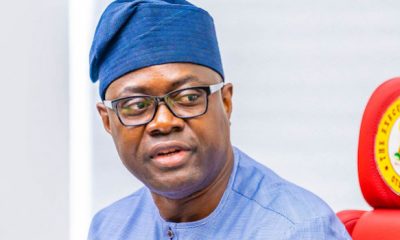
At Iseyin, as the crowd savoured the occasion, amid effusive showering of praises on Obasanjo’s host governor, Seyi Makinde, the man known for always provoking verbal balls of fire suddenly sauntered into his familiar route. At the first occasion, the road inauguration, I was told that invited traditional rulers sat even when Obasanjo and his host arrived. When Obasanjo got up to address the crowd during the second event at the University of Technology’s opening, and the larger crowd of traditional rulers still sat, something snapped in him and Obasanjo went into his usual tempestuous tirade. If he had talked to the Obas in very civil language, it would have gone down well with Yoruba people. Rather, the ex-president spat out poison like a venomous rattlesnake, talking down on the natural rulers like a teacher does to offending kindergarten pupils. Flaffing his left hand like a salamander does its tail in a moment of extreme anger, Obasanjo then hectored on the rulers to stand up, “e dide!”, in the mode of a Garrison Commander at an army parade. His lips twitched awkwardly, and his countenance was like Sango, the god of thunder’s. He had earlier lectured the traditional rulers on giving honour to whom it is due.

The issue for determination in Iseyin on Friday is, who was the Ar’obafin? The Obas who dishonoured Ijoba (government) by refusing to join the upstanding people to welcome the governor or Obasanjo who upbraided them using a language meant for slaves on royalty?

Like many African societies, the Yoruba venerated their kings, almost to the point of idolatory. Their king was the incarnation of the concept of earthly sovereign. He regulated peace and order, guaranteed harmonic social relations with their fellow beings and was the intercessor who interacted between them and cosmic forces. The palace where the king lives, though owned by the whole town, was the outward representation of the people’s reverence for their king. It is always located at the sacred centre of the town and surrounded by huge walls. The palace’s importance was partly due to the fact that it was the place where decisions of the most important texture concerning town life were deliberated upon and taken. It was where esoteric rituals were performed among a coterie of a narrow circle of initiates.

A number of weird lore and mores were curated to give the king his primus inter pares aura and dread. First, the title of an Alaafin of Oyo, for instance, symbolized his unlimited powers. He was “lord of the universe and life,” “the master of the land” and “companion of the gods,” as well as the Kabiyesi who no one dares contradict his authority. He was a sacred ruler and ideological and political centre of power of his people who holds a dimension of power that was awesome. A number of secrecies, mystery and dread of things unknown and incomprehensible kept alive the oeuvres of sacredness of traditional institution in him. He was the mythical intermediary between his people and the gods and the link that connected the people with all the deities of the land and in whom there was a fulfillment of the desires of the gods in the land of the living. The legitimacy of the king’s royal power emanated from the dread and mysteries that were hoed round him. For instance, he must not see dead body. The belief that begot this was that, as one who symbolized and embodied life and being a life-giving force himself, sighting a dead body detracts from that power. He was also reputed with magical powers that were beyond his subjects’. That is why, upon the enthronement of an Oba, all magic men were required to scramble over one another to donate their amulets and powers to him. This is because the king was believed to be linked with the spirits of his deceased predecessors. As king, his major obligation was the sustenance of the prosperity and fertility of the land which he does by making sacrifices as at when required, engage in innumerable annual rites, as well as magic rituals.

The life and death of Obas in Yorubaland are a testament to their assumed powers. According to Samuel Johnson, not less than 21, out of 36 kings that this respected Yoruba history biographer included in his dynastic list, died by excruciating violence. In Oyo Alaafin, not a single one out of the kings of the 17th century died of natural death at a period regarded as the highest flourish of that kingdom. Indeed, fifteen of them, beginning with the 17th king Odarawu were compelled to commit suicide as a result of sentences passed by the oracle. As a means of implanting the authority and veneration of their kings in their minds, palace griots, who were mainly custodians of historical oral tradition of the people, narrated in poetic renditions the official version of the history of their kingdoms, heroic feats of their kings and stories of warfare, conquest.

However, the conversation between Obierika and Okonkwo in Chinua Achebe’s Things Fall Apart seems to sum up the calamity that befell traditional institution subsequently. Dissecting colonial incursion into Igboland and the various queer events that had since transpired, upset by the white man’s total and complete disregard for the Igbo cosmology and the people’s conception of justice, Obierika was stunned that the colonialists didn’t understand the people of Umuofia. Obierika had said: “The white man is very clever. He came quietly and peaceably with his religion. We were amused at his foolishness and allowed him to stay. Now he has won our brothers, and our clan can no longer act like one. He has put a knife on the things that held us together and we have fallen apart.” This, to me, equates the calamity that befell traditional institution in Yorubaland, the precursor of the Friday lacerating discourtesy heaped on Yoruba traditional institution by a man whose inscrutable disdain for the other person knows no bounds.

The white man indeed put a knife on the traditional institution that held Yoruba people together. This began with the gale of exiles it unleashed on highly venerated and dreaded monarchical stool. Oba Akitoye of Lagos was about the first. He had ascended the throne of his forefathers in 1841 and attempted to end the inhuman trade in persons. In this bid, he sowed enmity in the minds of local slave traders who contributed to his deposition and eventual exile. After the white men annexed Lagos in 1861 as a British territorial colony, it was time for recalcitrant kings who insisted on the supremacy of their thrones to be dealt with too. Thus, Ovonramwen Nogbaisi, the Oba of Benin, was equally chased off the throne and exiled to Calabar, alongside his two queens, leading to his eventual death in 1914.

Other kings who tasted the sour broths of the white colonialists were the Alake of Egba land, Oba Sir Ladapo Samuel Ademola who ascended the throne on May 28, 1920. He was the father of Justice Adetokunbo Ademola, the first indigenous Chief Justice of Nigeria at the granting of independence in 1960. After 27 years of being on the throne, his power was eroded after a violent protest of about 2000 women against colonial government’s native authority in 1947. Under the leadership of Mrs. Funmilayo Ransom-Kuti, with the assistance of her sister-in-law, Eniola Soyinka, the women virulently protested against taxes for women. Prodded on by colonial disdain for traditional rulers, it was bye to the highly venerated Yoruba monarchy as the women successfully chased Oba Ademola out of the palace.

Obasanjo’s shout on the Iseyin kings to stand up reminds me of the same call by mercurial deputy leader of the Action Group, Chief Bode Thomas. Born in 1918, Thomas was one of the most brilliant solicitors of Yoruba extraction of pre-colonial Nigeria. In company with Chief Rotimi Williams and Chief Remilekun Fani-Kayode, he established the law firm named Thomas, Willams, Kayode and co. He was however far removed from the indigenous texture of his native Oyo town where he was born. He was also very haughty. So when in 1953, Thomas was appointed the Oyo Divisional Council Chairman, it was obvious that he would find his measure in the father of the recently deceased Alaafin of Oyo, Oba Adeniran Adeyemi II, who reigned on the stool from 1945 to 1954. On November 22, 1953, the day the 35-year-old Thomas made his first appearance in council, just like the Iseyin Obas gathered at the Friday function, Thomas could not countenance why Alaafin Adeniran would sit while others stood for him. Like Obasanjo, he immediately expressed his disavowal at this. He then asked the Oba, who was then in his 60s, “Why are you sitting when I walked in, don’t you know how to show respect?” During one of my discussions with Alaafin Lamidi Adeyemi who just passed, he confirmed to me that his father merely rhetorically demanded if it was him that Thomas was barking at – se’mi lo ngbo mo baun? And then commanded Thomas, to continue in his bark – Ma gbo lo baun! Oba Adeniran was to pay dearly for this as he was deposed and died in exile at Egerton, a mosquito-infested Guest House in Lagos. Thomas continued barking like a dog and passed on in the morning of the second day.

As they say, since then, a lot of water has passed under the bridge. By the constitutions of Nigeria since the advent of colonialism, the palace has always been put under the subordination of political authorities. This has colossally eroded the respect, veneration and contributions to society of kings. As it is now, monarchs are under the subordination of local government chairmen who can instigate their deposition. Respected veteran journalist, Lekan Alabi, sent out a video of an interview conducted by the NTA Ibadan with him as the Producer and presenter, with late Kano State governor, Alhaji Abubakar Rimi. Rimi was having a spat with the Emir of Kano, Alhaji Ado Bayero during this period. In the interview, Rimi exploded: “The way you press and our political opponents (regard) the Emir of Kano is not the way we regard him. As far as we are concerned (thumping his chest) – we the elected government of Kano state – as far as I, the governor of Kano State, is concerned – the Emir of Kano is nothing, nothing, nothing but a public person… he is holding a public office… being paid from public funds and whose appointment is at the pleasure of the governor of the state and who can be dismissed, removed interdicted, suspended if he commits an offence. And there is nothing unique about Ado Bayero, the Emir of Kano… believe me, if he commits any offence which will make it necessary for us to remove him, we will remove him and we will sleep soundly.”

In the explanation of their cosmogony, it is Yoruba’s belief that, as hot and red-eyed as Sango is, not only does it give respect to the blacksmithry and the forge, Ile Aro, it is not in his keel to strike it with its thunder. Why will Obasanjo, a man who has taught culture and tradition overtime, be the hot anvil that will consume the anvil? Don’t Yoruba say that the reverse is unimaginable, in the saying that ina ewu kii jo ewu, ina ewiri kii jo ewiri? Indeed, that Friday event was a mortal blow on traditional institution.

Why the Obasanjo Friday indecorous talk-down on the Iseyin Obas was unusual was that he had always shown the way to go to all political office holders by publicly courtesying to monarchs. He recently, even at his over 80 years old, prostrated to the Ooni of Ife who is younger in age than his first born. This is why, as I said earlier, if Obasanjo had not made a public ridicule of the Obas, he would have had sympathies of the people. First, he was far older than virtually all the kings at the event and thus deserved their respect. Second, as Nigeria’s former leader, who was Nigeria’s Head of State at a time many of them were in secondary school, they should have shown him some measure of honour. Sitting down when an elderly person stands is disrespect of the first order in Yorubaland. I have also confirmed that protocol, especially since the constitutional de-robing of kings of their essences, has since demanded that kings should pay obeisance to political leaders, including even the chairman of their local governments, at public events. However, as they say, if you are sent a message as a slave, you should be knowledgeable enough to deliver it as a freeborn.

To be fair to Obasanjo, though the gradual loss of verve of traditional institution didn’t begin with him, he willingly offered himself as its pallbearer. Many of the traditional rulers on parade in Nigeria today wear such disreputable robes that no one in their true senses should pay them any regard. Nyesom Wike, as governor of Rivers State, publicly dressed down one of them. Today, Yoruba do not venerate their kings any longer and do not see them as embodying their sovereignty. Rather than regulating peace and order of their domains, they are disruptors of the peace therein. The palace has become a den of thieves and fraudsters with many of them kings only to maximize pecuniary interests. No esoteric rituals are performed in palaces any longer but cryptic deals of fraudulence among a circle of fraudulent initiates, with the sacredness of traditional institution grossly destroyed. So, if Obasanjo talked down on them, he must have known that they were reverses of the natural rulers who deserved anyone’s respect.

I am actually interested in an aspect of the speech of Governor Makinde at the said event. On the vacant stool of the Alaafin, which is the subject of intense acrimony and tackles at the moment, Makinde had said: “Those of you fighting over the Alaafin stool should stop. Those who have collected money from people should know that Alaafin stool is not for sale. It is too important to Yorubaland that we will not sell it. For those who have collected money, I will take them to the EFCC”.

The governor’s homily is a representation of what ails traditional institution in Nigeria today. It has gone to the dogs. If it is possible for Makinde and the Oyo Mesi to recreate the profundity in tradition, language and culture of Yoruba people, panache and Yoruba leadership which the late Alaafin, Oba Lamidi Adeyemi manifested while alive, we probably would have none of those Iseyin Obas lacking the courage to damn Obasanjo’s bark at them to stand up. Kabiyesi, Omo Alowolodu, Iku Baba Yeye Lamidi Adeyemi, would rather die than be led by the nose to surrender as Obasanjo led those kings on Friday.

Comments

Opinion

The Silent Thief in Nigeria’s Petrol Stations | By Solomon Oroge

Published

on

File photo of Dr. Solomon Oroge

• How systemic fraud is draining billions, weakening businesses and threatening the future of the downstream petroleum sector

The Nigerian petroleum retail industry remains one of the most important drivers of economic activity in the country. Every day, millions of litres of petrol, diesel and other petroleum products are sold through thousands of filling stations spread across cities, towns and rural communities.

To many Nigerians, a filling station is simply a place where vehicles are refuelled. To investors and operators, however, it is a complex business environment involving inventory management, transportation logistics, cash handling, procurement processes, technology systems and human resources. When properly managed, petrol retailing can be highly profitable. When poorly controlled, it can become a breeding ground for one of the most dangerous threats to business sustainability – systemic fraud.

Unlike isolated incidents of theft or misconduct, systemic fraud is far more sophisticated and destructive. It is not the work of a single dishonest employee acting alone. Rather, it is a pattern of fraudulent activities that gradually becomes embedded within an organisation’s operational processes and culture. Over time, such practices become normalised, tolerated and, in some cases, deliberately protected by those who benefit from them.

This is what makes systemic fraud particularly dangerous. It often operates quietly beneath the surface while management remains focused on sales growth, market expansion and operational targets. By the time the full extent of the problem becomes apparent, substantial damage may already have been done.

Across Nigeria’s downstream petroleum sector, systemic fraud continues to drain significant resources from businesses every year. Revenue leakages occur through fuel diversion, stock manipulation, sales suppression, procurement abuses, payroll fraud, inventory theft and cash skimming. In many organisations, these activities take place daily, gradually eroding profitability and shareholder value.

One of the most common schemes is fuel diversion during transportation. Products that leave depots in approved quantities may arrive at their destinations with unexplained shortages. Sometimes these losses are disguised as operational variances or transportation-related discrepancies. In reality, they may be the result of organised siphoning carried out during transit.

Another common practice involves pump calibration manipulation. In such situations, customers unknowingly receive less fuel than the quantity displayed on the dispensing pump. While the discrepancy may appear insignificant on a single transaction, the cumulative financial impact can be enormous when repeated hundreds of times daily across multiple stations.

Tank dip manipulation represents another major challenge. Deliberate alteration of stock measurements allows losses to be concealed, making it difficult for management to accurately determine actual inventory positions. Similarly, sales suppression occurs when transactions are intentionally omitted from official records, creating opportunities for revenue diversion and cash theft.

Procurement fraud, inflated maintenance costs, ghost workers on payrolls, fictitious vendors and collusion between employees and suppliers have also become recurring concerns within many petroleum retail operations.
The unfortunate reality is that systemic fraud thrives where governance is weak, accountability is limited and internal controls are either poorly designed or inadequately enforced. High daily cash transactions, large fuel inventories, multiple operating locations and limited real-time supervision further increase exposure to fraud risks.

The warning signs are often visible long before losses become catastrophic.

Persistent cash shortages, unexplained stock variances, delayed banking, repeated customer complaints, inflated procurement costs and declining profitability despite rising sales should immediately attract management attention. Likewise, employees who resist transfers, refuse annual leave, display unusual secrecy or maintain lifestyles far above their legitimate income levels may warrant closer scrutiny.

Many organisations make the mistake of assessing fraud only from the perspective of direct financial losses.

However, the true cost extends much further.

Systemic fraud distorts management information and weakens decision-making. It undermines operational efficiency, damages corporate reputation, attracts regulatory sanctions and erodes customer confidence. Investors become wary, employees lose morale and businesses struggle to achieve sustainable growth.

Perhaps most damaging is the fact that fraud weakens trust—the single most important asset any organisation possesses. Once trust is compromised, rebuilding it becomes both difficult and expensive.

Addressing this challenge requires a shift from fraud detection to fraud prevention.

The most successful organisations understand that preventing fraud is significantly less costly than investigating fraud after it has occurred. Prevention begins with strong corporate governance, ethical leadership and a clear commitment to accountability at every level of the organisation.

Technology has also become an indispensable ally in the fight against fraud.

Automated tank monitoring systems, CCTV surveillance, GPS tanker tracking, integrated enterprise resource planning systems and data analytics tools provide organisations with greater visibility over operational activities and help identify unusual patterns before they escalate into major losses.

Yet technology alone cannot solve the problem.

Organisations must also invest in people, processes and culture. Employees should receive regular ethics training.

Whistleblower mechanisms must be strengthened and protected.

Responsibilities should be properly segregated and surprise verification exercises should become part of routine operational oversight.

In this regard, Internal Audit has a strategic role to play.

Modern Internal Audit functions must evolve beyond traditional compliance checks and become proactive partners in fraud risk management. Through fraud risk assessments, data analytics, control testing, fraud mapping and unannounced verification exercises, Internal Audit can provide independent assurance that critical controls are operating effectively and that emerging fraud risks are identified before they become crises.

To strengthen organisational resilience against systemic fraud, the Sedabuk Fraud Risk Management Model (SFRMM) was developed as a practical framework for fraud prevention, detection, investigation and sustainable risk management within petroleum retail operations.

The model is built around seven strategic pillars: Surveillance, Fraud Risk Assessment, Robust Internal Controls, Monitoring and Data Analytics, Management Accountability, Detection and Investigation, and Ethical Culture and Employee Engagement. Together, these pillars create a continuous cycle of identifying risks, implementing controls, monitoring activities, detecting anomalies, conducting investigations and driving continuous improvement.

The message for operators in Nigeria’s downstream petroleum sector is simple but urgent: the greatest threat to profitability may not be competition, inflation or market volatility. It may well be the silent leakage of resources occurring within their own operations.

As the industry continues to evolve under ongoing reforms and changing regulatory expectations, organisations must recognise that sustainable profitability is achieved not merely by increasing sales but by protecting every litre of fuel, every naira of revenue, every operational process and every stakeholder’s trust.

Companies that embrace ethical leadership, strong governance, proactive Internal Audit, technology-enabled monitoring and a zero-tolerance culture towards fraud will not only reduce losses but also strengthen stakeholder confidence, improve operational efficiency and position themselves for long-term success.


Dr. Solomon Oroge, PhD, is an accomplished professional in Internal Audit, Risk Management, Corporate Governance, Compliance and Fraud Risk Management with extensive experience in Nigeria’s downstream petroleum industry.

He is the developer of the Sedabuk Fraud Risk Management Model (SFRMM), a proprietary framework designed to help petroleum retail organisations proactively identify, prevent, detect and manage systemic fraud risks.

Oroge can be reached via the following contact details: saoprofessional@gmail.com or +234 806 512 6192.

Continue Reading

Opinion

State Police, Local Government Autonomy: Answers to Nigeria’s Lingering Questions | By Titilope Gbadamosi

Published

on

File photo of Dr. Titilope Gbadamosi, the Special Assistant on Youth Initiatives (Monitoring and Delivery) to President Bola Ahmed Tinubu.

Almost every democratically elected administration in Nigeria has had to grapple with pockets of insecurity in one form or another. Nigerians have watched uprisings metamorphose into banditry and terrorism, as though every administration had its own uniquely tailored brand of insecurity, defined by the modus operandi of these vicious elements.

The faces change, the methods change, but the burden on whoever occupies the highest office in the land has remained heavy and constant.

Just two administrations ago, during President Goodluck Jonathan’s tenure, we witnessed the horror of the abduction of the Chibok girls and explosives going off in public spaces in Abuja, the nation’s capital. Every well meaning Nigerian was worried, and nowhere felt truly safe. The President’s seat was not the most desirable at the time, and it was clearly a difficult job.

President Muhammadu Buhari’s administration had its own share, mostly in the form of clashes between farmers and herders, driven by grazing routes lost to farming, droughts pushing herders toward greener pastures, and old accommodations between communities slowly breaking down.

I recall quite vividly, while serving as Special Assistant to the former Governor of Oyo State, the late Senator Abiola Ajimobi, joining the head of our team in several peace talks with farmers, traditional rulers, and the Hausa and Fulani community in the state. One lesson from those rooms has stayed with me ever since. The people who understood the grievances, the terrain, and the actors were all local, yet the command of security sat far away in Abuja. That gap is the question every administration has struggled to answer.

Today, President Bola Ahmed Tinubu is in charge, and Nigerians who are students of history watched to see what shape insecurity would take and, more importantly, what this President would do differently. In recent development, the country received an answer that previous decades only debated.

On June 11, following the President’s formal request to the National Assembly to restructure our security architecture, the House of Representatives passed the constitutional amendment to establish state police, with 289 members voting in support and barely a voice against, while the Senate works to complete passage before year end. Today June 12th,2026, in his Democracy Day address, the President spoke plainly: the insecurity we face is partly the product of collapsed grassroots governance, and his administration remains committed to financial autonomy for our 774 local government councils. There it is, a two pronged solution: state police and true local government autonomy.

The first prong closes the gap I saw in those Oyo State peace talks. The amendment to Section 214 of the Constitution creates a dual policing structure under which each state may establish its own force. Security decisions will now be taken by those who know the terrain, the actors, and the grievances at first hand.

To his credit, the President did not merely champion the idea; he asked the National Assembly to institute controls to prevent abuses, the mark of a leader interested in a reform that endures rather than one that backfires. All of this rides on the largest security investment in our history, a 5.41 trillion naira commitment in the 2026 budget and over 50,000 new police officers approved for recruitment.

The second prong puts resources where the new responsibility will live. Since the Supreme Court ruled in July 2024 that federation allocations belonging to local governments must reach them directly, monthly allocations to the 774 councils have grown from roughly 387 billion naira in March 2025 to nearly 530 billion naira by September 2025. The money has never been the problem; control of it was. By pressing autonomy to its conclusion, this administration is returning both funds and accountability to the communities where insecurity actually begins, so that the grassroots governance whose collapse the President identified can finally be rebuilt.

So who wins in all of these? Nigerians win, because security decisions and development funds will finally live where the people live. Governors win the powers they have long demanded, and with them the responsibility they can no longer pass to Abuja. And the country wins a President willing to attempt what others only discussed. The President reminded us on Democracy Day that Nigerians bend and bleed but do not break. With these two reforms, we may finally stop having to prove it so often.


Dr. Titilope Gbadamosi  is the Special Assistant on Youth Initiatives (Monitoring and Delivery) to President Bola Ahmed Tinubu.

Continue Reading

Opinion

Nigeria’s Insecurity: Why the System Rewards Reaction, Not Prevention

Published

on

The most foolish person in a burning house is not the one who cannot find the exit. It is the one who knew the house would burn, watched it happen, and only ran when the ceiling collapsed. That is Nigeria’s governance posture toward insecurity—a pattern so consistent that it has become normalized.

“Ikú tó pa ojúgbà ẹni, òwe ló fi pa. (The death that kills your neighbour is a proverb directed at you).

The bandits did not simply arrive. They sent warnings ahead of them through a trail of violence that crossed state lines and appeared in every massacre headline we filed away as someone else’s problem.

When Insecurity Was Still “Someone Else’s Problem”

When the North was burning and the Middle Belt bleeding, the South West treated it as distant noise. Kwara became the first warning sign—the bridge between North and South—slowly slipping under the shadow of insurgency. The question every serious observer should have asked was simple: what happens when it crosses the border?

South West governors issued statements—careful, brief, and reactive. None moved with the urgency the threat demanded. Before long, violence arrived at our doorstep: herder brutality in Oke-Ogun, attacks in Oyo and Ekiti, kidnappings along the Ibadan–Ijebu-Ode expressway, and forest camps emerging in Ondo.

The warning signs had matured into reality, yet we were still searching for an exit strategy that should have been built years earlier.

The Problem: We Only Count the Dead

In safety performance management, there is a critical distinction between lagging indicators—outcomes after failure (deaths, destruction, losses)—and leading indicators, which measure prevention before failure occurs.

Aviation, oil and gas, and other high-risk industries understand this clearly: a system that obsesses over lagging indicators will always arrive after the accident.

Nigeria’s security governance is built almost entirely on lagging indicators. We count attacks after they happen. We rebuild after a collapse. We mourn after preventable deaths.

We rarely ask:

How many attacks were prevented this quarter?

How many threats were neutralized before execution?

How many cells were dismantled at the planning stage?

We do not know the answers—because we are not measuring them. The system was never designed to prevent. It was designed to respond: loudly, visibly, expensively, and always too late.

Another Base. The Same Question Nobody Asks

The presidency is reportedly considering a military base in Oriire Local Government Area of Oyo state. It is a familiar pattern: a major security incident, public outrage, and an institutional response designed to signal seriousness.

But the critical question remains unanswered: what has been the leading-indicator performance of existing bases?

How have long-standing military formations in places like Jos, Benue, and Zamfara—some active for over two decades—actually shifted the security outcome?

A military base without actionable intelligence is a stationary slaughter ground for soldiers. It does not prevent attacks; it often becomes a reactive outpost in a repeating cycle: attack, deployment, statement, investigation, and then silence—while underlying threat networks remain intact.

The Incentive Structure Behind the Chaos

The deeper issue is not the capability of security forces. It is the incentive structure of the system.

When leadership is judged only by incidents that have already occurred, governance shifts from prevention to performance management of failure. The objective becomes managing optics, not reducing probability.

Nigeria’s security budget has grown significantly over the past decade, yet insecurity has worsened. Kidnappings have become more brazen. Why? Because funding is justified by the persistence of the crisis, not its resolution.

If the problem is solved, what justifies the next budget cycle?

For years, decentralization has been proposed as the structural reform that could change the system—but it remains trapped in political rhetoric. Why? Because decentralization disperses power, and power in Nigeria’s political economy is not dispersed. It is concentrated.

Sixteen Days. Full Stop.

Forty-six children and teachers were kidnapped in Oriire. It reportedly took sixteen days for the presidency to authorize a specialized rescue framework.

Sixteen days before the Commander-in-Chief treated the abduction of forty-six human beings as a crisis requiring formal executive activation.
But responsibility in moments like this is not singular.

The Oyo State Governor, by constitutional convention regarded as the Chief Security Officer of the state and a recipient of security votes, also occupies a central coordinating role in the security architecture of the state. Within a crisis of this scale, expectations of rapid intergovernmental coordination, visible command urgency, and sustained pressure on federal response mechanisms are not optional, hey are inherent to the office.

Yet, the response cycle, from abduction to high-level coordinated action and physical engagement with affected communities, unfolded at a pace that raised legitimate public concern about the speed and intensity of institutional reaction.

By the time visible field visits and coordinated engagements occurred, the delay had already become part of the public record of the crisis itself—shaping perception as much as the incident shaped fear on the ground.

In a functional security system, crisis response is measured in hours, not days. Not for symbolism, but because time directly affects outcomes: every passing hour in an active kidnapping reduces the probability of safe recovery and increases the leverage of perpetrators.

Sixteen days, therefore, is not merely a lapse in timing. It reflects a deeper structural problem—where urgency is often declared after pressure builds, rather than operationalized when intelligence first breaks.

And in that gap between incident and action, citizens are left to absorb the consequences of delayed coordination across all tiers of authority.

The Verdict

Nigeria does not primarily need more military bases. It needs a new security measurement architecture—one that prioritizes intelligence conversion rates, early-warning response times, and pre-emptive disruption metrics over post-incident operations.

Every threat must be treated as time-sensitive, where minutes and hours determine outcomes—not weeks and statements.

Most importantly, citizens must shift the accountability question:

Not only “why did the attack happen?”

But “why was it not prevented?”

Nigeria’s security challenge is ultimately a leadership and systems failure—an institutional preference for reaction over prevention, because prevention is politically invisible.

You cannot hold a press conference about the attack that never happened.

Until this reality is named and confronted with precision, the cycle will continue.

Continue Reading

Advertisement

Entertainment

Advertisement

MegaIcon Magazine Facebook Page

Advertisement

MEGAICON TV

Advertisement

Trending