Opinion
The Smart Alec called Achraf Hakimi

Published
3 years agoon

The divorce epidemic in the world and its attendant crises in divorce property sharing assumed a different colour last week in the matter of Moroccan, Achraf Hakimi Mouh and his erstwhile wife, Spanish actress, Hiba Abouk. Hakimi is reported to be Africa’s sixth highest-paid player whose extreme popularity has stuck to him like a lapel since he led his home country, Morocco to the semi-finals of the 2022 FIFA World Cup.
The French magazine, First Mag, had reported that in her claim upon the grant of the divorce by the court, Hiba had requested for half of Hakimi’s assets and fortune. However, the actress, reported the magazine, was shocked when her lawyer found out that Hakimi literally had nothing in his name as the beneficiary of his salary and wealth was his adored mother, Saida Mouh, to whom he transferred his wages for several years. The news reverberated across Spain, France and Morocco and indeed, the rest part of the world.
Hiba is of Libyan and Tunisian descent. Full name Hiba Aboukhris Benslimane, she was born in Madrid as the youngest of four siblings. Her parents, who migrated from Tunisia, had earlier settled in Spain. Hiba studied at the French Lycée, Madrid and graduated at age 18. She thereafter underwent courses in Arabic philology, graduating with a licentiate degree in drama. Renowned for her roles in television series, the most exampled being El Príncipe, in a 2012 show, she starred in comedy series for the first two seasons. She later appeared in a debut El Príncipe crime drama series which was featured on a Spanish free-to-air channel called Telecinco. Watchers of the drama series were estimated to be in the neighbouhood of five million. From 2010 when her acting career began, Hiba was on record to have featured in six movies.
Her husband is the 1998-born Moroccan professional footballer who plies his footballing trade with Ligue 1 Club of the Paris Saint-Germain. He is known to be friends with Kylian Mbappe and recently gained global attention in the reported unusualness which his divorce from Hiba took.
Indications that the marriage between the duo had hit the rock was given by the actress when on March 27 of this year, she took to her Instagram account to announce that she and Hakimi had separated and were waiting for the court to finalize their divorce proceedings. The marriage was blessed with two sons, Amín, 3, and Naim, 1 who were birthed in 2020 and 2022. There was earlier fear that Hakimi’s investigation in Paris on allegation of rape had fuelled the divorce. On March 3, 2023, Hakimi’s indictment was pronounced by a Paris investigating judge who, on the pending allegation of rape he was ensconced in, placed him under judicial supervision. Hakimi had been accused of raping a 24-year old lady right in his Boulogne home while his wife and kids had travelled on holiday. The alleged rape, which took place on the Sunday night of February 26, was broken to the world by the popular tabloid, Le Parisien. Though his lawyer, Fanny Colin, put up a spirited denial of the allegation, the proceedings went on nevertheless. Replying to Le Parisien, Colin had been quoted to have said, “The accusations are false. He is calm and is making himself available to the authorities”. Part of the legal proceedings was a ban placed on Hakimi never to contact the victim of his alleged rape binge. He was however allowed by the court to travel out of the French territory.
Details of the divorce proceedings between Hakimi and Hiba came to the full glare of the world last week, indicating that the couple had been working towards separating legally even before the alleged rape matter cropped up. Suspicions became rife when Hiba expunged her pictures and Hashimi’s from her Instagram page which took place almost immediately the Moroccan international got embroiled in the February rape case. From what was known about Hiba, she had a fortune of hers and probably made the claim to have her pound of flesh on her allegedly adulterous husband.
In comparison with her husband, Hadi is said to be worth the sum of $2million while Hakimi’s net worth is $24 million, eighty percent of which is in the possession of his mother. She is said to be responsible for all the purchases made by Hakimi which included cars, jewelry and clothes. Hakimi’s monthly earning from PSG is said to be $1million, sharing this high worth with Lionel Messi and Neymar da Silva Santos Jnr. The 20 per cent of his paycheck that he keeps is also said to be in the neighbourhood of about $215 weekly. Were the Moroccan defender’s wife to succeed with her claims in the divorce proceedings, she would have got a whopping sum of $8.5million awarded her.
While it was not an issue when they got married, the African conservative abhorrence of a wife older than the husband in matrimony was said to be one of the reasons that triggered the move towards the divorce. A sizeable age gap exists between the duo. While Hakimi is 24, Hiba is 36, a whole twelve years separating them. In an interview in March with El Cierre Digital, Hiba had said her decision to get married to Hakimi was her desire to have a home life, in concert with her husband and children but found out that Hakimi relished the life of a sybarite, partying and living the reckless life of a bachelor.
On the March 27 statement she released via her official Instagram account, Hiba defended her silence on the rape issue but doubled down on her divorce plans. The El Pais, a Spanish newspaper, had quoted her as having said, “After having taken the decision to legally separate and to stop living together whilst awaiting the divorce procedure, which you can imagine, on top of the pain brought about by the separation, as well as having to accept the sadness that a failed project, which I gave my body and soul, brings, I was supposed to face up to this disgraceful act? I needed time to come to terms with this shock. One must trust the legal process, especially considering the gravity of the accusation. Nonetheless, in my life, I always have been, and always will be, on the side of victims.”
Since the details of the divorce property sharing in the proceedings were made known to the world, stands have been taken by people from all walks of life for and against both Hadi and Hakimi. When a legal action is instituted to terminate a marriage, one of the issues that come out of it is how the property which was accumulated during the pendency of the marriage must be shared between the two parties. While this is alien to most of Africa where patriarchy is the order of the day, which is a major bequeathal from traditional African practices of centuries ago, in many other civilized countries, the sharing is pegged on a matrimonial property system. This depends on the particular type of system the parties chose when they were embarking on the marriage.
The African traditional system is in support of divorcing women, for various reasons. Ezinna E Enwereji of the Abia State University’s College of Medicine, Uturu, in her paper entitled Indigenous Marriage institutions and divorce in Nigeria: The case of Abia State of Nigeria, named these reasons as “infidelity, infertility/barrenness impotence, probing a husband’s sexual life inability to reproduce male children and/or large number of children, laziness in taking on assigned gender roles, including farming, cooking late and/or inability to cook delicious food, disrespect to husband and his kinsmen, deviant actions like stealing, prostitution, witchcraft, fighting, especially in public, cases of leprosy, tuberculosis, epilepsy and sexually transmitted infections.”
Though divorces were frowned at in Africa, whenever they occurred in the pre-colonial era, the wives lost totally, even losing the right to custody of the children of the marriage. In some societies of Africa, it was even a taboo for a wife to demand from her spouse whether he had extramarital sexual relationships, catching him red-handed notwithstanding. If she does, she might get divorced for this audacity. When such husband divorces the wife, he will return her to her parents and defrost her of all the resources she might have acquired during the marriage or even which they both labored for. He will then demand the repayment of the bride price he paid on her. It does not matter who initiated the divorce. When the bride price is returned, it is a signification that the marriage had come to an end. Even in the case where a marriage is dissolved by the order of the customary court, the court will still hold that “it is the refund of the bride price or dowry that puts to an end all incidents of customary law marriage and not an order of any court dissolving such marriage. Any order dissolving any customary law marriage without a consequent order for the refund or acceptance of the bride price or dowry is meaningless”. The woman thus divorced is visited financial hardship and most of them never recover from it.
While the customary law marriage pretends that there is Settlement of property in it, it is applicable in theory only as an available relief while, in practice, it is non-existent. Among the Igbo, for instance, wives are still viewed traditionally as one of the chattels and property or possession of the husband and thus, whatever she must have acquired while under the roof of the man, stricto sensu, is the man’s. In such a case, it is always very difficult to ascertain what property belongs to the woman upon divorce. Even when assets are singly or jointly acquired, they can only be ceded or parts given to the woman upon the “magnanimity” of the man. Thus, in settlement of property under customary law, it becomes a discretionary relief for the man to grant his exiting spouse settlement of property.
The above must be the reason many men, including Hakimi’s countrymen and women, were fuming at what they considered Hadi’s “legal ploy” to take a half of her husband’s wealth upon the dissolution of the marriage and their excitedness that Hakimi “outsmarted” the actress.
However, many jurisdictions are conforming to the advocacies of feminist activists who have argued that such system was too punitive against the woman and should be reversed. One of the countries that has tinkered with its own divorce property system is South Africa. There, the legal system is based on the inherited colonialists’ model and codified in the Matrimonial Property Act 88 of 1984. It controls the property sharing model. This Act spells out the different matrimonial property systems which are available to couples in the country, depending on the type of marriages or unions that they choose to bind them legally, from civil, customary marriages and civil unions.
In the civil matrimonial property system of South Africa, there exist three main matrimonial property sub-systems. They are, out of community of property and in community of property. The last is what is called the accrual system. In the out of community property system, if a divorce proceedings is instituted, the property in the marriage is very easy to share and the marriage easier to dissolve because each of the party owns its own estate and their individual assets and liabilities, from the beginning of the marriage, have been known and delineated by the two of them as held separately.
In the in community property system, the estates of the spouses are merged to become a single joint estate during the pendency of the marriage and thus, the husband and wife, during divorce proceedings, are forced by law to share all their assets and liabilities. In this system, when dissolution of the marriage is effected, the court will pay all their liabilities and the balance of this joint estate will be divided in equal measure between the spouses.
If the spouses got married through the accrual system, as their estates multiply during the marriage, they will equally share them but retain their individual estate. Whatever is the accrual from these estates will go into their individual separate estate. Another feature of this system is that spouses cannot be held liable for debts incurred and during divorce proceedings, this sharing method automatically governs the dissolution of the marriage and the asset-sharing system.
The Nigerian matrimonial divorce systems under the Act and Customary Law are both clones of the old traditional practice that sees women as chattels and undeserving of partaking in the property of their spouses, upon dissolution of marriage. It is why Nigerian men have been most vociferous in the celebration of the “feat” of Hakimi. There is no doubting the fact that the ordinary rules of property law which are applied in the determination of the property rights of spouses in Nigeria have wrought financial hardship on women who are seen as weaker vessels. It should be known however that, while men are perceived as ones who go out to provide for the home, no financial or material wealth can surpass the glue and hold that women provide for the family.
While the Hakimi case will look as if he was a Smart Alec, there are some pivotal issues that favour him against Haidi. One is that, the marriage was only three years old. Thus, if the request of the Libyan-born actress had been granted, she would have reaped from where she didn’t sow because the footballer must have been amassing his wealth before their marriage. The second issue, which would have availed that marriage, is the benefit of conciliation which Africa usually witnesses in matrimonial disputes but which, I guess, was not available to the ex-spouses due to the nature of the individuality of the west. Now that potential wives have seen the Hakimi case, subsequent men who try to be smart like Hakimi may not be lucky as potential wives will most certainly begin to poke their noses, with audacious scrutiny, into the process and procedure of the wealth of their future husbands.
All said, the Nigerian property sharing model during dissolution of marriage is repugnant to natural justice as it affects women. There should, as a matter of urgency, be a reconsideration of the matrimonial property rights arrangement among spouses that is operational in Nigeria today. This piece calls for a review of the Matrimonial Causes Act 1970, the main law that governs matrimonial relations in Nigeria. This should be done with the view that the concept of due and equitable sharing of “matrimonial property” can be made applicable and operational during the pendency of marriages, as well as the critical stage of divorce in Nigeria.
Dr Adedayo, a journalist, lawyer and columnist writes





Opinion
Oloye Lekan Alabi: Memories Ere Death Beckoned Both Caller and Called |By Wole Adejumo
Published
3 weeks agoon
August 7, 2026By
Mega Icon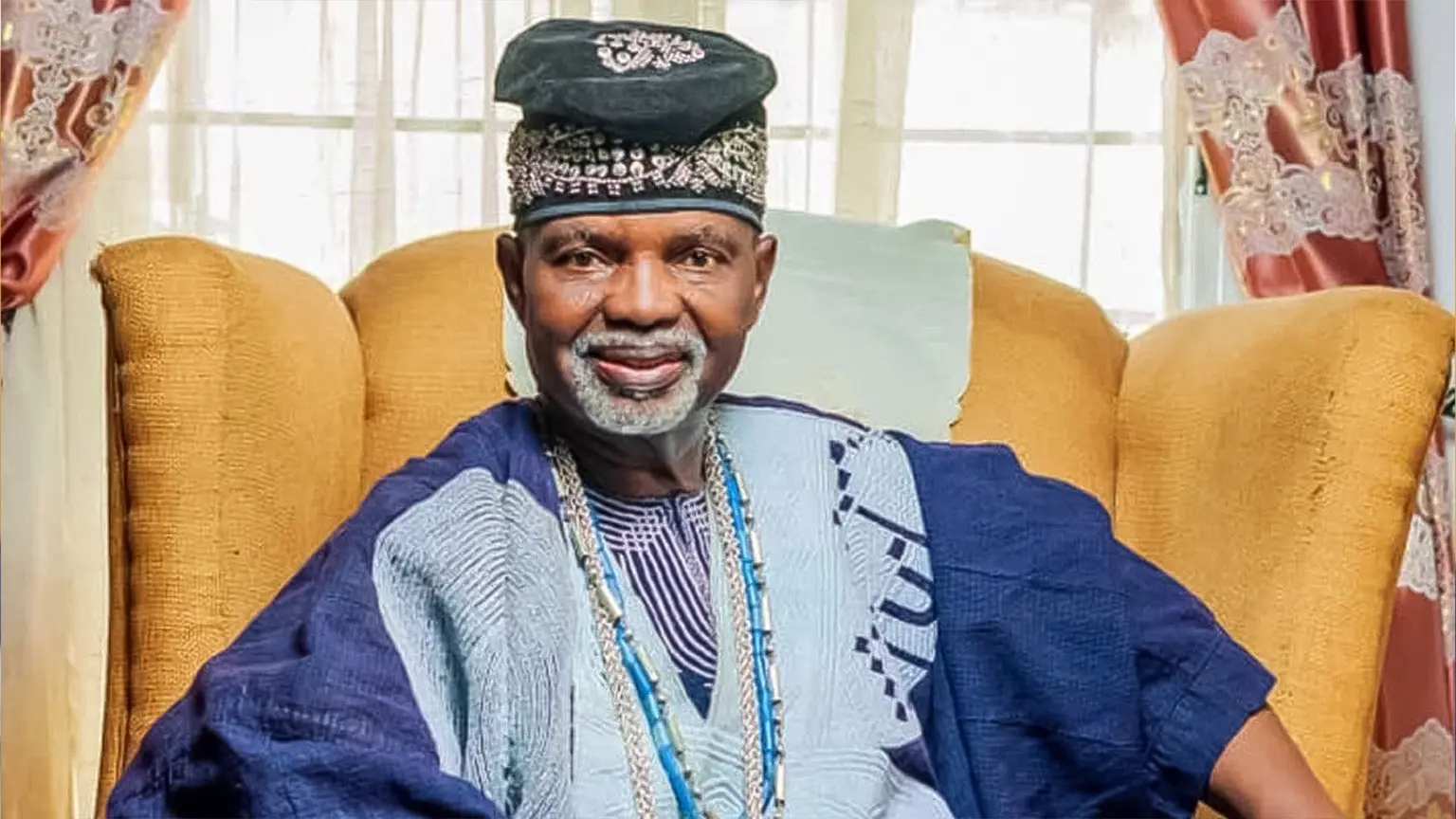
The young lady who usually delivers packaged moinmoin for members of staff who want it for lunch came in as she usually did, and after the exchange of pleasantries, I asked if she knew the difference between Ọọlẹ and Moinmoin. My colleagues looked at me strangely when I disagreed with her response that both were the same. I promised to tell her the difference later. I, however, told my colleagues the difference as explained to me by Oloye Lekan Alabi. Though a suave, urbane and sophisticated Ibadan chief, he took time to explain the similarities and differences as we prepared for the annual Oke ‘Badan Festival some years back.
He had retired from the service of Odua Investment Company Limited, where he demonstrated competence and character then, but that did not in any way diminish his encyclopaedic knowledge of history. He sat beside the Aboke, Chief Ifamapowa and some other stakeholders at the press conference heralding the ceremony that year.
My first real contact with him happened after I had written a short piece, ‘The Man Who Would Be King’, about him. Oloye, who bore the titles of Jagun Olubadan and Akogun of Lalupon agreed to have an interview. My Bureau Chief, Bola Davies (now of blessed memory) directed me to go and when I got to his office in Cocoa House, he thanked me for wishing him well. He thereafter took time to explain the Olubadan ascension system. The interview was published in one of the earliest editions of City People Quarterly back then. That interview and some other things I wrote about him eventually earned me a mention in one of his books.
Oloye Alabi was no doubt an aficionado when history, music and culture are up for discussion. Of course, with his rich cultural heritage, he stood out anywhere and everywhere. Little wonder His Imperial Majesty, the Ooni of Ife hosted his investiture when he was appointed as the first Cultural Ambassador of the National Museum, Ile Ife. His immense breadth of knowledge will give him a place in history just as it did to the likes of Chiefs John Adeyemi Ayorinde, Theophilus Akinyele and Alaafin Lamidi Adeyemi III. His love for good music too was more than obvious. Like a true connoisseur, he did everything with class and style. He wrote countless articles about Chief Commander Ebenezer Obey, King Sunny Ade, Chief Eddy Okonta and many more. His love for Yusuf Olatunji’s Sakara music defied competent description. It was so great that he named his youngest son after the Sakara legend.
In one of his many philosophical volumes, ‘Baba L’Egba’ as Olatunji was fondly called, sang that “o ye ka ni ‘fura taa ba nsin ale eni lo” (one should be watchful when seeing off a concubine) and the only person I felt I could ask what was on Baba L’Egba’s mind then was Oloye ‘Lekan Alabi. Sadly, the auspicious time to ask never came.
A reception was once hosted in his honour by Ambassador Ibironke Adefope at Bodija and it was regal! Everyone who mattered came to honour Oloye ‘Lekan Alabi. Reporting the event for City People then, one of the most unusual sights was Otunba Adebayo Alao-Akala, the then Deputy Governor of Oyo State. His simplicity was indescribable. Aside driving his convertible BMW, he came in a yellow sweatshirt and jeans.
And when he turned 60, it was like everyone else joined the Ibadan establishment to celebrate Oloye ‘Lekan Alabi. Aare Arisekola Also spoke about the celebrant in glowing terms as he emphasized that Oloye Alabi was indeed a man destined for greatness. The party afforded me the opportunity of seeing Alhaja Batile Alake live on stage. Her sonorous voice actually brought great childhood memories of when songs of Batile Alake, Olubowale Ajasco, Alalaye Ilorin and others were regular on the television.
Apart from his respectable dress sense and indepth knowledge of issues, other admirable traits of the late Abese Olubadan were his timeliness and punctuality. He once told me the story of how he had suggested that card be presented to the then military President, General Ibrahim Babangida on the birth of his baby girl back then. It turned out that the picture of where he handed the card over was published in dailies the following day. Apart from personal discipline, working with four Governors of Oyo State obviously rubbed off on him, he never attended an event late. There was a day we had to apologize as we started an event behind schedule at the Premier Hotel, Ibadan. He was about the first guest and after accepting our apologies, he didn’t become vexatious, rather, with a smile he told us that he would be in his room upstairs. He said all we needed to do was put call through to him when we were ready to start the programme.
I stood close by him at certain event and heard Chief Lateef Oyelade praying for Oloye Alabi who had just greeted him in Yoruba, he said “Olubadan o kan o” (may it be your turn to become the Olubadan). Like many of his mentees, I looked forward to seeing him on the exalted Olubadan throne, it was however not to be.
Reflecting on those golden days of celebrity journalism; the Bodija reception, the grand 60th birthday, the laughter of legends now silent; one is reminded that time eventually beckons both the caller and the called. Bola Davies, His Excellency, Otunba Alao-Akala, Aare Arisekola Alao, Chief Lateef Oyelade, Ambassador Adefope and now Oloye himself have all answered that ultimate call. Though the exalted Olubadan throne eluded him, Oloye ’Lekan Alabi leaves behind a legacy as towering as Cocoa House itself. Like his noble forebears – Oyetunde Olundegun, ‘Erin o P’ojo Logun’, and Ekerin Suberu Ajengbe, he came, he saw, he lived with unmatched panache, and he left an indelible mark on the sands of time.
Adejumo sent this piece from Ogbomoso
Opinion
Beyond Deportations: What South Africa’s Immigration Crisis Reveals About Nationhood and Economic Frustration
Published
2 months agoon
July 9, 2026By
Mega Icon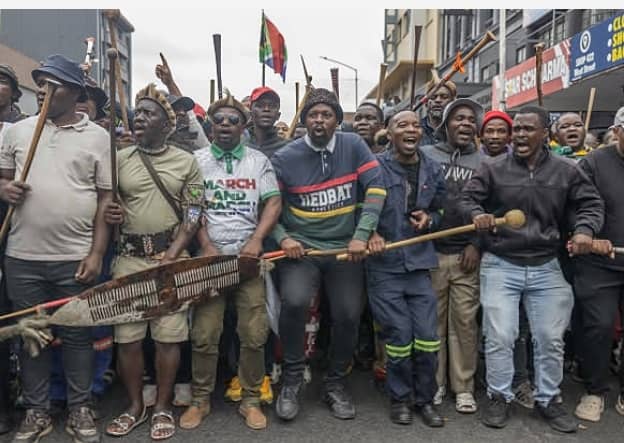
The popular saying that “one good turn deserves another” appears increasingly absent from present-day South Africa’s national consciousness. It is difficult not to ask whether many South Africans have forgotten the history of their country’s liberation and the immense sacrifices made by Nigeria and other African nations in the long struggle against apartheid.
For days, I have been deeply troubled by reports of South Africa’s worsening immigration crisis and the forceful, vigilante-style eviction of African migrants, particularly Nigerians. Beyond the headlines are broken families, shattered dreams and livelihoods painstakingly built over many years. It is a painful development that should concern every African who once believed in the ideals of continental solidarity.
Anti-immigrant sentiments in South Africa are not new. For more than two decades, campaigns against foreign nationals have been fuelled by high unemployment, widespread poverty, rising crime and frustration over inadequate public services. Many South Africans believe undocumented immigrants compete with them for jobs, housing, healthcare and social services, thereby denying citizens access to these basic necessities.
Yet, available evidence tells a more complex story. Research has consistently shown that immigrants alone cannot be blamed for South Africa’s economic and social challenges. Reducing such deep-rooted problems to the presence of foreign nationals oversimplifies a crisis that has been decades in the making.
What is often overlooked is the country’s structural economic reality. A significant skills mismatch, coupled with weaknesses in the quality of education, has left many job seekers ill-equipped for the demands of an economy increasingly driven by technology, innovation and specialised skills. This challenge is not peculiar to South Africa. Across much of sub-Saharan Africa, thousands of graduates enter the labour market every year without the technical, vocational and digital competencies employers now demand.
Beyond this, crime, insecurity, systemic corruption and poor governance continue to weigh heavily on South Africa’s economy. The country has one of the highest youth unemployment rates in the world. Persistent violent crime discourages investment, while corruption and the mismanagement of public resources have weakened service delivery, slowed infrastructure development and eroded investor confidence.
Equally significant is the enduring legacy of apartheid. More than three decades after democracy, inequalities in education, housing, infrastructure and economic opportunities remain deeply entrenched. Many Black communities still live with the consequences of decades of institutional discrimination and economic exclusion.
Against this backdrop, blaming undocumented immigrants for South Africa’s economic difficulties amounts to little more than scapegoating. It is a convenient narrative that diverts attention from the country’s more fundamental governance and developmental challenges.
The recurring xenophobic attacks against Nigerians and other African nationals make the situation even more painful. The recent killing of Emeka Iroegbu and Musa Yunana Joe on June 28, 2026, amid rising anti-migrant tensions, is a tragic reminder of how dangerous such sentiments can become.
One cannot help but ask: Is this the same South Africa for which Nigeria and many other African countries stood firmly during the anti-apartheid struggle?
I vividly remember growing up in the 1980s, listening to songs such as Free Mandela and Stop Apartheid in South Africa by iconic Nigerian musicians, including Majek Fashek, Onyeka Onwenu and Sonny Okosun. Those songs dominated the airwaves on NTA and became powerful symbols of African solidarity.
As a child, I even believed Nelson Mandela was Nigerian because Nigerians embraced his cause with such passion.
Mandela was released from prison in 1990 and became South Africa’s first Black President in 1994, bringing an end to decades of institutionalised racial segregation and apartheid. Today, just over three decades later, many Africans who once stood shoulder to shoulder with South Africans in their darkest hour are treated as unwelcome strangers.
History can be painfully ironic.
Perhaps, then, the saying that one good turn deserves another does not always reflect reality. Human beings are capable of repaying kindness with hostility. It is an uncomfortable truth, but one that life repeatedly teaches.
At a personal level, this reminds us to live with fewer expectations and strive for greater self-reliance. A heart that expects little, even after giving much, is less likely to be broken.
At the national level, however, the lesson is far more profound. Nigeria must build a country where its citizens can thrive without feeling compelled to seek survival elsewhere. Studies have shown that the overwhelming motivation behind the Japa phenomenon is the search for better opportunities and improved living conditions. If those opportunities existed at home, many Nigerians would gladly remain and contribute to national development.
The experience in South Africa—and, indeed, recent developments in the United States—demonstrates that immigration policies are shaped by changing political realities. No foreign country offers permanent guarantees.
Although the U.S. Supreme Court recently ruled against President Donald Trump’s executive order seeking to abolish birthright citizenship on constitutional grounds, the episode illustrates that even long-established policies can become subjects of political contestation. A constitutional principle that has existed since 1868 could still become a matter of national debate. That alone should remind us that every nation ultimately prioritises its own interests.
The enduring lesson is simple: no country can offer Nigerians greater long-term security than a well-governed Nigeria.
Nigeria’s greatest asset remains its people. Sustainable national prosperity can only be built through visionary leadership, accountable institutions, respect for the rule of law and responsible citizenship. When government creates an enabling environment and citizens embrace innovation, productivity and accountability, Nigeria can become a destination for investment rather than a source of economic migration.
As dozens of Nigerians return home following their repatriation from South Africa, government must move beyond sympathy and symbolic gestures. Some have returned with nothing more than the clothes they wore and a single travelling bag, leaving behind businesses, investments and years of hard work. Their return is not merely a journey home; for many, it is the painful collapse of dreams painstakingly built over decades. They deserve meaningful support to rebuild their lives and contribute productively to the nation’s economy once again.
History teaches that nations are strengthened not by chasing away strangers but by creating opportunities for their own citizens. Nigeria must therefore draw the right lessons from South Africa’s painful experience. Rather than exporting its brightest minds in search of survival, it should become a country where talent is rewarded, enterprise is encouraged and hope no longer requires a passport. Only then will Nigeria become not merely the giant of Africa by population, but by the quality of life it offers its people.
Olusegun Hassan, Ph.D
Public Policy Analyst and Social Commentator
Opinion
An Open Letter to Northern Leaders: Arewa Is Bleeding. Who Will Answer the Call?
Published
2 months agoon
July 7, 2026By
Mega Icon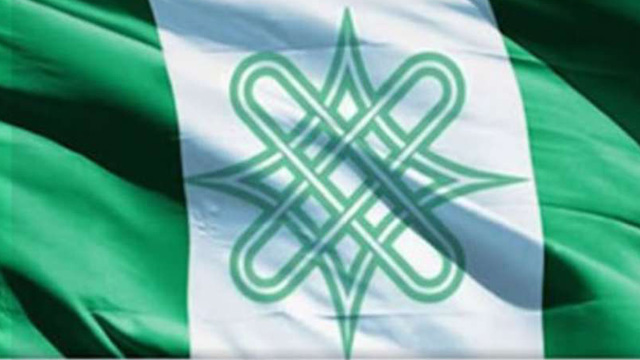
I write this letter with a heavy heart to the sons and daughters of Arewa, particularly those entrusted with leadership and influence, concerning the painful reality confronting our region today. Once united in purpose and driven by a shared vision, Arewa now appears to be living in the shadow of its glorious past.
Our forefathers built this great region with one voice, setting aside differences of ethnicity and religion. They understood that unity was our greatest strength and that our diversity was not a weakness but a blessing. Their legacy was one of peace, mutual respect, visionary leadership, and collective progress.
Today, it is heartbreaking to witness how far we have drifted from those ideals. This letter is a sincere call for reflection, reconciliation, and a renewed commitment to rebuilding the unity, security, and prosperity that once defined our beloved Arewa.
Arewa Under Siege
Northern Nigeria has become widely known as a hotspot for multiple forms of insecurity. From the Boko Haram insurgency to widespread kidnapping, armed banditry, and violent attacks, fear has become part of everyday life. People no longer feel safe in their homes, workplaces, on their farms, or while travelling on the highways. Every journey is undertaken with uncertainty, with no guarantee of arriving safely.
Even more troubling is the perception that these security challenges have become normalised. Reports of abductions, killings, and attacks have become so frequent that they often receive far less attention than they deserve. This perceived indifference from those in positions of authority has contributed to a growing public belief that criminal groups now operate with confidence and relative impunity.
Consequently, many residents feel abandoned, while public trust in the government’s ability to protect lives and property continues to erode.
Addressing this crisis requires a coordinated and sustained response through stronger security operations, improved intelligence gathering, greater support for affected communities, and genuine accountability. Without decisive action, the cycle of violence and fear will continue to undermine the region’s stability, economic development, and the well-being of its people.
Beyond Insecurity: A Crisis of Leadership
The North’s challenges are not accidental. Poverty, insecurity, and underdevelopment are the cumulative consequences of long-standing structural failures, weak governance, and policy choices that have compounded over decades.
Responsibility is shared across different segments of society—including the political elite, the educated class, and the business community—many of whom have possessed both the influence and the opportunity to intervene more decisively than they have.
Rather than being the result of a single coordinated agenda, what is evident is a persistent pattern of neglect, weak accountability, and recurring governance failures that have allowed social and economic conditions to deteriorate. These failures have contributed to rising unemployment, declining educational outcomes, inadequate healthcare, and the expansion of insecurity across much of the region.
Breaking this cycle requires more than assigning blame. It demands institutional reform, accountable leadership, strategic investment in human capital, and a renewed sense of public responsibility.
Where Are the Northern Elite?
This brings us to the most difficult question: Where are the Northern elite? Where are the governors, ministers, lawmakers, business leaders, scholars, and other influential voices? Many command enormous influence, considerable private wealth, and extensive international networks, yet too often appear unable—or unwilling—to meaningfully confront the conditions that continue to leave large parts of the region insecure, impoverished, and politically weakened.
Why does this gap persist?
Part of the answer lies in proximity to power. In political environments shaped by patronage, speaking boldly may threaten access, while silence preserves influence. Over time, self-preservation begins to resemble strategy.
Unfortunately, the cost is borne not by those in positions of privilege but by ordinary communities far removed from the rooms where decisions are made.
Reviving the North’s Industrial Legacy
Northern Nigeria was once the industrial powerhouse of the country. Cities such as Kano and Kaduna were thriving centres of manufacturing, commerce, and employment. Today, much of that industrial strength has faded.
This is, therefore, a respectful appeal to two of Nigeria’s most accomplished industrialists—Aliko Dangote and Abdul Samad Rabiu. Many people continue to ask why there is limited visible large-scale industrial reinvestment in Kano, your home state, and across Northern Nigeria.
As a Kano indigene, and to the best of my knowledge, neither Aliko Dangote nor Abdul Samad Rabiu currently operates major manufacturing facilities actively producing in Kano. Several facilities associated with their businesses are widely reported to have become inactive or to function primarily as warehouses rather than active industrial plants. For example, along Tafawa Balewa Road, two BUA facilities that previously operated flour and vegetable oil mills are reported to have ceased production. Likewise, several Dangote industrial sites stretching from Mai Malari Road to the Sharada Industrial Area are also widely reported to be inactive or operating far below capacity.
Kano and Kaduna, once renowned for their vibrant manufacturing sectors, have experienced decades of industrial decline, resulting in widespread unemployment and underutilised infrastructure. At the same time, a significant share of new private-sector industrial investment appears to have been concentrated in other parts of the country, particularly the South-West. This naturally raises important questions about balanced national development.
Philanthropy remains valuable and deeply appreciated. Scholarships, donations, and humanitarian support undoubtedly improve lives. However, charity cannot replace sustainable industrial development.
What the North urgently needs is long-term investment that revives manufacturing, creates employment, strengthens local supply chains, develops skills, and rebuilds industrial ecosystems across Kano, Kaduna, and neighbouring states. Strong factories build strong communities, while sustainable industries create lasting prosperity. The expectation, therefore, is not charity but a renewed commitment to the economic transformation of the region where many of Nigeria’s greatest industrial success stories first began.
The Responsibility of Business Leaders
The Northern business elite have watched insecurity, poverty, and displacement deepen while economic activity has increasingly concentrated elsewhere.
Insurgency, banditry, and weakened rural governance have disrupted agriculture, trade routes, and local markets. Investment naturally gravitates towards safer and more predictable environments. Yet public advocacy from many influential business leaders has often remained muted, constrained by commercial interests, political relationships, and regulatory considerations.
The region risks becoming divided into two realities: one integrated into national wealth and opportunity, and the other left to bear the consequences of persistent insecurity, economic stagnation, and neglect.
Business leadership extends beyond generating profits. It also entails helping to create an environment where enterprise can flourish, jobs can be created, and communities can prosper. Sustainable economic growth depends not only on private investment but also on the willingness of influential stakeholders to advocate policies and initiatives that promote stability, security, and inclusive development.
The North’s business community has historically played a significant role in shaping the region’s economic fortunes. That tradition of leadership remains essential today. While governments bear primary responsibility for governance and security, the private sector also possesses the capacity to influence development through strategic investments, partnerships, innovation, and constructive engagement with public institutions.
Rebuilding confidence in Northern Nigeria requires collaboration among government, businesses, civil society, and local communities. A more secure and prosperous region ultimately benefits everyone, creating new opportunities for investment, employment, and long-term economic growth.
A Message to Political Leaders
To the political leadership of Northern Nigeria: the contradiction has become increasingly difficult to ignore. The region remains one of the country’s most significant in terms of population and political influence, yet it continues to lag behind on key development indicators such as education, healthcare, infrastructure, employment, and security.
When communities are attacked, farmers are displaced, and schools are forced to close, silence from those entrusted with leadership is seldom interpreted as restraint. More often, it is perceived as detachment. Leadership is measured not only by electoral success or political influence but also by the willingness to confront difficult realities with courage, empathy, and decisive action.
The expectations of citizens go beyond promises. They seek visible commitment, practical solutions, and sustained engagement with the challenges affecting their daily lives. Rebuilding public confidence requires leadership that is accountable, responsive, and focused on the long-term development of the region.
A Message to the Educated and Professional Class
To our academics, professionals, and intellectuals: the evidence is neither hidden nor difficult to find. Reports, research, and lived experiences consistently reveal widening gaps in human development, education, healthcare, and security.
Yet, too often, expertise remains confined within institutions and professional circles that discourage open engagement with entrenched power. Knowledge should not merely describe problems; it should help solve them. Research should inform policy, enrich public debate, and contribute meaningfully to sustainable solutions.
Every society depends on courageous thinkers who are willing to engage constructively, challenge complacency, and place the public interest above personal convenience. The North possesses no shortage of intellectual talent. What is needed is a stronger connection between knowledge and action.
A Message to Cultural Influencers
To our musicians, artists, writers, actors, and other public figures: throughout history, art has served as a powerful instrument of truth, reflection, and social transformation. Cultural voices have inspired movements, preserved history, and given hope to communities during difficult times.
Yet, when economic survival becomes closely tied to political or commercial interests, critical voices often become subdued. Society benefits when its cultural figures speak with honesty, empathy, and a sense of responsibility. Their influence extends beyond entertainment; it helps shape public values, inspire civic engagement, and amplify the concerns of ordinary people.
A Shared Responsibility
Ultimately, this is not solely a Northern Nigerian problem. It reflects a broader question confronting societies everywhere: what happens when elite interests become disconnected from the well-being of ordinary people?
When access becomes more valuable than accountability, and proximity to power outweighs responsibility to the public, silence is rarely accidental—it becomes institutionalised.
The result is a widening emotional and political distance between leadership and the people. Unless that distance is narrowed through meaningful investment, principled advocacy, and courageous leadership, the same questions will continue to resonate:
Who speaks? Who benefits? Who bears the cost?
History will judge every generation by how it responds to the challenges of its time. Northern Nigeria possesses enormous human potential, entrepreneurial talent, agricultural resources, and a rich cultural heritage.
What it requires now is leadership marked by vision, courage, integrity, and an unwavering commitment to the common good.
This letter is not intended to condemn but to encourage honest reflection and meaningful action. The future of Arewa depends not only on government but also on every leader, businessperson, scholar, professional, artist, and citizen willing to place the region’s long-term prosperity above personal or political interests.
May we find the wisdom to rebuild what has been weakened, the courage to confront uncomfortable truths, and the determination to restore Northern Nigeria to its rightful place as a region of peace, opportunity, and shared prosperity.
Abba Dukawa writes from Kano and can be reached at abbahydukawa@gmail.com.
Advertisement

Entertainment









MegaIcon Magazine Facebook Page
MEGAICON TV
Advertisement

Trending
-
 Politics1 week ago
Adeleke Reaffirms Tinubu Endorsement After Osun Victory
-
Politics1 week ago
Adeleke: I Had No Electoral Deal With ADC
-
Education1 week ago
ADC guber candidate, Adegoke decries 674,324 out-of-school children in Oyo
-
News1 week ago
FG adds 208MW to national grid, upgrades Ijora, Apapa substations