Opinion
Redesigning Nigeria With Votes

Published
4 years agoon
By
Oludayo Tade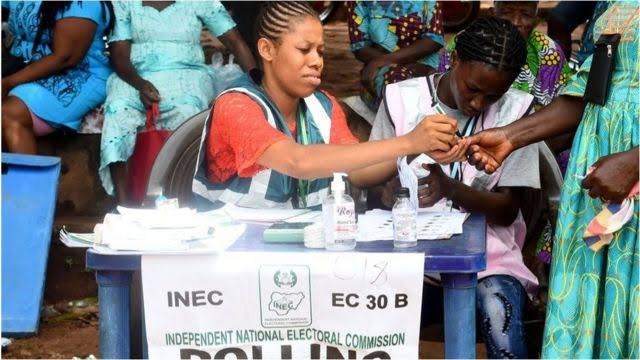
Will Nigerians rise to the occasion and redesign Nigeria with their votes? I know that surviving has been difficult for many and better for a few. Democracy is a game of numbers and this is why Nigerian voters should understand their situations and identify individuals who best fit the Nigeria of their dreams. They should not do this only because of religion, region, or political party. Since the return of democracy in 1999, poverty, criminal victimization and unemployment and the effects of poor leadership have not spared any person because he or she comes from the North or South, Muslim or Christian. If a society deserves the type of leadership they get, it means a lot rests on the finger of eligible voters. In your hands lies the future of Nigeria and you should be ready to bear the consequences of your voting decisions. Before voting, you must review where we are coming from as a country to understand why we arrived at our present situation. The combination of the past and present conditions should inform and guide you to make the right choices for the future that you desire.
We are where we are partly because we have always elected bad or misfit people into government. A few people lie to us and turn one ethnic group against another to enslave their people and after that, the same tribesman who had painted one political party as evil goes back to the evil party to make money for himself and his family. In 2014, we know how our economy was and how it is today. We know that Goodluck Jonathan was to be voted out because of the infirmity of control over his government and the endemic corruption. Candidate ‘Saint’ Muhammadu Buhari was repackaged by those who had expressed reservations about his person but that was the only route to the realization of their dreams. Almost eight years after the emergence of the prince of Daura, corruption is deep-rooted in low and high places in audacious dimensions. Policies of government are poorly conceived or wholesale imported without domestication. Today, 133 million Nigerians, according to the National Bureau of Statistics (NBS) experience multi-dimensional poverty. According to NBS, 70% of Nigerians live in rural areas. Out of these, 80% of them are poor. The intensity of poverty in rural areas is 41.9% compared to 36.9% in urban areas. Furthermore, seven out of 10 persons living in rural areas of Nigeria are multi-dimensionally poor while four out of every 10 persons in urban areas experience the same. Unfortunately, most political campaigns leading to the 2023 polls have been urban-based and those who visited rural areas did so to patronize them for votes and may never return there until another election season. I remember when Vice President, Yemi Osinbajo was patronizing rural communities with trader-moni in 2019. When last did you see him pursue such a scheme? It was to bring people in with their treasured votes just as Nigerians were asked for their old naira in banks and after that, they have to beg to withdraw from it.
Budgetary allocation to education and health has not been encouraging. The nosediving fortunes in the education and health sectors contributed to the Japa syndrome which now puts the lives of many Nigerians at risk because of a shortage of skilled physicians and specialists. Those still at home are hibernating for opportunities. Nigerians in their homeland who cannot afford to consult in the United Kingdom or United Arab Emirates like the outgoing president Muhammadu Buhari and some of those aspiring to become the President, need to think when casting who to vote for on Saturday, February 25, 2023.
Monetary poverty is across the nation but not above fifty percent. The price of Premium Motor Spirit hovers around N257.12 according to NBS. Still, fuel is scarce and depositors cannot get their money from banks. Their money has been kidnapped by the Emefieleistic naira redesign policy and its faulty implementation. As I write this piece, people were under the sun and locked outside the banking premises observed from the University of Ibadan through Dugbe in Ibadan. Yet, this Buhari-led government asked people to exercise patience. The same government turned the people against the banks by blaming them for sabotaging the policy. But who are the major shareholders of these banks? Are they not the politicians and their cronies who need naira ahead of elections and for money laundering? Will the banks not do the bidding of their financiers to save their jobs? While saboteurs within the banking system contributed to the sufferings of Nigerians, the government of the day cannot absolve itself of shallow thought on how to properly implement a policy of this nature without afflicting the people with pain, violence, dehumanization, and death.
From naked protests within the banking hall to the violence and arson on the streets, the socio-economic landscape of Nigeria speaks of the pressure that Nigerians endure under this outgoing government. Someone reportedly died in Lagos while queueing up to withdraw cash while many died in the hospital because they cannot access money to pay for healthcare services. While so much has been spent to equip the security systems, the Northeast is still afflicted with insurgency and banditry, Northcentral with pastoral-herder conflict, militancy, and insurgency while South-south is battling militancy, secessionists’ movement, banditry, and cultism leading to deaths, and displacements. The victims of armed robbery and kidnapping on Nigeria’s hellish highways won’t forget in a hurry. Some people have left the country on account of insecurity; others due to perceived hopelessness for their future in Nigeria. While many variables account for crime occurrence, the failure of the government to tackle the causative factors contributed to its pervasiveness. It should now be obvious to Nigerians that it is not enough to be a General, a civilian who understands what the problem is and has the will to do it will perform more than the outgoing President of Nigeria. Notwithstanding the bad economy, accumulation of foreign debts, and security setbacks, the Muhammadu Buhari government recorded successes in infrastructures, train rejuvenation, and signing of the electoral act among others.
Presidential and National Assembly elections held in a few hours. This is the only opportunity that democracy has given to you to determine who governs and impacts your life chances for another four years. You may decide to vote along ethnic lines but remember that poverty, insecurity, and unemployment do not isolate one ethnic group. You may decide to vote based on religion but remember that all religious groups are now facing a reduction in church and mosque attendance as well as a reduction in offerings because of one poorly implemented policy. Are you planning to vote along the party line? Remember that the People’s Democratic party ruled for 16 years and you replaced them with the All-Progressives Congress which has not been a better substitute. Are you voting for personality? Check out how many times that contesting has had to jump from one political party platform to another including forming and switching alliances. The point here is that one variable is not sufficient to elect somebody into political office and certainly, not on primordial sentiments. If we elect bad people, it is because we are bad ourselves. We elect people who represent our views about life and about how public offices should be run. Ahead of voting, try to honestly answer these questions: what kind of Nigeria do I desire? Is it a Nigeria in which the majority enthrones the minority for the enjoyment of the minority and the punishment of the majority for their foolishness? Or a Nigeria in which the majority elects people who think and act in the best interest of the majority? Or a Nigeria in which the majority elect those interested in holding political offices to fulfill personal ambitions without any readiness for the demands of those offices? Finally, if Nigeria were to be your company and it is facing what Nigeria is experiencing, which of the candidates would you employ to rescue your company? Now that you have answered the questions, you may now go ahead, cast your vote and live with the intended and unintended consequences of your voting decision.
Dr. Tade, a sociologist wrote via dotad2003@yahoo.com





Opinion
Oloye Lekan Alabi: Memories Ere Death Beckoned Both Caller and Called |By Wole Adejumo
Published
3 weeks agoon
August 7, 2026By
Mega Icon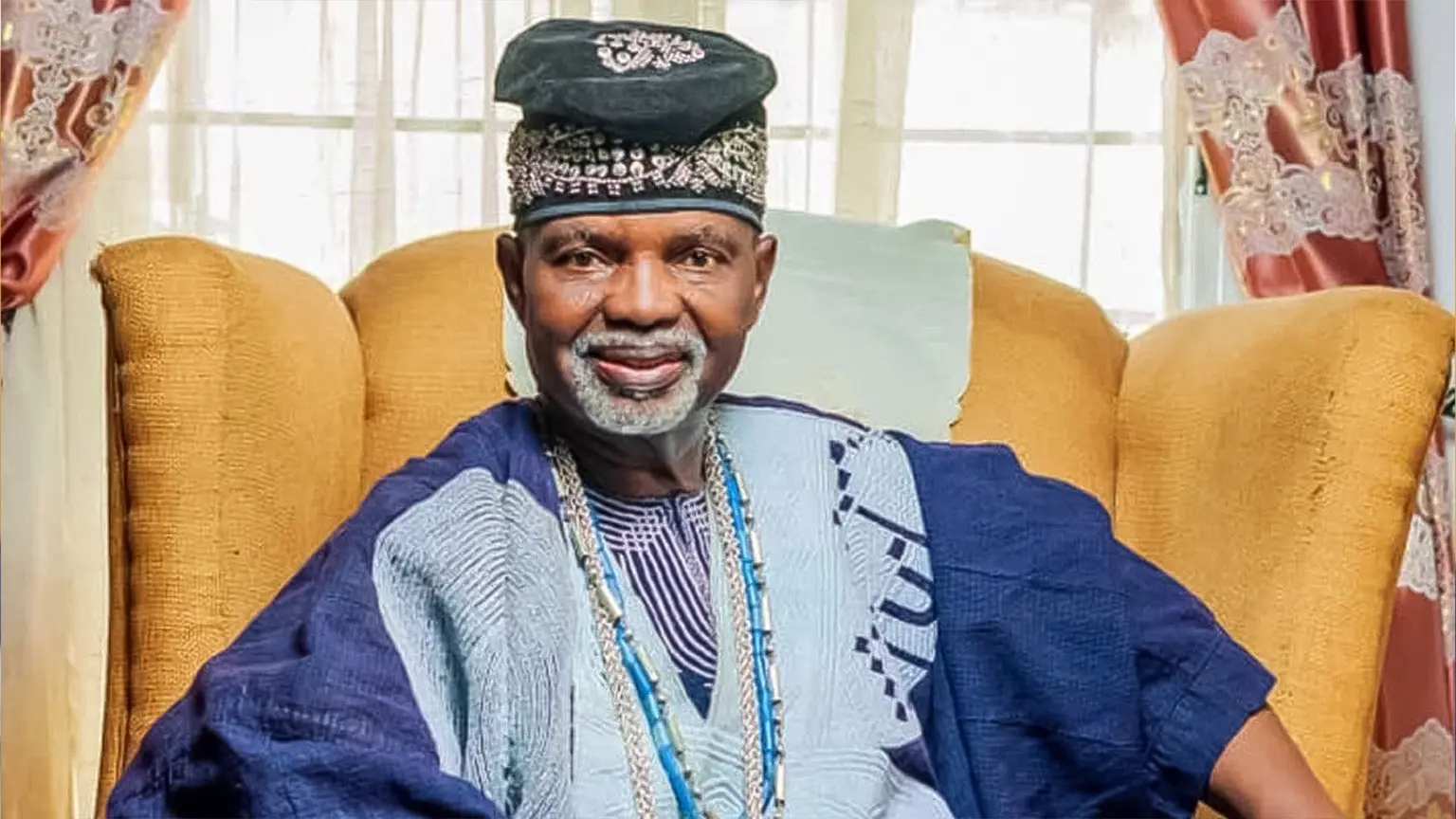
The young lady who usually delivers packaged moinmoin for members of staff who want it for lunch came in as she usually did, and after the exchange of pleasantries, I asked if she knew the difference between Ọọlẹ and Moinmoin. My colleagues looked at me strangely when I disagreed with her response that both were the same. I promised to tell her the difference later. I, however, told my colleagues the difference as explained to me by Oloye Lekan Alabi. Though a suave, urbane and sophisticated Ibadan chief, he took time to explain the similarities and differences as we prepared for the annual Oke ‘Badan Festival some years back.
He had retired from the service of Odua Investment Company Limited, where he demonstrated competence and character then, but that did not in any way diminish his encyclopaedic knowledge of history. He sat beside the Aboke, Chief Ifamapowa and some other stakeholders at the press conference heralding the ceremony that year.
My first real contact with him happened after I had written a short piece, ‘The Man Who Would Be King’, about him. Oloye, who bore the titles of Jagun Olubadan and Akogun of Lalupon agreed to have an interview. My Bureau Chief, Bola Davies (now of blessed memory) directed me to go and when I got to his office in Cocoa House, he thanked me for wishing him well. He thereafter took time to explain the Olubadan ascension system. The interview was published in one of the earliest editions of City People Quarterly back then. That interview and some other things I wrote about him eventually earned me a mention in one of his books.
Oloye Alabi was no doubt an aficionado when history, music and culture are up for discussion. Of course, with his rich cultural heritage, he stood out anywhere and everywhere. Little wonder His Imperial Majesty, the Ooni of Ife hosted his investiture when he was appointed as the first Cultural Ambassador of the National Museum, Ile Ife. His immense breadth of knowledge will give him a place in history just as it did to the likes of Chiefs John Adeyemi Ayorinde, Theophilus Akinyele and Alaafin Lamidi Adeyemi III. His love for good music too was more than obvious. Like a true connoisseur, he did everything with class and style. He wrote countless articles about Chief Commander Ebenezer Obey, King Sunny Ade, Chief Eddy Okonta and many more. His love for Yusuf Olatunji’s Sakara music defied competent description. It was so great that he named his youngest son after the Sakara legend.
In one of his many philosophical volumes, ‘Baba L’Egba’ as Olatunji was fondly called, sang that “o ye ka ni ‘fura taa ba nsin ale eni lo” (one should be watchful when seeing off a concubine) and the only person I felt I could ask what was on Baba L’Egba’s mind then was Oloye ‘Lekan Alabi. Sadly, the auspicious time to ask never came.
A reception was once hosted in his honour by Ambassador Ibironke Adefope at Bodija and it was regal! Everyone who mattered came to honour Oloye ‘Lekan Alabi. Reporting the event for City People then, one of the most unusual sights was Otunba Adebayo Alao-Akala, the then Deputy Governor of Oyo State. His simplicity was indescribable. Aside driving his convertible BMW, he came in a yellow sweatshirt and jeans.
And when he turned 60, it was like everyone else joined the Ibadan establishment to celebrate Oloye ‘Lekan Alabi. Aare Arisekola Also spoke about the celebrant in glowing terms as he emphasized that Oloye Alabi was indeed a man destined for greatness. The party afforded me the opportunity of seeing Alhaja Batile Alake live on stage. Her sonorous voice actually brought great childhood memories of when songs of Batile Alake, Olubowale Ajasco, Alalaye Ilorin and others were regular on the television.
Apart from his respectable dress sense and indepth knowledge of issues, other admirable traits of the late Abese Olubadan were his timeliness and punctuality. He once told me the story of how he had suggested that card be presented to the then military President, General Ibrahim Babangida on the birth of his baby girl back then. It turned out that the picture of where he handed the card over was published in dailies the following day. Apart from personal discipline, working with four Governors of Oyo State obviously rubbed off on him, he never attended an event late. There was a day we had to apologize as we started an event behind schedule at the Premier Hotel, Ibadan. He was about the first guest and after accepting our apologies, he didn’t become vexatious, rather, with a smile he told us that he would be in his room upstairs. He said all we needed to do was put call through to him when we were ready to start the programme.
I stood close by him at certain event and heard Chief Lateef Oyelade praying for Oloye Alabi who had just greeted him in Yoruba, he said “Olubadan o kan o” (may it be your turn to become the Olubadan). Like many of his mentees, I looked forward to seeing him on the exalted Olubadan throne, it was however not to be.
Reflecting on those golden days of celebrity journalism; the Bodija reception, the grand 60th birthday, the laughter of legends now silent; one is reminded that time eventually beckons both the caller and the called. Bola Davies, His Excellency, Otunba Alao-Akala, Aare Arisekola Alao, Chief Lateef Oyelade, Ambassador Adefope and now Oloye himself have all answered that ultimate call. Though the exalted Olubadan throne eluded him, Oloye ’Lekan Alabi leaves behind a legacy as towering as Cocoa House itself. Like his noble forebears – Oyetunde Olundegun, ‘Erin o P’ojo Logun’, and Ekerin Suberu Ajengbe, he came, he saw, he lived with unmatched panache, and he left an indelible mark on the sands of time.
Adejumo sent this piece from Ogbomoso
Opinion
Beyond Deportations: What South Africa’s Immigration Crisis Reveals About Nationhood and Economic Frustration
Published
2 months agoon
July 9, 2026By
Mega Icon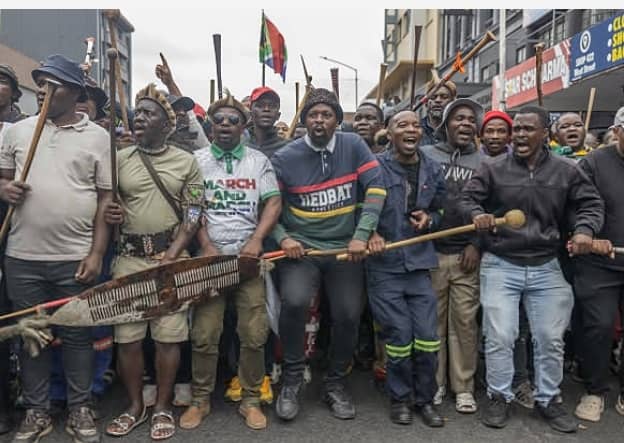
The popular saying that “one good turn deserves another” appears increasingly absent from present-day South Africa’s national consciousness. It is difficult not to ask whether many South Africans have forgotten the history of their country’s liberation and the immense sacrifices made by Nigeria and other African nations in the long struggle against apartheid.
For days, I have been deeply troubled by reports of South Africa’s worsening immigration crisis and the forceful, vigilante-style eviction of African migrants, particularly Nigerians. Beyond the headlines are broken families, shattered dreams and livelihoods painstakingly built over many years. It is a painful development that should concern every African who once believed in the ideals of continental solidarity.
Anti-immigrant sentiments in South Africa are not new. For more than two decades, campaigns against foreign nationals have been fuelled by high unemployment, widespread poverty, rising crime and frustration over inadequate public services. Many South Africans believe undocumented immigrants compete with them for jobs, housing, healthcare and social services, thereby denying citizens access to these basic necessities.
Yet, available evidence tells a more complex story. Research has consistently shown that immigrants alone cannot be blamed for South Africa’s economic and social challenges. Reducing such deep-rooted problems to the presence of foreign nationals oversimplifies a crisis that has been decades in the making.
What is often overlooked is the country’s structural economic reality. A significant skills mismatch, coupled with weaknesses in the quality of education, has left many job seekers ill-equipped for the demands of an economy increasingly driven by technology, innovation and specialised skills. This challenge is not peculiar to South Africa. Across much of sub-Saharan Africa, thousands of graduates enter the labour market every year without the technical, vocational and digital competencies employers now demand.
Beyond this, crime, insecurity, systemic corruption and poor governance continue to weigh heavily on South Africa’s economy. The country has one of the highest youth unemployment rates in the world. Persistent violent crime discourages investment, while corruption and the mismanagement of public resources have weakened service delivery, slowed infrastructure development and eroded investor confidence.
Equally significant is the enduring legacy of apartheid. More than three decades after democracy, inequalities in education, housing, infrastructure and economic opportunities remain deeply entrenched. Many Black communities still live with the consequences of decades of institutional discrimination and economic exclusion.
Against this backdrop, blaming undocumented immigrants for South Africa’s economic difficulties amounts to little more than scapegoating. It is a convenient narrative that diverts attention from the country’s more fundamental governance and developmental challenges.
The recurring xenophobic attacks against Nigerians and other African nationals make the situation even more painful. The recent killing of Emeka Iroegbu and Musa Yunana Joe on June 28, 2026, amid rising anti-migrant tensions, is a tragic reminder of how dangerous such sentiments can become.
One cannot help but ask: Is this the same South Africa for which Nigeria and many other African countries stood firmly during the anti-apartheid struggle?
I vividly remember growing up in the 1980s, listening to songs such as Free Mandela and Stop Apartheid in South Africa by iconic Nigerian musicians, including Majek Fashek, Onyeka Onwenu and Sonny Okosun. Those songs dominated the airwaves on NTA and became powerful symbols of African solidarity.
As a child, I even believed Nelson Mandela was Nigerian because Nigerians embraced his cause with such passion.
Mandela was released from prison in 1990 and became South Africa’s first Black President in 1994, bringing an end to decades of institutionalised racial segregation and apartheid. Today, just over three decades later, many Africans who once stood shoulder to shoulder with South Africans in their darkest hour are treated as unwelcome strangers.
History can be painfully ironic.
Perhaps, then, the saying that one good turn deserves another does not always reflect reality. Human beings are capable of repaying kindness with hostility. It is an uncomfortable truth, but one that life repeatedly teaches.
At a personal level, this reminds us to live with fewer expectations and strive for greater self-reliance. A heart that expects little, even after giving much, is less likely to be broken.
At the national level, however, the lesson is far more profound. Nigeria must build a country where its citizens can thrive without feeling compelled to seek survival elsewhere. Studies have shown that the overwhelming motivation behind the Japa phenomenon is the search for better opportunities and improved living conditions. If those opportunities existed at home, many Nigerians would gladly remain and contribute to national development.
The experience in South Africa—and, indeed, recent developments in the United States—demonstrates that immigration policies are shaped by changing political realities. No foreign country offers permanent guarantees.
Although the U.S. Supreme Court recently ruled against President Donald Trump’s executive order seeking to abolish birthright citizenship on constitutional grounds, the episode illustrates that even long-established policies can become subjects of political contestation. A constitutional principle that has existed since 1868 could still become a matter of national debate. That alone should remind us that every nation ultimately prioritises its own interests.
The enduring lesson is simple: no country can offer Nigerians greater long-term security than a well-governed Nigeria.
Nigeria’s greatest asset remains its people. Sustainable national prosperity can only be built through visionary leadership, accountable institutions, respect for the rule of law and responsible citizenship. When government creates an enabling environment and citizens embrace innovation, productivity and accountability, Nigeria can become a destination for investment rather than a source of economic migration.
As dozens of Nigerians return home following their repatriation from South Africa, government must move beyond sympathy and symbolic gestures. Some have returned with nothing more than the clothes they wore and a single travelling bag, leaving behind businesses, investments and years of hard work. Their return is not merely a journey home; for many, it is the painful collapse of dreams painstakingly built over decades. They deserve meaningful support to rebuild their lives and contribute productively to the nation’s economy once again.
History teaches that nations are strengthened not by chasing away strangers but by creating opportunities for their own citizens. Nigeria must therefore draw the right lessons from South Africa’s painful experience. Rather than exporting its brightest minds in search of survival, it should become a country where talent is rewarded, enterprise is encouraged and hope no longer requires a passport. Only then will Nigeria become not merely the giant of Africa by population, but by the quality of life it offers its people.
Olusegun Hassan, Ph.D
Public Policy Analyst and Social Commentator
Opinion
An Open Letter to Northern Leaders: Arewa Is Bleeding. Who Will Answer the Call?
Published
2 months agoon
July 7, 2026By
Mega Icon
I write this letter with a heavy heart to the sons and daughters of Arewa, particularly those entrusted with leadership and influence, concerning the painful reality confronting our region today. Once united in purpose and driven by a shared vision, Arewa now appears to be living in the shadow of its glorious past.
Our forefathers built this great region with one voice, setting aside differences of ethnicity and religion. They understood that unity was our greatest strength and that our diversity was not a weakness but a blessing. Their legacy was one of peace, mutual respect, visionary leadership, and collective progress.
Today, it is heartbreaking to witness how far we have drifted from those ideals. This letter is a sincere call for reflection, reconciliation, and a renewed commitment to rebuilding the unity, security, and prosperity that once defined our beloved Arewa.
Arewa Under Siege
Northern Nigeria has become widely known as a hotspot for multiple forms of insecurity. From the Boko Haram insurgency to widespread kidnapping, armed banditry, and violent attacks, fear has become part of everyday life. People no longer feel safe in their homes, workplaces, on their farms, or while travelling on the highways. Every journey is undertaken with uncertainty, with no guarantee of arriving safely.
Even more troubling is the perception that these security challenges have become normalised. Reports of abductions, killings, and attacks have become so frequent that they often receive far less attention than they deserve. This perceived indifference from those in positions of authority has contributed to a growing public belief that criminal groups now operate with confidence and relative impunity.
Consequently, many residents feel abandoned, while public trust in the government’s ability to protect lives and property continues to erode.
Addressing this crisis requires a coordinated and sustained response through stronger security operations, improved intelligence gathering, greater support for affected communities, and genuine accountability. Without decisive action, the cycle of violence and fear will continue to undermine the region’s stability, economic development, and the well-being of its people.
Beyond Insecurity: A Crisis of Leadership
The North’s challenges are not accidental. Poverty, insecurity, and underdevelopment are the cumulative consequences of long-standing structural failures, weak governance, and policy choices that have compounded over decades.
Responsibility is shared across different segments of society—including the political elite, the educated class, and the business community—many of whom have possessed both the influence and the opportunity to intervene more decisively than they have.
Rather than being the result of a single coordinated agenda, what is evident is a persistent pattern of neglect, weak accountability, and recurring governance failures that have allowed social and economic conditions to deteriorate. These failures have contributed to rising unemployment, declining educational outcomes, inadequate healthcare, and the expansion of insecurity across much of the region.
Breaking this cycle requires more than assigning blame. It demands institutional reform, accountable leadership, strategic investment in human capital, and a renewed sense of public responsibility.
Where Are the Northern Elite?
This brings us to the most difficult question: Where are the Northern elite? Where are the governors, ministers, lawmakers, business leaders, scholars, and other influential voices? Many command enormous influence, considerable private wealth, and extensive international networks, yet too often appear unable—or unwilling—to meaningfully confront the conditions that continue to leave large parts of the region insecure, impoverished, and politically weakened.
Why does this gap persist?
Part of the answer lies in proximity to power. In political environments shaped by patronage, speaking boldly may threaten access, while silence preserves influence. Over time, self-preservation begins to resemble strategy.
Unfortunately, the cost is borne not by those in positions of privilege but by ordinary communities far removed from the rooms where decisions are made.
Reviving the North’s Industrial Legacy
Northern Nigeria was once the industrial powerhouse of the country. Cities such as Kano and Kaduna were thriving centres of manufacturing, commerce, and employment. Today, much of that industrial strength has faded.
This is, therefore, a respectful appeal to two of Nigeria’s most accomplished industrialists—Aliko Dangote and Abdul Samad Rabiu. Many people continue to ask why there is limited visible large-scale industrial reinvestment in Kano, your home state, and across Northern Nigeria.
As a Kano indigene, and to the best of my knowledge, neither Aliko Dangote nor Abdul Samad Rabiu currently operates major manufacturing facilities actively producing in Kano. Several facilities associated with their businesses are widely reported to have become inactive or to function primarily as warehouses rather than active industrial plants. For example, along Tafawa Balewa Road, two BUA facilities that previously operated flour and vegetable oil mills are reported to have ceased production. Likewise, several Dangote industrial sites stretching from Mai Malari Road to the Sharada Industrial Area are also widely reported to be inactive or operating far below capacity.
Kano and Kaduna, once renowned for their vibrant manufacturing sectors, have experienced decades of industrial decline, resulting in widespread unemployment and underutilised infrastructure. At the same time, a significant share of new private-sector industrial investment appears to have been concentrated in other parts of the country, particularly the South-West. This naturally raises important questions about balanced national development.
Philanthropy remains valuable and deeply appreciated. Scholarships, donations, and humanitarian support undoubtedly improve lives. However, charity cannot replace sustainable industrial development.
What the North urgently needs is long-term investment that revives manufacturing, creates employment, strengthens local supply chains, develops skills, and rebuilds industrial ecosystems across Kano, Kaduna, and neighbouring states. Strong factories build strong communities, while sustainable industries create lasting prosperity. The expectation, therefore, is not charity but a renewed commitment to the economic transformation of the region where many of Nigeria’s greatest industrial success stories first began.
The Responsibility of Business Leaders
The Northern business elite have watched insecurity, poverty, and displacement deepen while economic activity has increasingly concentrated elsewhere.
Insurgency, banditry, and weakened rural governance have disrupted agriculture, trade routes, and local markets. Investment naturally gravitates towards safer and more predictable environments. Yet public advocacy from many influential business leaders has often remained muted, constrained by commercial interests, political relationships, and regulatory considerations.
The region risks becoming divided into two realities: one integrated into national wealth and opportunity, and the other left to bear the consequences of persistent insecurity, economic stagnation, and neglect.
Business leadership extends beyond generating profits. It also entails helping to create an environment where enterprise can flourish, jobs can be created, and communities can prosper. Sustainable economic growth depends not only on private investment but also on the willingness of influential stakeholders to advocate policies and initiatives that promote stability, security, and inclusive development.
The North’s business community has historically played a significant role in shaping the region’s economic fortunes. That tradition of leadership remains essential today. While governments bear primary responsibility for governance and security, the private sector also possesses the capacity to influence development through strategic investments, partnerships, innovation, and constructive engagement with public institutions.
Rebuilding confidence in Northern Nigeria requires collaboration among government, businesses, civil society, and local communities. A more secure and prosperous region ultimately benefits everyone, creating new opportunities for investment, employment, and long-term economic growth.
A Message to Political Leaders
To the political leadership of Northern Nigeria: the contradiction has become increasingly difficult to ignore. The region remains one of the country’s most significant in terms of population and political influence, yet it continues to lag behind on key development indicators such as education, healthcare, infrastructure, employment, and security.
When communities are attacked, farmers are displaced, and schools are forced to close, silence from those entrusted with leadership is seldom interpreted as restraint. More often, it is perceived as detachment. Leadership is measured not only by electoral success or political influence but also by the willingness to confront difficult realities with courage, empathy, and decisive action.
The expectations of citizens go beyond promises. They seek visible commitment, practical solutions, and sustained engagement with the challenges affecting their daily lives. Rebuilding public confidence requires leadership that is accountable, responsive, and focused on the long-term development of the region.
A Message to the Educated and Professional Class
To our academics, professionals, and intellectuals: the evidence is neither hidden nor difficult to find. Reports, research, and lived experiences consistently reveal widening gaps in human development, education, healthcare, and security.
Yet, too often, expertise remains confined within institutions and professional circles that discourage open engagement with entrenched power. Knowledge should not merely describe problems; it should help solve them. Research should inform policy, enrich public debate, and contribute meaningfully to sustainable solutions.
Every society depends on courageous thinkers who are willing to engage constructively, challenge complacency, and place the public interest above personal convenience. The North possesses no shortage of intellectual talent. What is needed is a stronger connection between knowledge and action.
A Message to Cultural Influencers
To our musicians, artists, writers, actors, and other public figures: throughout history, art has served as a powerful instrument of truth, reflection, and social transformation. Cultural voices have inspired movements, preserved history, and given hope to communities during difficult times.
Yet, when economic survival becomes closely tied to political or commercial interests, critical voices often become subdued. Society benefits when its cultural figures speak with honesty, empathy, and a sense of responsibility. Their influence extends beyond entertainment; it helps shape public values, inspire civic engagement, and amplify the concerns of ordinary people.
A Shared Responsibility
Ultimately, this is not solely a Northern Nigerian problem. It reflects a broader question confronting societies everywhere: what happens when elite interests become disconnected from the well-being of ordinary people?
When access becomes more valuable than accountability, and proximity to power outweighs responsibility to the public, silence is rarely accidental—it becomes institutionalised.
The result is a widening emotional and political distance between leadership and the people. Unless that distance is narrowed through meaningful investment, principled advocacy, and courageous leadership, the same questions will continue to resonate:
Who speaks? Who benefits? Who bears the cost?
History will judge every generation by how it responds to the challenges of its time. Northern Nigeria possesses enormous human potential, entrepreneurial talent, agricultural resources, and a rich cultural heritage.
What it requires now is leadership marked by vision, courage, integrity, and an unwavering commitment to the common good.
This letter is not intended to condemn but to encourage honest reflection and meaningful action. The future of Arewa depends not only on government but also on every leader, businessperson, scholar, professional, artist, and citizen willing to place the region’s long-term prosperity above personal or political interests.
May we find the wisdom to rebuild what has been weakened, the courage to confront uncomfortable truths, and the determination to restore Northern Nigeria to its rightful place as a region of peace, opportunity, and shared prosperity.
Abba Dukawa writes from Kano and can be reached at abbahydukawa@gmail.com.
Advertisement

Entertainment









MegaIcon Magazine Facebook Page
MEGAICON TV
Advertisement

Trending
-
 Education1 week ago
ADC guber candidate, Adegoke decries 674,324 out-of-school children in Oyo
-
News1 week ago
FG adds 208MW to national grid, upgrades Ijora, Apapa substations
-
Politics1 week ago
Adeleke: I Had No Electoral Deal With ADC
-
Sports1 week ago
Oyo APC Demands Probe of N5.5bn Lekan Salami Stadium Renovation