Opinion
Murder so cruel

Published
4 years agoon
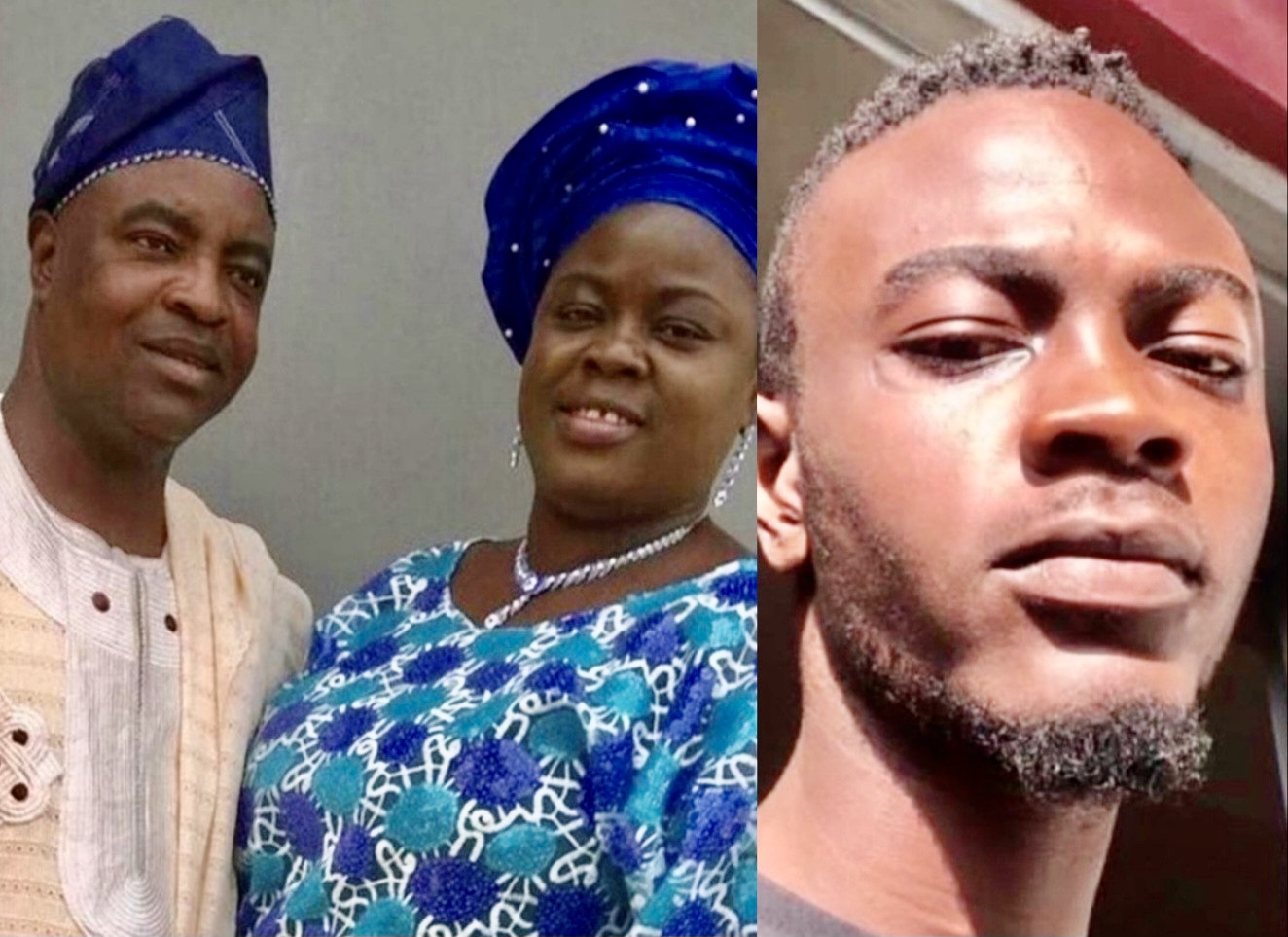
The murders of Kehinde and Bukola Fatinoye, a few hours after the new year, have made me pensive and downcast since the news broke. That dastardly murder is one event of 2023 that throws me into spasms whenever my mind reflects on it. Unable to reconcile the gravity of this evil with the aesthetic beauty of life as God’s creation, this murder made me dust up my handbooks on the philosophy of evil and wickedness. I wanted a clue as to why this horror happened and why our world’s most fitting alias is wickedness and cruelty.
The Fatinoyes were killed in their home located in Ibara Government Reservation Area, Abeokuta, Ogun State, a few hours after the celebration of the birth of a new year. According to newspaper reports, the duo, who worked at the Central Bank of Nigeria (CBN) and the Federal University of Agriculture, Abeokuta respectively, had just returned from the yearly church ritual of Crossover Service when their assailants struck. Not only did the killers snuff life out of them, but their corpses were also set ablaze, ostensibly to shroud the motive of and railroad investigators from the alibi of the assassination.
As they escaped the scene, the killers dragged with them the Fatinoyes’ 23-year-old son, Oreoluwa, who they abducted. Three days after, the lifeless body of Oreoluwa was found floating in a river along the Adigbe-Obada Road, Abeokuta, his hands tied behind him. Very few murders of that cruel brew have made my heart this brittle, getting me inconsolable and distraught. It was as if I knew this hapless couple while they were alive.
What juts out for all to see in this heartless murder is a literal wiping off of the Fatinoye generation. It is united by the grisly undercoating of the assassination. On its surface, this killing is callous and reeks of inexplicable wickedness that lies at the heart of man.
Globally and almost on a daily basis, heart-wrenching wickedness and evils of frightening proportions and dimensions are unleashed into the public space. Only on Christmas day, Nigerians were aghast to hear of the killing of a Lagos-based lawyer, Bolanle Raheem, gunned down by ASP Drambi Vandi at Ajah in Lagos State.
To be sure, our world is bespattered with evils and wickedness of unimaginable proportions. On December 14, 2012, for instance, a 20-year-old boy, Adam Lanz, at the Sandy Hook Elementary School in the village of Sandy Hook in Newtown, Connecticut, fatally gunned down 20 kids and six other grown-up staff members of the school. It was a mass murder that was considered to rank, as at then, as the second deadliest mass shooting perpetrated by one person in American history. History also recorded it as an American school’s second deadliest mass murder. Adam had gunned down his victims multiple times, shooting many of them at close quarters. You would think you were reading any of the famous crime thriller novels of James Hadley Chase.
What has been considered even the most intriguing and a major issue for consideration for criminologists and psychologists is that Adam was very calm, cool and devoid of emotions as he inflicted mayhem on his victims. If your immediate conclusion was that Adam was suffering the pangs of drug usage, you were wrong. Investigations later revealed that he had none in his system nor even a residue of alcohol or any mind-wrenching substance. Adam shot with his sobriety intact and as philosopher, John Phillip Togado, said, “he was in his right mind doing the most wrong thing… was in his sanest state doing the most insane thing.”
It will thus be wonky analysis to submit that, in the world today, there is a recent implosion of evil and wickedness; or that modernity has made the global atrocity paradigm shoot up. Far be it from the truth. From the creation of the world, even by the account of the holy writ and its narratives of immediate post-creation, man’s wickedness has been of heartrending stature. Like a serpent, man hatches and curates evil every single day. The seeming implosion of the narratives of evils and wickedness only get amplified by the multifarious media outlets available to man in this modern age. Parodying the holy writ, one can say that the heart of man has been desperately wicked, from his creation.
Listening to a track of late Ibadan Awurebe music maestro, Dauda Epo Akara, recently, I was reminded of how criminals concoct alibis for their psychopathic actions. I also got an idea of how musicians and society as a whole covertly lend a hand in the commitment of crimes. Done in the early 1970s, the song, while praise-singing the Oredegbe Society in Mushin, Lagos, Epo Akara sang the panegyrics of members of that Society who he said emerged from refined pedigrees. Omo eyan’re – he said of them. One of these was Lagos socialite and notorious land grabber, Jimoh Ishola, also known as Ejigbadero.
Ishola had arranged a child naming ceremony, attended by the crème-de-la crème of society, to coincide with his murder of Jimoh Oba who he hoped to dispossess of a land. For an alibi, he pasted Naira notes on the face of the invited musician for the ceremony, changed his clothes and drove, through the backdoor of his house, to go kill Oba in the farm, returned to the ceremony and continued with the event. Ejigbadero had virtually all musicians singing his praises. No one was able to bell the cat of where his obnoxious wealth emanated from, including a famous musician who sang that as inscrutable as it is to know how liquid enters a coconut pod, so was the mystery of Ejigbadero’s wealth. By the way, till today, one of my major regrets is that, in one of my off-handed discussions with Late Oba Lamidi Adeyemi, the famous king had told me that the Nigerian state and the military rulers of the time connived in Ejigbadero’s eventual conviction by the court and his subsequent execution in 1979, four years after his murder of Oba. I blame myself on why I suddenly lost my inquisitiveness and didn’t interrogate Alaafin of Oyo further on that submission. Now, the Alaafin, an iconoclast, a walking encyclopedia of ancient and contemporary history, has gone with what may be a valid information in that regard.
The cases of Adam, the murder of the Fatinoyes, point blank shooting of Lagos lawyer on Christmas day by ASP Drambi Vandi and so many others which occurred and are still occurring in the world, have provoked so many unanswered or unanswerable questions. They range from, as posed by Togado, “why do evil people find painful choices neither difficult nor painful?… Must (we) become evil to fight evil?” So, I ask, why do atrocities, evils of frightening dimensions, wickedness in high and low places, outweigh good in this world? Are human beings naturally evil?
Already, due to the multiple evils associated with the Nigerian policemen, the general impression is that the Nigeria Police Force is the natural domicile of the Nigerian Devil, in its imperial and unpretentious wickedness. I shuddered at a Twitter post I stumbled upon last week which seems to sum up the general impression of Nigerians about the Force. The post had read, “If I see a policeman dying by the roadside and needing help, God in heaven knows I will not help. I will jump and pass. I hate you guys. All of you, Nigerian policemen. My experience with you guys have (sic) left me very bitter. Even you, Mr. Ben, I hate you. You guys irritate me.” Even Benjamin Hudenyin, Lagos Police PRO, was seemingly speechless as he tried to spin the good deeds he attributed to the Nigerian police. You can imagine the ounce of wickedness from the police the fellow who wrote this must have encountered.
Philosophers say that evil is actually the parent of actions that are considered by humanity as wicked. Wicked actions are ones considered to be at the same gruesome level with that of animals or beasts. Stanley Benn, a research fellow in Philosophy at the Australian National University, Canberra, said wickedness is one of the extracts of evil.
In distinguishing different varieties of wickedness, Benn dimensioned them into self-centered wickedness, psychopathic wickedness and conscientious wickedness. According to him, self-centered wickedness can be likened to narcissism where the sufferer from this selfish wickedness defines what is good according to what is good for them. The second, psychopathic wickedness or what he labeled “moral imbecility,” happens when the sufferer does not factor the wellbeing of others into their action. The last, conscientious wickedness occurs when its perpetrator sees their action as reasonable and necessary.
While it will seem that evil is latent in the heart of man, irrespective of race, colour or religion, many underdeveloped or developing countries contribute to the pervasiveness of evil in their societies. This they do by their peremptory treatment of humanity. If we universalize humanity and remove compartments of class and other identifiers which we put different humans into, we may be on our way to protecting every man from evil. By doing this, we will be protecting ourselves as well. The ongoing trial in Moscow of Brian Kohberger, the lone suspect in the murder, on November 13, 2022, of four University of Idaho, Moscow students — Madison Mogen, 21; Kaylee Goncalves, 21; Xana Kernodle, 20 and Ethan Chapin, 20 authenticates the above assertion. Typical of students, they had spent the preceding Saturday night out of campus in a revelry and returned home in the early morning hours only to be knifed to death around 4 a.m.
Kohberger, 28, a doctoral student of Criminal Justice at the Washington State University, was fingered as suspect in the killings. His doctoral research’s area of interest is said to be criminology as he studied the mindsets of criminals. One of his classmates told investigators that days before the killing, Kohberger was engaged in discussion with his colleagues on DNAs, forensics and was a teaching assistant in his university. Harvesting a major lead of a knife sheath discovered by investigators beside the stabbed bodies of Ms. Mogen and Ms. Goncalves, the CCTV camera recordings of neighbours of the murdered students, which revealed that the killer rode into the neighbourhood in a white Elantra car around 2am and then the DNA on the knife which was picked up from the Kohberger family trash bin site in Philadelphia, the police traced and arrested Kohberger. One of the surviving roommates of the stabbed victims also reported seeing the masked killer and her description of him fitted Kohberger.
Most murderers are psychopathically wicked and do not factor others into the outcome of their actions. If ASP Drambi Vandi and the murderer(s) of the Fatinoyes had bothered about what becomes of their victims after their actions, other than theirs, they most probably would not have committed those gruesome murders. Did Vandi know, for instance, that by killing Raheem, he was killing three persons at a go? Or, as Police PRO was recorded to have said, he was a victim of the Yoruba edi, traditional African invocation used to railroad a victim into doing what they otherwise would not have wanted to do?
The killing of the Fatinoyes has all the trappings of revenge, cult or drug peddlers’ assassination. Or that of an organized crime by the mafia. This pattern is also found in southern African muti killing. The brutality in the murders was not dissimilar to mafia killing.
Those who have encountered the Nigerian police in action have said that, sans corruption and pristine investigative equipment that they still grapple with, the Force parades brilliant, competent and effective officers whose eagle investigative eyes, with clinical certainty, can spot the pregnancy of a snail, even as it is ensconced inside its shell – apologies to this Yoruba aphorism which references deftness and precision. I have engaged brilliant Lagos ex-Police Commissioner, Fatai Owoseni, countless times on Nigeria police officers’ efficiency and his statistics are believably fascinating.
However, place the Moscow police efficiency in tracking Kohberger, within few weeks of his alleged psychopathic killing of those four students, side by side the possibility that the Fatinoye killers may never be found, and you will shudder. The tendency towards evil and violence of blood-curdling dimensions are seemingly comparatively higher in advanced societies than in developing ones. For instance, the Gun Violence Archives in the United States recorded that in the first 24 hours of 2023, America recorded “59 gun deaths, 150 gun injuries, six mass shootings, two children shot… and six unintentional shootings.” However, the certainty of being caught in America and in advanced societies as a whole is a huge deterrence and disincentive on the road to perpetrating evil. Criminologists say that certainty of arrest and severity of punishment lower man’s natural inclination towards embracing his ape and beast ancestors, thus lowering rates of atrocities and reducing paradigms of evils.
In Nigeria, certainty of arrest and justice are sickeningly low. This is worsened by enveloping darkness of power outages which does not encourage individual or public installation of CCTV cameras. The distinguishing difference between Nigeria and saner climes is in technology and a people who see the police as working for them. In Moscow and Philadelphia where Kohberger lived with his father and where he was apprehended, the people cooperated with the police. In Nigeria, the people have seen too many instances of police wickedness that they don’t believe that the police work for them. Police brutality, pandemic corruption in the force and a Nigeria that is apathetic to modernization of its society are the bane of the possibility of reaching the amazing investigative level that the Idaho killings reached. I have often argued that the moment Nigeria gets the issue of electricity right, she would have solved fifty percent of her existential crises, chief among which is crime investigations. This has encouraged and flourished the pandemic of corruption among police officers who, like the flamingo, are feeding fat on the failure of the system. The flamingo, you will recall, can only eat when its head is upside down. The Nigerian system is upside down and corrupt elements eat from it.
It is why, in the buildup to the presidential election, Nigerians must be interested in the candidate who can break the curse of darkness that hovers over the country like a deathly apparition. If we have electricity, corruption will be trackable and will serve as a disincentive to the crime; economy will be revivified and our society will be run as they do human societies of the world.
By the way, all must be done to track the Fatinoye murderer(s). Not tracking them will incentivize their killers and make such killings grow rotund in Nigeria. Apprehending criminals is not for the sake of their victims, many of whom have come face to face with their gruesome fates, but for the sake of the living.
Dr Festus Adedayo writes from Ibadan
You may like
Opinion
Oloye Lekan Alabi: Memories Ere Death Beckoned Both Caller and Called |By Wole Adejumo
Published
4 weeks agoon
August 7, 2026By
Mega Icon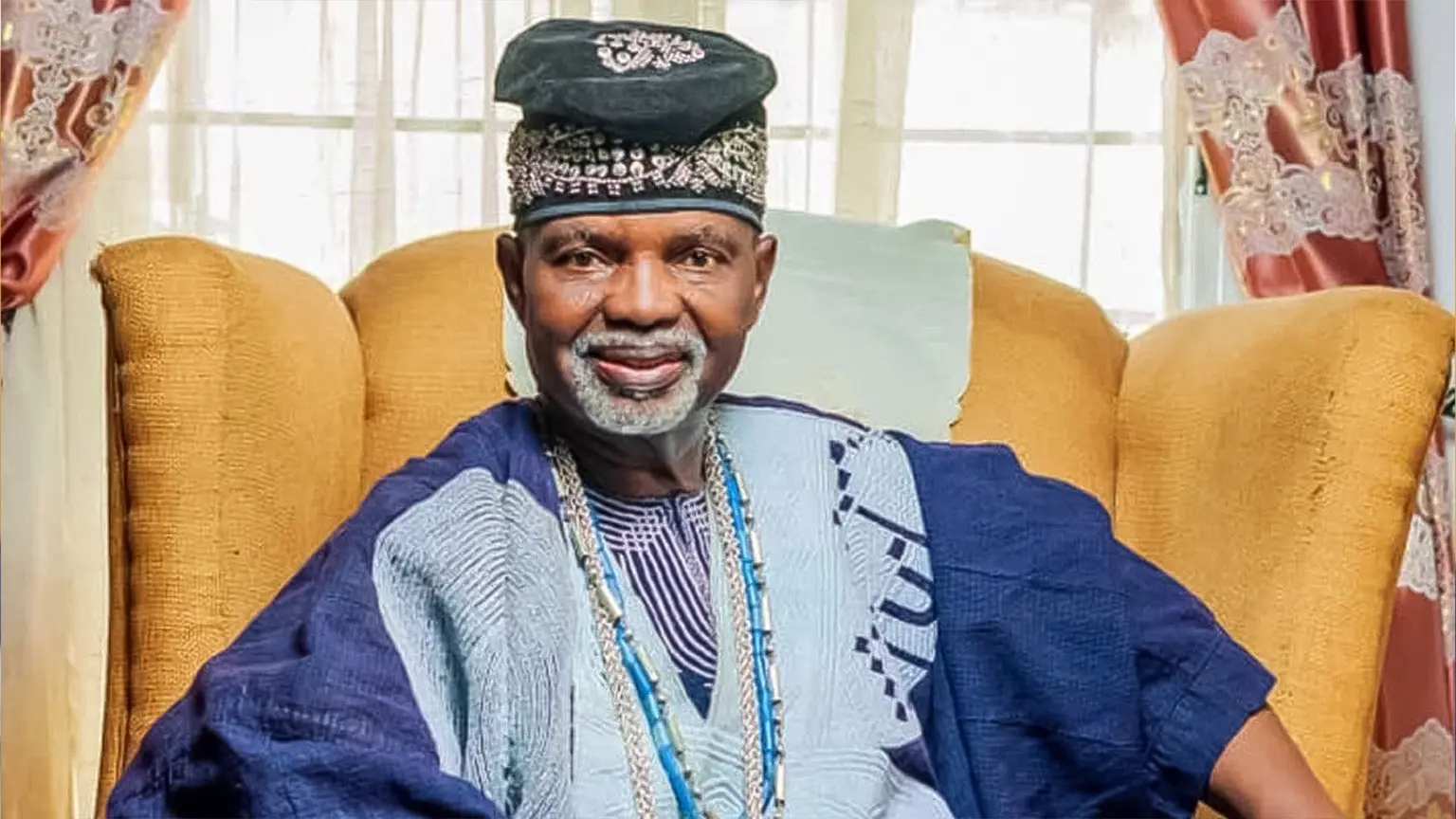
The young lady who usually delivers packaged moinmoin for members of staff who want it for lunch came in as she usually did, and after the exchange of pleasantries, I asked if she knew the difference between Ọọlẹ and Moinmoin. My colleagues looked at me strangely when I disagreed with her response that both were the same. I promised to tell her the difference later. I, however, told my colleagues the difference as explained to me by Oloye Lekan Alabi. Though a suave, urbane and sophisticated Ibadan chief, he took time to explain the similarities and differences as we prepared for the annual Oke ‘Badan Festival some years back.
He had retired from the service of Odua Investment Company Limited, where he demonstrated competence and character then, but that did not in any way diminish his encyclopaedic knowledge of history. He sat beside the Aboke, Chief Ifamapowa and some other stakeholders at the press conference heralding the ceremony that year.
My first real contact with him happened after I had written a short piece, ‘The Man Who Would Be King’, about him. Oloye, who bore the titles of Jagun Olubadan and Akogun of Lalupon agreed to have an interview. My Bureau Chief, Bola Davies (now of blessed memory) directed me to go and when I got to his office in Cocoa House, he thanked me for wishing him well. He thereafter took time to explain the Olubadan ascension system. The interview was published in one of the earliest editions of City People Quarterly back then. That interview and some other things I wrote about him eventually earned me a mention in one of his books.
Oloye Alabi was no doubt an aficionado when history, music and culture are up for discussion. Of course, with his rich cultural heritage, he stood out anywhere and everywhere. Little wonder His Imperial Majesty, the Ooni of Ife hosted his investiture when he was appointed as the first Cultural Ambassador of the National Museum, Ile Ife. His immense breadth of knowledge will give him a place in history just as it did to the likes of Chiefs John Adeyemi Ayorinde, Theophilus Akinyele and Alaafin Lamidi Adeyemi III. His love for good music too was more than obvious. Like a true connoisseur, he did everything with class and style. He wrote countless articles about Chief Commander Ebenezer Obey, King Sunny Ade, Chief Eddy Okonta and many more. His love for Yusuf Olatunji’s Sakara music defied competent description. It was so great that he named his youngest son after the Sakara legend.
In one of his many philosophical volumes, ‘Baba L’Egba’ as Olatunji was fondly called, sang that “o ye ka ni ‘fura taa ba nsin ale eni lo” (one should be watchful when seeing off a concubine) and the only person I felt I could ask what was on Baba L’Egba’s mind then was Oloye ‘Lekan Alabi. Sadly, the auspicious time to ask never came.
A reception was once hosted in his honour by Ambassador Ibironke Adefope at Bodija and it was regal! Everyone who mattered came to honour Oloye ‘Lekan Alabi. Reporting the event for City People then, one of the most unusual sights was Otunba Adebayo Alao-Akala, the then Deputy Governor of Oyo State. His simplicity was indescribable. Aside driving his convertible BMW, he came in a yellow sweatshirt and jeans.
And when he turned 60, it was like everyone else joined the Ibadan establishment to celebrate Oloye ‘Lekan Alabi. Aare Arisekola Also spoke about the celebrant in glowing terms as he emphasized that Oloye Alabi was indeed a man destined for greatness. The party afforded me the opportunity of seeing Alhaja Batile Alake live on stage. Her sonorous voice actually brought great childhood memories of when songs of Batile Alake, Olubowale Ajasco, Alalaye Ilorin and others were regular on the television.
Apart from his respectable dress sense and indepth knowledge of issues, other admirable traits of the late Abese Olubadan were his timeliness and punctuality. He once told me the story of how he had suggested that card be presented to the then military President, General Ibrahim Babangida on the birth of his baby girl back then. It turned out that the picture of where he handed the card over was published in dailies the following day. Apart from personal discipline, working with four Governors of Oyo State obviously rubbed off on him, he never attended an event late. There was a day we had to apologize as we started an event behind schedule at the Premier Hotel, Ibadan. He was about the first guest and after accepting our apologies, he didn’t become vexatious, rather, with a smile he told us that he would be in his room upstairs. He said all we needed to do was put call through to him when we were ready to start the programme.
I stood close by him at certain event and heard Chief Lateef Oyelade praying for Oloye Alabi who had just greeted him in Yoruba, he said “Olubadan o kan o” (may it be your turn to become the Olubadan). Like many of his mentees, I looked forward to seeing him on the exalted Olubadan throne, it was however not to be.
Reflecting on those golden days of celebrity journalism; the Bodija reception, the grand 60th birthday, the laughter of legends now silent; one is reminded that time eventually beckons both the caller and the called. Bola Davies, His Excellency, Otunba Alao-Akala, Aare Arisekola Alao, Chief Lateef Oyelade, Ambassador Adefope and now Oloye himself have all answered that ultimate call. Though the exalted Olubadan throne eluded him, Oloye ’Lekan Alabi leaves behind a legacy as towering as Cocoa House itself. Like his noble forebears – Oyetunde Olundegun, ‘Erin o P’ojo Logun’, and Ekerin Suberu Ajengbe, he came, he saw, he lived with unmatched panache, and he left an indelible mark on the sands of time.
Adejumo sent this piece from Ogbomoso
Opinion
Beyond Deportations: What South Africa’s Immigration Crisis Reveals About Nationhood and Economic Frustration
Published
2 months agoon
July 9, 2026By
Mega Icon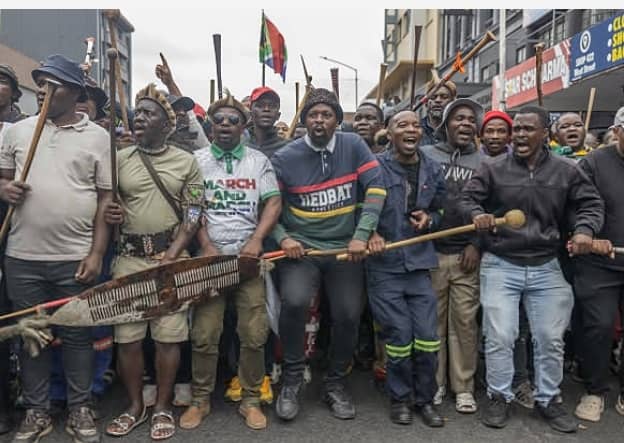
The popular saying that “one good turn deserves another” appears increasingly absent from present-day South Africa’s national consciousness. It is difficult not to ask whether many South Africans have forgotten the history of their country’s liberation and the immense sacrifices made by Nigeria and other African nations in the long struggle against apartheid.
For days, I have been deeply troubled by reports of South Africa’s worsening immigration crisis and the forceful, vigilante-style eviction of African migrants, particularly Nigerians. Beyond the headlines are broken families, shattered dreams and livelihoods painstakingly built over many years. It is a painful development that should concern every African who once believed in the ideals of continental solidarity.
Anti-immigrant sentiments in South Africa are not new. For more than two decades, campaigns against foreign nationals have been fuelled by high unemployment, widespread poverty, rising crime and frustration over inadequate public services. Many South Africans believe undocumented immigrants compete with them for jobs, housing, healthcare and social services, thereby denying citizens access to these basic necessities.
Yet, available evidence tells a more complex story. Research has consistently shown that immigrants alone cannot be blamed for South Africa’s economic and social challenges. Reducing such deep-rooted problems to the presence of foreign nationals oversimplifies a crisis that has been decades in the making.
What is often overlooked is the country’s structural economic reality. A significant skills mismatch, coupled with weaknesses in the quality of education, has left many job seekers ill-equipped for the demands of an economy increasingly driven by technology, innovation and specialised skills. This challenge is not peculiar to South Africa. Across much of sub-Saharan Africa, thousands of graduates enter the labour market every year without the technical, vocational and digital competencies employers now demand.
Beyond this, crime, insecurity, systemic corruption and poor governance continue to weigh heavily on South Africa’s economy. The country has one of the highest youth unemployment rates in the world. Persistent violent crime discourages investment, while corruption and the mismanagement of public resources have weakened service delivery, slowed infrastructure development and eroded investor confidence.
Equally significant is the enduring legacy of apartheid. More than three decades after democracy, inequalities in education, housing, infrastructure and economic opportunities remain deeply entrenched. Many Black communities still live with the consequences of decades of institutional discrimination and economic exclusion.
Against this backdrop, blaming undocumented immigrants for South Africa’s economic difficulties amounts to little more than scapegoating. It is a convenient narrative that diverts attention from the country’s more fundamental governance and developmental challenges.
The recurring xenophobic attacks against Nigerians and other African nationals make the situation even more painful. The recent killing of Emeka Iroegbu and Musa Yunana Joe on June 28, 2026, amid rising anti-migrant tensions, is a tragic reminder of how dangerous such sentiments can become.
One cannot help but ask: Is this the same South Africa for which Nigeria and many other African countries stood firmly during the anti-apartheid struggle?
I vividly remember growing up in the 1980s, listening to songs such as Free Mandela and Stop Apartheid in South Africa by iconic Nigerian musicians, including Majek Fashek, Onyeka Onwenu and Sonny Okosun. Those songs dominated the airwaves on NTA and became powerful symbols of African solidarity.
As a child, I even believed Nelson Mandela was Nigerian because Nigerians embraced his cause with such passion.
Mandela was released from prison in 1990 and became South Africa’s first Black President in 1994, bringing an end to decades of institutionalised racial segregation and apartheid. Today, just over three decades later, many Africans who once stood shoulder to shoulder with South Africans in their darkest hour are treated as unwelcome strangers.
History can be painfully ironic.
Perhaps, then, the saying that one good turn deserves another does not always reflect reality. Human beings are capable of repaying kindness with hostility. It is an uncomfortable truth, but one that life repeatedly teaches.
At a personal level, this reminds us to live with fewer expectations and strive for greater self-reliance. A heart that expects little, even after giving much, is less likely to be broken.
At the national level, however, the lesson is far more profound. Nigeria must build a country where its citizens can thrive without feeling compelled to seek survival elsewhere. Studies have shown that the overwhelming motivation behind the Japa phenomenon is the search for better opportunities and improved living conditions. If those opportunities existed at home, many Nigerians would gladly remain and contribute to national development.
The experience in South Africa—and, indeed, recent developments in the United States—demonstrates that immigration policies are shaped by changing political realities. No foreign country offers permanent guarantees.
Although the U.S. Supreme Court recently ruled against President Donald Trump’s executive order seeking to abolish birthright citizenship on constitutional grounds, the episode illustrates that even long-established policies can become subjects of political contestation. A constitutional principle that has existed since 1868 could still become a matter of national debate. That alone should remind us that every nation ultimately prioritises its own interests.
The enduring lesson is simple: no country can offer Nigerians greater long-term security than a well-governed Nigeria.
Nigeria’s greatest asset remains its people. Sustainable national prosperity can only be built through visionary leadership, accountable institutions, respect for the rule of law and responsible citizenship. When government creates an enabling environment and citizens embrace innovation, productivity and accountability, Nigeria can become a destination for investment rather than a source of economic migration.
As dozens of Nigerians return home following their repatriation from South Africa, government must move beyond sympathy and symbolic gestures. Some have returned with nothing more than the clothes they wore and a single travelling bag, leaving behind businesses, investments and years of hard work. Their return is not merely a journey home; for many, it is the painful collapse of dreams painstakingly built over decades. They deserve meaningful support to rebuild their lives and contribute productively to the nation’s economy once again.
History teaches that nations are strengthened not by chasing away strangers but by creating opportunities for their own citizens. Nigeria must therefore draw the right lessons from South Africa’s painful experience. Rather than exporting its brightest minds in search of survival, it should become a country where talent is rewarded, enterprise is encouraged and hope no longer requires a passport. Only then will Nigeria become not merely the giant of Africa by population, but by the quality of life it offers its people.
Olusegun Hassan, Ph.D
Public Policy Analyst and Social Commentator
Opinion
An Open Letter to Northern Leaders: Arewa Is Bleeding. Who Will Answer the Call?
Published
2 months agoon
July 7, 2026By
Mega Icon
I write this letter with a heavy heart to the sons and daughters of Arewa, particularly those entrusted with leadership and influence, concerning the painful reality confronting our region today. Once united in purpose and driven by a shared vision, Arewa now appears to be living in the shadow of its glorious past.
Our forefathers built this great region with one voice, setting aside differences of ethnicity and religion. They understood that unity was our greatest strength and that our diversity was not a weakness but a blessing. Their legacy was one of peace, mutual respect, visionary leadership, and collective progress.
Today, it is heartbreaking to witness how far we have drifted from those ideals. This letter is a sincere call for reflection, reconciliation, and a renewed commitment to rebuilding the unity, security, and prosperity that once defined our beloved Arewa.
Arewa Under Siege
Northern Nigeria has become widely known as a hotspot for multiple forms of insecurity. From the Boko Haram insurgency to widespread kidnapping, armed banditry, and violent attacks, fear has become part of everyday life. People no longer feel safe in their homes, workplaces, on their farms, or while travelling on the highways. Every journey is undertaken with uncertainty, with no guarantee of arriving safely.
Even more troubling is the perception that these security challenges have become normalised. Reports of abductions, killings, and attacks have become so frequent that they often receive far less attention than they deserve. This perceived indifference from those in positions of authority has contributed to a growing public belief that criminal groups now operate with confidence and relative impunity.
Consequently, many residents feel abandoned, while public trust in the government’s ability to protect lives and property continues to erode.
Addressing this crisis requires a coordinated and sustained response through stronger security operations, improved intelligence gathering, greater support for affected communities, and genuine accountability. Without decisive action, the cycle of violence and fear will continue to undermine the region’s stability, economic development, and the well-being of its people.
Beyond Insecurity: A Crisis of Leadership
The North’s challenges are not accidental. Poverty, insecurity, and underdevelopment are the cumulative consequences of long-standing structural failures, weak governance, and policy choices that have compounded over decades.
Responsibility is shared across different segments of society—including the political elite, the educated class, and the business community—many of whom have possessed both the influence and the opportunity to intervene more decisively than they have.
Rather than being the result of a single coordinated agenda, what is evident is a persistent pattern of neglect, weak accountability, and recurring governance failures that have allowed social and economic conditions to deteriorate. These failures have contributed to rising unemployment, declining educational outcomes, inadequate healthcare, and the expansion of insecurity across much of the region.
Breaking this cycle requires more than assigning blame. It demands institutional reform, accountable leadership, strategic investment in human capital, and a renewed sense of public responsibility.
Where Are the Northern Elite?
This brings us to the most difficult question: Where are the Northern elite? Where are the governors, ministers, lawmakers, business leaders, scholars, and other influential voices? Many command enormous influence, considerable private wealth, and extensive international networks, yet too often appear unable—or unwilling—to meaningfully confront the conditions that continue to leave large parts of the region insecure, impoverished, and politically weakened.
Why does this gap persist?
Part of the answer lies in proximity to power. In political environments shaped by patronage, speaking boldly may threaten access, while silence preserves influence. Over time, self-preservation begins to resemble strategy.
Unfortunately, the cost is borne not by those in positions of privilege but by ordinary communities far removed from the rooms where decisions are made.
Reviving the North’s Industrial Legacy
Northern Nigeria was once the industrial powerhouse of the country. Cities such as Kano and Kaduna were thriving centres of manufacturing, commerce, and employment. Today, much of that industrial strength has faded.
This is, therefore, a respectful appeal to two of Nigeria’s most accomplished industrialists—Aliko Dangote and Abdul Samad Rabiu. Many people continue to ask why there is limited visible large-scale industrial reinvestment in Kano, your home state, and across Northern Nigeria.
As a Kano indigene, and to the best of my knowledge, neither Aliko Dangote nor Abdul Samad Rabiu currently operates major manufacturing facilities actively producing in Kano. Several facilities associated with their businesses are widely reported to have become inactive or to function primarily as warehouses rather than active industrial plants. For example, along Tafawa Balewa Road, two BUA facilities that previously operated flour and vegetable oil mills are reported to have ceased production. Likewise, several Dangote industrial sites stretching from Mai Malari Road to the Sharada Industrial Area are also widely reported to be inactive or operating far below capacity.
Kano and Kaduna, once renowned for their vibrant manufacturing sectors, have experienced decades of industrial decline, resulting in widespread unemployment and underutilised infrastructure. At the same time, a significant share of new private-sector industrial investment appears to have been concentrated in other parts of the country, particularly the South-West. This naturally raises important questions about balanced national development.
Philanthropy remains valuable and deeply appreciated. Scholarships, donations, and humanitarian support undoubtedly improve lives. However, charity cannot replace sustainable industrial development.
What the North urgently needs is long-term investment that revives manufacturing, creates employment, strengthens local supply chains, develops skills, and rebuilds industrial ecosystems across Kano, Kaduna, and neighbouring states. Strong factories build strong communities, while sustainable industries create lasting prosperity. The expectation, therefore, is not charity but a renewed commitment to the economic transformation of the region where many of Nigeria’s greatest industrial success stories first began.
The Responsibility of Business Leaders
The Northern business elite have watched insecurity, poverty, and displacement deepen while economic activity has increasingly concentrated elsewhere.
Insurgency, banditry, and weakened rural governance have disrupted agriculture, trade routes, and local markets. Investment naturally gravitates towards safer and more predictable environments. Yet public advocacy from many influential business leaders has often remained muted, constrained by commercial interests, political relationships, and regulatory considerations.
The region risks becoming divided into two realities: one integrated into national wealth and opportunity, and the other left to bear the consequences of persistent insecurity, economic stagnation, and neglect.
Business leadership extends beyond generating profits. It also entails helping to create an environment where enterprise can flourish, jobs can be created, and communities can prosper. Sustainable economic growth depends not only on private investment but also on the willingness of influential stakeholders to advocate policies and initiatives that promote stability, security, and inclusive development.
The North’s business community has historically played a significant role in shaping the region’s economic fortunes. That tradition of leadership remains essential today. While governments bear primary responsibility for governance and security, the private sector also possesses the capacity to influence development through strategic investments, partnerships, innovation, and constructive engagement with public institutions.
Rebuilding confidence in Northern Nigeria requires collaboration among government, businesses, civil society, and local communities. A more secure and prosperous region ultimately benefits everyone, creating new opportunities for investment, employment, and long-term economic growth.
A Message to Political Leaders
To the political leadership of Northern Nigeria: the contradiction has become increasingly difficult to ignore. The region remains one of the country’s most significant in terms of population and political influence, yet it continues to lag behind on key development indicators such as education, healthcare, infrastructure, employment, and security.
When communities are attacked, farmers are displaced, and schools are forced to close, silence from those entrusted with leadership is seldom interpreted as restraint. More often, it is perceived as detachment. Leadership is measured not only by electoral success or political influence but also by the willingness to confront difficult realities with courage, empathy, and decisive action.
The expectations of citizens go beyond promises. They seek visible commitment, practical solutions, and sustained engagement with the challenges affecting their daily lives. Rebuilding public confidence requires leadership that is accountable, responsive, and focused on the long-term development of the region.
A Message to the Educated and Professional Class
To our academics, professionals, and intellectuals: the evidence is neither hidden nor difficult to find. Reports, research, and lived experiences consistently reveal widening gaps in human development, education, healthcare, and security.
Yet, too often, expertise remains confined within institutions and professional circles that discourage open engagement with entrenched power. Knowledge should not merely describe problems; it should help solve them. Research should inform policy, enrich public debate, and contribute meaningfully to sustainable solutions.
Every society depends on courageous thinkers who are willing to engage constructively, challenge complacency, and place the public interest above personal convenience. The North possesses no shortage of intellectual talent. What is needed is a stronger connection between knowledge and action.
A Message to Cultural Influencers
To our musicians, artists, writers, actors, and other public figures: throughout history, art has served as a powerful instrument of truth, reflection, and social transformation. Cultural voices have inspired movements, preserved history, and given hope to communities during difficult times.
Yet, when economic survival becomes closely tied to political or commercial interests, critical voices often become subdued. Society benefits when its cultural figures speak with honesty, empathy, and a sense of responsibility. Their influence extends beyond entertainment; it helps shape public values, inspire civic engagement, and amplify the concerns of ordinary people.
A Shared Responsibility
Ultimately, this is not solely a Northern Nigerian problem. It reflects a broader question confronting societies everywhere: what happens when elite interests become disconnected from the well-being of ordinary people?
When access becomes more valuable than accountability, and proximity to power outweighs responsibility to the public, silence is rarely accidental—it becomes institutionalised.
The result is a widening emotional and political distance between leadership and the people. Unless that distance is narrowed through meaningful investment, principled advocacy, and courageous leadership, the same questions will continue to resonate:
Who speaks? Who benefits? Who bears the cost?
History will judge every generation by how it responds to the challenges of its time. Northern Nigeria possesses enormous human potential, entrepreneurial talent, agricultural resources, and a rich cultural heritage.
What it requires now is leadership marked by vision, courage, integrity, and an unwavering commitment to the common good.
This letter is not intended to condemn but to encourage honest reflection and meaningful action. The future of Arewa depends not only on government but also on every leader, businessperson, scholar, professional, artist, and citizen willing to place the region’s long-term prosperity above personal or political interests.
May we find the wisdom to rebuild what has been weakened, the courage to confront uncomfortable truths, and the determination to restore Northern Nigeria to its rightful place as a region of peace, opportunity, and shared prosperity.
Abba Dukawa writes from Kano and can be reached at abbahydukawa@gmail.com.
Advertisement

Entertainment







MegaIcon Magazine Facebook Page
MEGAICON TV
Advertisement