Opinion
Emefiele’s terrorism mess

Published
4 years agoon
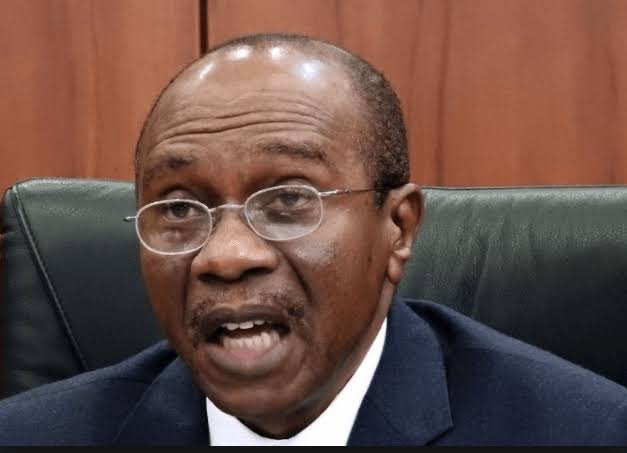
If you read God’s Bankers: A History of Money and Power at the Vatican, you would have a whiff of understanding of the battle that assails and the nature of the assailants of Godwin Emefiele, Central Bank of Nigeria (CBN) Governor. God’s Bankers, written by Gerald Posner, is an expose on the Papacy and the Holy See, known to be the world’s biggest and the most impregnable religious institution ever. Posner, reputed to be a “master chronicler of legal and financial misconduct,” conducted a deep-seated investigation which lasted nine years, into how financial octopuses of the Vatican, known as God’s Bankers, waddled through the ocean of wealth, intrigues, corruption and plotted the graph of political intrigues that these bankers face in the Catholic Church.
With a fine toothcomb which he pierces into the darkest secrets of the Vatican, Posner was able to meticulously locate and prise open cracks in the Holy See, revealing legendary and long-lost secrecies that have acted as the underbelly of the Vatican. Like David Yallop’s In God’s Name, Posner was able to expose how the church accumulated wealth and the byzantine, cobweb-like weaves of its financial malfeasances scattered all over the world. From the narratives of cardinals, prelates, bishops and Popes who were in charge of the Vatican in the previous 200 years, Posner uncovered the lead of eyebrow-lifting narratives of how power and money were shuffled, as they do in card games, inside one of the world’s most dreaded but influential religious empires. In God’s Bankers, you are confronted with a cache of revelations of how business moguls were poisoned; how prosecutors disappeared and some were found with holes in their heads; how obvious murders were swapped as suicides and the tension of power in the inner court of power at the Vatican. These all got a trace from the author who plotted the graph of how the Vatican mutated from its initial conception as a bastion of faith to a convoluted empire of immense wealth, power and systemic corruption.
In Nigeria where the grotesque, and the absurd are everyday commonplaces, Nigerians should rank as possessing one of the most vibrant shock-absorbing mechanisms in the world. Yet, last week, Nigerians were shocked beyond comprehension. News suddenly hit the airwave that Central Bank of Nigeria (CBN) Governor, Godwin Emefiele, was embroiled in terrorism financing allegations. The first thought that coursed through Nigerians’ minds was that the allegation was a broth straight from the pot of yellow journalism concoction. On a more careful perusal, the news shed its veil of social media gossip. So it unfolded, the Department of State Services (DSS) had secretly filed a suit to have Emefiele arrested over terrorism charges. The ex-parte suit, filed at the Federal High Court Abuja, before John Tsoho, was however dismissed by the court, in what it called a subterranean ploy and an illegal operation; indeed, a “plot to deceive the court into granting a frivolous order to help them arrest and deprive an innocent man of his liberty.”
Innocent man?
In the suit No FHC/ABJ/CS/2255/2022 and its affidavit depositions, DSS had averred that its preliminary investigation revealed various acts of terrorism financing, fraudulent activities perpetrated by Emefiele and his involvement in economic crimes of national security dimension. Prefacing its prayers on Section 66 of the Terrorism Prevention and Prohibition Act 2022, the plaintiff asked the court to grant an order for the arrest and detention of the CBN governor for 60 days. By the wording of that Act, if that ex-parte application was granted and Emefiele clamped into 60 days detention, the order could be renewed for another 60 days or until an investigation into the alleged misdemeanour is concluded. Such a person would be held incommunicado during the pendency of the investigation. The judge however ruled that DSS provided no concrete evidence to back up its very grievous allegations.
Peeled of its legalese, Nigerians are scared stiff of the implications of these allegations. Yes, Emefiele has behaved like a rogue CBN governor, the most roguish in the history of that office ever, while he got enmeshed, early this year, in a scandalous but subterranean angling for the Nigerian presidency. In the process of that obtuse ambition, billions of what would appear to be Nigerian money were incinerated in this amorphous bid which, according to feelers from political sidewalks, also got him allegedly milked by the don of media-cum-political wheeling-dealing, Nduka Obaigbena. This notwithstanding, news of Emefiele’s alleged involvement in terrorism financing is not a barroom gossip that should be flung off with a beer fly whisk.
Having sufficiently mastered the geography of propaganda and image-burnishing techniques that are the turf of Nigerian politics, Emefiele immediately began to play the politics of re-contextualizing the grievous allegations with which he was tar-brushed. One after the other, lackeys and political beneficiaries appeared in the media trying to voice their dissent to the Emefiele terrorism allegation. All of these dissenting voices to the DSS allegation, if the Nigerian propaganda mechanism is to be factored in, must have been actioned by Emefiele himself or induced by politicians who stand to make political currency from where they stand.
First to march out in protest was a group calling itself Coalition of Civil Society Organisations, (CSOs) a body said to comprise Lawyers in Defence of Economic Rights and Justice, a Forum of Chairmen of Political Parties, Ethnic Youth Leaders of Nigeria, Buhari Legacy Defenders, African Centre for Justice and Human Rights, Arewa Consultative Youths Movement, and Ohanaeze Youths Movement.
The group marched to the Office of the Attorney General of the Federation and submitted a petition against the DSS boss, Yusuf Bichi. It also submitted a similar letter to the office of the President, Secretary to the Government of the Federation, and Inspector General of Police and addressed a press conference where its convener, Tochukwu Ohazuruike, outlined their grouses. They queried why the DSS, headed by an appointee of the president, “brazenly undermined” his authority and “carried out actions that could so destabilize the government and the economy of the country.” It asked how Emefiele could be accused of being a terrorist and yet be allowed to travel with the president, thus having unrestricted access to the President. The last straw was their claim that the goal of what they called the witch-hunt of Emefiele was both political and financial.
“It must be stated clearly that the entire purpose of this dastardly plot was for political and financial benefit. The people in the plot are very strong people and indeed the high and mighty in the government and our country,” it said.
Individuals and groups have also latched on to the alleged politics in the terrorism allegation. One such was the Conference Of Nigeria Political Parties (CNPP) which tasked the federal government to investigate the allegation it labelled a plot to frame Emefiele. CNPP raised a further allegation that the DSS was derailing from its statutory role and becoming a tool in the hands of desperate politicians.
“Those who want to receive and spend money without any traces are those who have been kicking against the cashless policy of the CBN. If you have legitimate money, why are you afraid to wire the money through bank transfers? Why are you afraid of cash withdrawal limits? There is no limit to the amount you can transfer through the bank but because they are having stolen money, they don’t want to make traceable transactions and that is a sin of Emefiele. That’s why they want him out of the way before the election so that someone who can do their bidding is appointed to reverse the cashless policy implementation,” CNPP said.
A group called itself Center for Financial Surveillance and Illicit Transaction Tracking Group (CSITT) also jumped into the fray. In a release issued by its director, John Dimu, CSITT raised a poignant alarm of looming consequences that could follow what it called an “unprovoked attack” on the CBN governor. The attack, it said, was borne out of the disavowal of the new cash withdrawal policy of the apex bank. Egmont Group, a 164-countries forum with the core responsibility of providing financial units with a platform to securely exchange expertise and financial intelligence, to combat money laundering and terrorist financing, said CSITT, could sanction Nigeria for the “witch-hunt” of Emefiele.
A chieftain of the Peoples Democratic Party (PDP) and former Senate President, Bukola Saraki, in a statement, also condemned the DSS charge, advising Nigerian security agencies to refrain from being manipulated by politicians as the 2023 polls draw near. “With all the due respect that I have for the DSS, as a very professional security agency, I still found it very difficult to understand what led to the charges, why concrete evidence that will enable the court to take a good decision was not provided and why the Department gave room for suspicion and speculations as the case file has gaping holes as noted by the Judge, John Tsoho,” he said.
Speaking in the same vein last Wednesday, Lord Hannan, the Baron of Kingsclere, a member of the Board of Trade and Conservative peer, queried the DSS charge of terrorism on Emefiele at the House of Lords. He said: “The rule of law, due process and the independence of public officials: these values matter. They bind us together as Commonwealth nations… That is why I have raised the issue of the attempt to detain the Governor of the Central Bank of Nigeria, Godwin Emefiele, in Parliament. And that is why I hope that democrats on all sides will join Nigeria in supporting the independence of its institutions in the run-up to the 2023 election – including, of course, the central bank.”
What should agitate Nigerians more is that, thus far, neither the Nigerian government, President Buhari nor the ruling party, the All Progressives Congress (APC) has spoken about the bothersome matter. Yet, the Emefiele terrorism charge is held as a strong symbol of the kind of government Buhari has run in the last seven and half years or so.
Notorious for his aloofness, embarrassing taciturnity, and smallish drawl in taking decisions on dire, critical matters of state, these unstatesmanlike qualities have dragged Nigeria backwards under Buhari. The loopholes of this laidback leadership style have been bored even deeper by individuals with an eye on taking advantage of the presidential decision hiatus. The actions of these proxies have led Nigeria and the system to grave consequences. Some have even said that Buhari’s 2015 prefacing of his government as “I belong to everybody and I belong to nobody.” was a clear summary of the drudgery in the office which he eventually manifested
For instance, when Buhari, ensconced in his snailish shell, pre-All Progressives Congress (APC) presidential primary, dilly-dallied on his preferred choice of a successor, a group of people in the presidency, allegedly chaperoned by the famous cabal head, Mamman Daura, using Obaigbena as their front office media mopping-stick, gave an Emefiele presidency a larger-than-life image. In the process, these mopping-stick triumvirates succeeded in squeezing liquid cash said to be in billions of Naira, from Nigeria’s Number One Banker’s Banker and inflicting danger of Hiroshima proportions on the a-political office of the CBN governor.
At the end of the presidential primary, not only did Emefiele hurt some top guns in the presidential race, his integrity as Nigeria’s financial umpire suffered a serious setback. It was said that he would never remain the same. After that fox-like angling for Aso Rock, which Emefiele shrouded with infantile and deceptive denials, the image of the Buhari government got dented in no small measure. A clear-sighted, unambivalent and purposeful government would have shown Emefiele the gate of the CBN afterwards, but not Buhari. The tragedy of it all is however that, if today, he is asked about the whole Emefiele-for-president furore, we may be shocked that Buhari’s response would be that he never knew that Emefiele ever took that shameful step. Buhari doesn’t know anything and the proxies who act for him enjoy that veil on the president’s face. It is the veil under which the cabal re-angles presidential policies to suit their interests, cavalierly call the shots and take atrocious steps that have taken Nigeria to where it is today.
After superintending over the most unprecedented somersault of national currency in Nigeria’s history within the period of the Buhari presidency, the currency re-designation policy of Emefiele has been held to be one of his most redemptive moves ever. Its advantages for the polity are myriads. First is that it will stem the Nigerian currency’s journey to Zimbabwe which it embarked upon under Buhari. Second, it will take the wind off the sail of Nigerian politicians’ vote-buying strategy as they have reportedly warehoused billions of Naira in personal vaults for the 2023 election. Third, it will bring sanity to the worthless binge that the Nigerian Naira is enveloped in.
Methinks the gravest allegation that those who are ranged against Emefiele hold aloft against him is that he is being used by those selfsame proxies of Buhari to emasculate them financially while conferring financial advantage on their opponent. Thus, having allegedly had the EFCC, DSS and strategic agencies under their armpit, it was time for Emefiele’s adversaries, the political vultures of Nigeria, to unleash these agencies on Emefiele, When you add this to the vultures’ disgust at Emefiele’s audacity in contesting the primary election against them, configuring trumped up charges of terrorism against him may just be their last card in this 2023 race to achieve their life ambition.
The audacity of the DSS in levelling terrorism charges against a top officer of the state, the CBN governor, without noticeable recourse to the president, is a manifestation of awareness in top circles that Buhari is a boringly weak leader. Emefiele was also said to have stayed back abroad, rather than come to Nigeria with the president, with whom he had earlier travelled. This has provoked analysts’ claim that this is a confirmation that Emefiele knows that the bloodsucking paws of the vultures gathered against him can reach him faster than the protective shield of the Buhari presidency. To understand the weakness of the president and his inability to bring sanity into this messy scenario, one can just imagine what would have happened to the conjurers of this grisly terrorism charge if they had dared do the same under Olusegun Obasanjo.
One is tempted to pity Emefiele who, like Posner revealed in God’s Bankers, is strapped in a vault of dangerous, vaulting ambitions that clash like cymbals. To continue to occupy his position as Nigeria’s No 1 Banker’s Banker, Emefiele dined with the devils of power who dragged him into the raw sewage of political power. The devil is asking for propitiation now. Its demand is a bowl of human flesh. Will Emefiele offer himself as a sacrifice?
Dr Festus Adedayo, a lawyer, journalist and columnist writes from Ibadan, Oyo State.
You may like
Opinion
Oloye Lekan Alabi: Memories Ere Death Beckoned Both Caller and Called |By Wole Adejumo
Published
3 weeks agoon
August 7, 2026By
Mega Icon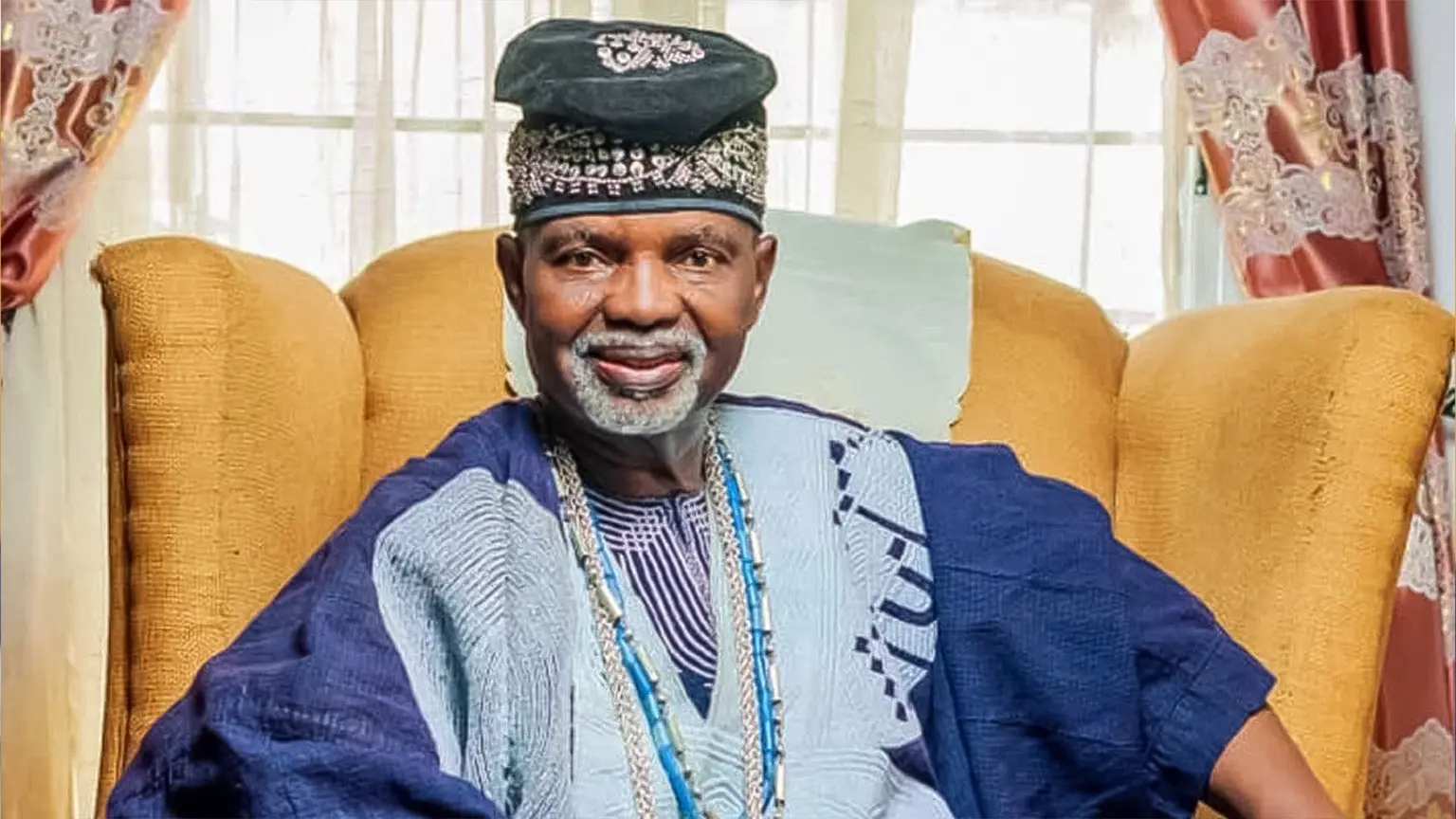
The young lady who usually delivers packaged moinmoin for members of staff who want it for lunch came in as she usually did, and after the exchange of pleasantries, I asked if she knew the difference between Ọọlẹ and Moinmoin. My colleagues looked at me strangely when I disagreed with her response that both were the same. I promised to tell her the difference later. I, however, told my colleagues the difference as explained to me by Oloye Lekan Alabi. Though a suave, urbane and sophisticated Ibadan chief, he took time to explain the similarities and differences as we prepared for the annual Oke ‘Badan Festival some years back.
He had retired from the service of Odua Investment Company Limited, where he demonstrated competence and character then, but that did not in any way diminish his encyclopaedic knowledge of history. He sat beside the Aboke, Chief Ifamapowa and some other stakeholders at the press conference heralding the ceremony that year.
My first real contact with him happened after I had written a short piece, ‘The Man Who Would Be King’, about him. Oloye, who bore the titles of Jagun Olubadan and Akogun of Lalupon agreed to have an interview. My Bureau Chief, Bola Davies (now of blessed memory) directed me to go and when I got to his office in Cocoa House, he thanked me for wishing him well. He thereafter took time to explain the Olubadan ascension system. The interview was published in one of the earliest editions of City People Quarterly back then. That interview and some other things I wrote about him eventually earned me a mention in one of his books.
Oloye Alabi was no doubt an aficionado when history, music and culture are up for discussion. Of course, with his rich cultural heritage, he stood out anywhere and everywhere. Little wonder His Imperial Majesty, the Ooni of Ife hosted his investiture when he was appointed as the first Cultural Ambassador of the National Museum, Ile Ife. His immense breadth of knowledge will give him a place in history just as it did to the likes of Chiefs John Adeyemi Ayorinde, Theophilus Akinyele and Alaafin Lamidi Adeyemi III. His love for good music too was more than obvious. Like a true connoisseur, he did everything with class and style. He wrote countless articles about Chief Commander Ebenezer Obey, King Sunny Ade, Chief Eddy Okonta and many more. His love for Yusuf Olatunji’s Sakara music defied competent description. It was so great that he named his youngest son after the Sakara legend.
In one of his many philosophical volumes, ‘Baba L’Egba’ as Olatunji was fondly called, sang that “o ye ka ni ‘fura taa ba nsin ale eni lo” (one should be watchful when seeing off a concubine) and the only person I felt I could ask what was on Baba L’Egba’s mind then was Oloye ‘Lekan Alabi. Sadly, the auspicious time to ask never came.
A reception was once hosted in his honour by Ambassador Ibironke Adefope at Bodija and it was regal! Everyone who mattered came to honour Oloye ‘Lekan Alabi. Reporting the event for City People then, one of the most unusual sights was Otunba Adebayo Alao-Akala, the then Deputy Governor of Oyo State. His simplicity was indescribable. Aside driving his convertible BMW, he came in a yellow sweatshirt and jeans.
And when he turned 60, it was like everyone else joined the Ibadan establishment to celebrate Oloye ‘Lekan Alabi. Aare Arisekola Also spoke about the celebrant in glowing terms as he emphasized that Oloye Alabi was indeed a man destined for greatness. The party afforded me the opportunity of seeing Alhaja Batile Alake live on stage. Her sonorous voice actually brought great childhood memories of when songs of Batile Alake, Olubowale Ajasco, Alalaye Ilorin and others were regular on the television.
Apart from his respectable dress sense and indepth knowledge of issues, other admirable traits of the late Abese Olubadan were his timeliness and punctuality. He once told me the story of how he had suggested that card be presented to the then military President, General Ibrahim Babangida on the birth of his baby girl back then. It turned out that the picture of where he handed the card over was published in dailies the following day. Apart from personal discipline, working with four Governors of Oyo State obviously rubbed off on him, he never attended an event late. There was a day we had to apologize as we started an event behind schedule at the Premier Hotel, Ibadan. He was about the first guest and after accepting our apologies, he didn’t become vexatious, rather, with a smile he told us that he would be in his room upstairs. He said all we needed to do was put call through to him when we were ready to start the programme.
I stood close by him at certain event and heard Chief Lateef Oyelade praying for Oloye Alabi who had just greeted him in Yoruba, he said “Olubadan o kan o” (may it be your turn to become the Olubadan). Like many of his mentees, I looked forward to seeing him on the exalted Olubadan throne, it was however not to be.
Reflecting on those golden days of celebrity journalism; the Bodija reception, the grand 60th birthday, the laughter of legends now silent; one is reminded that time eventually beckons both the caller and the called. Bola Davies, His Excellency, Otunba Alao-Akala, Aare Arisekola Alao, Chief Lateef Oyelade, Ambassador Adefope and now Oloye himself have all answered that ultimate call. Though the exalted Olubadan throne eluded him, Oloye ’Lekan Alabi leaves behind a legacy as towering as Cocoa House itself. Like his noble forebears – Oyetunde Olundegun, ‘Erin o P’ojo Logun’, and Ekerin Suberu Ajengbe, he came, he saw, he lived with unmatched panache, and he left an indelible mark on the sands of time.
Adejumo sent this piece from Ogbomoso
Opinion
Beyond Deportations: What South Africa’s Immigration Crisis Reveals About Nationhood and Economic Frustration
Published
2 months agoon
July 9, 2026By
Mega Icon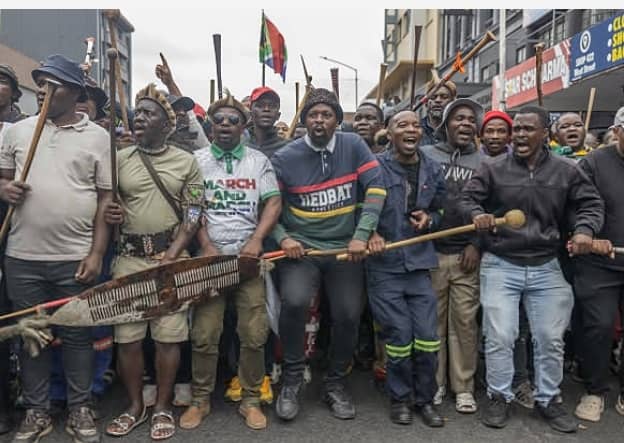
The popular saying that “one good turn deserves another” appears increasingly absent from present-day South Africa’s national consciousness. It is difficult not to ask whether many South Africans have forgotten the history of their country’s liberation and the immense sacrifices made by Nigeria and other African nations in the long struggle against apartheid.
For days, I have been deeply troubled by reports of South Africa’s worsening immigration crisis and the forceful, vigilante-style eviction of African migrants, particularly Nigerians. Beyond the headlines are broken families, shattered dreams and livelihoods painstakingly built over many years. It is a painful development that should concern every African who once believed in the ideals of continental solidarity.
Anti-immigrant sentiments in South Africa are not new. For more than two decades, campaigns against foreign nationals have been fuelled by high unemployment, widespread poverty, rising crime and frustration over inadequate public services. Many South Africans believe undocumented immigrants compete with them for jobs, housing, healthcare and social services, thereby denying citizens access to these basic necessities.
Yet, available evidence tells a more complex story. Research has consistently shown that immigrants alone cannot be blamed for South Africa’s economic and social challenges. Reducing such deep-rooted problems to the presence of foreign nationals oversimplifies a crisis that has been decades in the making.
What is often overlooked is the country’s structural economic reality. A significant skills mismatch, coupled with weaknesses in the quality of education, has left many job seekers ill-equipped for the demands of an economy increasingly driven by technology, innovation and specialised skills. This challenge is not peculiar to South Africa. Across much of sub-Saharan Africa, thousands of graduates enter the labour market every year without the technical, vocational and digital competencies employers now demand.
Beyond this, crime, insecurity, systemic corruption and poor governance continue to weigh heavily on South Africa’s economy. The country has one of the highest youth unemployment rates in the world. Persistent violent crime discourages investment, while corruption and the mismanagement of public resources have weakened service delivery, slowed infrastructure development and eroded investor confidence.
Equally significant is the enduring legacy of apartheid. More than three decades after democracy, inequalities in education, housing, infrastructure and economic opportunities remain deeply entrenched. Many Black communities still live with the consequences of decades of institutional discrimination and economic exclusion.
Against this backdrop, blaming undocumented immigrants for South Africa’s economic difficulties amounts to little more than scapegoating. It is a convenient narrative that diverts attention from the country’s more fundamental governance and developmental challenges.
The recurring xenophobic attacks against Nigerians and other African nationals make the situation even more painful. The recent killing of Emeka Iroegbu and Musa Yunana Joe on June 28, 2026, amid rising anti-migrant tensions, is a tragic reminder of how dangerous such sentiments can become.
One cannot help but ask: Is this the same South Africa for which Nigeria and many other African countries stood firmly during the anti-apartheid struggle?
I vividly remember growing up in the 1980s, listening to songs such as Free Mandela and Stop Apartheid in South Africa by iconic Nigerian musicians, including Majek Fashek, Onyeka Onwenu and Sonny Okosun. Those songs dominated the airwaves on NTA and became powerful symbols of African solidarity.
As a child, I even believed Nelson Mandela was Nigerian because Nigerians embraced his cause with such passion.
Mandela was released from prison in 1990 and became South Africa’s first Black President in 1994, bringing an end to decades of institutionalised racial segregation and apartheid. Today, just over three decades later, many Africans who once stood shoulder to shoulder with South Africans in their darkest hour are treated as unwelcome strangers.
History can be painfully ironic.
Perhaps, then, the saying that one good turn deserves another does not always reflect reality. Human beings are capable of repaying kindness with hostility. It is an uncomfortable truth, but one that life repeatedly teaches.
At a personal level, this reminds us to live with fewer expectations and strive for greater self-reliance. A heart that expects little, even after giving much, is less likely to be broken.
At the national level, however, the lesson is far more profound. Nigeria must build a country where its citizens can thrive without feeling compelled to seek survival elsewhere. Studies have shown that the overwhelming motivation behind the Japa phenomenon is the search for better opportunities and improved living conditions. If those opportunities existed at home, many Nigerians would gladly remain and contribute to national development.
The experience in South Africa—and, indeed, recent developments in the United States—demonstrates that immigration policies are shaped by changing political realities. No foreign country offers permanent guarantees.
Although the U.S. Supreme Court recently ruled against President Donald Trump’s executive order seeking to abolish birthright citizenship on constitutional grounds, the episode illustrates that even long-established policies can become subjects of political contestation. A constitutional principle that has existed since 1868 could still become a matter of national debate. That alone should remind us that every nation ultimately prioritises its own interests.
The enduring lesson is simple: no country can offer Nigerians greater long-term security than a well-governed Nigeria.
Nigeria’s greatest asset remains its people. Sustainable national prosperity can only be built through visionary leadership, accountable institutions, respect for the rule of law and responsible citizenship. When government creates an enabling environment and citizens embrace innovation, productivity and accountability, Nigeria can become a destination for investment rather than a source of economic migration.
As dozens of Nigerians return home following their repatriation from South Africa, government must move beyond sympathy and symbolic gestures. Some have returned with nothing more than the clothes they wore and a single travelling bag, leaving behind businesses, investments and years of hard work. Their return is not merely a journey home; for many, it is the painful collapse of dreams painstakingly built over decades. They deserve meaningful support to rebuild their lives and contribute productively to the nation’s economy once again.
History teaches that nations are strengthened not by chasing away strangers but by creating opportunities for their own citizens. Nigeria must therefore draw the right lessons from South Africa’s painful experience. Rather than exporting its brightest minds in search of survival, it should become a country where talent is rewarded, enterprise is encouraged and hope no longer requires a passport. Only then will Nigeria become not merely the giant of Africa by population, but by the quality of life it offers its people.
Olusegun Hassan, Ph.D
Public Policy Analyst and Social Commentator
Opinion
An Open Letter to Northern Leaders: Arewa Is Bleeding. Who Will Answer the Call?
Published
2 months agoon
July 7, 2026By
Mega Icon
I write this letter with a heavy heart to the sons and daughters of Arewa, particularly those entrusted with leadership and influence, concerning the painful reality confronting our region today. Once united in purpose and driven by a shared vision, Arewa now appears to be living in the shadow of its glorious past.
Our forefathers built this great region with one voice, setting aside differences of ethnicity and religion. They understood that unity was our greatest strength and that our diversity was not a weakness but a blessing. Their legacy was one of peace, mutual respect, visionary leadership, and collective progress.
Today, it is heartbreaking to witness how far we have drifted from those ideals. This letter is a sincere call for reflection, reconciliation, and a renewed commitment to rebuilding the unity, security, and prosperity that once defined our beloved Arewa.
Arewa Under Siege
Northern Nigeria has become widely known as a hotspot for multiple forms of insecurity. From the Boko Haram insurgency to widespread kidnapping, armed banditry, and violent attacks, fear has become part of everyday life. People no longer feel safe in their homes, workplaces, on their farms, or while travelling on the highways. Every journey is undertaken with uncertainty, with no guarantee of arriving safely.
Even more troubling is the perception that these security challenges have become normalised. Reports of abductions, killings, and attacks have become so frequent that they often receive far less attention than they deserve. This perceived indifference from those in positions of authority has contributed to a growing public belief that criminal groups now operate with confidence and relative impunity.
Consequently, many residents feel abandoned, while public trust in the government’s ability to protect lives and property continues to erode.
Addressing this crisis requires a coordinated and sustained response through stronger security operations, improved intelligence gathering, greater support for affected communities, and genuine accountability. Without decisive action, the cycle of violence and fear will continue to undermine the region’s stability, economic development, and the well-being of its people.
Beyond Insecurity: A Crisis of Leadership
The North’s challenges are not accidental. Poverty, insecurity, and underdevelopment are the cumulative consequences of long-standing structural failures, weak governance, and policy choices that have compounded over decades.
Responsibility is shared across different segments of society—including the political elite, the educated class, and the business community—many of whom have possessed both the influence and the opportunity to intervene more decisively than they have.
Rather than being the result of a single coordinated agenda, what is evident is a persistent pattern of neglect, weak accountability, and recurring governance failures that have allowed social and economic conditions to deteriorate. These failures have contributed to rising unemployment, declining educational outcomes, inadequate healthcare, and the expansion of insecurity across much of the region.
Breaking this cycle requires more than assigning blame. It demands institutional reform, accountable leadership, strategic investment in human capital, and a renewed sense of public responsibility.
Where Are the Northern Elite?
This brings us to the most difficult question: Where are the Northern elite? Where are the governors, ministers, lawmakers, business leaders, scholars, and other influential voices? Many command enormous influence, considerable private wealth, and extensive international networks, yet too often appear unable—or unwilling—to meaningfully confront the conditions that continue to leave large parts of the region insecure, impoverished, and politically weakened.
Why does this gap persist?
Part of the answer lies in proximity to power. In political environments shaped by patronage, speaking boldly may threaten access, while silence preserves influence. Over time, self-preservation begins to resemble strategy.
Unfortunately, the cost is borne not by those in positions of privilege but by ordinary communities far removed from the rooms where decisions are made.
Reviving the North’s Industrial Legacy
Northern Nigeria was once the industrial powerhouse of the country. Cities such as Kano and Kaduna were thriving centres of manufacturing, commerce, and employment. Today, much of that industrial strength has faded.
This is, therefore, a respectful appeal to two of Nigeria’s most accomplished industrialists—Aliko Dangote and Abdul Samad Rabiu. Many people continue to ask why there is limited visible large-scale industrial reinvestment in Kano, your home state, and across Northern Nigeria.
As a Kano indigene, and to the best of my knowledge, neither Aliko Dangote nor Abdul Samad Rabiu currently operates major manufacturing facilities actively producing in Kano. Several facilities associated with their businesses are widely reported to have become inactive or to function primarily as warehouses rather than active industrial plants. For example, along Tafawa Balewa Road, two BUA facilities that previously operated flour and vegetable oil mills are reported to have ceased production. Likewise, several Dangote industrial sites stretching from Mai Malari Road to the Sharada Industrial Area are also widely reported to be inactive or operating far below capacity.
Kano and Kaduna, once renowned for their vibrant manufacturing sectors, have experienced decades of industrial decline, resulting in widespread unemployment and underutilised infrastructure. At the same time, a significant share of new private-sector industrial investment appears to have been concentrated in other parts of the country, particularly the South-West. This naturally raises important questions about balanced national development.
Philanthropy remains valuable and deeply appreciated. Scholarships, donations, and humanitarian support undoubtedly improve lives. However, charity cannot replace sustainable industrial development.
What the North urgently needs is long-term investment that revives manufacturing, creates employment, strengthens local supply chains, develops skills, and rebuilds industrial ecosystems across Kano, Kaduna, and neighbouring states. Strong factories build strong communities, while sustainable industries create lasting prosperity. The expectation, therefore, is not charity but a renewed commitment to the economic transformation of the region where many of Nigeria’s greatest industrial success stories first began.
The Responsibility of Business Leaders
The Northern business elite have watched insecurity, poverty, and displacement deepen while economic activity has increasingly concentrated elsewhere.
Insurgency, banditry, and weakened rural governance have disrupted agriculture, trade routes, and local markets. Investment naturally gravitates towards safer and more predictable environments. Yet public advocacy from many influential business leaders has often remained muted, constrained by commercial interests, political relationships, and regulatory considerations.
The region risks becoming divided into two realities: one integrated into national wealth and opportunity, and the other left to bear the consequences of persistent insecurity, economic stagnation, and neglect.
Business leadership extends beyond generating profits. It also entails helping to create an environment where enterprise can flourish, jobs can be created, and communities can prosper. Sustainable economic growth depends not only on private investment but also on the willingness of influential stakeholders to advocate policies and initiatives that promote stability, security, and inclusive development.
The North’s business community has historically played a significant role in shaping the region’s economic fortunes. That tradition of leadership remains essential today. While governments bear primary responsibility for governance and security, the private sector also possesses the capacity to influence development through strategic investments, partnerships, innovation, and constructive engagement with public institutions.
Rebuilding confidence in Northern Nigeria requires collaboration among government, businesses, civil society, and local communities. A more secure and prosperous region ultimately benefits everyone, creating new opportunities for investment, employment, and long-term economic growth.
A Message to Political Leaders
To the political leadership of Northern Nigeria: the contradiction has become increasingly difficult to ignore. The region remains one of the country’s most significant in terms of population and political influence, yet it continues to lag behind on key development indicators such as education, healthcare, infrastructure, employment, and security.
When communities are attacked, farmers are displaced, and schools are forced to close, silence from those entrusted with leadership is seldom interpreted as restraint. More often, it is perceived as detachment. Leadership is measured not only by electoral success or political influence but also by the willingness to confront difficult realities with courage, empathy, and decisive action.
The expectations of citizens go beyond promises. They seek visible commitment, practical solutions, and sustained engagement with the challenges affecting their daily lives. Rebuilding public confidence requires leadership that is accountable, responsive, and focused on the long-term development of the region.
A Message to the Educated and Professional Class
To our academics, professionals, and intellectuals: the evidence is neither hidden nor difficult to find. Reports, research, and lived experiences consistently reveal widening gaps in human development, education, healthcare, and security.
Yet, too often, expertise remains confined within institutions and professional circles that discourage open engagement with entrenched power. Knowledge should not merely describe problems; it should help solve them. Research should inform policy, enrich public debate, and contribute meaningfully to sustainable solutions.
Every society depends on courageous thinkers who are willing to engage constructively, challenge complacency, and place the public interest above personal convenience. The North possesses no shortage of intellectual talent. What is needed is a stronger connection between knowledge and action.
A Message to Cultural Influencers
To our musicians, artists, writers, actors, and other public figures: throughout history, art has served as a powerful instrument of truth, reflection, and social transformation. Cultural voices have inspired movements, preserved history, and given hope to communities during difficult times.
Yet, when economic survival becomes closely tied to political or commercial interests, critical voices often become subdued. Society benefits when its cultural figures speak with honesty, empathy, and a sense of responsibility. Their influence extends beyond entertainment; it helps shape public values, inspire civic engagement, and amplify the concerns of ordinary people.
A Shared Responsibility
Ultimately, this is not solely a Northern Nigerian problem. It reflects a broader question confronting societies everywhere: what happens when elite interests become disconnected from the well-being of ordinary people?
When access becomes more valuable than accountability, and proximity to power outweighs responsibility to the public, silence is rarely accidental—it becomes institutionalised.
The result is a widening emotional and political distance between leadership and the people. Unless that distance is narrowed through meaningful investment, principled advocacy, and courageous leadership, the same questions will continue to resonate:
Who speaks? Who benefits? Who bears the cost?
History will judge every generation by how it responds to the challenges of its time. Northern Nigeria possesses enormous human potential, entrepreneurial talent, agricultural resources, and a rich cultural heritage.
What it requires now is leadership marked by vision, courage, integrity, and an unwavering commitment to the common good.
This letter is not intended to condemn but to encourage honest reflection and meaningful action. The future of Arewa depends not only on government but also on every leader, businessperson, scholar, professional, artist, and citizen willing to place the region’s long-term prosperity above personal or political interests.
May we find the wisdom to rebuild what has been weakened, the courage to confront uncomfortable truths, and the determination to restore Northern Nigeria to its rightful place as a region of peace, opportunity, and shared prosperity.
Abba Dukawa writes from Kano and can be reached at abbahydukawa@gmail.com.
Advertisement

Entertainment







MegaIcon Magazine Facebook Page
MEGAICON TV
Advertisement

Trending
-
 Education1 week ago
ADC guber candidate, Adegoke decries 674,324 out-of-school children in Oyo
-
Politics1 week ago
Adeleke: I Had No Electoral Deal With ADC
-
News1 week ago
FG adds 208MW to national grid, upgrades Ijora, Apapa substations
-
Sports1 week ago
Oyo APC Demands Probe of N5.5bn Lekan Salami Stadium Renovation