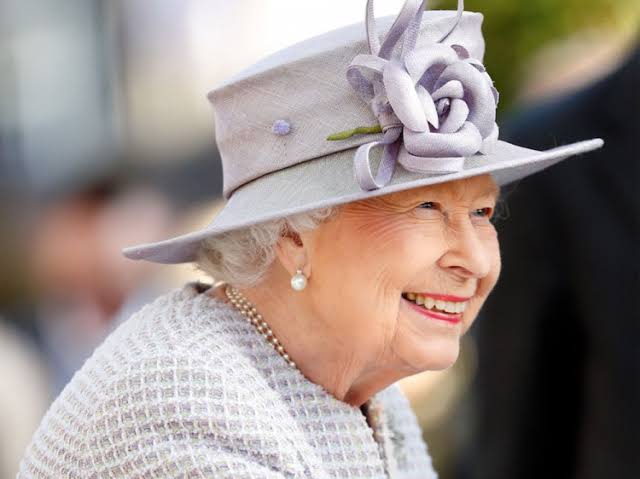
Like a prude confronted with sexually explicit images, the world didn’t hide its shock at Nigerian-born American professor, Uju Anya’s negative comments last week on the late British monarch, Queen Elizabeth II. The world had waited with bated breath at manifest indications that Elizabeth’s last hours had come. Amid this apprehension, the associate professor of Applied Linguistics, Critical Sociolinguistics and Critical Discourse at Carnegie Mellon University launched her salvo. It came in the form of a tweet that brimmed with bile and hate. She had tweeted: “I heard the chief monarch of a thieving, raping genocidal empire is finally dying. May her pain be excruciating”. It was a bazooka that upset and shook the world out of its sanctimony.
Billionaire Jeff Bezos, the world’s third richest man, had an immediate riposte for Anya. “This is someone supposedly working to make the world better? I don’t think so. Wow,” he had written. Not one to be cowed, Anya launched another diatribe at both Bezos and the now-confirmed-dead 96-year-old monarch. “If anyone expects me to express anything but disdain for the monarch who supervised a government that sponsored the genocide that massacred and displaced half my family and the consequences of which those alive today are still trying to overcome, you can keep wishing upon a star,” she tweeted. Uju was apparently making reference to the 1967–1970 Nigerian-Biafran war during which time the British Empire, supporting Nigeria, supplied arms and ammunition that helped Nigeria vanquish Biafra. About one million people reportedly died in the needless war. For Bezos, Anya had a harangue: “May everyone you and your merciless greed have harmed in this world remember you as fondly as I remember my colonizers”.
Uju is apparently an against-method academic. Born of a Nigerian/Trinidadian origin, her parents lived in Enugu, Nigeria and her father’s embrace of the African polygyny fractured the wedlock, necessitating her Trinidadian mother to flee to America with her and siblings. A self-confessed lesbian, Uju got legally separated from her husband in 2017, even as she publicly announced her against-the-grain sexuality.
While Uju may be considered to have stepped off the borders of humanity by wishing another creation “excruciating death,” the facts of her grouse are in the public domain and need not be glossed over. An analysis of Anya’s tweet reveals three key elements in her accusations against the British Empire, viz theft, rape and genocide support. There is none of these allegations that historical renditions, especially by African and Africanist scholars, have not levelled against British colonisers.
Apparently, because of her vested interest in Nigeria, Britain overtly supported Nigeria in the civil war and indeed supplied arms and ammunition to Nigeria. Thousands of Igbo had been killed in the 1966 pogrom with Britain, the immediate past suzerain, lifting no finger. The Harold Wilson government, through its lackey high commissioner in Lagos, David Hunt, was unapologetically against Biafra. As the war raged, 1.8 million refugees sprang up in Biafra, many of whom were living skeletons, kwashiorkor-stricken kids. Karl Jaggi, head of the Red Cross at the time, had estimated that about a million children were killed by hunger and bullets but Red Cross saved about half a million through its intervention.
With the help of BBC correspondent, Fredrick Forsyth, the terrifying pictures of skeleton-like children appeared on British TV and unsettled Britons, leading to a lack of appetite as those figures disrupted the flow of their dinner meals. The hitherto covered grim situations of the war, which Wilson had shielded from the British people’s view, sparked outrage and revealed Britain’s complicity in the genocidal war against the people of Nigeria. Queen Elizabeth was so powerful that if she indeed desired that the war should not be fought by both youthful soldiers, Yakubu Gowon and Emeka Odumegwu-Ojukwu, no blood would be shed by both parties.
Before Anya, Forsyth had revealed this complicity and connivance by Britain’s top echelon of power. He had written, “What is truly shameful is that this was not done by savages but aided and assisted at every stage by Oxbridge-educated British mandarins. Why? Did they love the corruption-riven, dictator-prone Nigeria? No. From start to finish, it was to cover up that the UK’s assessment of the Nigerian situation was an enormous judgmental screw-up. And worse, with neutrality and diplomacy from London, it could all have been avoided”. The truth is that, if Britain and her monarchy had insisted that the Aburi Accord, struck by the two leaders in Ghana, be observed to the letter, there would not have been the bloodshed that eventually occurred.
Britain was stung by allegations of vicarious complicity in the multiple deaths. It became clear that it either did not seek an armistice between the warring countries or it failed in its peremptory bid to reconcile them. Dr Akanu Ibiam, former governor of the Eastern Region, disclaimed the Knight of British Empire (KBF) bestowed upon him by Queen Elizabeth in protest of the UK’s biased involvement in the war. To further show his protest, Ibiam reportedly renounced his English name, Francis. So many other people protested the British complicity in the deaths of the people who later became re-assimilated into Nigeria.
What in Harold Wilson and David Hunt’s actions showed that they did not mirror the mind of Queen Elizabeth and her desire for the deaths of a people who, a few years before then, were her subjects, under the British colonial umbrella? A people who had now taken on the new name of Biafra? If the debonair queen didn’t stop Wilson from supporting the war on Biafra, why does anybody want to spare her of history’s unkind jab for the colossal deaths during the Biafran war?
Facts of history do not see Britain and ipso facto, Queen Elizabeth, as benevolent but cruel conquistadors. Till today, Britain’s foundational roles in the socio-political woes Nigeria currently faces have not ceased from jutting out of remembrancers’ lips. The 1914 amalgamation was done by Britain for the business pleasure of the empire without any regard for the future of Nigeria. The Royal Niger Company, a mercantile company formed in 1879, was chartered by Britain in the 19th century for this purpose. It became part of the United Africa Company which was used for the purchase and formation of colonial Nigeria. Through the activities of the company, Britain fenced off Bismarck Germany from the acquisition of Nigeria and it enabled this colonial empire to establish firm control over the lower Niger.
In Kenya, Britain’s conquistador role was no less benumbing. Between 1952 – the year Queen Elizabeth ascended the throne – and 1960, a revolt of the Kikuyu tribe against British rule reigned. The war was fought over three issues – the expulsion of Kikuyu tenants from settler farms, white settlers taking over lands and Britain’s failure to ascribe political representation to Kenyans in their own land. In the uprising, 32 white settlers and about 200 British police, as well as soldiers were said to have been killed. More than 1,800 African civilians were also killed. The number of Mau Mau rebels killed was put at around 20,000. When Britain hunted and captured the leader of the uprising, Didan Kimathi on October 21, 1956, it signalled the beginning of the move to grant Kenya its independence. Kimathi was executed by hanging in the early hours of February 18, 1957, at the Kamiti Maximum Security Prison.
Many of the empires under British suzerainty will also remember Britain and the Queen with grim-laced hearts.
Thus, while we stricture Anya, we should not gloss over history. By our human convention and norm, Anya tripped over the borders. The convention is for us to beatify fellow residents of this human space who transit mortality for immortality and their earthly sins are forgiven them. Our laws are no less guilty as even criminals undergoing trial have their cases discontinued. But should we allow the dead to escape that easily?
Britain dealt unkindly with her empires like merchandise and forcefully and unjustly expropriated their natural endowments as mercantile do. In the process, many lives were lost and futures railroaded. While many of those Mephistophelean activities of Britain took place before Queen Elizabeth ascended the throne, as the monarch that the rest of the world has known in the last 70 years, she should be a recipient of the assets and cruelty of her recent forebears. Methinks this was what Anya tried to say but which, either due to her unbridled anger and lack of diplomatese, she failed to pad with niceties – as the world wanted. Attempts at suppressing the angst against the past, rather than placating offspring of those whose kindred blood was spilt by African rulers, in connivance with colonial authorities, have boomeranged. Treating them dismissively and dressing them in derogatory words like “dot in a circle” has led to the metastasis of the hate and curated angry characters like Anya and Nnamdi Kanu.
The culture of not speaking ill of the dead is ancient and perhaps spans the whole of humanity. Africa has carried this culture on its head, probably more pretentiously than the rest of the world. History has however not allowed us to close our eyes to the evils perpetrated around us, even by ancient African monarchies who are the precursors of the current kings. From Sunni Ali Ber, the first king of the Songhai Empire and 15th ruler of the Sunni dynasty who conducted a repressive policy against the scholars of Timbuktu; Askia the Great, emperor of the Songhai empire; Shaka the Zulu; Idris Alooma; Benhazin Bowelle of Dahomey; Menelik II; Mansa Musa of Mali and down to some of our ancient Alaafins of the old Oyo Empire, as well as their chiefs like the wicked Bashorun Gaa, Africa too does not have a sparse supply of despots. Today, we paper over these excesses in history, just as we are doing with the kings and queens of England.
The British monarchy and some monarchies in the world are realising that modernity may make it hard for them to continually assert the fiery powers of their fiefdoms as they did in times past. This, I think, is the most enduring manifestation of the monarchy superintended over by Elizabeth II. Under Elizabeth as queen, though the monarchical power is huge and awesome, it was dressed in a ceremonial robe. The political power, on the outward, was then made to look like the decider of the destinies of Britain and its erstwhile colonies. This however does not remove the fact that the monarchy was an umpire of bloodshed and tears in colonial territories some centuries ago.
The realisation of this wave shift in power was espoused by the author of the celebrated Yoruba classic, Igbi Aye Nyi – Life swivels like a wind – Chief T. A. A. Ladele. Written in 1978, Ladele, an Okeho, Oyo state-born history teacher at Durbar College, Oyo and pioneer headmaster of Baptist School, Iwere-Ile, was one of Nigeria’s early writers. In, Igbi Aye Nyi, the 1920-born writer sought to teach us all about the ephemeral worth of political power and the un-enduring texture of raw brawn. Set in a town called Otolu at the outset of colonial incursion into Nigeria, Oba Bankarere, the Otolu king, in concert with his sons, inflicted huge terror on his subjects in his excessive wielding of power. He flaunted the wealth that accrued from power and defied all known societal norms. Two of Oba Bankarere’s subjects however rose to save the sanity of the traditional institution and the lives of the people. In the end, the colonial government waded in to curtail these excesses in a manner that rubbished the king and curtailed his outlaw sons.
That culture of defending the dead, even when we know their excesses while alive, is what the rest of the world seems to be espousing with Queen Elizabeth’s transition. While I agree that wishing evil on the living as Professor Anya did was not tidy enough and sounds very inhuman, I am not against her dwelling on the perceived soft landing for the genocide that Britain, under the Queen’s watch, gave the Nigerian war. By not treading this path of beatifying the dead, in spite of themselves, Professor Anya and travellers on her kind of boat have received flaks on their persons. Some even went to the extent of deploying Anya’s sexuality to attack her and a queer character said that because she tweets positive comments on LP’s presidential candidate, she epitomizes the negative character some online rats ascribe to the candidate. Yes, Africans cannot stand same-sex relationships, but the fact of our global existence is that the biology of some people is misdirected towards such sexuality, in spite of themselves. There are so many citizens of the globe who share our admirable opposite-sex biology but whose minds are as odious and repugnant as the sewer. So why beatify the latter and incinerate the former?
To my mind, the culture of beatifying the dead with a blanket of “a life well lived” is self-serving. Most of the time, we spread this omnibus blanket as a shawl on the disreputable lives lived by the dead simply because we all dread what the world would say when we too exit the world. This was aptly explained by the late Ilorin, Kwara state Dadakwada maestro, Odolaye Aremu, who sang that no one can predict who will be free of being drenched by rain that is yet to abate. He had expressed it in his lyrics: “Ojo ti nro ti o da, Olohun lo mo iye eni ti o pa”.
The way to go is to let whoever lives their lives miserably be apportioned strictures commensurate with their measly lives and those who live life as puritans be so accorded at their departure. We have taken this apportioning of blanket beatification on the dead to such an absurd level that it encourages evil doers to bask in the warmth of their evil broths. This does not discourage the living from evil. While it is nice to beatify Queen Elizabeth as it is being done all over the world for her recorded great footprints while alive, let non-conformists like Anya freely dwell on the misgivings they have about her too. They should not be made victims of unfavourable censoring or censure.
Dr. Festus Adedayo, a Journalist, author, lawyer and columnist writes from Ibadan, Oyo State