Connect with us

News

Court okays EFCC ’s power to freeze suspicious accounts

Published

on

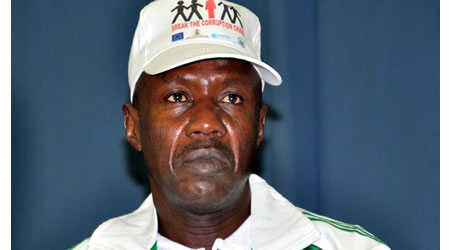
The Court of Appeal in Abuja has affirmed the power of the Economic and Financial Crimes Commission ( EFCC ) has the power to freeze suspicious accounts.

The court said the anti-graft agency can direct banks to suspend operation of accounts suspected to have been used for criminal activities, or any account of into which slush funds and proceeds of crime have been deposited.

The court, however, said such a directive by the EFCC to banks must be followed by an order of a court for interim freezing, which it must obtain from a competent court, to enable it conduct investigation to ascertain the origin of the funds.

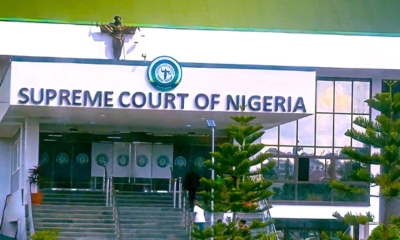
The appellate court said these in a unanimous judgment by its three-man panel on an appeal by Messrs A. R. Security Solutions Limited, which challenged the refusal by a Federal High Court in Abuja to vacate an interim freezing order earlier granted against it.

Justice Binta Nyako of the Federal High Court, Abuja had on January 25, 2016, granted an ex-parte application by the EFCC for, among others, an interim freezing order on A. R. Security accounts with Heritage Bank.

R Security applied to the court to have the order set aside, a request Justice Nyako, in a ruling on April 22, 2016, refused, prompting the company to approach the appellate court.

Justice Mohammed Mustapha, who prepared the lead judgment of the appellate court, resolved the sole issue raised for determination against the appellant.

The issue was whether the trial court was right to have held that the EFCC could obtain an order of court to temporarily freeze the appellant’s account, once the account is the subject of investigation.

Justice Mustapha said while the EFCC was empowered, under sections 28 and 29 of its establishment Act to trace, attach and apply for interim freezing order on such suspicious accounts, the court, under Section 44(2)(k) of the Constitution, was empowered to grant such interim injunction.

He said: “The respondent ( EFCC ) clearly bears the burden of establishing that there is a prima facie evidence that the property in issue is liable to be forfeited on account of its being proceed of crime.

“That burden is discharged once there is an arrest for an offence under the Act ( EFCC Act), and the respondent traces the assets and attaches the property of the accused person acquired as a result of economic and financial crimes. That done, the respondent is entitled to an interim attachment order by the court.”

Justice Mustapha agreed with the appellant that the EFCC must show that the origin of the suspicious funds is illegal.

He added: “If bank accounts have to be investigated with any degree of success for the purpose of tracing criminality in transactions, how else can that be done without exercising some degree of control over the account?

“It stands to logic and common sense that any serious investigation of criminality in a bank account has to first and foremost start with taking control of the bank account or at least putting restraints on the account; anything short of that will be quixotic, because funds in the account investigated will simply take a flight. That is the logic behind sections 28 and 29 of the Act.

“Prima facie proof starts, for the purpose of the Act, with arrest of the accused person for financial and economic crimes, which now denotes, at this stage, that the monies in the account are likely proceeds of crimes, and therefore, liable to forfeiture, thus necessitating the grant of the interim order.

“It is for these reasons that the money in the accounts is fair game, because that attachment and proper investigation of such accounts will assist the respondent (EFCC) in prosecuting the accused successfully or consequently lead to the discharge of the order, depending on how the investigation goes.

“The need for credible evidence, showing the money to be proceeds of crime, underscores the necessity for the respondent’s mandate to ‘immediately trace and attach’ the property.”

He added that the grant of the interim order by the court was to enable the EFCC conduct a holistic investigation on the account to enable it establish whether or not the origin of the funds in the affected account was illegal.

“It has to be pointed out that ultimately, it is for the same reason that the grant of interim order becomes necessary, as it explains the necessity for the respondent to have, not only access, but control of the account, by having it frozen, anything else might end up being pyrrhic for the respondent,” Justice Mustapha said.

Other members of the panel – Justices Abubakar Datti Yahaya and Tani Yusuf Hassan – agreed with the lead judgment a copy of which was seen by The Nation.

Comments

News

Kola Oyewo’s family to Adeleke, Ooni, Atiku: Your condolences are our pillar of strength

Published

on

The family of the late veteran actor and scholar, Chief (Prof.) Adekola “Kola” Oyewo, has expressed deep appreciation to Governor Ademola Adeleke of Osun State, the Ooni of Ife, Oba Adeyeye Enitan Ogunwusi, Ojaja II, and former Vice President Atiku Abubakar, among other Nigerians, for their messages of condolence and support following the death of their patriarch.

In a statement issued on Saturday by Dr. Adewale Oyewo on behalf of the family, the bereaved household said the overwhelming show of sympathy, prayers, visits and acts of kindness from across Nigeria and beyond had served as a strong pillar of comfort in their period of grief.

The family described the late Oyewo as a respected community leader, accomplished academic, devoted family man, and traditional title holder whose life was defined by service, integrity, and unwavering commitment to societal development.

According to the statement, the tributes received in his honour reflect the far-reaching impact he made on students, colleagues, cultural practitioners and the wider society.

The family particularly appreciated Governor Ademola Adeleke for his condolence message and prayers, noting that his support had been deeply comforting.

It also expressed gratitude to the Ooni of Ife, whose words of encouragement were described as uplifting and consoling during the mourning period.

The statement further acknowledged the Oloba of Oba-Ile, Oba (Prof.) Adekunle Ashamu Oyeyemi (Tewogbade I), the Oloba-in-Council, and other traditional institutions for their fatherly support and solidarity.

Former Vice President Atiku Abubakar was also commended for his message of sympathy, which the family said brought reassurance in their moment of loss.

The family extended appreciation to professional bodies including the National Association of Nigerian Theatre Arts Practitioners (NANTAP) and the Theatre Arts and Motion Pictures Practitioners Association of Nigeria (TAMPAN), as well as academic communities of Obafemi Awolowo University, Redeemer’s University, Ekiti State University, and Elizade University, where the deceased served.

They also thanked friends, associates and well-wishers who stood by them with prayers and support.

“As we continue preparations to honour the life and legacy of our beloved patriarch, we humbly seek continued prayers and support,” the statement added, praying for the peaceful repose of his soul.

Continue Reading

News

IGP appoints Iniedu Force spokesman, replaces Placid

Published

on

photo combo of Anietie Iniedu and outgoing Force spokesman, Anthony Placid

The Inspector-General of Police, Tunji Disu, has appointed Anietie Iniedu as the new Public Relations Officer of the Nigeria Police Force, succeeding Anthony Placid, who was appointed to the position barely three months ago.

The appointment was announced in a statement issued on Friday by Placid, who described his successor as a seasoned police officer with extensive experience in public communication, operational policing, intelligence management, institutional accountability and administration.

An indigene of Etinan Local Government Area of Akwa Ibom State, Iniedu holds a Bachelor of Science degree in Pure Chemistry from the University of Uyo and has attended several professional courses in investigative interviewing, crime scene management, intelligence analysis, strategic communication and human rights-based policing.

Before his latest appointment, Iniedu headed the Complaint Response Unit at the Force Headquarters, Abuja, where he coordinated the management of public complaints and drove initiatives aimed at deepening transparency, accountability and public trust in the Nigeria Police Force.

He also served as Public Relations Officer of the Police College of Information Technology, Kobape, Ogun State, in addition to holding several operational and administrative positions across the country.

His previous postings include Operations Officer at the Maisandari Division in Yobe State, Area Crime Officer at the Umuahia Area Command in Abia State, Staff Officer at the IGP Secretariat, Force Headquarters, Second-in-Command of the 50 Police Mobile Force Squadron, Kubwa, and Officer-in-Charge of the Force Headquarters Situation Room, where he coordinated the dissemination of crime and security information nationwide.

The statement quoted the Inspector-General as expressing confidence in Iniedu’s capacity to lead the Force Public Relations Department, noting that his wealth of experience and professional background would further strengthen the police’s strategic communication architecture and enhance engagement with members of the public.

Continue Reading

News

Govs Back State Police, Power Reform, Nutrition Drive, World Bank Partnership

Published

on

Insist state policing must align with federalism, citizens’ rights as governors deepen talks on constitutional review, energy transition, agriculture, social protection

The 36 state governors under the umbrella of the Nigerian Governors’ Forum have renewed their support for the establishment of state police and sweeping reforms in Nigeria’s power sector, signalling fresh momentum for key constitutional and economic restructuring efforts.

The position was contained in a communiqué issued at the end of the Forum’s second meeting held on Wednesday, where the governors deliberated on security, energy, nutrition, agriculture and development partnerships affecting the country.

According to the communiqué, the governors engaged in extensive consultations with Attorneys-General across the states to review proposed constitutional amendments relating to state policing and other governance reforms.

They stressed that any framework for state police must be “constitutionally sound, consistent with federalism, and protective of citizens’ rights,” adding that ongoing legal consultations would help shape a unified and stronger position for the states ahead of national engagement.

The Forum noted that the collaborative review process with legal advisers was already producing inputs expected to strengthen the collective stance of states on security restructuring in the country.

On social development, the governors received a presentation from the Federal Ministry of Budget and Economic Planning on progress under the National Nutrition 774 (N-774) Initiative, aimed at tackling malnutrition at the grassroots.

They reaffirmed their commitment to improving nutrition outcomes across Nigeria, particularly in reducing child malnutrition, and expressed support for the ongoing consideration of the National Nutrition Bill.

The governors also called for sustained engagement with stakeholders to strengthen the legal and institutional framework guiding nutrition governance nationwide.

In another briefing, the Forum was updated by the World Bank Country Office on the proposed Country Partnership Framework (CPF) for Nigeria (FY2026–2032), alongside the Nigeria Sustainable Agricultural Value-Chains for Growth (AGROW) Programme.

The AGROW initiative is designed to boost agricultural productivity, strengthen value chains, attract private sector investment, improve food security, and support early childhood development interventions across participating states.

The governors expressed support for continued collaboration with the Federal Government, the World Bank and development partners, while endorsing state-specific interventions aimed at ensuring effective implementation and measurable impact.

They further urged stronger inter-sectoral coordination in health, nutrition, education, water and sanitation, and social protection systems to improve outcomes for citizens.

On energy reform, the Forum considered the National Solar Super-Grid (NSSG) Initiative, a plan to expand electricity access through decentralised solar generation integrated into a national transmission backbone.

The governors noted the initiative’s potential to improve energy security, deepen industrialisation, strengthen state electricity markets and accelerate economic growth across the federation.

Reaffirming their commitment to power sector reforms, the governors pledged sustained collaboration with stakeholders to expand access to reliable and affordable electricity, describing energy reform as central to job creation, productivity and national development.

The meeting ended with a renewed resolve by the governors to deepen cooperation on reforms seen as critical to economic stability, security restructuring and improved welfare for Nigerians.

Continue Reading

Advertisement

Entertainment

Advertisement

MegaIcon Magazine Facebook Page

Advertisement

MEGAICON TV

Advertisement

Trending