The imaginatively presented material below is basically about the Yoruba worldview. Within the invaluable Yoruba system the whole lifecycle is fractionalised into accomplishable bits. The system is hierarchical, therefore the order of achievement is natural and sensible.
The cart is not placed before the horse hence the inherent discipline in the lives of those that have passed through this system and the reverse in the lives of those who failed to imbibe these principles. It has nothing to do with age, it is a cultural element that those who failed to imbibe live to regret because they always stick out like sore thumbs everywhere they found themselves.
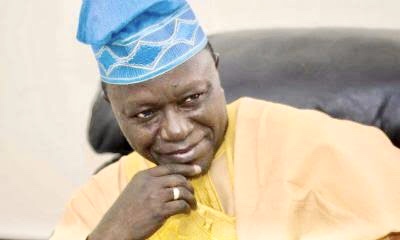
Not so for Chief Adeniyi Akintola. He is always flying the Yoruba flag in character and learning.
Please spare some time to review this write up on the Yorubas that the writer has kindly permitted us to share and the additional materials that we’ve chalked up on the erudite Yoruba man.
In Yorubaland, money has never been foremost in Yoruba value system. In our value system money is number six.
What are the first five you may ask?
1. The first is làákà’yè – The application of knowledge, wisdom & understanding… (Ogbón and ìmò òye)
2. The second is Ìwà Omolúàbí– (integrity) Someone with integrity is a man/woman of their words. If you have all the wealth in the world but lack integrity, you are not worth a thing. Integrity is combined with iwa, (character) which we regard as Omolúàbí.
3. The third is Akínkanjú or Akin – (Valour)
That is why Balóguns is second-in-command to the leaders in Yoruba land.
Balóguns are people that can lead them to war. To lead with great courage in the face of danger, especially in battle. Yoruba people have no respect for cowards.
4. The fourth is Anísélápá tí kìíse òle – (Having a visible means of livelihood) A person must be identified with a visible means of livelihood that guarantees a lawful income or sustenance. His or her profession or job must be open and legally approved by society, and not through cheating or forcefulness.
5. The fifth is iyi – (Honour) Yoruba people place a premium on the gait with which individuals carry themselves and public reputation.
That is why Yorùbá people usually say when you set out to look for money and you meet honour on the way then you don’t need the journey anymore, because if you get the money, you will still use it to buy honour.
6. The last in the Yorùbá value system is owó tàbí orò – (Money or wealth) If putting money ahead of the other five, then you are nobody in Yoruba land of the olden days. Unfortunately, this is being pushed to the back burner nowadays due to the erosion of our value system.
After all his struggle to acquire the golden fleece. He graduated with a law degree, appeared in Court for the first time in borrowed gown and head gear but forged ahead anyways. He got a job that offered a Santana car and 400 naira (huge sum at the time) where the regular lawyers earned between 180 and 220 but his adopted father asked whether he wanted to learn law practice or run after money.
He gave him the freedom to choose. Remembering his Yoruba upbringing, he went for the 220 naira job but learnt the best court presentations and law application available at that time. The rest is history as he’s one of the most sought after legal minds and administrator today.
Let’s read more about the Chief…
NIYI AKINTOLA: A man on a mission
Having a goal in life and achieving it will seem to be the norm for all human beings. But having a goal would seem to be, under close scrutiny, the dream of a person who’s got everything lined up for them.
Think about it, if survival for the day is your preoccupation as an indigent child, what time is there to dream talkless set a goal ?! But if you’re guided by unseen hands and every decision you take, to break the cycle of poverty, works like a cinch even when it obviously seem impossible given your position and background to achieve the heights you have attained in life you’ll definitely know you have a date with destiny.
Three primary schools, mechanic apprenticeship, plank seller motor-boyship and photostudio apprenticeship filling in for your high school education. And through hardwork you threw all that into the trash ( retaining the lessons) to clear all required WASCE papers at one sitting.
Within a blurring moment you also clinched A-B-A in WAEC A- Level and another A-B-A same year in Cambridge A-Level examinations. You attracted via the media sponsors from an elite Ibadan club who saw you through University of Ibadan studying law having rejected sociology offered through JAMB by Ife 2 years earlier. You became a Senior Advocate in your chosen profession and member of body of benchers relatively young.
Definitely you’re a special individual and most certainly providence has an interest in you and everything you touch.
CONSUMMATE PROFESSIONAL
The Bible says “Seest thou a man who is diligent in his work….he shall stand before kings and not before ordinary men”.
Talking about professional conduct, you do not need rocket science to conclude that a Senior Advocate of Nigeria got that far because they’ve given a good account of themselves inside and outside of the court rooms elevating the course of their calling everywhere they go. Niyi AKINTOLA SAN took a lot from his profession and he has by all means given so much back in terms of record setting and becoming something of a reference point in the resolution of complicated litigations.
If you care to look , check the outcome of some landmark cases some of which he did without receiving any remuneration.
AKINTOLA was lead counsel in the celebrated Inakoju vs Adeleke case which was a notable case in the history of Nigerian legal jurisprudence. AKINTOLA in that case believed that the law should be used as an instrument of social engineering and change to better the lot of society.
Even when some of his colleagues and senior members of the bar believed he was walking along the wrong path challenging the impeachment of Chief Ladoja in the courts of law. He proved that he knew the horse he was betting on by cleverly changing the mode of challenge. He made the legislators sue themselves and made the speaker of the house of assembly the arrow head of the challenge.
The approach of AKINTOLA SAN on impeachment proceedings has now become the reference point as was evident in subsequent impeachment proceedings in Plateau , Ekiti, and Bayelsa states to mention a few.
The traiblaising traits can be found on the Ilero chieftaincy stool case where the Alaafin and the kingmakers were against government’s imposition of a candidate against the traditionally chosen one. He won the case for the people in spite of all the stumbling blocks including the sudden death of a major witness.
AKINTOLA did his work with the fear of God and deep considerations for humanity. He had been at the two extremes of life. He had nothing, starting out and he’s now within the top echelon of his career. He’s very sensitive when it comes to people’s welfare probably because of his personal experiences and also passionate about uplifting the indigents most especially those experiencing issues with education but not limited to that.
He’s easily on the card at most intellectual gatherings within and outside the law profession. His law qualification and understanding of arbitration has taken him to other lands to work with resounding success just like he’s doing at home.
HIS ACTIVISM AND PHILANTHROPY
Niyi Akintola SAN’s OYO and Ibadan Origins are never in question. And like the adage says “a leaf does not fall far away from the tree” The gene of fighting for a just cause that the Ibadan people are known for runs in his veins. He’s a great great great grandson of Ibikunle the fiery army general that protected OYO empire from the Kunrunmi rebellion within, In Orile Ijaye and external aggression against Yorubas generally.
Akintola has been in the trenches with human rights activists from his school days but very actively since the June 12 debacle. His mantra has been ” injustice done to one is injustice done to all.
He was herded into detention by the powerfuls together with some human rights lawyers, trade unionists, progressive politicians and journalists like Gani Fawehinmi, NLC man Bolomope, Femi Falana, Lam Adesina to mention a few. They were either asking for improved education, health and freedom for the people. It was never about personal aggrandizement.
He was the deputy speaker in 1992. Because he dared to oppose the ” this is how we’ve been doing it people ” the kingpin of Amala-Politics himself, Lamidi Adedibu ordered his arrest using his foot soldiers to throw the second most powerful lawmaker in the state for that time in the booth of a car and driven to Molete. And as if the absurdity of this lawless behaviour was not grevious enough, the politics by other means mafioso sternly warned him to desist from his activism or he will be dealt with.
He carried on his activism in the courts of law by choosing to use the law as an instrument to get justice for the common man and even for the well to do like governor Ladoja who was crudely removed from power.
Charity begins at home they say, Chief Akintola is at home in the courts of law and so his charitable activities takes root even from there by taking cases of indigent clients free of charge.
Niyi Akintola, SAN was lifted up by kind hearted people, consequently he has assisted many and still assisting many others in their educational pursuits
because he believes knowledge is power.
Only recently he promised the burnt down Ibadan motor Spare parts market traders 10 lockup shops and he delivered to the amazement of the owners shops painted, with better doors and toilets.
His philanthropic work also crosses over into his politics. All political cases he had taken on for the progressives and they are many from the Local government to governorship to the lower and upper houses to presidential were done free of charge. Show me any other party man doing the same standing today.
When we discuss his politics next you will get much more.
HIS PHILANTHROPY AND POLITICS.
I did say that Chief Adeniyi Akintola SAN did not have the opportunity of a secondary school education instead he learnt lessons of life from one apprenticeship to another (3 of them)and at the end of the day by divine providence and hard work made the loss seem unnecessary.
Continuing with his philanthropic efforts from where we left off. Chief Akintola is a strong advocate of the philosophy that privileged citizens should give back to the communities that produced them but not by giving ridiculous half Kongos of rice and gari but by real empowerment that makes them fishermen themselves instead of getting pieces of fish in trickles, a feudalistic shenanigan that makes them perpetual slaves.
* He built an edifice tagged Tunji Bello Hall at the school of nursing Eleyele Ibadan for the Muslim Society Oyo State though himself a Baptist. He practices what he preaches.
* I had witnessed a prayer session at the Oja Oba, Ibadan central mosque where he honoured an invitation to a prayer session by the Imams and Alfas of Yoruba land.
* He built the Magistrate court, and joined in the effort to build a
* Police station in his native Omi Adio, his ancestors farmstead.
* He also built a well equipped hospital in that community, being managed by the Baptist Church and as we speak there’s no other elaborate health structure of it’s type in the area. In fact, the hospital was commissioned in 2006 by Asiwaju Bola Tinubu.
* Chief Akintola had donated to the Federal Government also a parcel of land(3 plots) for a health facility in the area.
* The Baptist convention had also been allocated huge (27 hectares) of land for the Bowen University Teaching Hospital Annexe.
So when eventually all these other facilities come on stream through the effort of Adeniyi Akintola SAN, the Omi Adio environment would be a bastion of health facilities.
* At 50, he awarded 50 indigent higher institution students scholarship.
* He instituted a scholarship scheme for Ibadan indigenes( apart from others) at Lautech University , Ogbomosho – under the chairmanship of Oluyole club of Ogbomosho. The scholarship programme still runs today.
*Myriads of unpublicized, solid, market women empowerments, hence the strong women support base in all local governments.
Now to his politics. He is one of the few progressives still standing in Oyo State since Bola Ige era.
He is a principled progressive whose ideology thrives on positive programmes for the people and not on fithy lucre as has become of the dye in wool political hermaphrodites who run with the hares and hunt with the hounds.
He makes friends across party lines and hierarchy but draws the line on principles. He’s a fantastic negotiator because of his background in arbitration. There’s no losing with Niyi because he listens to all very carefully and appropriately thrash out all issues ( everyone is happy).
Unlike most people of his status he answers virtually all telephone calls. That is a culture of civility lacking among Nigeria’s high and mighty.
He was member Oyo State House of Assembly in the 3rd republic in 1992. As a matter of fact he was deputy Speaker.
He was harrased by the Adedibu political machinery. Undaunted he resigned from deputy Speakership and went back to law. He’s about the only politician in Nigeria’s history who has resigned from office on principles.
He was, during the tenure in the 3rd republic chairman Committee on Public Petitions and Judiciary.
He was a member presidential Committee on The Review of The 1999 constitution.
He’s currently a legal adviser/ counsel to his party – The APC and had been representing the progressives legally since 1998.
He was the dissenting voice that single handedly wrote the minority report on resource control for the 1999 presidential Committee on the review of the constitution.
He’s on the national committee planning the 2023 elections campaign for his party. One of the 3 from Oyo State.
HIS POLITICS AND ADMINISTRATIVE EXPERIENCES.
The Yorubas believe that you need to ” show me the apparel you’re donning if you must gift me a dress”.
Those aspiring to high offices must have a history of excellent administrative capacities to show how society has benefitted from their wealth of experiences in the past. Charity begins at home. Chief Akintola runs 4 fully functional chambers in Nigeria ( Ibadan, Lagos, Abuja and Portharcourt) and collaborates with others elsewhere in the world.Because of his professional prowess public and private organizations have entrusted him with the management of sensitive and delicate issues not just in the courts and he has delivered beyond expectations.
He consults for wholly owned Nigerian companies and multinationals, government parastatals, financial institutions, oil and gas companies including construction and manufacturing concerns. You’ll agree with me that a dodderer can’t smell these environments talkless function effectively there.
It is therefore not surprising that a versatile individual like Adeniyi AKINTOLA SAN has served his fatherland, the world and the legal profession in so many capacities among which are being:
*Appointed counsel to the Federal Government on the Judicial Commission of Inquiry that probed Nigerdock N81 Billion fraud.
*Appointed Member Presidential visitation panel to FUTA I999-2000
*Member Body of Benchers- The highest governing body of the legal profession. And he is a life bencher, the youngest to become so at 50.
*Director Nigerian Reinsurance PLC
*Member Disciplinary Committee of the NBA( since 1998).
* Past Chairman NBA Ibadan Branch.
*Fellow London Court of International Arbitration
*Appointed partner with the Alternative Dispute Resolution of London, Marriott West India Quay, London (2008) Also a manager at the ADR Seminar of 2008 in the United Kingdom.
*Fellow Chattered Institute of Arbitrators, Nigeria.
*Member 1999 Presidential Committee on the review of the Constitution.
*Member Nigeria Bar Association
*Member African Bar Association
*Member International Bar Association
An incorruptible fellow, he exposed the 50 million naira fraud at FUTA and rejected an allotment of land in 1992 by the FG in Abuja because it was tainted with corruption.
The staunch progressive that he is he believes in
* Quality education for the mass of our people
In Technical areas, Sciences, ICT, Liberal arts, Agric chain, Commerce and Trade.
* Robust health system with focus on the professionals,the masses, the infrastructure and medication.
*Infrastructural radicalization to answer multisectorial deficiencies in lifting the system out of the current doldrum and creating jobs.
*Provision of facilities for SMEs to encourage entrepreneurship.
And more… to be unveiled subsequently.
But even as it is, you will agree with me that he has fulfilled what is required of him to be called a seasoned Yoruba person but there’s more to be shown the world about this exemplar. Just stay tuned!
Mobolaji Oladepo, the media aide to Chief Adeniyi Akintola, sent this piece from Ibadan, Oyo state