Shortly after the former Head of State, General Abdulsalami Abubakar took up the mantle of leading the country and expressed the resolve of the then Federal Military Government to return the nation to full blown democracy, many Nigerians were in doubt of his sincerity and this was justifiable on account of the numerous disappointing experience of the past. The untimely death of the undeclared acclaimed winner of the June 12, 1993 Presidential election, Bashorun Moshood Kashimawo Abiola in detention under General Sanni Abacha had sparked off serious crisis in which there were wanton destruction of lives and properties. The citizenry which included Civil Society groups and the International Community raised their voices and demanded an end to military rule without further delay.
Consequently, the Independent National Electoral Commission (INEC) under Professor Maurice Iwu officially registered the Peoples Democratic Party (PDP), All Peoples Party (APP) and later Alliance for Democracy (AD) in readiness for the proposed full democratization process of the country. In summary, the PDP won the presidential poll as former military ruler, Chief Olusegun Obasanjo defeated AD/APP coalition candidate, Chief Olu Falae who had been a minister of Finance and Secretary to the Government of the Federation at different occasions. The party (PDP) also won 26 states out of 36 states including the Federal Capital Territory, Abuja and installed its members at virtually all levels of governance – federal, state and local governments. It repeated the feat in three subsequent electoral cycles (1999, 2003, 2007 and 2011. In 1999, Alhaji Atiku Abubakar was elected the executive governor of Adamawa State, but he later emerge the running mate to Chief Obasanjo following his nomination by the political group of his late mentor, Gen. Shehu Musa Yar’Adua’s Peoples Democratic Movement (PDM).
General Obasanjo was said to have been favourably disposed to Alhaji Atiku Abubakar to compensate the Shehu Musa Yar’Adua group whose principal died in detention over a phantom coup. The choice of Alhaji Atiku was also logical and politically strategic given the fact that Chief Olusegun Obasanjo (then presidential candidate of the PDP) was not politically acceptable at ‘home’- the South Western part of the country, compared to the political strength and popularity of the then promoters of the Alliance for Democracy (AD). In the end, INEC declared the PDP as the winner of the presidential election as the duo of Chief Olusegun Obasanjo and Alhaji Atiku Abubakar became President and Vice President respectively. The rest, they say, is now history.
Before the end of their first 4 years in office, the relationship between the duo had become frosty but this was well managed until it was time for build up to the 2003 general elections. Informed sources revealed that it took persuasions by elders of the party to convince Alhaji Atiku Abubakar to support his boss, President Obasanjo in the Presidential poll. Being a better experienced politician, Atiku had surreptitiously taken over the control of the PDP and this was to be utilized to strip Obasanjo of the second term ticket until he reportedly begged his number two man in all humility.
But before the end of their second term, it had become an open secret that the relationship between them was not rosy. After months of denial, Chief Obasanjo eventually let the cat out of the bag when he featured regular special interview programme on NTA titled; ‘The President Explains’ and openly lambasted Atiku Abubakar. The stage was set for serious battle between the two political gladiators and was towards the tail end of their second term in office. Atiku later revealed that his problem with his boss was because he opposed his third term ambition. It was, however, gathered from reliable sources that Atiku was largely influenced the overwhelming opposition the alleged third term ambition of Chief Olusegun Obasanjo. Though, the last straw which finally broke the camel’s back was the Senate under Chief Ken Nnamani who killed the third term ambition by a struck of the gavel. This overheated the polity and eventually, Atiku Abubakar was forced to decamp from the Peoples Democratic Party (PDP) to the defunct Action Congress (AC) under which he contested and lost the 2007 presidential election to Alhaji Umaru Musa Yar’Adua
There were insinuations that Obasanjo foisted a sickly Yar’Adua on the country to pave a way for another president of the southern extraction since he could not achieve his rumoured third term bid. It was alleged that he (Obasanjo) used Yar’Adua as a stop gap between his own reign and that of another southerner. And before long after he won an election widely believed to be flawed, President Umaru Yar’Adua bowed to the pang of an undisclosed ailment. The sickness got complicated at some point that he was removed from the public and later, he was flown abroad. After months of medical sojourns in Germany and the Kingdom of Saudi Arabia, Yar’Adua gave up the ghost and his remains were committed to mother earth almost immediately. Quite predictably, the PDP could not resolve the attendant political logjam peacefully and it took the combined intervention of many stakeholders to fix the situation as the northern oligarchy was against the then Vice President, Dr. Goodluck Jonathan from being sworn-in as the next president in compliance with the dictates of the nation’s Constitution. Pointedly, the National Assembly triggered the ‘Doctrine of Necessity’ which facilitated the inauguration of Jonathan presidency which was, in fact, a continuation of Umaru Yar’Adua/Goodluck Jonathan joint mandate of 2007. As expected, Dr. Jonathan sought a fresh mandate of his own in 2011 although this did not go down well with a section of northerners who felt his action had altered the unwritten zoning arrangement between the north and south to mitigate the effect of palpable dichotomy. However, as the struggle for the 2015 election began to hot up, the Peoples Democratic Party (PDP) under the Presidency of Goodluck Jonathan faced another acid test and did not emerge unscathed from it.
What started first as a child play later snowballed into a major crisis. Indeed, the crisis threatened the very foundation of the party. At first; it was the rumoured presidential ambitions of Governors Sule Lamido of Jigawa state and Rotimi Amaechi of Rivers State that stirred another hornet’s nest. The two – term governors were no push-over in their respective right. The two of them were said to be enjoying the support of the same godfather, Chief Olusegun Obasanjo, who was also in support of Goodluck Jonathan.
In this vein, the presidency under Goodluck Jonathan drew the battle line with the perceived reactionary forces. The first casualty of the imbroglio was former Osun State Governor, Prince Olagunsoye Oyinlola who suddenly got ‘sacked’ as National Secretary of the PDP by an Abuja High court. The sack unexpected drew a lot of condemnation from party leaders who contented that Oyinlola could only be sacked by the National Working Committee (NWC) of the PDP and not the presidency which was fingered as the brain behind the development. That Oyinlola’s sack was sponsored by the powers-that-be was no mere rumour going by the instant action of the Alhaji Bamanga Tukur-led National Working Committee which replaced him almost immediately.
A special Convention of the party to pick the Southwest candidate for the position of National Secretary billed for Ibadan, the Oyo state capital was cancelled at the last minutes. Consequently, the presidency and the then embattled National Chairman of the party, Alhaji Bamanga Tukur set up a Special National Convention Committee headed by Prof. Jerry Gana. In between the time set for the convention and the convention proper, hostilities among different blocs within the party continued unabated. In Rivers state, Governor Rotimi Amaechi was in the storm. The presidency was at home with him and all apparatuses of the state were deployed to dislodge him. It first started with ‘roforofo fight’ between the first lady, Dame Patience Jonathan who snatched the microphone from Amaechi who was explaining the reason why the shanties in the first lady’s Okrika town should be demolished to pave way for the construction of a modern school.
The sack of the Chairman of Obior/Okpor Local Government over alleged financial impropriety by the Rivers State House of Assembly further compounded the crisis, as the presidency waded in to reverse the action. This was followed with the dissolution of the Rivers State PDP Executives and appointment of fresh executives with the tacit backing of the presidency. Since then, it has been one crisis too many for the PDP in virtually all the 36 state chapters of the party. From Ogun to Osun, to Kwara, to Oyo, to Abia, Rivers to Sokoto and Borno, it is tales of woes as the party continued to fall apart. The umbrella could no longer guarantee any cover from the scorching sun and torrential rain to its members across the land.
Then, litigations upon litigations continued to be the lots of the PDP. Although, the much publicized Special National Convention was held at the Eagle Square, Abuja and streamed live to the whole world, no fewer than seven governors together with their contingents walked out of the convention ground. The aggrieved governors later went ahead to conduct a parallel congress in which one of its former National Chairman, Alhaji Kawu Baraje from Kwara state was picked as the National Chairman and a factional group nPDP emerged.
After series of political horse-trading, the police acting on the instruction from ‘above’ besieged the Abuja National Secretariat of the new PDP and sealed it up. Apparently, incensed by the action, the New PDP leadership headed for an Abuja High Court which ruled that the New PDP should be allowed to flourish. In spite of this landmark judgement, the Alhaji Bamanga Tukur led faction of the PDP heavily relied on the state security apparatus to torment and frustrate the other factions. President Goodluck Jonathan held at least five dinners and nocturnal meetings with the aggrieved governors, all ended in a deadlock. To the aggrieved governors, Alhaji Bamanga Tukur must go but this did not go down well with Jonathan. Jostle for political relevance and control of the soul of the party was fractured with the registration of the Peoples Democratic Movement (PDM), the Sheu Musa Yar’Adua political group inherited by former Vice President Atiku Abubakar.
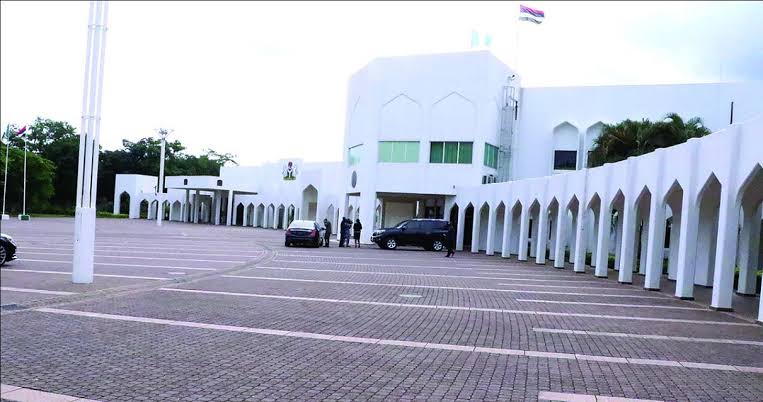
With internal war raging unabatedly, the Peoples Democratic Party was unknowingly preparing a ground for its exit from the Presidential Seat of Power (Aso Villa) as the political gladiators threatened hell and brimstone. Five governors out of the G7 and members of the new PDP defected to the All Progressives Congress (APC) which was formed on 6 February 2013. Also, towards the end of year 2013, there was mass defection of members of the Federal House of Representatives which gave the then opposition party – the All Progressives Congress (APC) majority by 172 members to PDP’s 171 members.
Similarly, at the upper chambers of the National Assembly, many serving Senators ditched the PDP and joined the opposition APC early in the year 2014. This marked the crescendo of the protracted crisis which had engulfed the PDP and reduced it to a House of Commotion. It was too visible that the raging hostilities in the party and the self inflicted crisis would mar the electoral prosperity of the party in 2015 elections and beyond. As rightly predicted, the PDP lost the election to the opposition All Progressives Congress (APC) as President Muhammadu Buhari defeated ex -President Jonathan by 2.57 million votes, which ended the PDP’s hold of Africa’s most populous nation at the centre.
In spite of the huge gang up against the Buhari led APC government’s second term bid, the party suffered the same defeat as attempts to rebuild the party after its primaries has remained unsuccessful. Having recorded rhythmic electoral victories for sixteen years, no doubt, the Peoples Democratic Party (PDP) that prides itself as the biggest and the largest political party in the continent of Africa and vowed to stay in power for sixty years according to one of its former chairmen, Prince Vincent Ogbulafor is in deep mess as it failed again to occupy the ‘Aso Villa’, even when the ‘almighty’ Atiku Abubakar was presented as its flag bearer in the 2019 elections. He exploited all the necessary means, including legal battle, but failed and ‘Atiku isn’t coming again’ (a slogan adopted by the PDP nurturing a hope of the desire to sack Buhari from office).
Though, the party is still alive, it is obvious that the Nigeria’s once mighty PDP is fighting for its future political prosperity. In government today, is the All Progressives Congress (APC) and on the number seat is President Muhammadu Buhari enjoying a second term tenure.