Connect with us

News

African Union endorses new initiatives to end AIDS.

Published

on

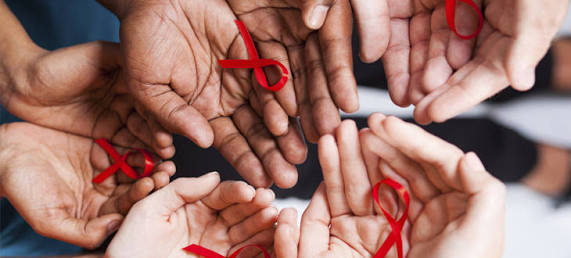
AFRICAN heads of state have endorsed two major new initiatives to help end AIDS by 2030. The community health workers initiative aims to recruit, train and deploy 2 million community health workers across Africa by 2020. The western and central Africa catch-up plan aims to rapidly accelerate access to HIV treatment in the region and close the gap in access between African regions. The initiatives were endorsed at the AIDS Watch Africa Heads of State and Government Meeting, held on 3 July during the 29th African Union Summit in Addis Ababa, Ethiopia.

Western and central Africa catch-up plan

Under the leadership of countries and regional economic communities, and in collaboration with UNAIDS, the World Health Organization, Doctors Without Borders and other partners, the catch-up plan in western and central Africa, which started implementation in late 2016, seeks to dramatically accelerate the scale-up of HIV testing, prevention and treatment programmes, with the goal of putting the region on the Fast-Track to meet the 90–90–90 targets by December 2020.

While the world witnesses significant progress in responding to HIV, with 57% of all people living with HIV knowing their HIV status, 46% of all people living with HIV accessing treatment and 38% of all people living with HIV virally suppressed in 2015, the western and central Africa region lags behind, achieving only 36%, 28% and 12%, respectively, in 2015. The gap is considerable: 4.7 million people living with HIV are not receiving treatment, and 330 000 adults and children died from AIDS-related illnesses in 2015.

“We cannot accept a two-speed approach to ending AIDS in Africa,” said UNAIDS Executive Director Michel Sidibé. “To put western and central Africa on track to end AIDS, we must address stigma, discrimination and other challenges to an effective response, allocate funding to support the most effective strategies and implement delivery strategies that reach the communities most in need.”

The catch-up plan will aim to increase the number of people on treatment from 1.8 million to 2.9 million by mid-2018, giving an additional 1.2 million people, including 120 000 children, access to urgently needed treatment.

The first call for a catch-up plan for the region was made at the United Nations General Assembly High-Level Meeting on Ending AIDS in June 2016. Since then, at least 10 countries (Benin, Cameroon, the Central African Republic, Côte d’Ivoire, the Democratic Republic of the Congo, Guinea, Liberia, Nigeria, Senegal and Sierra Leone) have developed country operational plans deriving from the western and central Africa catch-up plan with a focus on ensuring the needed policy and structural changes.

Two million community health workers

To put western and central Africa on track to end AIDS, we must address stigma, discrimination and other challenges to an effective response

The community health worker initiative aims to accelerate progress towards achieving the 90–90–90 targets by 2020—whereby 90% of all people living with HIV know their HIV status, 90% of people who know their HIV-positive status are accessing treatment and 90% of people on treatment have suppressed viral loads—and to lay the foundation for sustainable health systems. Championed by the President of Guinea and African Union Chair, Alpha Condé, the initiative seeks to confront the acute health workforce shortages across Africa and improve access to health services for the most marginalized populations, including people living in rural areas.

“Recruiting 2 million community health workers is a critical step towards achievement of the Africa-wide socioeconomic transformation envisioned in the African Union’s Agenda 63”, said Mr Condé. “Few tools have the ability of community health workers to drive progress across the entire breadth of the 2030 Agenda for Sustainable Development.”

Substantial evidence, from both Africa and elsewhere, demonstrates that well-trained, properly supervised community health workers provide an excellent quality of care and improve the efficiency and impact of health spending. Community health workers have helped devise some of the most effective service delivery strategies for HIV testing and treatment, and studies have also linked community-delivered services with increased rates of immunization, exclusive breastfeeding and malaria control coverage.

“Sustainable community health work is a matter of survival and development in Ethiopia, said Prime Minister of Ethiopia Hailemariam Desalegn. “My community health workers have made better health happen. Achieving universal health coverage is not possible without building community health systems.”

UNAIDS estimates that there are more than 1 million community health workers in Africa today, but most focus on a single health problem and are under-trained, unpaid or under-paid, and not well integrated in health systems. The new initiative endorsed by AIDS Watch Africa seeks to retrain existing community health workers, where feasible, and to recruit new health workers to reach the 2 million target.

“Few investments generate such a remarkable social and economic return as community health workers,” said Jeffrey Sachs, Director, Earth Institute, Columbia University. “Community health worker programmes are essentially self-sustaining, in that they avert illness, keep workers healthy and productive and contribute to economic growth and opportunity.”

While community health workers may hold the key in many settings to achieving the 90–90–90 targets, the benefits of this new initiative extend well beyond the AIDS response. The initiative will expedite gains across the health targets of Sustainable Development Goal 3, create new jobs that will strengthen local and national economies and offer new opportunities to young people. The new initiative is aligned with the World Health Organization’s Global Strategy on Human Resources for Health.

Start Free Stay Free AIDS Free

At the AIDS Watch Africa meeting, the participants also called on member states and development partners to support the African Union campaign to eliminate new HIV infections among children and keep mothers alive as part of the Start Free Stay Free AIDS Free collaborative framework.

“Complacency gives birth to regression of the gains made in reducing HIV prevalence, said, Yoweri Museveni, President of Uganda. “We in Uganda have rekindled the campaign to end AIDS; the science exists, as well as the medication. We can win this battle.”

AIDS Watch Africa is a statutory entity of the African Union with the specific mandate to lead advocacy, accountability and resource mobilization efforts to advance a robust African response to end AIDS, tuberculosis and malaria by

.


Comments

News

Kano Assembly Moves to Impeach Deputy Governor Gwarzo Over ₦1.6bn Alleged Fraud

Published

on

By

Deputy Governor of Kano State Aminu Gwarzo

The Kano State House of Assembly has initiated impeachment proceedings against Deputy Governor Aminu Abdussalam Gwarzo over allegations of gross misconduct, abuse of office, and breach of public trust.

The notice was presented yesterday during plenary by the Majority Leader, Lawan Hussaini Dala, who said the action follows Section 188 of the 1999 Constitution of the Federal Republic of Nigeria.

Dala said the allegations stem from Abdussalam’s tenure as Commissioner for Local Government (2023–2024) and his current role as deputy governor. He accused the deputy governor of diverting funds meant for the 44 local government councils.

According to the majority leader, Abdussalam allegedly received N1.5 million monthly from each council between June 2023 and January 2024, totaling N462 million. Between February and July 2024, he allegedly collected N3.255 million monthly from each council under the guise of special assignments, amounting to N726 million.

Dala also accused the deputy governor of abuse of office, claiming he facilitated payments of N10 million from each council to NovoMed Pharmaceuticals Limited, totaling N440 million, in violation of state procurement laws.

“The misuse of official capacity to confer undue advantage constitutes abuse of power and undermines public trust,” Dala told lawmakers, adding that the allegations amount to gross misconduct under the Constitution.

The impeachment notice was reportedly endorsed by 38 lawmakers, meeting the constitutional threshold to proceed. The Speaker has acknowledged receipt, and the House is expected to serve the allegations on the deputy governor.

If approved, a panel may be constituted by the state Chief Judge to investigate the claims.

As of filing, Abdussalam had yet to respond publicly to the allegations.

Continue Reading

News

IGP Inaugurates State Police Committee, Gives Four-Week Deadline

Published

on

By

State policing has been on the frontburner in Nigeria in recent years. Photo: X@PoliceNG

The Inspector-General of Police, Tunji Disu, on Wednesday inaugurated a seven-member committee on the establishment of state police, giving it four weeks to submit its report.

The inauguration was held during his maiden conference with senior police officers at the Peacekeeping Conference Centre, Force Headquarters, Abuja.

Charging members of the panel to discharge their duties with professionalism and objectivity, Disu described the assignment as “both significant and timely,” noting that it would shape the framework through which state policing may operate in Nigeria.

“In carrying out this assignment, your deliberations must be guided by professionalism, objectivity, and a clear appreciation of the unique complexities of policing a diverse nation such as our own,” the IGP said.

He stated that if properly designed and effectively implemented, state policing holds significant potential benefits for the country.

“By bringing law enforcement closer to communities, state police institutions can deepen local knowledge of security dynamics and enable quicker and more targeted responses to emerging threats,” he added.

The committee is expected to review existing policing models within and outside Nigeria, assess community security needs and emerging risks, and propose an operational framework for the establishment and coordination of state police structures.

It will also address issues relating to recruitment, training, standards and resource allocation, as well as develop accountability and oversight mechanisms to ensure professionalism and public trust.

The panel is chaired by Olu Ogunsakin, with Bode Ojajuni as secretary. Other members are Emmanuel Ojukwu, Okebechi Agora, Suleyman Gulma, Ikechukwu Okafor and Tolulope Ipinmisho.

Disu said the committee had about four weeks to conclude its assignment and submit a comprehensive report.
The move marks one of the first major steps taken by the new police chief since his appointment and confirmation a few days ago.

The development comes amid rising security concerns across the country, with several stakeholders advocating state policing as part of measures to tackle insecurity.

President Bola Tinubu had earlier asked the National Assembly to commence the process of amending relevant laws to pave the way for the creation of state police.

Continue Reading

News

Tinubu swears in Disu as IGP, inaugurates RMAFC, FCSC commissioners

Published

on

By

President Bola Tinubu on Wednesday swore in Olatunji Disu as the Inspector-General of Police (IGP).

Disu took the oath of office at the Council Chamber of the Presidential Villa, Abuja, shortly before the commencement of the Federal Executive Council (FEC) meeting.

The President also administered the oath of office to six commissioners of the Revenue Mobilisation Allocation and Fiscal Commission (RMAFC) and two commissioners of the Federal Civil Service Commission (FCSC).

The ceremonies were witnessed by ministers, senior government officials and family members of the appointees.
The council meeting began shortly after the swearing-in.

In attendance were Vice President Kashim Shettima; the Secretary to the Government of the Federation, Senator George Akume; the Chief of Staff to the President, Femi Gbajabiamila; the National Security Adviser (NSA), Nuhu Ribadu; and the Head of the Civil Service of the Federation, Mrs EsthMrs.Walson-Jack.

Disu was appointed acting IGP on February 25, 2026, by President Tinubu, following the resignation of former IGP Kayode Egbetokun.

His appointment was subsequently endorsed by the Nigeria Police Council (NPC).

The former Assistant Inspector-General of Police assumed office last Wednesday.

He previously served as Assistant Inspector-General in charge of the Force Criminal Investigation Department (FCID) Annex, Alagbon, Lagos, after his promotion to the rank last year.

A former head of the Lagos Rapid Response Squad (RRS), Disu has pledged to deliver accountable, modern and professional policing.

Continue Reading

Advertisement

Entertainment

Advertisement

MegaIcon Magazine Facebook Page

Advertisement

MEGAICON TV

Advertisement

Trending