Connect with us

Education

Brexit upheaval brings opportunity for African educators

Published

on

The influential magazine Foreign Policy published an article at the end of 2018 entitled

The Brexit Fueled Death of the British University 

A grim outlook for the British education sector at the start of the year has only got worse as the nation prepares for a “No Deal Brexit” and a long period of uncertainty around UK trade and immigration policies.

A joint letter sent by the heads of 150 UK universities to British Members of Parliament called a No Deal Brexit one of the “biggest threats ever” to British universities. The letter stated “vital research links will be compromised, from new cancer treatments to technologies combating climate change. The valuable exchange of students, staff and knowledge would be seriously damaged.”

British universities are now warning that international students, worth £26bn to the UK economy, will opt for countries such as the US, Canada and Australia instead. Already Australia has moved ahead of the UK as the second biggest destination for overseas students.

However, in a time of crisis for UK universities, opportunities could open up for African higher education institutions. While political developments like Brexit are putting up increased barriers to free global movement, the demand for international education and experience has never been higher.

A British Education in Africa

Since 2002 Rushmore Business School in Mauritius has offered British education in association with British universities from its base in Mauritius. The idea of a winning a British degree without the high cost of relocating and living in the UK proved popular with Mauritian students. Rushmore now offers over 60 programmes in collaboration with UK institutions, some up to PhD level.

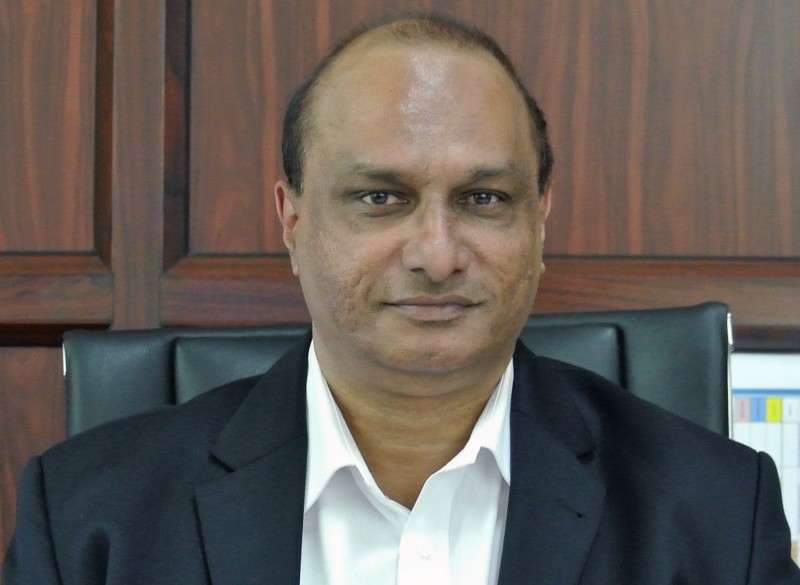
In an interview with AfricaLive.net


Dr Essoo announced plans to open new international Rushmore campus in East Africa and Europe.

Both moves would represent a significant reversal of the current trend in Mauritian education of attempting to build the country as an education hub and attract students from Africa and India to study on the island.

Future of Pan-African Education

A Mauritian higher education institution moving into East Africa could be a significant moment in the development of Pan-African internationalist education.

Dr Essoo outlined Rushmore’s development strategy by stating “We were the first institution to really look at this idea of the education hub, of developing Mauritius as a knowledge hub. The previous government started the education hub programme and this government has continued.

However, having looked at it we realised that we are maybe putting the cart before the horse. My personal opinion is that we have tried this education hub approach and it hasn’t worked very well. We attracted maybe 10 to 15% of our students from Africa and India.

I think our next step needs to be going physically to those markets and expanding there. We are working on that now, we call this the third stage of our development. The first stage was setting up initially, the second stage was building our campus here and consolidating what we had, and now the third stage is to go in to other markets and take our model there.

The plan is to have campuses in Mauritius, Eastern Africa, and Europe offering the same courses and offer students mobility between the three campuses. Students from Europe could spend some time in Africa and some time in Mauritius, and see three different cultures. We would then be a truly international school or University and students would get a truly international education.

In addition to Africa, a lot of Europeans, particularly from eastern Europe, study in the UK either for their full degree or for one term or one year through exchange programmes such as Erasmus.

We believe that with Brexit there is going to be an impact on education and on those students. We believe that we can go into those European markets and offer British education.”

The developments at Rushmore highlight the rapid changes the international education market is going through.

Demand for international education has never been higher. However, the traditional education markets in the global north are fostering political environments increasingly hostile to internationalisation.

International higher education is now a $1.9 trillion global market and enrollments in higher education institutions are projected to grow by 200% by 2040. Total enrolment across the African continent will roughly triple from 7.4 million students to nearly 22 million by 2040.

Following the historic launch of the African Continental Free Trade Area


The continent must develop leaders with both a Pan-African and internationalist mindset. The expansion of institutions such as Rushmore Business School will be a significant catalyst in created an integrated African higher education sector able to attract partnerships with the leading British and international academics and teachers.

Rushmore Business School offers a wide range of programmes that address Africa’s future development needs, from engineering, business, hospitality and tourism through to aviation.

Comments

Education

Tinubu Appoints Adelabu Rector, Federal Polytechnic Ayede

Published

on

President Bola Ahmed Tinubu has approved the appointment of Dr Isiaka Tunji Adelabu as the substantive Rector of the Federal Polytechnic, Ayede, Oyo State.

The appointment, which took effect on August 5, 2026, was announced by the Acting Director of the Centre for Information, Communication and Public Relations (CICPR), Sunday Adepoju, on behalf of the institution.

Adepoju, in a statement, quoted the Registrar of the polytechnic, Akinlolu Akinpade, as saying that Adelabu’s appointment was approved by President Tinubu.

Until his appointment, Adelabu was a Chief Lecturer in the Department of Accountancy at the Federal Polytechnic, Ede, Osun State, where he also served as a Chartered Accountant.

He had held several administrative positions at the institution, including Head of Department, Dean of School and Deputy Rector (Administration).

His appointment, according to the polytechnic, brings to the institution a combination of academic experience and administrative exposure considered vital to its continued development.

Akinpade said Adelabu’s track record and experience would position him to contribute meaningfully to the growth of the institution.

He urged members of the polytechnic community to extend their full support and cooperation to the new Rector as he settles into office.

The Registrar said: “The support and cooperation of the entire polytechnic community will be crucial to enabling the new Rector to advance the vision and mission of the institution.”

With the appointment, Adelabu becomes the second substantive Rector of the Federal Polytechnic, Ayede.

The management, staff and students of the institution, as well as the Governing Council, congratulated Adelabu on his appointment and wished him wisdom, strength and the capacity to provide purposeful leadership and take the polytechnic to greater heights.

Continue Reading

Education

MAKPOLY holds maiden Music Technology performance exam

Published

on

Michael Adeniyi Koleosho Polytechnic, Saki, Oyo State, on Wednesday recorded a major milestone with the conduct of the maiden final-year performance examination for the pioneer student of its Department of Music Technology, marking a new chapter in the institution’s commitment to practical and creative education.

The examination, held at the TETFund Building of the School of Business and Communication Studies, featured Master Okegbola Moses Bright, the department’s first National Diploma student. Lecturers, students, family members and other guests gathered at the venue to witness what many described as a historic moment for the institution.

The practical assessment was coordinated by the Acting Head of the Department, Dr. Abegunrin Adebayo Olugbenga, while two external examiners from The Polytechnic, Ibadan, Dr. Rotimi Ologududu and Dr. Abiodun Akere, evaluated the student’s performance. The Dean of the School of Business and Communication Studies, Mr. Waheed Popoola, and other senior officials of the polytechnic also attended the exercise.

Welcoming guests, Abegunrin described the occasion as a landmark in the department’s history, saying it signalled that the vision behind establishing the programme was becoming a reality.

He said, “Today marks a milestone not just for our department, but for Michael Adeniyi Koleosho Polytechnic. We are witnessing the stage performance of our very first Music Technology student. This is the first of many, and it shows that the seed we planted has begun to bear fruit.”

He explained that the performance examination is a compulsory practical requirement for the award of the National Diploma in Music Technology, adding that it is designed to assess students’ creativity, technical competence and stage performance.

“Music Technology is not just about theory; it is about performance, production and impact. Our pioneer student is setting the standard for those who will come after him,” he added.

Congratulating the student for blazing the trail, Abegunrin urged him to perform with confidence, passion and professionalism. He also encouraged other students in the department to remain focused and committed, assuring them that they, too, would have the opportunity to showcase their talents in due course.

Speaking on the department’s future, the acting head said plans were underway to expand its studio facilities, strengthen collaboration with industry players and build a programme capable of producing graduates with the skills to thrive in the music and creative industries.

“Our goal is to make this department a hub for sound production, live performance, music business and digital creativity in Oyo State and beyond,” he said.

Abegunrin thanked the management of the polytechnic for its continued support and expressed appreciation to the Dean of the School of Business and Communication Studies, members of staff and other stakeholders for their contributions to the growth of the Department of Music Technology, saying their commitment had been instrumental to the programme’s success.

Continue Reading

Education

‎Oseni unveils AI learning hubs for Oyo South students

Published

on

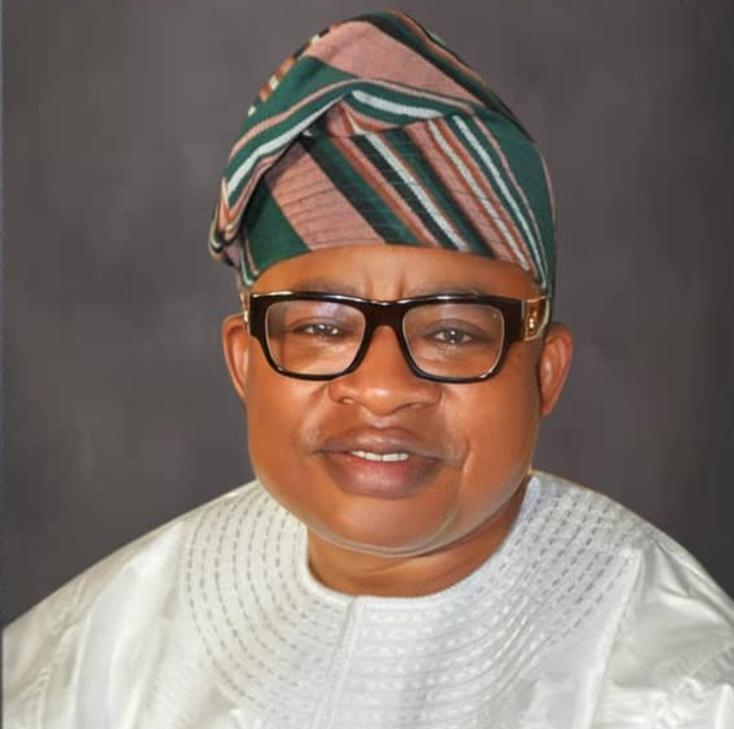
The All Progressives Congress (APC) senatorial candidate for Oyo South in the 2027 election, Hon. Aderemi Oseni, on Thursday unveiled the Remi Oseni Smart Learning Intervention (ROSMA) Legacy Programme, introducing a network of Artificial Intelligence-powered learning hubs designed to prepare secondary school students for the demands of a fast-changing digital world.

‎The initiative, which also witnessed the commissioning of the first batch of ROSMA Smart Learning Hubs in Ibadan, is aimed at exposing students to Artificial Intelligence (AI), robotics, coding, digital literacy and mentorship, while supporting their preparation for public examinations, including WAEC, NECO and the Unified Tertiary Matriculation Examination (UTME).

Addressing an audience of students, teachers, parents and community leaders, Oseni who represents Ibarapa East/Ido federal constituency said the future would belong to nations that invest in knowledge and technology, stressing that education must move beyond conventional classroom learning to embrace innovation.

‎He described the project as a deliberate investment in the next generation, saying every child, regardless of background, deserves the opportunity to compete with peers anywhere in the world.

“This programme is not just about giving support; it is about opening doors. We want our students to understand Artificial Intelligence, embrace technology and develop the confidence to compete with their peers anywhere in the world. Every investment we make in a child today is an investment in a stronger society tomorrow,” Oseni said.

‎The federal lawmaker recalled that his intervention in education did not begin with politics, noting that over the years he had funded scholarships, bursaries, free WAEC and JAMB registrations, digital skills training and entrepreneurship programmes for thousands of young people, many of whom are now pursuing higher education across the country.

He also announced the proposed ROCOF Royal Ambassadors Initiative, which, according to him, will recognise exceptional students, innovators, entrepreneurs and youth leaders who distinguish themselves through academic excellence, creativity and integrity. Such recognition, he said, would inspire more young people to strive for excellence.

‎The Chairman , House Committee on Federal Roads Maintenance Agency (FERMA) added that his ambition to represent Oyo South in the Senate was driven by a desire to expand educational opportunities across the district, promising that if elected in 2027, programmes such as free WAEC and NECO registrations, JAMB sponsorships, scholarships, bursaries, AI education and digital empowerment would be extended to all nine local government areas.

‎Project Director of the ROSMA Legacy Programme, Dr. Demilade AkinAlabi, described the initiative as a bold response to the growing digital divide, saying children in Oyo South must not be left behind at a time when technology increasingly determines educational and economic success.

‎AkinAlabi disclosed that five of the proposed nine Smart Learning Hubs had been completed in Eruwa, Agbadagbudu, Ido, Oke-Ado and Oja’ba, while construction was ongoing at the remaining centres. He explained that the hubs would go beyond providing computers and internet access by offering practical training in coding, artificial intelligence, digital marketing, data analysis and other employable skills for students, artisans, farmers and small business owners.

‎”Our dream is simple. A child’s future should never be determined by where he or she was born. These hubs are more than classrooms with computers; they are places where ideas will grow, talents will be discovered and futures will be built. We want every child who walks through these doors to believe that anything is possible,” AkinAlabi said.

Oseni, however urged the students to remain disciplined, dream beyond their circumstances and embrace technology as a tool for solving real-life problems. He said the ROSMA Legacy Programme was conceived not merely to improve academic performance but to nurture a generation of innovative, confident and globally competitive young people capable of shaping the future of Oyo South and Nigeria.

Continue Reading

Advertisement

Entertainment

Advertisement

MegaIcon Magazine Facebook Page

Advertisement

MEGAICON TV

Advertisement

Trending