Connect with us

Top Stories

Behold, Ruby Gold Multipurpose Complex : A Hidden Paradise In Ibadan

Published

on

OYO  is an inland state in South-western Nigeria, that is known for its famous capital city, Ibadan. It is bounded in the North by Kwara State, in the East by Osun State, in the South by Ogun State and in the West partly by Ogun State and partly by the Republic of Benin.

The ancient city of Ibadan has also recorded several ‘firsts’. it was the first to have a television station in Black Africa – NTA Ibadan, the premier University of Ibadan (UI), Cocoa House which is the first high rise building among others.

It was the pioneer of the free education scheme, which arguably, was the first of its type on the African continent.

Interestingly, Ibadan, the political headquarters of the Western region is also full of rich history and blessed with several interesting tourist attraction centres that spills from every nook and cranny of the city.

Mega Icon Magazine during a facility tour recently discovered one of Ibadan’s fabulous hidden gems – Ruby Gold Hotel and Restaurant.

The hotel, which is centrally located in Dugbe can best be described as home to many corporate headquarters, government offices and large manufacturers. A main gateway linking the city with the rest of Ibadan and close to the suburb’s cultural and tourist attractions.

Its unique ‘multipurpose concept’ for customers comfort sets Ruby Gold brand apart from other competitors.

The edifice houses business hub with over hundred offices, shopping mall with adequate recreational facilities.

The 22-room Ruby Gold Hotel and Restaurant, Ibadan offers a choice of contemporary standard, business-class and executive rooms, as well as a range of ultra-stylish one, including suites with sumptuous beds topped with silky duvets, goose-down pillows and spacious tiled baths.

All rooms carry a fresh and modern design, with free high-speed wireless Internet and free breakfast for customers.

The hotel has an extensive food and drinks offering. Guests can enjoy the all-day dining restaurant, serving international and local cuisine at affordable rates. Also, for a relaxing drink, guests have a choice between the
bar or night club.

Similarly, it has impressive mini conference and seminar hall facilities with an adjoining shopping mall conveniently accommodating a Cinema with 150 capacity space (later expanding to 500), furniture and upholstery store, electronics showroom and Barbing saloon.

The cinema, will also offer free popcorn and water to customers.

Leisure facilities include a suspended swimming pool (ongoing), kiddies park and game centre for travelers and families seeking fun.

Recognising the importance of guest satisfaction, Ruby Gold Hotel and Restaurant has actively work to improve the guest experience by providing a free shuttle bus that takes guests round the city to make movement easier.

According to the owner of the facility, Otunba Reuben Famuyibo, the cinema is being built in accordance with experience gathered in his years of travelling to cities across the world where tourism is a point of reference.

The far famed Ibadan based businessman and socialite, also hinted that  “some aspects of the project are yet be completed, but we have started skeletal operations at the hotel, bar and lounge, furniture and electronic shops and most of the offices are functioning.  We have materials for everything available and I am sure the project will be ready in few weeks time”.

He further informed that the idea is to return Dugbe to its natural form in a modern way.

“Dugbe and its environs used to be a hub of entertainment but now it is clumsy with so business activities with less concentration on recreational centre, so we decided to come up with an all encompassing hub for entertainment, hospitality, and tourism. Also we have shops where people can buy various things.”

“Our primary target are members of the public, specifically workers and people working around here, we have close to 5000 people working with various organizations here. We want to make them more comfortable by creating a spot where they can relax, spend their nights in a serene environment without stress of driving through serious traffic after a heavy mental tussle at work. After work, they can come here, sleep and enjoy their nights and weekend with their families and loved ones. This is a home away from home because we offer excellent services and our environment is secure”, he explained.

Famuyibo, however assured that the hotel is ready to welcome both local community and international guests, stressing that its service will lead the brand to becoming the preferred hotel for all guests, because Ruby Gold Hotel and Restaurant will find a way to entice guests to stay even longer.


Comments

Politics

Oyo: Adekanmbi should clear corruption allegations before attacking others, says Team Arapaja

Published

on

Team Arapaja, a political group loyal to former Oyo State Deputy Governor Taofeek Arapaja, has challenged the All Progressives Movement governorship candidate, Bimbo Adekanmbi, to address allegations against him before making accusations against political opponents.

The group made the call in a statement signed by its spokesperson, Comrade Ibrahim Sheriff, in reaction to Adekanmbi’s recent appearance on Fresh FM, where he reportedly accused the All Progressives Congress candidate of embezzling funds while serving as chairman of Ibadan North Local Government.

Adekanmbi was also reported to have claimed that he had evidence to back up his allegation.

But Team Arapaja dismissed the claim as political mudslinging, questioning why Adekanmbi had yet to make the alleged evidence public despite Senator Sharafadeen Alli’s previous electoral contests, including the 2023 Oyo South Senatorial District election.

The group said voters should not take serious allegations at face value but should demand evidence and examine the records of those seeking public office.

It also questioned Adekanmbi’s record during his time as acting chairman of the Board of Internal Revenue and commissioner for finance, alleging that some staff members were subjected to humiliation and mistreatment under his leadership.

The statement further raised questions over allegations concerning ₦30bn in local government funds during his tenure as finance commissioner, challenging him to publicly address the matter.

Team Arapaja, however, did not provide documentary evidence to substantiate the allegations in its statement.

The group also questioned Adekanmbi’s political relationship with Governor Seyi Makinde, citing his reported admission that he associated with the governor for nearly seven years after the death of his former political benefactor, the late Governor Abiola Ajimobi.

It alleged that Adekanmbi’s relationship with Makinde raised questions about his political loyalty and suggested that he should explain his role during the period.

The group further challenged him to respond to allegations that he provided the Economic and Financial Crimes Commission with information about properties belonging to the Ajimobi family.

Team Arapaja said the issues deserved clarification, particularly given what it described as the role of the Ajimobi family in bringing Adekanmbi from the private sector into public service.

Quoting the saying, “He who comes to equity must come with clean hands,” the group questioned whether Adekanmbi had adequately addressed the allegations it raised before criticising other politicians.

It also recalled the controversy surrounding the 2023 governorship election campaign, when Governor Makinde reportedly made allegations against the then APC governorship candidate, Senator Teslim Folarin.

The group urged politicians to avoid making accusations they could not substantiate, warning that such claims could distract voters from issues of governance and accountability.

As political activities gather momentum ahead of the 2027 elections, Team Arapaja urged residents of Oyo State to scrutinise the records, integrity and competence of candidates rather than be swayed by campaign rhetoric.

It challenged Adekanmbi to respond to the issues raised and provide evidence for his own allegations against political opponents.

Continue Reading

Politics

Oyo: Adekanmbi Fabricating Lies Against Alli to Save Himself, Says SSACO

Published

on

The campaign organisation of Senator Sharafadeen Alli, the All Progressives Congress (APC) governorship candidate in Oyo State, has accused Hon. Bimbo Adekanmbi of making false allegations against the senator in a desperate attempt to damage his reputation ahead of the 2027 governorship election.

The organisation, SSACO, said Adekanmbi was distorting historical facts to discredit Alli rather than engaging in meaningful discussions about the development of Oyo State.

In a statement issued on Saturday by its Director of Media and Publicity, Mr Bisi Oladele, the campaign organisation described the allegations made by Adekanmbi during a radio interview as politically motivated, insisting that they would not erase Alli’s record in public office.

Defending the senator’s tenure as chairman of Ibadan North Local Government, SSACO said Alli maintained prompt salary payments and prioritised workers’ welfare, earning recognition from the Nigeria Union of Teachers (NUT) in Oyo State.

The organisation argued that the financial difficulties experienced by local governments following the Federal Military Government’s January 1993 policy on staff promotions and salary increases were not peculiar to Alli’s administration.

According to the statement, the problem affected local governments across the country because of inadequate allocations to implement the policy. It added that the difficulties continued beyond Alli’s tenure and were later addressed through institutional measures, including the establishment of the National Primary Education Commission in 1997 and the introduction of first-line charges for teachers’ salaries by 1999.

SSACO accused Adekanmbi of using the historical challenges to create a misleading impression of Alli’s record, insisting that the circumstances surrounding the crisis should not be ignored in assessing the senator’s performance.

The organisation challenged Adekanmbi to produce the report on which he based his corruption allegation against Alli, warning that it would pursue legal action if the claims were found to be defamatory.

It maintained that public officials should be held accountable through verifiable facts, not allegations designed to damage political opponents, and insisted that Alli had nothing to fear from a fair examination of his record.

The campaign organisation also turned its attention to Governor Seyi Makinde’s administration, accusing it of weakening local government administration and limiting the ability of councils to meet the needs of residents at the grassroots.

It said Alli would make the revitalisation of the state’s 33 local government areas a priority if elected governor in 2027.

According to SSACO, his proposed agenda would focus on strengthening the administrative and financial capacity of local councils, enabling them to deliver services more effectively and respond to the needs of their communities.

The organisation also identified the reconstruction of feeder and access roads as a priority, saying better road networks would ease the movement of people and goods, support farmers and traders, and open up more economic opportunities across the state.

SSACO expressed confidence in Alli’s prospects ahead of the 2027 election, insisting that its campaign would focus on his record, development plans and the need to restore effective grassroots governance.

It urged Adekanmbi to produce evidence to support his allegations and engage in substantive debate on the state’s future, rather than what it described as attempts to distort history for political advantage.

Continue Reading

Opinion

Doctors’ Strike and the Price of Human Life | By Olusegun Hassan

Published

on

The popular Yoruba saying, “Ẹni kan l’ọmọ,” meaning that only the person wearing the shoes knows where they pinch, recently took on a deeper meaning for me. Just last week, I experienced its true significance beyond its familiar place as an aphorism.

Popular sayings often remain mere expressions in our consciousness until we find ourselves at the receiving end of the experiences they describe. Similarly, systemic flaws and structural deficiencies in society may seem distant until we become victims of them. News of kidnapping is just another newspaper report until a loved one is abducted and the family is thrown into a desperate search for money to pay a ransom. In the same vein, the news that “doctors are on strike” may appear to be just another headline until someone close to us dies because urgent medical attention was unavailable as a result of the strike.

Nigeria’s story is replete with such unfortunate experiences, which have given rise to another familiar expression: “May Nigeria not happen to you.”

While the media landscape was still reeling from reports of the death of popular gospel singer Toluwanisings, who reportedly died on October 14, 2026, following an alleged lack of urgent medical attention during a doctors’ strike, I also lost a close relative two days later, on October 16, under circumstances involving the same lack of timely medical care.

She was an asthma patient who suffered an attack in the middle of the night. After receiving first aid, she was rushed to the nearest hospital, a teaching hospital, only to be turned away because doctors were on strike and none was available to attend to her. By the time the family reached the nearest private hospital, she had died. Her death left the entire family, myself included, traumatised.

These are only two cases among many similar tragedies that have occurred over the years. They raise a painful question: how many of these deaths could have been prevented if essential medical services had remained accessible?

I cannot help but wonder: what is the value of human life in this country? At what point did the sanctity of human life become secondary to demands for improved welfare by medical unions?

This is not to suggest that the grievances of doctors are illegitimate. Far from it. Medical professionals deserve fair remuneration, adequate facilities, safe working conditions and an environment that enables them to perform their duties effectively. The question, however, is whether the pursuit of these legitimate demands should come at such a devastating cost to human life, particularly when the fundamental purpose of the medical profession is to preserve life through the provision of appropriate healthcare.

It is a troubling paradox.

Doctors undoubtedly have the right to demand fair treatment and safe working conditions. However, that right must be exercised in a manner that protects patients from abandonment and avoidable harm. When patients die because essential medical services have been withdrawn without adequate safeguards, the ethical justification for the action becomes a serious matter for scrutiny.

The World Medical Association (WMA), an international body that promotes widely recognised ethical standards for physicians, upholds principles that include respect for human life and the dignity of patients. These principles underscore the responsibility of doctors to protect the health and well-being of those under their care, provide competent and timely treatment, prevent avoidable harm and act in their patients’ best interests.

These are not merely ideals about compassion. They are professional obligations that must continue to guide medical decisions, including during industrial disputes.

In Nigeria, the Medical and Dental Council of Nigeria (MDCN) addressed this issue in January 2024, reportedly directing the heads of teaching hospitals, federal medical centres and specialised hospitals to ensure that industrial action did not result in the abandonment or premature discharge of patients.

Among the safeguards outlined were the following:

  • Accident and emergency departments must remain open and adequately staffed.
  • Emergency paediatric services, labour wards, neonatal units and intensive care units must continue to provide emergency and critical care.
  • Patients already admitted to hospital must not be discharged merely because a strike has commenced.
  • Patients with scheduled appointments before the strike must be attended to in accordance with the applicable directives.

These safeguards reinforce an important principle: the right to pursue employment-related demands does not extinguish a doctor’s professional obligation to protect patients from preventable harm.

Where emergency patients are turned away, critically ill patients are abandoned, or essential services are shut down without adequate arrangements for emergency care, the circumstances warrant investigation. Where evidence establishes a breach of professional obligations or applicable regulations, appropriate disciplinary or legal action should follow.

Similarly, when a patient dies after being denied emergency treatment during an industrial action, the circumstances surrounding the death deserve a thorough and impartial investigation. Where negligence, professional misconduct or a breach of applicable directives is established, appropriate sanctions should be imposed in accordance with the law and relevant professional regulations.

The point is simple: no legitimate grievance should justify abandoning a patient whose life is in immediate danger.

At this juncture, it is equally important to acknowledge the government’s share of the blame. While this article emphasises the ethical obligation of doctors to preserve human life, the government must also recognise that poor remuneration, unpaid allowances, inadequate medical facilities, excessive workloads and unsafe working conditions undermine doctors’ morale and their ability to provide quality healthcare.

The consequences are increasingly evident in Nigeria’s continuing loss of medical professionals to other countries.

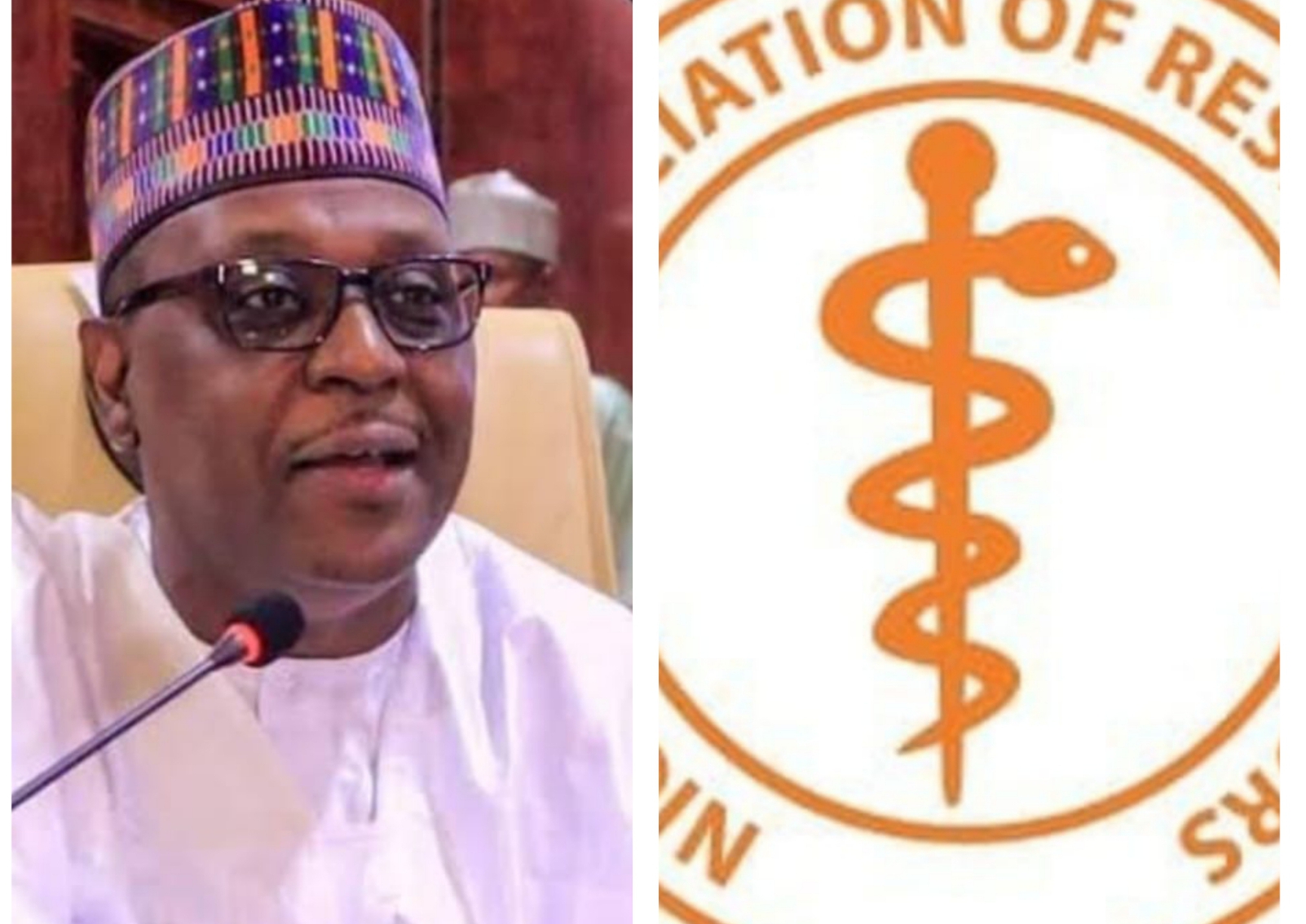
In 2025, the Coordinating Minister of Health and Social Welfare, Professor Muhammad Ali Pate, reportedly disclosed that more than 16,000 Nigerian doctors had emigrated over the preceding five to seven years, largely in search of better opportunities abroad. Furthermore, a 2025 report on Nigeria’s health statistics reportedly indicated that 4,193 doctors and dentists left the country in 2024 alone.

These departures deepen staffing shortages, increase the pressure on the doctors who remain and expose patients to longer waiting times and potentially avoidable deaths.

The government must therefore move beyond repeated negotiations and implement sustainable reforms. These should include the prompt payment of salaries and allowances, improved working conditions, adequate funding for public hospitals, transparent career progression and the effective implementation of agreements reached with medical unions.

The Federal Ministry of Health and relevant hospital authorities must also strengthen monitoring and oversight during industrial disputes to ensure that emergency and critical care services remain available in public hospitals. Patients in life-threatening conditions must not be turned away simply because doctors are on strike.

Ultimately, responsibility for Nigeria’s healthcare crisis cannot be placed entirely on one side. Doctors must uphold their professional and ethical obligations, while the government must fulfil its responsibility to create conditions in which those obligations can be discharged effectively.

Medicine is not an ordinary occupation. It carries a profound moral responsibility because, in certain circumstances, the timely intervention of a medical professional can make the difference between life and death. No employment grievance should be used to justify abandoning a patient whose life is in immediate danger.

The sanctity of human life demands responsibility from the doctors entrusted with treating patients and from the government authorities responsible for ensuring that appropriate treatment remains available.

A functional healthcare system depends on cooperation between these two critical stakeholders. When they fail to find common ground, it is the ordinary citizen who suffers the consequences. As the familiar saying goes, when two elephants fight, the grass suffers.

And trust me, I know what that suffering feels like. I have just experienced it.

Olusegun Hassan, Ph.D.
Public Policy Analyst and Social Commentator

Continue Reading

Trending